A well built roof protects your home from the elements, and one of its key components is roof underlayment. Underlayment is the water resistant barrier installed over the roof deck and beneath the roofing material, whether that is shingles, slate, or metal panels. It is designed to give temporary protection while the roof is being installed, which raises a fair question from homeowners: how long can roof underlayment be exposed before it stops doing its job? In this post we answer that question from the point of view of a Pittsburgh roofing crew that installs underlayment every working day.
The short answer is that it depends on the product, the weather, and how the roof was prepared. On a Malick Brothers roof replacement, most roofs are torn off, dried in, and shingled the same day, so the underlayment is rarely exposed overnight. When a roof is too large to finish in one day, we only tear off what we can cover before we leave.
Understanding Roof Underlayment
Roof underlayment is a secondary layer of protection. The shingles or metal panels are the primary weather barrier. The underlayment sits beneath them and catches any water that gets past the surface, whether from wind driven rain, a lifted shingle, or an ice dam at the eave. It also protects the wood deck from resin and moisture during installation. There are two primary types of underlayment used on sloped roofs, plus a third product used in the most vulnerable spots.
Asphalt Saturated Felt
Also known as felt paper or tar paper, this is the traditional underlayment. It is made by saturating a felt base with asphalt for water resistance. Felt comes in 15 pound and 30 pound weights. It is inexpensive, but it wrinkles when it gets wet, tears in the wind, and breaks down quickly in sunlight. Many older Pittsburgh roofs still have felt under the shingles, and we see its condition every time we tear one off.
Synthetic Underlayment
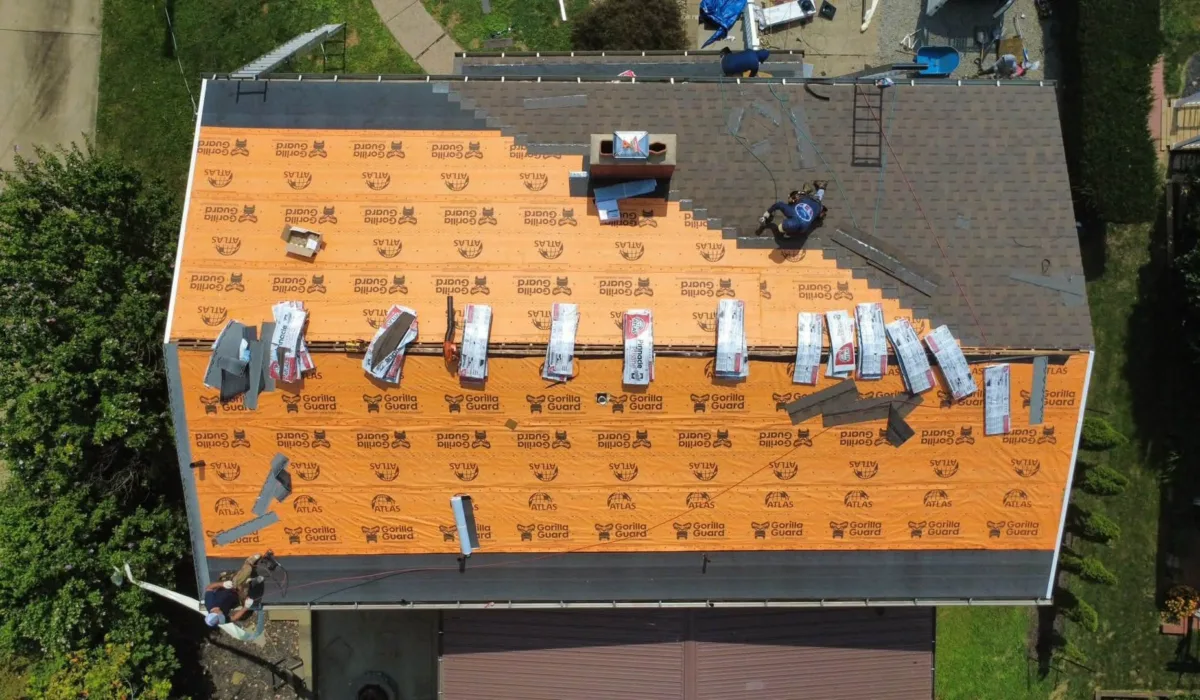
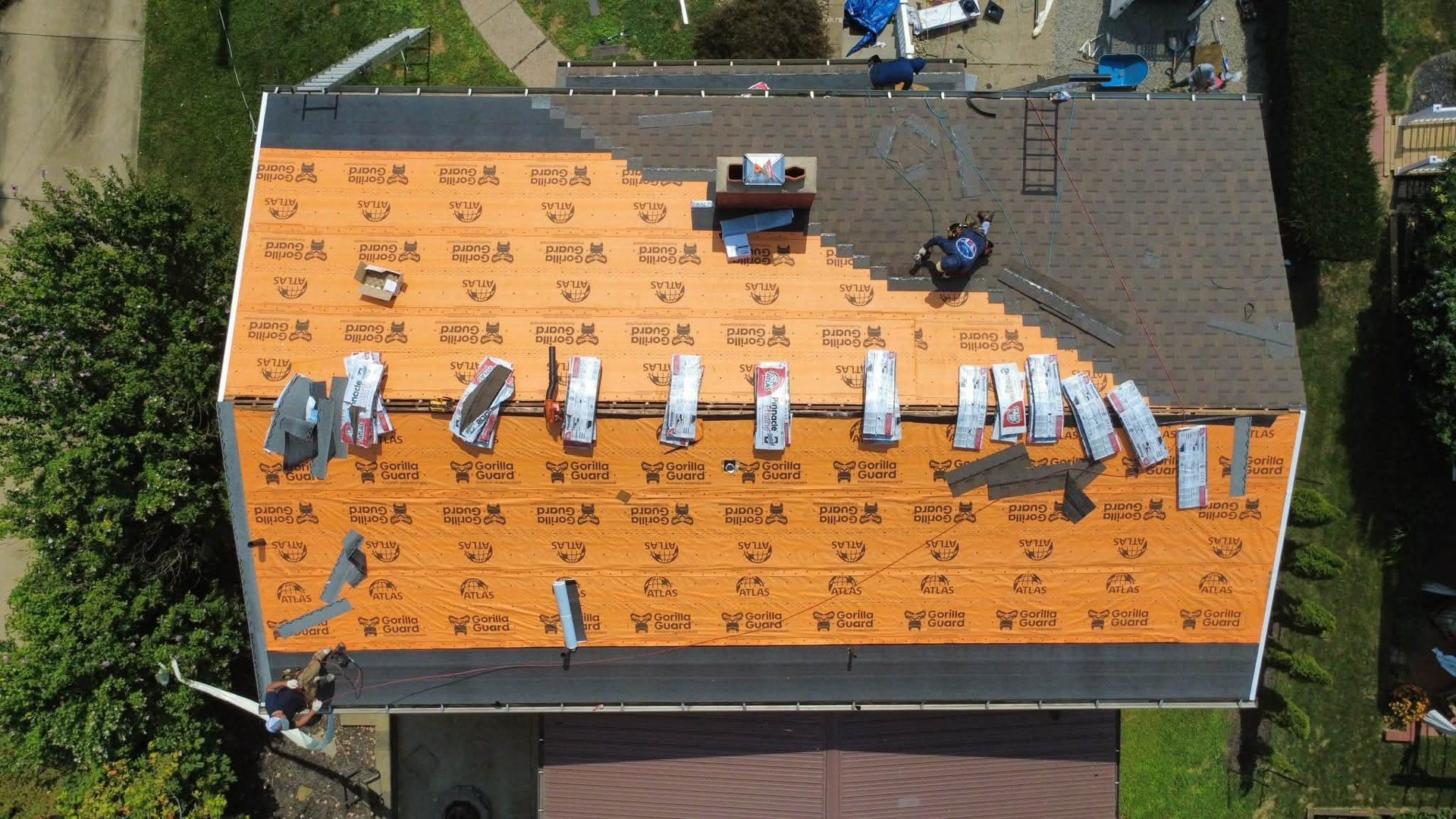
Synthetic underlayment is a newer alternative made from woven polypropylene or polyethylene. It is lighter, stronger, and far more resistant to ultraviolet light and moisture than felt. It lies flat, holds fasteners well, and gives the crew better footing on a steep roof. We install synthetic underlayment on the complete Atlas roofing systems we put on homes across the North Hills, South Hills, and the city, because it is part of what makes the Atlas 50 year warranty possible.
Ice and Water Shield
Ice and water shield is a self adhering rubberized asphalt membrane. It is not a full roof underlayment on most homes, but it goes on the eaves, in the valleys, and around chimneys, skylights, and pipe penetrations where ice dams and standing water are most likely. Pennsylvania code requires it along the eaves in our climate, and we extend it past the warm wall line so melting snow cannot back up under the shingles.
How Long Can Roof Underlayment Be Exposed?
Roof underlayment is not designed to be a permanent roofing solution on its own. Every product has an exposure rating printed on the roll or published by the manufacturer, and that number is the only reliable answer for a specific product. In general terms:
- Asphalt saturated felt: Felt should be covered within days. It will survive a passing shower, but a few days of sun and wind will curl the edges, loosen the staples, and weaken its water resistance. A few weeks of exposure is the realistic upper limit, and by then it is usually ruined.
- Synthetic underlayment: Most synthetics carry a rated exposure window measured in months rather than days, and premium products are rated for the longest windows. That rating assumes the sheet was fastened correctly with cap nails and overlapped properly. Even so, the rating is a limit for emergencies, not a plan.
- Ice and water shield: Self adhering membranes also carry a published exposure limit. Because they bond to the deck, they hold up better in wind than felt, but their surface degrades in sunlight and the adhesive can be affected by heat, so they should be covered promptly as well.
Exposure ratings are written for ideal conditions. A Pittsburgh roof that sits open through a week of February freeze and thaw or a run of July thunderstorms is not in ideal conditions.
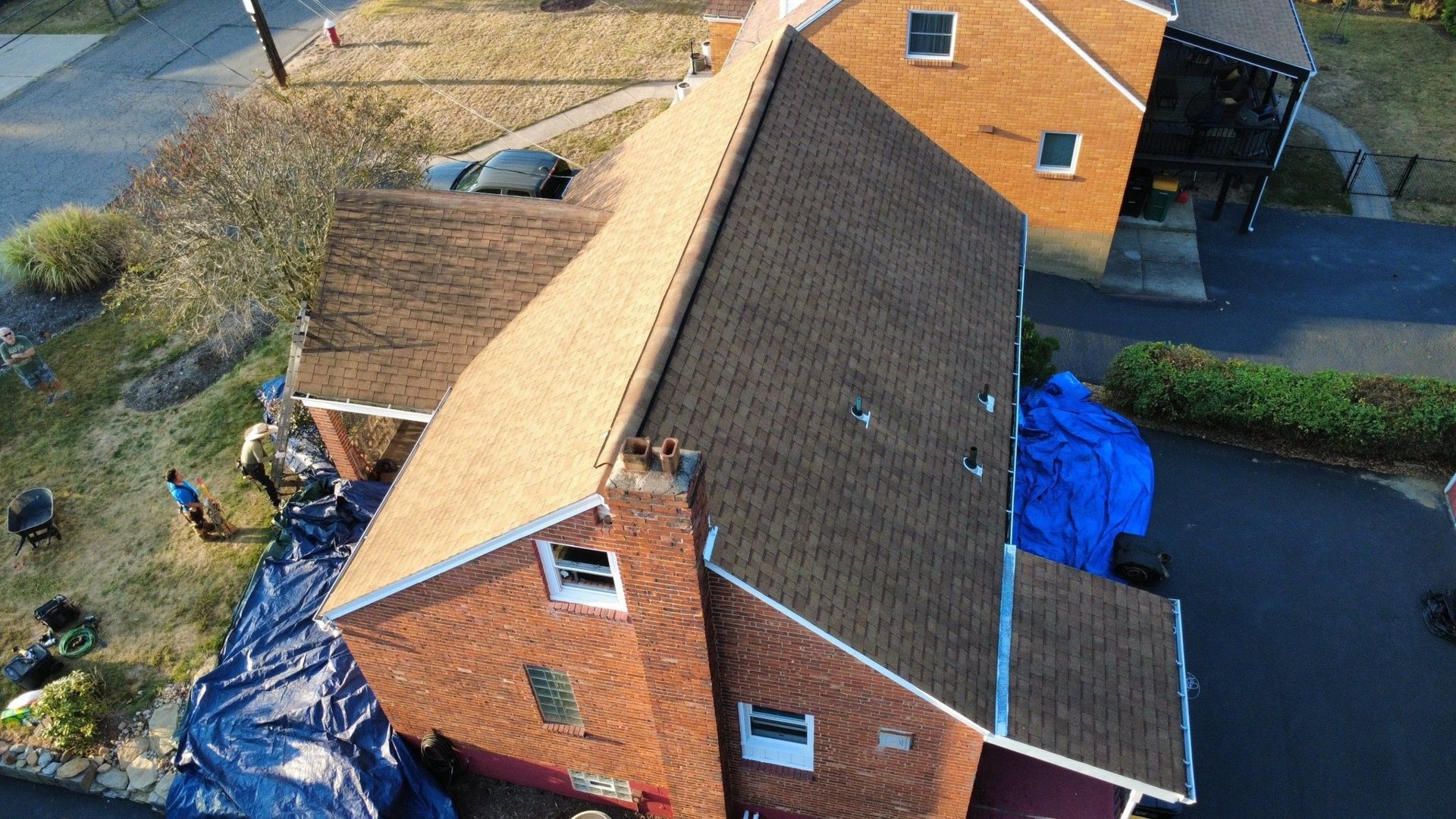
Factors That Affect Exposure Time
Several factors change how long underlayment can safely stay uncovered.
- Local climate. Pittsburgh gets rain in every month, heavy snow most winters, and humid summers with strong afternoon storms. Ultraviolet light does the slow damage, wind and water do the fast damage, and we get all three.
- Roof pitch. Steeper roofs shed water quickly, so water has less chance to find a seam or a fastener hole. Low slope sections and dead valleys hold water and expose the laps to more pressure.
- Quality and thickness of the product. A heavier synthetic with a UV stabilized coating lasts far longer in the open than light felt.
- Fastening and overlap. Underlayment that is stapled too lightly, run short on the overlaps, or laid without cap nails will lift in the first strong wind no matter what the label says.
- Deck condition. Underlayment over soft or wet sheathing hides a problem that gets worse every day the roof stays open.
Why Underlayment Gets Left Exposed
Underlayment should only be exposed for the time it takes to install the roof. When it sits open longer, it is usually because a contractor tore off more than the crew could finish, because shingles were back ordered, or because a storm damaged roof was dried in while an insurance claim was reviewed. The first two are planning problems. We confirm material delivery before we schedule the tear off, watch the forecast, and size the crew to the roof. On a storm repair, the dry in is a stopgap, and we get the permanent roof on as soon as the claim allows.
How Malick Brothers Handles Underlayment on a Pittsburgh Roof
We are a family owned roofing company founded in 2022 by Ryan Malick, with our shop at 500 Perry Highway in West View. Our crews install our own roofs, and the sequence on a typical residential replacement looks like this:
- Tear off the old shingles and underlayment down to the wood deck, in sections the crew can cover the same day.
- Inspect the deck and replace any soft, rotted, or delaminated sheathing before anything goes over it.
- Install ice and water shield at the eaves, in the valleys, and around every penetration.
- Roll out synthetic underlayment over the rest of the deck, fastened with cap nails and overlapped to shed water downhill.
- Install drip edge, starter strip, shingles, ridge vent, and flashing, usually finishing before we leave for the day.
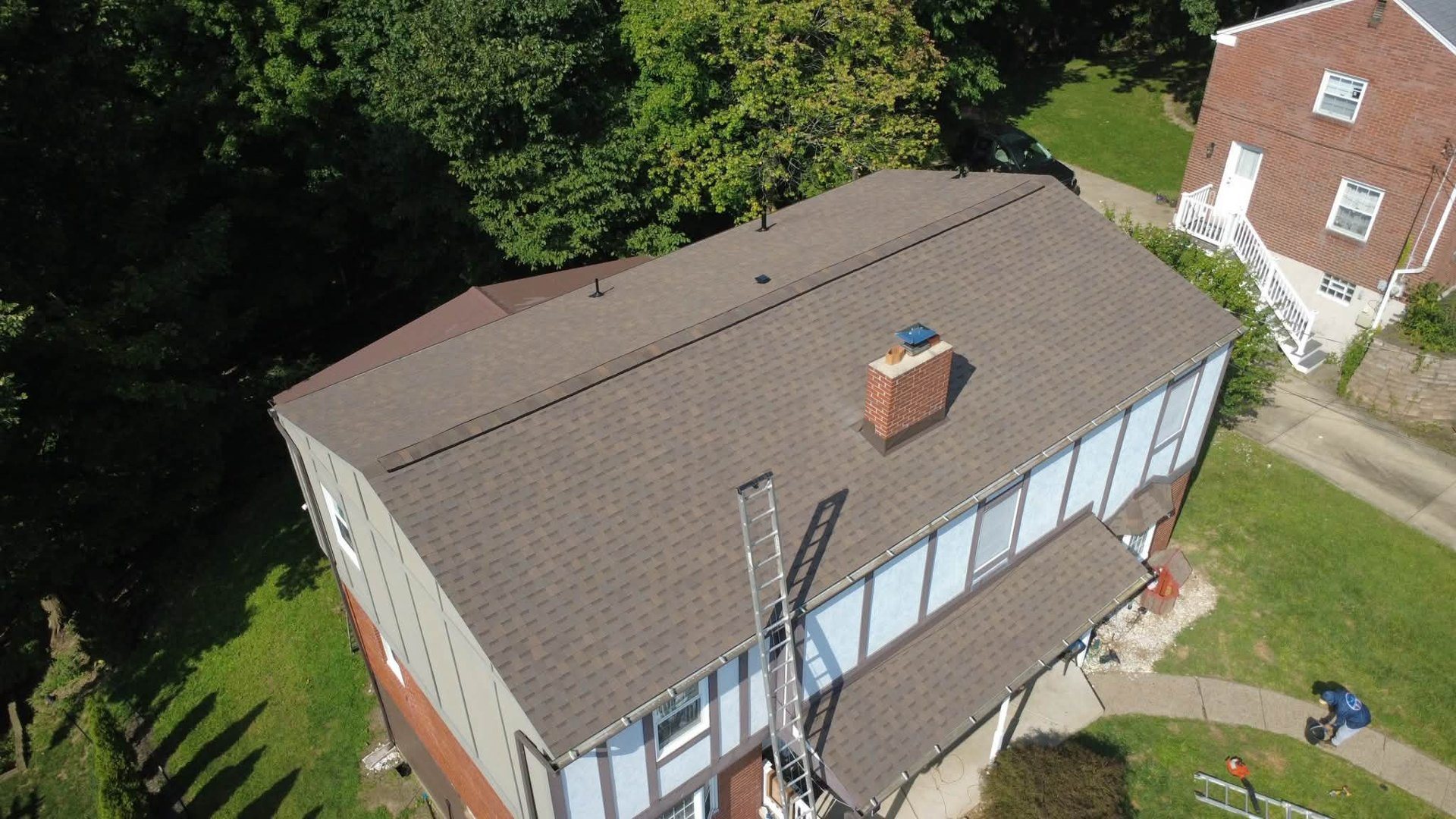
Because we use complete Atlas systems, the underlayment, shingles, and ventilation are designed to work together, which is what qualifies the roof for the Atlas 50 year warranty through our AtlasPro+ Platinum Select status. The same discipline applies on our metal roofs and slate repairs.
What to Do If Your Underlayment Has Been Exposed
If your roof has been sitting open longer than it should, here is what we recommend.
- Find out what product is on the roof and look up its published exposure rating.
- Look for lifted laps, torn sheets, wrinkles, and exposed fastener heads. Any of these means water can reach the deck.
- Check the attic after the next rain for damp sheathing or staining on the underside of the deck.
- If the underlayment is damaged or past its rating, it should be replaced, not covered over. Shingles over compromised underlayment give you a new roof with an old problem underneath.
Frequently Asked Questions
Can roof underlayment get rained on?
Yes, within reason. Synthetic underlayment and ice and water shield are made to shed rain during installation. Felt tolerates light rain but wrinkles and weakens once it is soaked.
Is synthetic underlayment worth the extra cost over felt?
In our experience, yes. It is stronger, safer to walk on, holds up far longer in the open, and is part of the manufacturer systems that carry the best warranties.
Does underlayment make a roof waterproof by itself?
No. Underlayment is water resistant and ice and water shield is a waterproof membrane, but both rely on the shingles or metal above them to shed most of the water and to protect them from sunlight. Think of underlayment as a backup, not a roof.
Will exposed underlayment void my roof warranty?
It can. System warranties assume each component was installed according to the published instructions, which include exposure limits. If underlayment sat past its rating before shingles went on, the manufacturer may not stand behind it.
How quickly can you cover a roof once the old one comes off?
On most Pittsburgh homes we tear off, dry in, and shingle in a single day. Larger or more complicated roofs may take two or three days, and in those cases we tear off only the sections we can cover before the end of each day.
Talk With a Pittsburgh Roofer
If you have questions about underlayment, an open roof, or a replacement you are planning, we are glad to take a look. Malick Brothers Exteriors is BBB A+ accredited and registered in Pennsylvania as PA HIC PA174918. Contact us for a free written estimate and an honest answer about what your roof needs.