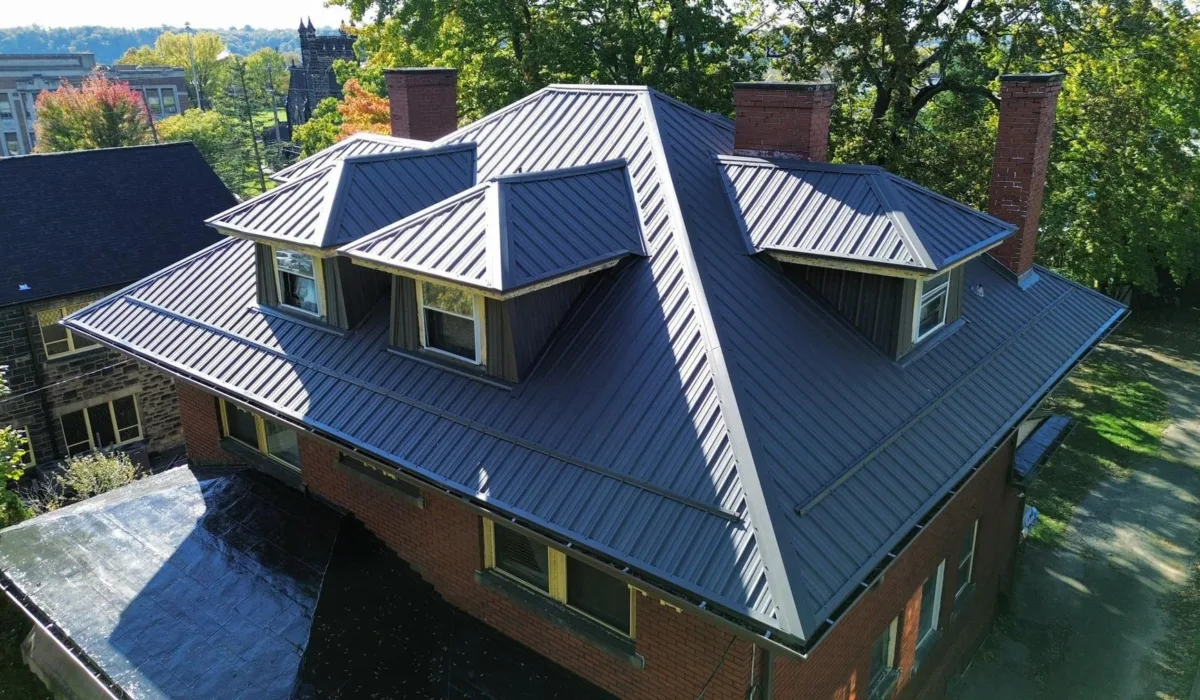
Metal roof repair is almost always possible, and it is usually far less work than replacing the roof. Most leaks on a metal roof do not come from the panels at all. They come from the small parts around the panels: fasteners that have backed out, sealant that has dried up, seams that have opened and flashing that has pulled away from a chimney or wall. Find the right small part and the repair is often simple.
We are Malick Brothers Exteriors, a family owned roofing company based in West View in Pittsburgh's North Hills. We install and repair metal roofing in Pittsburgh and the surrounding towns, and our repair division works on metal, slate, tile, shingle and flat roofs every week. This guide explains what goes wrong with metal roofs, how each problem is fixed, what you can safely do yourself and when repair stops making sense.
Can a Metal Roof Be Repaired?
Yes. A metal roof is one of the most repairable roofs there is, because the panels themselves rarely wear out. Steel and aluminum panels with a factory finish can last for decades. What ages faster are the parts that keep water out at the joints:
- Rubber washers under exposed screws
- Sealant and butyl tape inside seams and laps
- Pipe boots around plumbing vents
- Flashing at chimneys, walls, valleys and skylights
- Ridge caps and trim pieces
Each of these can be renewed without disturbing the rest of the roof. Repair only stops being the right answer when the panels are rusted through over a wide area or the wood deck underneath has rotted.
First, Know Which Type of Metal Roof You Have
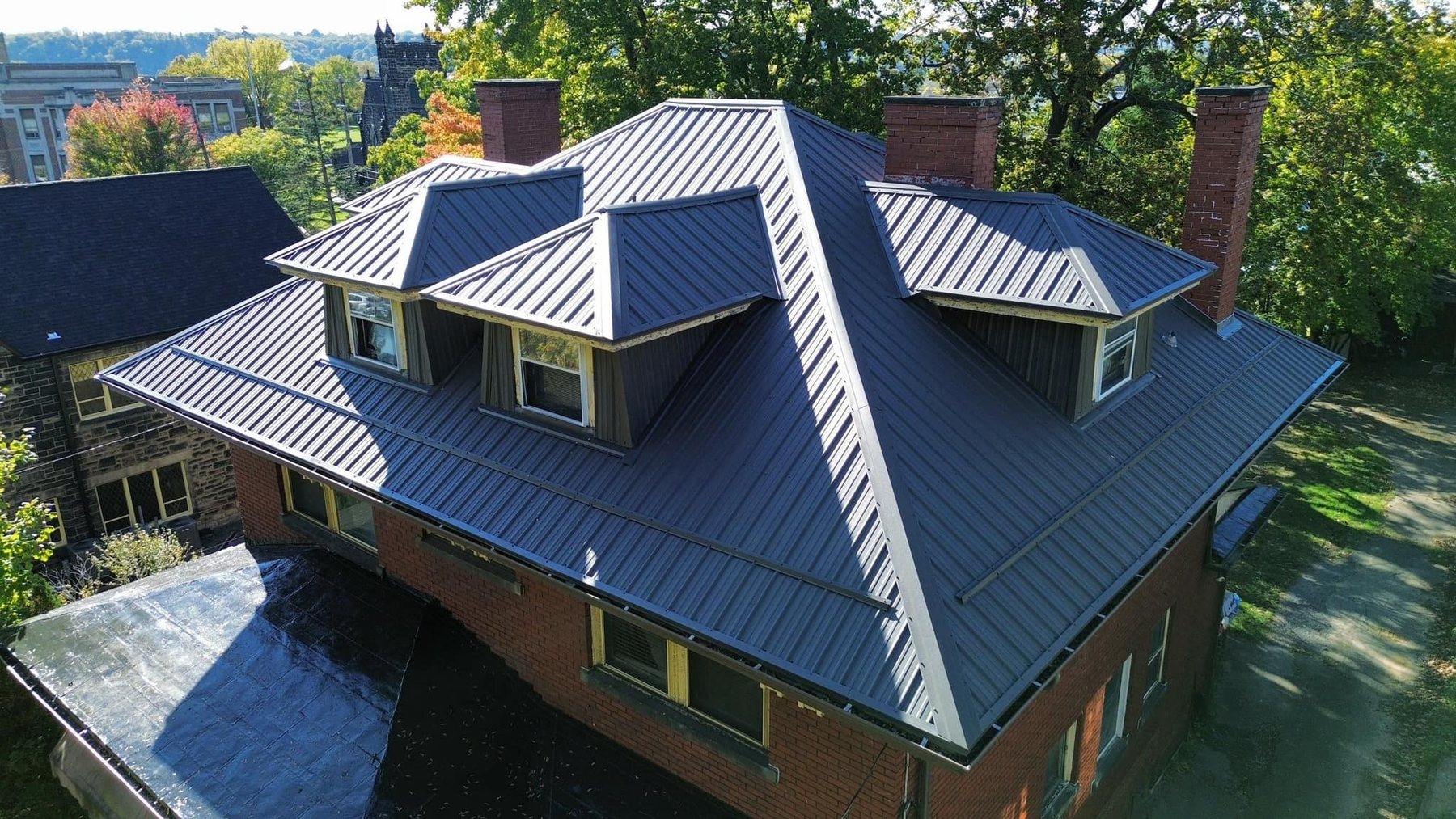
The repair depends on how the panels are fastened, so identify the system before anything else.
| Exposed fastener panels | Standing seam panels | |
|---|---|---|
| How to recognize it | Rows of screw heads visible on the face of the panels | Raised vertical seams with no visible screws |
| Most common leak source | Screws that have backed out or washers that have cracked | Flashing, pipe boots and end details |
| Typical repair | Replace fasteners, reseal laps, replace damaged panels | Rework flashing, replace boots, repair or replace a panel |
| Routine upkeep | Fasteners need checking every few years | Very little beyond inspection and cleaning |
The Most Common Metal Roof Repair Problems and How Each Is Fixed
1. Loose, missing or worn fasteners
Metal expands in the sun and contracts at night. Over thousands of cycles this movement works exposed screws loose and wears out the rubber washer under each head. Water then follows the screw straight into the building. This is the single most common leak on exposed fastener roofs.
The fix is to remove each failed screw and install a new one with a fresh sealing washer. Where the old hole has stripped out, a slightly larger diameter screw is used so that it bites into solid material. Snug is enough: a screw driven too hard splits the washer.
2. Open seams and panel laps
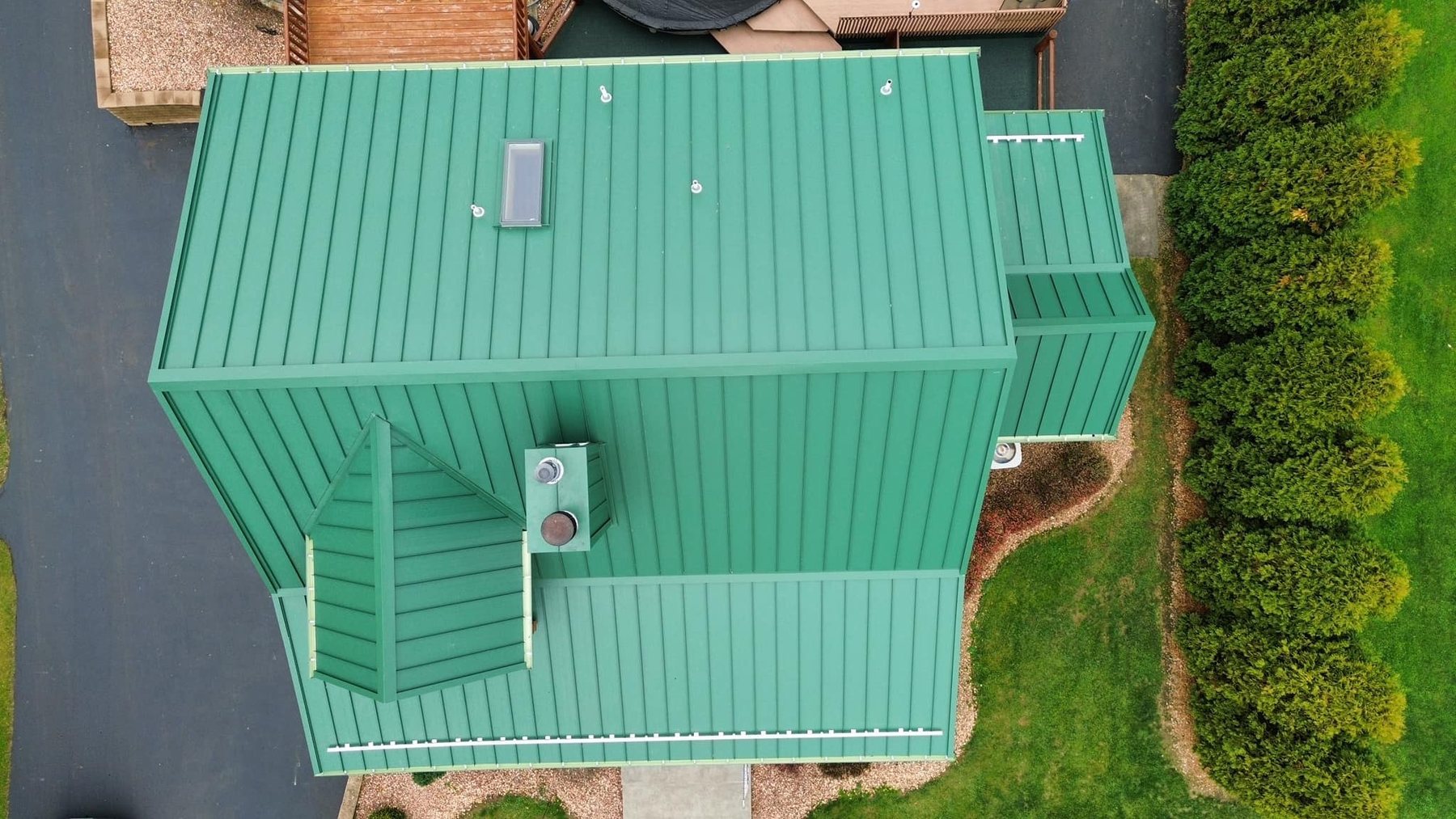
Where two panels overlap, a strip of butyl tape or sealant keeps wind driven rain out. When that seal dries or the lap opens, water gets in during heavy rain even though the roof looks fine from the ground. The repair is to clean the lap, install new butyl sealant inside the joint and fasten it closed. Caulk smeared over the outside of a seam cracks again as the panels move.
3. Failed flashing and pipe boots
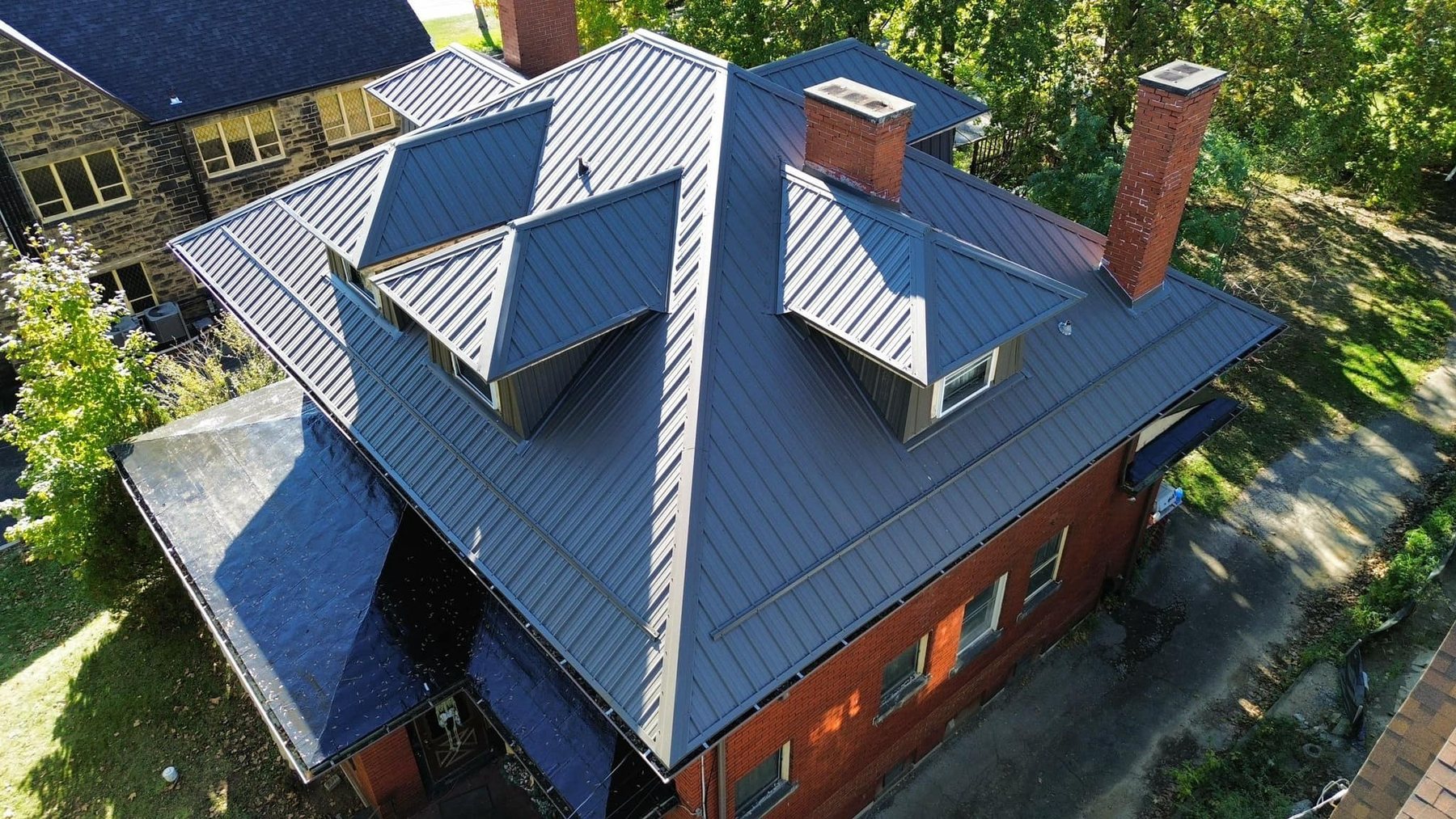
Chimneys, dormers, skylights, sidewalls and plumbing vents all interrupt the panels, and every interruption needs flashing. On most metal roofs, flashing and pipe boots are more likely to leak than the panels themselves. The correct repair is to replace the boot or rebuild the flashing so that water is shed by overlapping metal, with sealant only as a backup.
4. Rust and corrosion
Steel panels are protected by a zinc or zinc and aluminum coating plus paint. Rust starts where that protection is broken: at scratches, cut edges, spots where leaves sit wet for months and places where a different metal touches the panel. Treat it by its stage:
- Surface rust: clean to bright metal with a wire brush, apply a rust inhibiting primer, then a finish paint made for metal roofing.
- Pitted metal or pinholes: clean and prime, then patch as described below.
- Rust through over a large area: replace the affected panels. A coating will not restore metal that is no longer there.
5. Holes, punctures and dents
Fallen limbs, foot traffic and old satellite dish mounts leave holes. A small hole is cleaned and sealed with a sealant that stays flexible on metal. A larger hole gets a patch cut from the same type of metal, sized at least two inches beyond the damage on every side, with rounded corners, bedded in sealant and fastened around the edge. Matching the metal matters, because two different metals in contact can corrode each other.
6. Wind lifted panels, ridge caps and trim
Storms can lift a panel edge or peel back ridge cap and trim. Refasten loose pieces into solid framing quickly, and replace creased panels, because a crease will not lie flat again.
How Do You Find a Leak on a Metal Roof?
Water travels along panels and framing before it shows on a ceiling, so the stain is rarely directly below the entry point. Work uphill from the stain and check in this order:
- Pipe boots, chimney flashing, skylights and wall flashing above the stain
- Fasteners in that area: look for raised heads, missing screws and cracked washers
- Panel laps and seams, especially the horizontal end laps
- The ridge cap and any valley above the area
One more thing to rule out is condensation. In a cold Pittsburgh winter, warm indoor air that reaches the underside of a metal roof can condense and drip, which looks exactly like a leak. If the dripping happens on cold clear mornings instead of during rain, the cause is ventilation or insulation, not the roof surface. A professional roof inspection will tell the two apart.
What Is the Best Patch or Sealant for a Metal Roof?
There is no single best product, only the right one for the location:
- Butyl tape or butyl sealant inside seams and laps, where it stays soft and moves with the panels.
- Polyether or silicone sealant rated for metal roofing for small holes, fastener heads and flashing details.
- A matching metal patch for any hole too large to bridge with sealant.
- Fabric reinforced seam tape systems for long runs of failing seams on low slope metal roofs.
Avoid asphalt roof cement and tar. They dry out, crack with the movement of the metal and trap moisture against the panel, which speeds up rust.
Repair, Restore or Replace?
Most metal roofs fall into one of three situations.
Repair when the problems are isolated: a section of loose fasteners, one bad pipe boot, a chimney that needs new flashing, a damaged panel or two. Our residential roof repair crew handles this work throughout the North Hills and the city.
Restore when the panels are structurally sound but the seams and fasteners are failing across the whole roof. This is most common on low slope commercial and industrial metal roofs. The seams and fasteners are sealed, then the whole surface receives a silicone coating. We are a MuleHide certified contractor and install MuleHide silicone roof coatings on roofs that qualify.
Replace when panels have rusted through in many places, when the deck below is soft or rotted, or when the roof was installed so poorly that the leaks cannot be chased down one at a time.
What Drives the Cost of a Metal Roof Repair?
We do not publish prices, because no two repairs are alike and a number without an inspection would only be a guess. These are the factors that decide the cost:
- The type of system. Standing seam panels take more labor to remove and replace than exposed fastener panels.
- The size of the affected area and how many separate leak points there are.
- Roof pitch, height and access, which determine the safety setup.
- Whether matching panels and trim in the same profile and color are available.
We inspect the roof, show you photos of what we find and give you a free written estimate before any work begins.
Metal Roof Maintenance That Prevents Repairs
Whether the roof is on a home or an industrial building, the routine is the same:
- Inspect twice a year, in spring and fall, and after any severe storm. Look for loose or damaged panels, raised fasteners, rust and open sealant.
- Clear leaves, twigs and branches from the panels and valleys. Debris holds moisture against the finish and is where rust begins.
- Keep gutters and downspouts open so that water leaves the roof edge instead of backing up under the panels.
- Trim back limbs that rub the roof, and touch up scratches with paint from the panel manufacturer.
- On exposed fastener roofs, have the screws checked every few years and plan on renewing them as the washers age.
- Keep foot traffic low.
- On commercial and industrial roofs, check around rooftop units, curbs and any penetration added after the roof was installed, and keep a written log of each inspection.
What Pittsburgh Weather Does to a Metal Roof
Western Pennsylvania is hard on the small parts of a metal roof. Freeze and thaw cycles through the winter open and close every joint. Summer sun followed by a cool night moves long panels enough to work screws loose. Mature trees across the North Hills, Sewickley and Fox Chapel drop leaves and limbs that hold moisture and scratch finishes.
Metal is still one of the longest lasting roofs we install. It simply rewards a quick look every spring and fall.
DIY or Call a Roofer?
A careful homeowner can clear debris from the ground or a secured ladder, clean gutters and check the attic for stains.
Leave the rest to a professional. Metal panels are slick, especially with dew, frost or pollen on them, and a fall from a roof is a serious injury. Walking it incorrectly also dents panels. Call a roofer for any leak you cannot trace, any flashing work, panel replacement, widespread rust or storm damage.
In Pennsylvania, any contractor who works on your home must be registered with the Attorney General. You can confirm a registration on the Pennsylvania Home Improvement Contractor lookup. Ours is PA174918.
Metal Roof Repair FAQ
How do you fix a leak on a metal roof?
First find the true source, which is usually uphill from the stain. Then fix that part properly: replace backed out screws and worn washers, reseal the inside of an open lap with butyl, replace a cracked pipe boot, rebuild loose flashing or patch a hole with matching metal bedded in sealant. Surface caulk alone rarely lasts.
What is the best patch for a metal roof?
For a small hole, a polyether or silicone sealant made for metal roofing. For anything larger, a patch cut from the same kind of metal, extending at least two inches past the damage, with rounded corners, sealed underneath and fastened around the edge. Do not use asphalt roof cement, which cracks and holds moisture against the panel.
How much does a metal roof repair cost?
It depends on the type of metal system, how large the damaged area is, how steep and high the roof is, whether matching panels are available and whether the underlayment or deck is damaged. Because those factors vary so much, we inspect the roof and provide a free written estimate instead of quoting a figure sight unseen.
Why does my metal roof leak only in heavy rain?
Heavy or wind driven rain pushes water sideways and uphill into places that normal rain never reaches, such as open panel laps, ridge caps, loose flashing and sidewall joints. A roof that leaks only in those storms usually has a failed seal at one of these details instead of a hole in a panel.
Need Metal Roof Repair in the Pittsburgh Area?
If your metal roof is leaking, rusting or has lost a panel in a storm, we will inspect it, show you what we find and give you a free written estimate for the repair. Malick Brothers Exteriors is family owned, BBB A+ accredited and based at 500 Perry Highway in West View. Contact us to schedule your inspection.