I still remember the call we got one February from a property manager across town who thought he had a simple drip. By the time we climbed up, a clogged drain had let water pool over his stockroom for most of the winter, and the freeze and thaw cycle had quietly worked that moisture under the membrane. The ceiling below was sagging and a fifteen minute fix had turned into a five figure repair. That morning stuck with all of us at Malick Brothers Exteriors. It is why I push every client toward a plan, because a roof rarely fails all at once. It fails one ignored detail at a time.
How to Extend the Life of a Commercial Roof Starts Long Before a Leak
Good commercial roof maintenance is not glamorous, and that is exactly why so many buildings skip it. The truth is simple. A roof that gets looked at on a schedule outlasts one that only gets attention after something goes wrong. We build our whole approach around catching small things while they are still small. You do not need to be a roofer to start. You just need a routine you actually keep.
Schedule Inspections Twice a Year
The National Roofing Contractors Association recommends a professional inspection at least twice a year, once in spring and once in fall. I agree with that rhythm, and here in Ohio it matters even more. Winter beats up a membrane in ways you cannot spot from the ground. A spring check finds the damage early, and a fall check makes sure you head into the cold season sealed up tight.
Do Not Skip the Post Storm Walkthrough
After any serious wind or hail event, get a professional up there. Storms loosen flashing and lift seams in places that look perfectly fine from below. Keep a written record of every inspection and every fix, with dates and photos. Many manufacturers will void a warranty if that paper trail is missing, and I have watched owners lose thousands over a folder they never kept.

Drainage Problems Are the Silent Killer
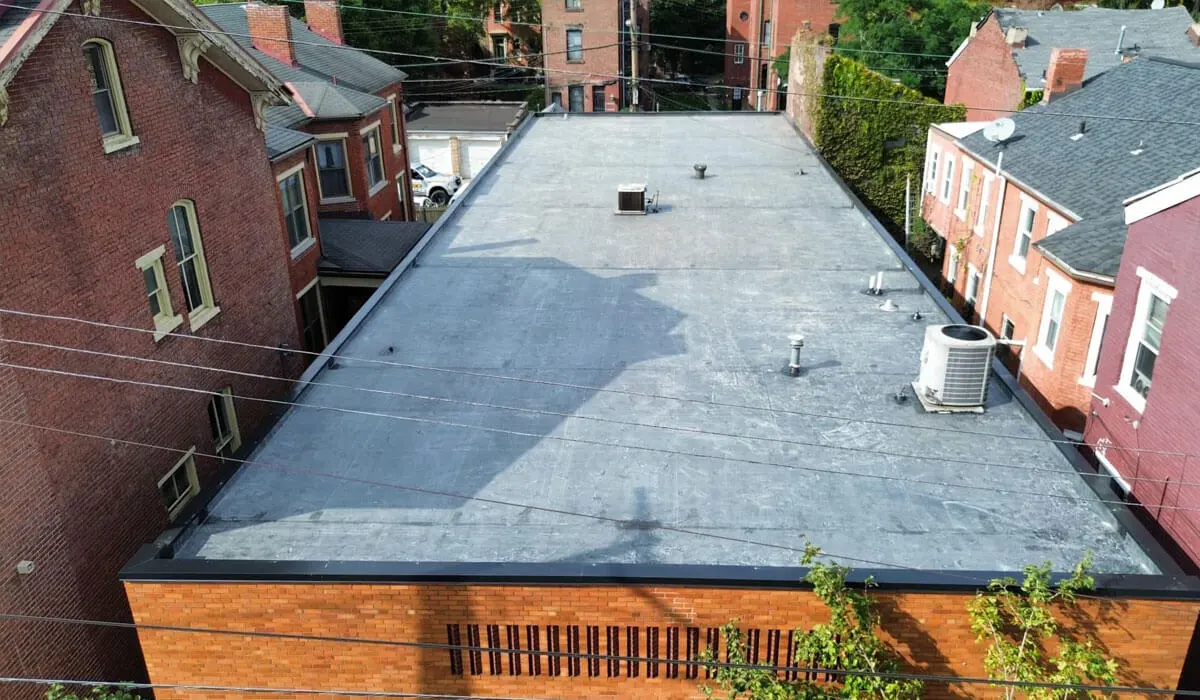
Standing water is the number one enemy of any flat or low slope roof. When drains, gutters, and scuppers clog with leaves and grit, water has nowhere to go, so it sits and it soaks. Ponding adds weight, breaks down the membrane, and finds every weak seam it can reach. Clear your drainage points on a regular schedule, and make sure the roof still holds its proper slope. A little planning for water run off today saves you from the slow rot that quietly ends most roofs early. This is the cheapest part of commercial roof maintenance, and it is the part people skip the most.
What Is the 25% Rule for Roofing?
This question comes up constantly, so let me explain it plainly. The 25 percent rule is a building code guideline. It says that if more than a quarter of a roof or roof section is repaired or replaced inside a twelve month window, the entire section often has to be brought up to current code. The idea is rooted in the International Building Code and the International Existing Building Code, and many states and local jurisdictions enforce some version of it. Here in Ohio it usually works as a practical benchmark rather than a strict statute, with code officials and insurers leaning on it to decide between a patch and a full replacement. The lesson for owners stays the same either way. Staying ahead of damage with steady roof repair keeps you under that threshold and out of a much larger project.
How to Extend the Life of a Commercial Roof With Coatings and Quick Fixes
Once the structure is sound, two habits do most of the heavy lifting.
Restoration Coatings Buy You Years
If your roof is aging but the membrane is still in solid shape, a liquid applied restoration coating can add real life to the system. A quality reflective coating lowers surface temperatures, eases thermal shock, and shields the materials underneath from constant UV. There is a bonus too. Those same reflective coatings can cut your cooling costs by bouncing the sun away from the building, so the roof actually starts paying you back.
Fix Small Problems Before They Spread
Never sit on a seam separation, a loose strip of flashing, or a small puncture. Each one is a doorway, and water only needs a crack to reach the deck. A minor fix on a Tuesday is cheap. The same spot ignored until spring becomes a soaked deck and a torn out ceiling. Prompt attention is the least expensive insurance you will ever buy.
How Can I Make My Roof Last Longer?
Beyond inspections and drainage, the answer often comes down to who walks on your roof. HVAC technicians, satellite installers, and other trades all mean well, but a dropped tool or a careless step can puncture a membrane in seconds. Set clear rules for rooftop access, and install designated walk pads along the routes people actually use. Keep unauthorized foot traffic off the surface entirely. Pair that discipline with the documentation habit, and a properly maintained commercial roofing system will reward you with extra years of quiet, leak free service.
Can a Roof Last Longer Than 25 Years?
Yes, and a well kept one often does. Material sets the baseline. TPO commonly runs fifteen to thirty years, EPDM rubber can reach twenty to thirty five years, and metal systems sometimes stretch past forty with proper care. The number on a spec sheet is only a starting point, though. A roof with working drains and yearly attention can outlast a neglected one by a decade or more. Installation quality, climate, and steady upkeep decide whether you land at the low end of that range or the high end.
Your Five Minute Maintenance Checklist
Here is the short version I hand to building owners who just want a place to start.
| Task | How Often | Why It Matters |
|---|---|---|
| Professional inspection | Twice a year | Catches small damage early |
| Clear drains and scuppers | Quarterly and after storms | Stops ponding and rot |
| Document inspections and repairs | Every visit | Protects your warranty |
| Seal seams, flashing, and punctures | As found | Keeps water off the deck |
| Limit and route rooftop traffic | Ongoing | Prevents accidental punctures |
If you want a deeper look at timing and when replacement makes sense, our guide on How Often Should a Commercial Roof Be Replaced? walks through the warning signs worth watching for.
How to Extend the Life of a Commercial Roof Comes Down to the Right Partner
I will be honest with you. The best plan in the world does nothing sitting in a drawer. What protected that property manager’s neighbor was not a fancy product. It was a standing relationship and a calendar we both respected. At Malick Brothers Exteriors, we treat your roof like it covers our own warehouse, because the small habits we have talked about here are the difference between a roof that ages quietly and one that fails on the coldest night of the year. Reach out before the next storm, not after it.