Is industrial and commercial the same thing?
Commercial and industrial roofs often look alike from the street, but they’re built for very different realities inside the building. Commercial spaces—offices, retail centers, restaurants, gyms—need roofs that balance efficiency, appearance, and serviceability. Industrial facilities—factories, distribution hubs, chemical plants, power operations—demand heavier structure, specialized assemblies, and higher tolerance for heat, loads, and frequent access. That’s the core divide: purpose and performance.
What is considered commercial roofing?
“Commercial” typically covers office buildings, retail strips, medical suites, schools, and similar spaces. These buildings commonly use flat or low-slope assemblies that make maintenance straightforward and help control energy costs. You’ll see systems like TPO, EPDM, PVC, and modified bitumen—durable, cost-effective choices that play nicely with skylights, solar, and rooftop HVAC. If you’re weighing options locally, explore Commercial roofing best practices to align materials with budgets, timelines, and building goals.
What is the difference between industrial and commercial roofing?
Industrial projects scale up the stakes. Roofs over manufacturing lines, racks, cranes, and chemical processes must manage heavier static and dynamic loads, temperature swings, and potential exposure to corrosives. These assemblies often incorporate multi-layer membranes, robust metal systems, and engineered details for ventilation, make-up air, and process exhaust. By contrast, commercial projects focus more on energy performance, occupant comfort, and a clean, professional appearance—while still protecting critical assets below.
What is the difference between commercial and industrial roofing?
Let’s get specific. Commercial designs often prioritize reflectivity, insulation values, and service access for HVAC. Industrial designs prioritize structural capacity, chemical resistance, fire performance, and long service life under harsher conditions. As a result, industrial roofs are frequently installed in sections, coordinated around production schedules and safety plans. For commercial buildings, phased work is still common—but generally simpler to stage without disrupting day-to-day operations.
At-a-Glance Comparison (Materials, Loads, Timelines)
| Factor | Commercial Roofing | Industrial Roofing |
|---|---|---|
| Building Types | Offices, retail, schools, hospitality | Factories, warehouses, energy and chemical facilities |
| Primary Focus | Efficiency, cost, appearance | Strength, safety, environmental resistance |
| Common Materials | TPO, EPDM, PVC, modified bitumen | Reinforced membranes, BUR, metal, multi-layer systems |
| Loads & Access | Standard HVAC loads; periodic access | Heavy equipment loads; frequent access and staging |
| Installation | Streamlined, shorter durations | Staged sections, longer durations, more safety coordination |
| Maintenance | Routine inspections and light repairs | Structural checks, corrosion monitoring, chemical resistance checks |
When you’re mapping the right path for Commercial roofing systems, keep life-cycle goals front and center. In industrial settings, the conversation usually starts with risk tolerance, redundancy, and compliance—and then moves to energy and appearance.
What are the three types of roofing?
If you group by system families used on low-slope buildings, three broad categories cover most needs:
Single-Ply Membranes
Think TPO, EPDM, and PVC. These offer proven performance, excellent energy profiles (especially white TPO and PVC), and ease of repair. They’re a mainstay for Commercial roofing because they balance cost and longevity.
Built-Up and Modified Bitumen
Multi-ply bitumen with reinforcing mats (BUR) and polymer-modified sheets deliver robust waterproofing and puncture resistance. Good fits for roofs with higher foot traffic or when owners want extra redundancy.
Metal Systems
From structural standing-seam to engineered panels, metal shines in demanding environments. It tolerates heat, sheds water and snow efficiently, and integrates well with industrial ventilation—key advantages for Industrial roofing use cases that need durability first.
Materials and performance in the real world
Material selection should match building use, not just budget. For office or retail, reflective single-ply membranes help control utility costs and simplify leak tracing. On industrial facilities, resistance to chemicals, fats/oils, solvents, and thermal cycling becomes pivotal. That’s why heavier membranes, protective surfacing, and corrosion-resistant metals often lead the spec. When in doubt, benchmark assemblies against your known exposures—and verify warranty terms for those risks.
Size, loads, and layout: why it matters
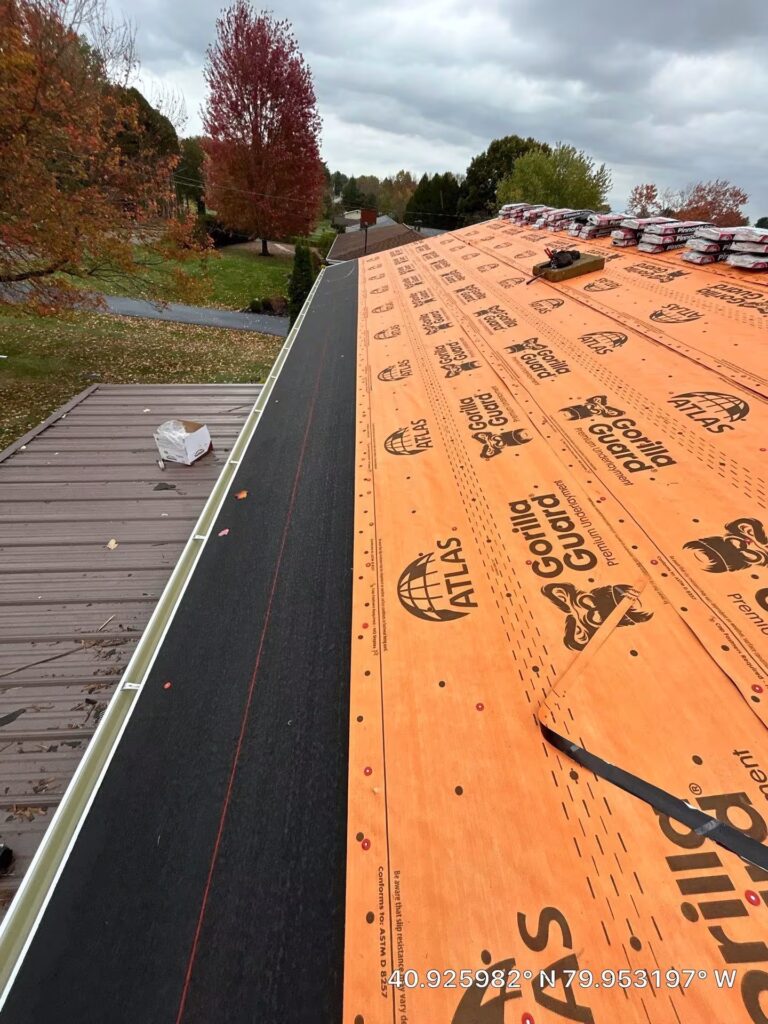
Industrial roofs are often enormous—think multiple football fields—and dotted with penetrations for stacks, conveyors, and ductwork. Spans can be wider, and point loads heavier. This drives structural steel decisions before you ever pick a membrane. Commercial buildings typically have smaller footprints and fewer penetrations, which simplifies drainage, insulation layout, and flashing work. Either way, design details around curbs, seams, and transitions decide day-two performance.
Installation timelines and operating windows
Commercial timelines are usually shorter. Crews can stage areas, protect customer entrances, and complete sections quickly. Industrial timelines stretch, not just because the roofs are bigger, but because safety, hot-work permits, confined-space protocols, and process shutdowns must be choreographed. Expect sectional installs, night or weekend work, and robust temporary weatherproofing. A thoughtful plan preserves production and reduces rework—time is money.
Maintenance and compliance considerations
All roofs need inspections, but the checklists diverge. Commercial owners focus on membrane condition, seams, drains, and flashing. Industrial teams add corrosion monitoring, chemical compatibility, rooftop traffic control, and equipment vibration impacts. Documentation is essential, especially for regulated environments. For general best practices on low-slope systems, consult the NRCA’s technical resources for guidance on details, maintenance, and design fundamentals.
Choosing systems with life-cycle in mind
A good project brief looks beyond the bid number. Consider energy targets, interior humidity, rooftop traffic, future solar, and expected access frequency. For commercial properties, start with reflectivity, insulation thickness, and warranty terms tied to your climate. For industrial, prioritize redundancy (multi-ply or coverboards), chemical resistance, and heavier-duty flashing details. If you’re weighing options, see How to Choose the Right Commercial Roofing System for Your Business for a practical decision framework.
Bringing it together: partner selection and next steps
Your roofing partner should meet you where your operations live. For retail or offices, you want clean staging, minimal disruption, and predictable service. For plants and warehouses, you need a contractor fluent in safety plans, shutdown coordination, and high-exposure detailing. Clear scopes, mock-ups, and a maintenance plan set you up for long-term value. When in doubt, align specs to the harshest condition your roof will reasonably face—that’s what separates a problem roof from a reliable asset.