Table of Contents
A few winters back, I got a call close to midnight from a warehouse manager who was clearly rattled. Rain was sheeting down, and water had started running along an interior support column and onto a row of packaged inventory. He needed it stopped right then, not next week. So we grabbed headlamps, climbed up in the middle of the storm, dried a section of split seam as best we could, and pressed a rubberized patch over it. It held through the night. The next morning we came back to do the work that actually mattered.
That call sums up the whole tension behind commercial roof leaks. There is the fix you make at eleven at night to protect what sits under the roof, and there is the repair that keeps the leak from ever coming back. Both have a place. The trouble starts when people confuse one for the other. Knowing which one you are buying, and why, is what keeps a small problem from quietly draining your maintenance budget for years. Let me walk you through how our crew thinks about it.
Quick Fixes for Commercial Roof Leaks: Buying Time, Not Solving It
A quick fix is exactly what it sounds like. It is emergency containment, meant to keep water out of your building while you arrange a real repair. We use them during active storms, in freezing weather when nothing will cure properly, or when a tenant simply cannot wait until morning. They are cheap, fast, and genuinely useful in the right moment. What they are not is permanent.
The honest truth is that most patches last a few weeks to a few months. UV exposure, heat, and the constant expand-and-contract cycle of a flat roof break down tape and sealant fast. Lean on them too long and you end up paying again and again for the same leak.
The Tools We Reach For in an Emergency
Our emergency kit is simple. We carry waterproof roofing tape, heavy-duty roofing cement, and rubberized flashing patches for cracked seams or punctures. The one step nobody should skip is drying the surface first. Mastic and sealant will not bond to a wet membrane, so a rushed patch on a soaked roof tends to peel within days. That is the difference between a patch that buys you a week and one that fails before lunch.
Long-Term Solutions That Actually Hold
A lasting repair starts by asking why the water got in at all. Most of the time it traces back to failing seams, compromised flashing, or water that has been sitting where it should have drained. For isolated trouble spots, real roof repair means cutting out the deteriorated membrane, installing fresh flashing, and using fleece-backed silicone on problem metal seams. Done right, that work carries a warranty instead of a prayer.
Liquid-Applied Membranes and Coatings
When the damage is spread out rather than pinpointed, we often recommend a liquid-applied membrane. Fabric-reinforced or seamless silicone coatings get rolled over the entire roof, sealing it as one continuous surface. They can add decades of life for a fraction of what a full tear-off costs. For many of our commercial roofing clients, this is the sweet spot between a temporary patch and a brand-new roof.
Restoration or Full Replacement
Restoration coatings usually run twenty to forty percent of a full tear-off, which makes them attractive when the deck underneath is still sound. But a coating cannot save a roof that is past saving. If the deck is rotted or the system has aged out of its structural life, replacement is the only responsible call. If you are weighing those two paths, our guide on Signs Your Commercial Roof Needs Repair vs Replacement lays out the warning signs in plain terms.
Commercial Roof Leaks: Quick Fixes vs. Long-Term Solutions at a Glance
Here is the quick comparison I give building owners when they ask me to cut to the chase.
| Feature | Quick Fix (Patch) | Long-Term Solution |
|---|---|---|
| Lifespan | A few weeks to 1–3 months | 10 to 20+ years |
| Warranty | None | Up to 10–20 years (labor and material) |
| Best for | Active drips during storms, temporary containment | Failing seams, aging membranes, recurring leaks |
What Is the Most Common Cause of Roof Leaks?
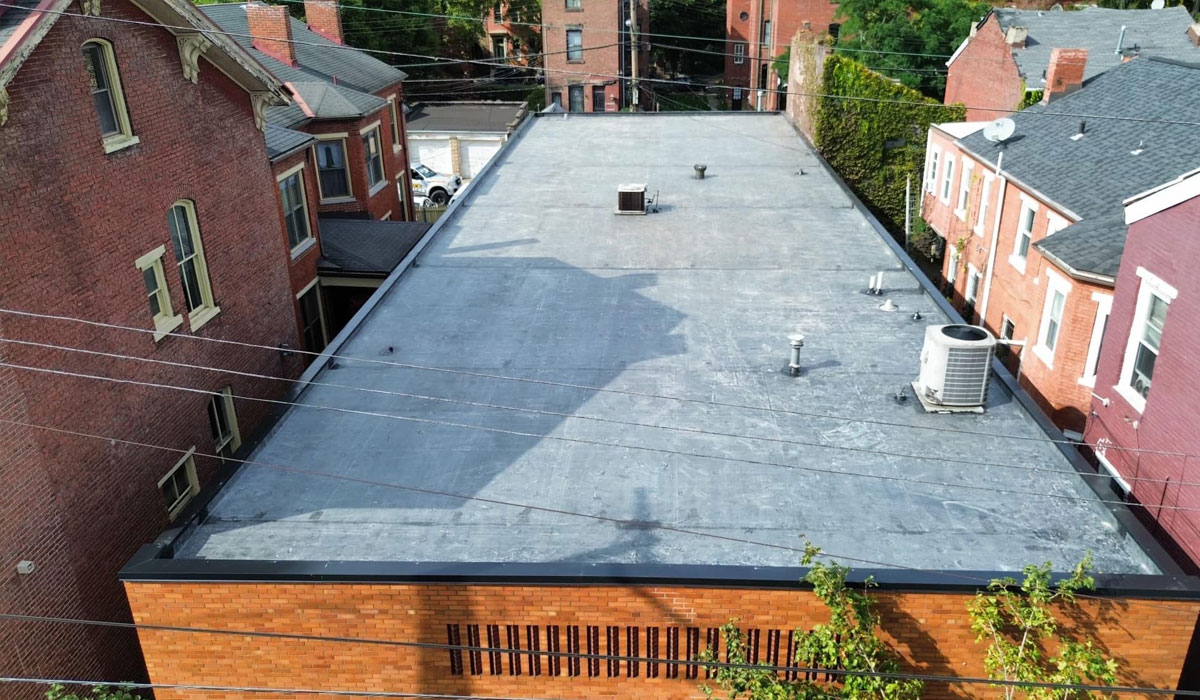
If I had to name one culprit, it is membrane damage. Heavy foot traffic, rooftop equipment, and storm debris puncture or wear thin the surface that is supposed to keep water out. Right behind it sits ponding water from poor drainage, where clogged scuppers and shallow low spots let water sit for days and slowly work through. Flashing failure rounds out the top three, since those metal joints around vents, curbs, and walls take a beating from weather and the natural movement of the building. Age ties it all together, because every roofing material gets brittle eventually. None of these announce themselves until water is already inside.
How to Find a Commercial Roof Leak
Here is the part that surprises people. The wet spot on your ceiling is almost never directly under the breach. Water travels along the deck, follows seams and pipes, and shows up several feet from where it entered. So we start at the interior stain, then work outward across the roof above it, checking seams, penetrations, flashing, and the low spots where water pools. Right after a major storm is the smartest time to look. For hidden moisture trapped under the membrane, we lean on infrared scans and moisture meters instead of guesswork, because chasing the wrong spot wastes everyone’s time and money.
Does Commercial Insurance Cover Roof Leaks?
Sometimes, and the difference comes down to one word: sudden. Insurers generally cover damage from a specific, accidental event like a windstorm, hail, or a fallen limb. What they typically exclude is gradual wear, neglect, and poor maintenance, and most commercial policies spell that out in a gradual-damage clause. In plain terms, a leak that has been dripping for months usually lands on you, while a roof torn open by Tuesday’s storm may well be covered. Keeping inspection records and dated photos genuinely strengthens a claim. For a neutral breakdown of how roof age and condition affect coverage, the Insurance Information Institute is a solid place to read up.
Why We Treat Commercial Roof Leaks as a Business Problem
A leak is rarely just a roof issue. It interrupts tenants, threatens inventory, breeds mold, and can quietly rot structure long before anyone notices the stain. That is why I push owners to act on commercial roof leaks early instead of stacking patch on patch. A coating or a proper repair almost always costs less over five years than the slow bleed of repeated emergency calls. In the end, protecting the building is really about protecting the business that runs inside it.
How We Handle Your Roof at Malick Brothers
When you call us, we do not lead with the most expensive option on the menu. We assess the severity, stop the active leak if one is running, and then lay out your real choices with honest numbers attached. Sometimes that is a targeted repair, sometimes a full coating, and occasionally it is a replacement. Whatever your roof actually needs, our team will tell you straight and stand behind the work we do. That is how we have always operated, and it is why building owners keep calling us back.