Table of Contents
I have walked more flat commercial roofs than I can count, and the same scene plays out almost every time. An owner hands me a thick warranty folder, drops it on the hood of my truck, and asks what it actually means. They paid for the roof. They paid for the paperwork too. Yet the coverage reads like a foreign language drafted by attorneys who bill by the comma.
So let me translate it the way I would for a neighbor. At Malick Brothers Exteriors, we believe a building owner should understand a commercial roof warranty before a leak forces the lesson. The good news is that the logic is simpler than the document. Once you see how the pieces fit, you stop guessing and start managing your roof like the asset it is.
What Do Roof Warranties Typically Cover?
Most roof warranties protect three things: the materials, the installation, and the leaks that show up when either one fails early. A material warranty answers for premature cracking, splitting, or membrane breakdown. A workmanship warranty answers for sloppy seams, bad flashing, and the small installation mistakes that invite water inside. Put together, they promise that a properly built roof will perform for the term you paid for.
That promise has edges, though. Warranties cover the roof system itself, not everything the roof happens to shelter. I tell clients to think of it as a guarantee on the lid, not the contents of the box. Knowing that distinction early saves a lot of frustration later.
The Two Sides of Every Commercial Roof Warranty
Every commercial roof warranty really comes in two parts, and those parts come from two different companies. Understanding who stands behind each piece tells you exactly who to call when something goes wrong. This is the detail most owners miss until they need it most.
Contractor (Workmanship) Warranty
The contractor warranty comes from the crew that installed the roof. It covers problems caused by the installation itself, like a poorly sealed seam or flashing that was never set right. These usually run one to five years. If your installer closes their doors, that coverage often disappears with them, which is one more reason to hire a company built to stick around.
Manufacturer Material and System Warranty
The manufacturer warranty comes from the company that made the membrane, whether that is TPO, EPDM, or metal. It covers premature material failure and can stretch anywhere from ten to thirty years. The strongest version is the No-Dollar-Limit, or NDL, warranty. It pays the full cost of both materials and labor to fix a covered defect, so inflation never lands on your desk as a surprise bill.
What Does a Commercial Warranty Cover?
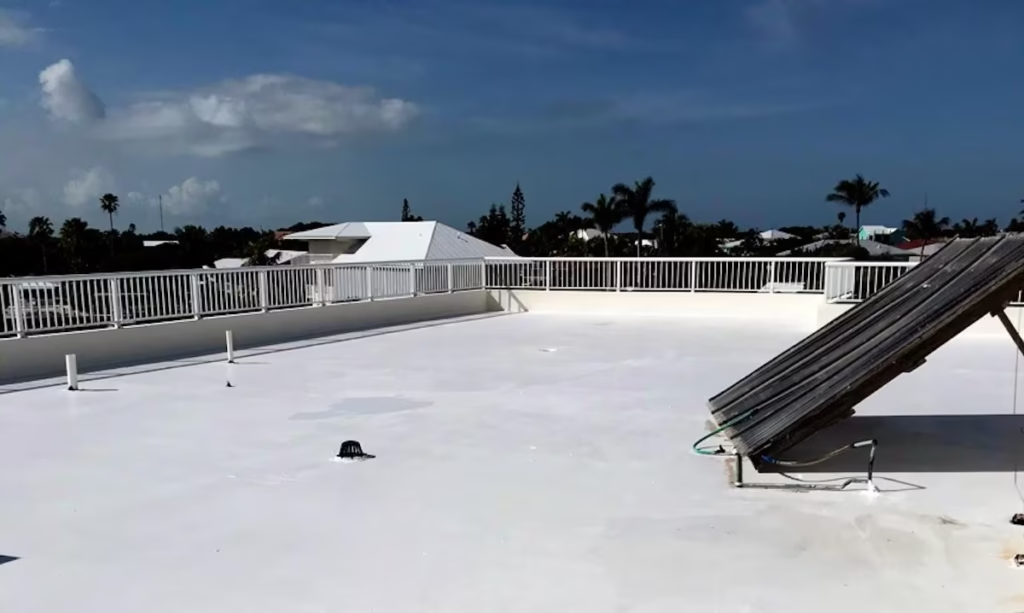
Here is the plain-language list I walk owners through on site. A commercial warranty covers material defects, such as a membrane that degrades faster than it should. It covers installation failures in the more complete coverage tiers, including leaks traced back to workmanship. And under a No-Dollar-Limit policy, it covers both the replacement materials and the labor with no spending cap during the term.
That last point carries real weight on a large building. If a covered defect surfaces in year nineteen of a twenty-year term, an NDL warranty still pays the full repair. A standard system warranty might cap the payout and leave you covering the gap. The difference can run into tens of thousands of dollars, which is exactly why I push owners to read the coverage tier, not just the headline number.
Where Your Commercial Roof Warranty Quietly Stops
Now the part people skip. Every commercial roof warranty has an exclusions section, and that section is where most denied claims live. Read it before you sign, or have someone read it for you. The table below covers what almost never makes the cut.
| What Gets Excluded | Common Examples |
|---|---|
| Acts of God and weather | Hail, high winds, hurricanes, lightning strikes |
| Interior damage | Equipment, inventory, and property ruined by a leak |
| Improper maintenance | Ponding water, clogged drains, debris buildup |
| Rooftop traffic and alterations | Damage from HVAC techs or unapproved rooftop units |
I am not sharing this to scare anyone. I share it because nearly every denied claim I have seen traces straight back to one of those lines. When you know the boundaries, you can manage around them with confidence.
The Day a Coffee Roaster Taught Me About Exclusions
A few years back I got a call from the owner of a small coffee roasting operation north of town. Water was dripping onto a very expensive roaster, and he was certain his warranty would cover the repair and the ruined equipment. We climbed up and found the culprit fast. A vendor had installed a new exhaust fan months earlier, cut through the membrane, and sealed it with a tube of hardware-store caulk.
The leak was repairable under the roof system terms, but the damaged roaster was not, and neither was the unauthorized penetration. He learned an expensive lesson that day. Now his rule is dead simple: nobody touches the roof without calling us first. That single habit has protected his coverage ever since.
What Not to Say to a Roof Insurance Adjuster?
When storm damage sends you to an insurance claim instead of a warranty claim, words matter. Do not guess at the cause, and do not call the roof “old” or say it “needed work anyway,” because that hands the adjuster a reason to shrink your payout. Avoid admitting you skipped maintenance or delayed a repair you knew about. Stick to what you can document, and let the facts carry the conversation.
I also tell owners never to treat the first number as final without a professional review. Bring in someone who speaks the technical language and can point out damage an adjuster might miss. You are not being difficult. You are protecting an asset worth far more than the deductible.
How I Help Owners Keep a Commercial Roof Warranty Valid
Most manufacturer warranties require proof that you maintained the roof, and that single requirement voids more coverage than any storm ever has. Keeping a commercial roof warranty alive comes down to a few habits I build into every maintenance relationship. Clear the drains and gutters so water never ponds. Require documentation and authorized personnel any time HVAC or satellite work happens up top. Keep clean records of every inspection and minor repair.
The national experts agree on the rhythm here. The National Roofing Contractors Association recommends inspecting commercial roofs at least twice a year, in spring and fall. That cadence catches small problems while they are still cheap, and it builds the paper trail a manufacturer wants to see. If you ever face a roof replacement, those same records help you negotiate the next warranty from a position of strength.
A Simple Plan for Protecting Your Investment
You do not need to memorize the fine print to stay protected. You need a partner who reads it for a living and keeps your roof on a schedule. Our commercial roofing team treats your warranty as a working document, not a folder gathering dust in a drawer. We document the work, flag risks early, and make sure your coverage holds up when it counts.
If you want to go deeper before your next project, take a look at our guide on What Warranties Should a Commercial Roof Have. Then call us. I would rather walk your roof with you today than meet you during a leak tomorrow, and at Malick Brothers Exteriors, that is the whole point.