Hip roof vs gable roof is one of the first questions we hear from homeowners planning an addition, comparing houses, or trying to understand why an insurance agent asked about roof shape. The short answer: a gable roof has two sloping planes that meet at a ridge and form a triangle at each end. A hip roof slopes on all four sides with no vertical end walls. Each shape handles wind, snow, attic space, cost and replacement work differently, and in Pittsburgh those differences matter in specific ways.
We are Malick Brothers Exteriors, a family owned roofing company in West View. We replace both roof shapes across the North Hills and the city, so this guide covers what we actually see on Pittsburgh houses. If your current roof is nearing the end of its life, you can read how we handle roof replacement in Pittsburgh for either shape.
Hip Roof vs Gable Roof: The Basic Difference
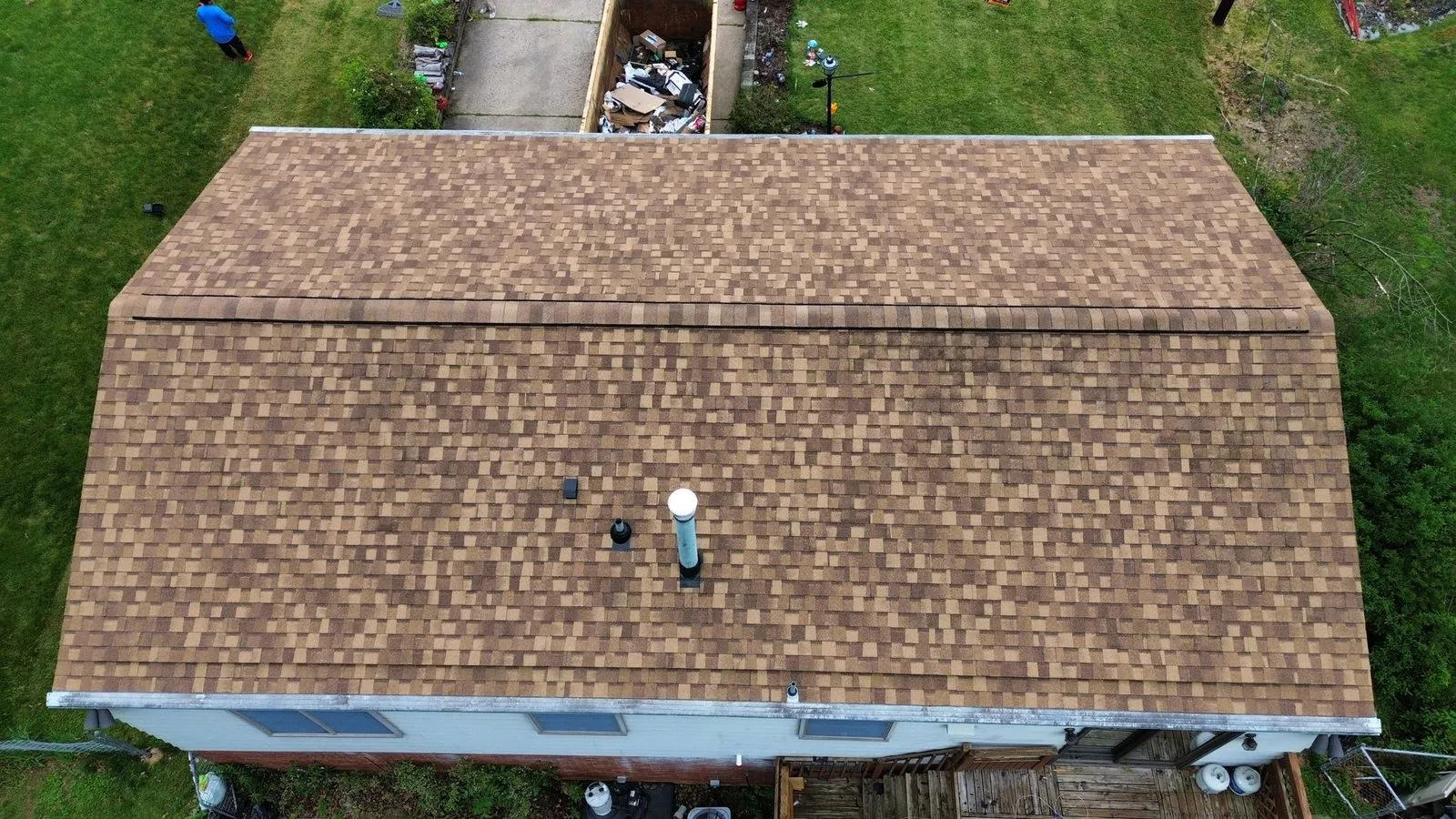
A gable roof is the simplest pitched roof. Two rectangular planes rise from opposite walls and meet at a ridge. The end walls continue up to the ridge, and that triangular wall section is the gable. With only two planes, framing is straightforward.
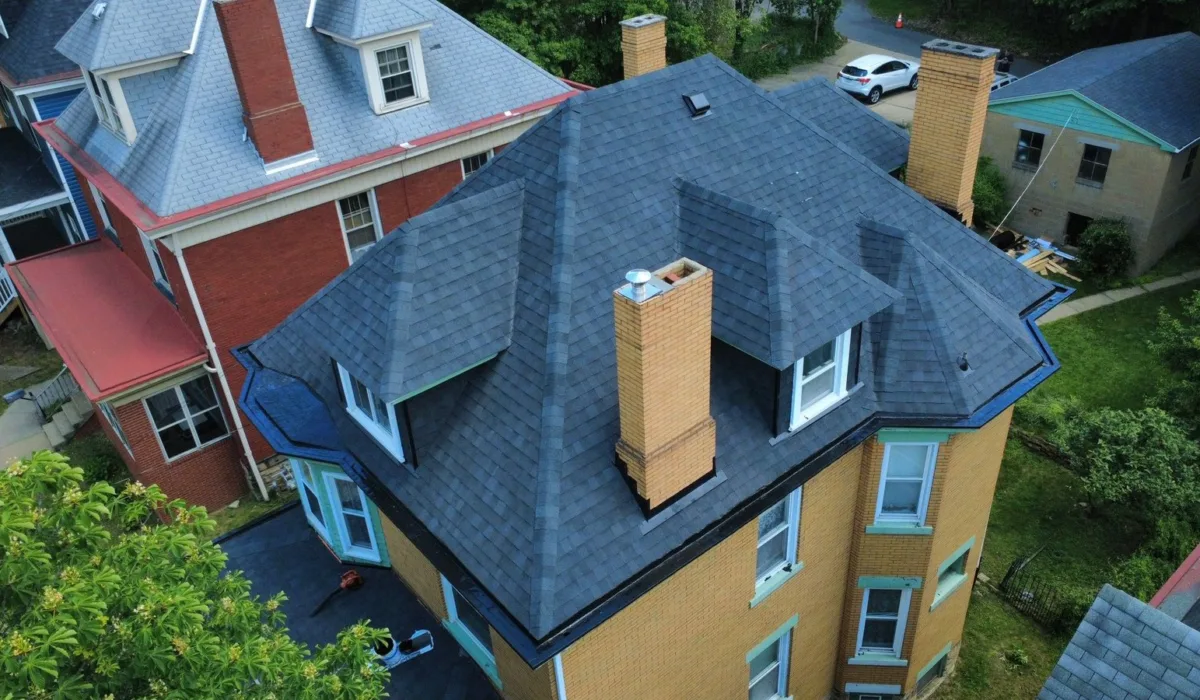
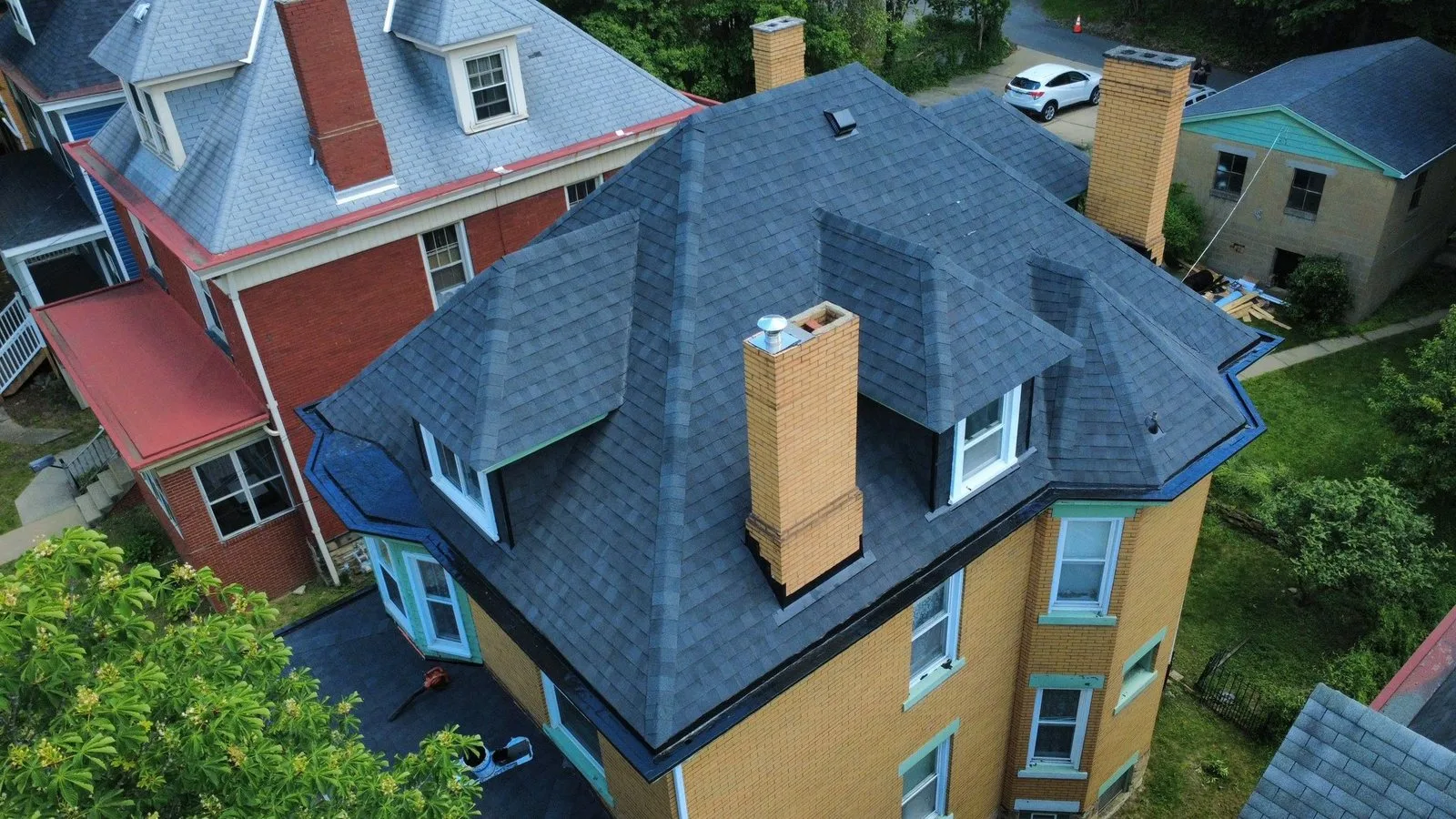
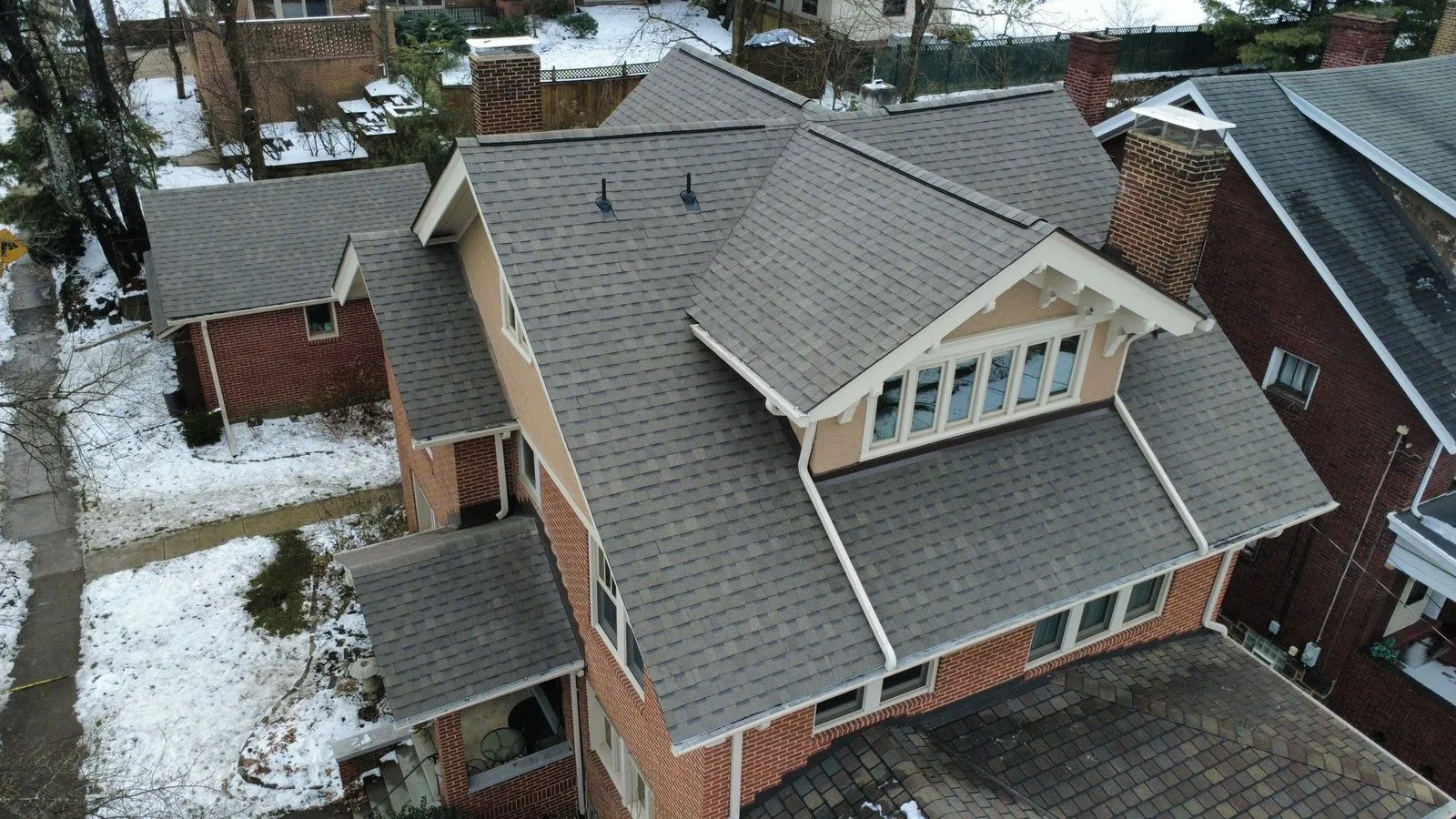
A hip roof has four sloping planes. The two long sides meet at a shorter ridge, and the two ends slope inward to meet them. The diagonal lines where the planes meet are the hips. On a square house the four planes can meet at a single point, which is called a pyramid hip. Many Pittsburgh houses combine the two shapes: a hip main roof with a gable dormer, or a gable main roof with a hipped porch.
Which Roof Handles Wind Better in Pittsburgh?
Hip roofs resist wind better than gable roofs. The sloped ends let wind pass over the house, and the four planes brace each other at the hips. On a gable roof the triangular end wall takes wind head on, and the rake edge above it is where uplift begins. The Building America Solution Center at Pacific Northwest National Laboratory notes that hip roofs catch less wind and rain than gable roofs for this reason.
Pittsburgh does not see hurricanes, so the hip advantage here is smaller than national articles suggest. What we do see are straight line winds from summer thunderstorms and strong gusts in late winter. On gable roofs those storms lift shingles along the rake edge and loosen gable end trim. On hip roofs the damage is usually at the hip and ridge caps, which are easy to repair.
Either shape holds up well here when the roof is installed correctly. Starter shingles along every edge, sealed hip and ridge caps, and the manufacturer nailing pattern matter far more than the shape itself.
Gable vs Hip Roof Insurance: What Pennsylvania Homeowners Should Know
Roof shape insurance discounts are a coastal and hurricane zone practice. In Florida and along the Gulf, insurers run wind mitigation inspections and credit hip roofs because they fail less often in hurricanes. Pennsylvania does not have a state wind mitigation program, and in our experience local carriers rarely price a policy on hip versus gable alone.
What Pittsburgh insurers do ask about is roof age, condition and material. An old roof with lifted shingles or soft decking is far more likely to raise a premium than the shape of the roof. If you are shopping for coverage, a recent roof inspection report and the installation date of your current roof will do more for you than any argument about hips and gables. Ask your own agent what their underwriting guidelines say, because every carrier is different.
Which Roof Is Better for Pittsburgh Snow?
Snow performance depends on pitch more than shape. A steep gable roof sheds snow quickly on long, uninterrupted planes. Most hip roofs sit at a lower pitch, and the hip lines slow the slide, so snow stays longer.
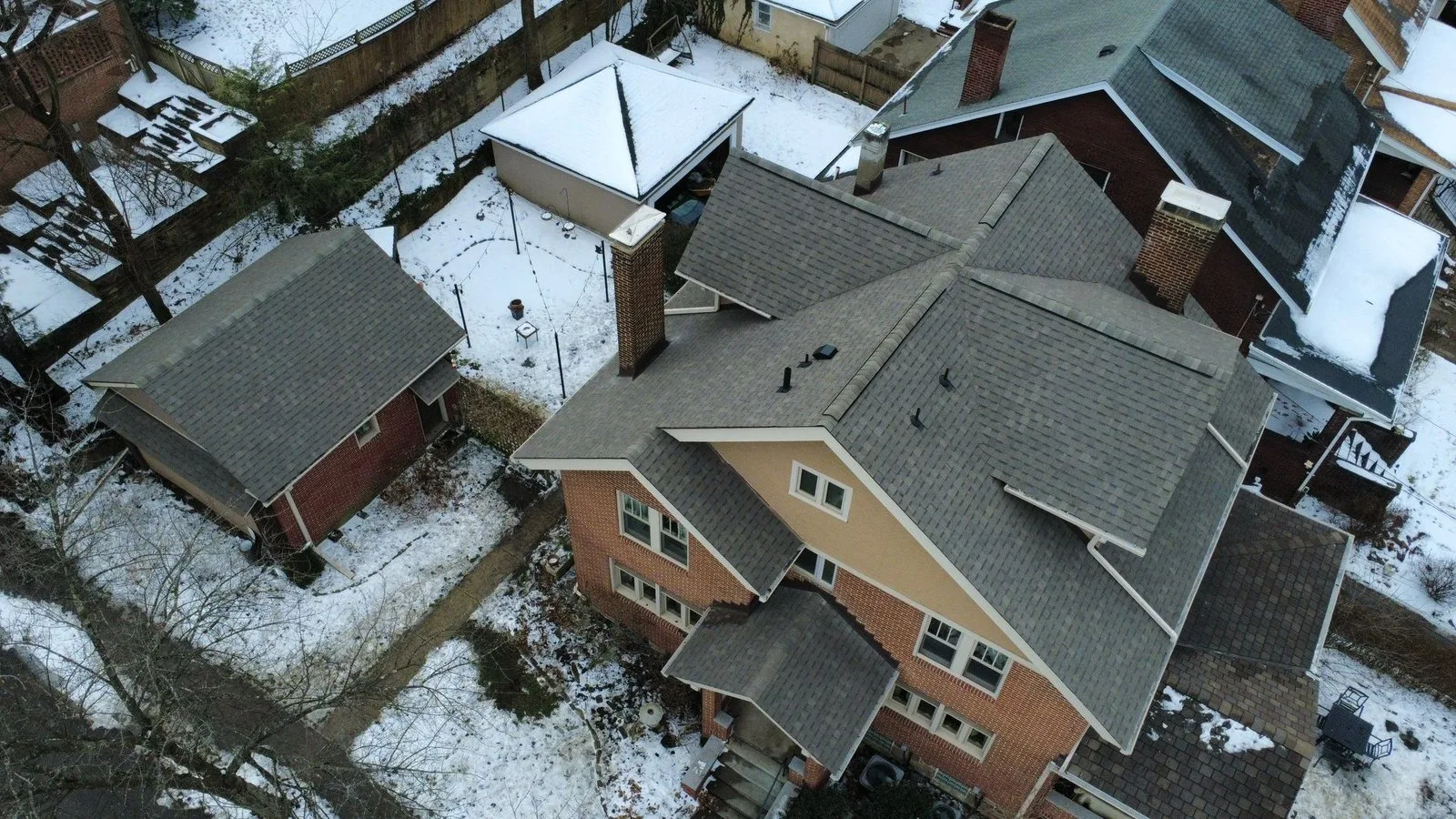
Pittsburgh winters bring repeated freeze and thaw cycles rather than one deep snowpack. That pattern produces ice dams at the eaves on both roof shapes. Hip roofs have more eave length relative to their area, so they have more edge where ice can form. Gable roofs concentrate meltwater into two long eaves and into any valleys where an addition meets the main roof. On every replacement we install ice and water barrier along the eaves, in the valleys and around penetrations, which is the real defense against winter leaks regardless of shape.
Attic ventilation also decides how a roof handles snow. A warm attic melts snow from below and the water refreezes at the cold eave. Gable roofs can use gable, ridge and soffit vents. Hip roofs rely on ridge and soffit vents, and the short ridge sometimes does not give enough exhaust, so we may add low profile vents on the rear planes. Our soffit and fascia work often includes opening intake vents that were sided over years ago.
Attic Space, Headroom and Future Use
If you want a usable attic, the gable roof wins without a contest. The vertical end walls give full headroom from one end of the house to the other, and a window in each gable brings in light and air. Many Pittsburgh families have finished a gable attic into a bedroom or office.
A hip roof loses headroom on all four sides, with full height only near the center, and the hip rafters and braces cut through the attic. Dormers add headroom and light, which is why so many older Pittsburgh hip roofs carry them, but dormers add valleys and flashing that need attention at replacement time.
What Drives Cost on a Hip Roof vs Gable Roof
We do not publish prices because every roof is measured and quoted individually, and we provide a free written estimate for every job. What we can explain is why a hip roof usually costs more to replace than a gable roof of the same footprint.
- More roof area. A hip roof covers the same floor plan with more roof surface, because the end walls become sloped planes that need shingles, underlayment and ice barrier.
- Hip and ridge cap. Every hip line needs cap shingles and the labor to cut and lay them. A gable roof has one ridge and two straight rake edges.
- Waste from angled cuts. Hip planes are triangles and trapezoids, so more shingles are cut at an angle and more material ends up in the dumpster.
- Dormers and valleys. Every dormer adds flashing, step flashing, valley metal and labor. This is true for both shapes, but hip roofs in our area carry dormers more often.
- Pitch and access. Steep gable roofs cost more in labor and safety setup than low hip roofs.
- Decking and gutters. Rotten plywood or plank decking, new drip edge, and seamless gutters add to either job. Hip roofs have gutter on all four sides, so gutter replacement costs more on a hip.
On a gable roof, roofing savings are partly offset by siding and trim on the two gable end walls, a cost a hip roof does not carry.
Which Pittsburgh Houses Have Which Roof
You can usually guess the roof from the house style.
- American Foursquare (hip). The square brick or frame houses in Bellevue, Avalon, Dormont, Brookline and Squirrel Hill almost always have a low pyramid hip roof with a front dormer and a hipped front porch.
- Pittsburgh brick bungalows and Craftsman homes (both). Low gable roofs with wide overhangs are common, and many have a hipped porch or a hipped main roof with a gable dormer.
- Cape Cod and postwar ranches (gable). The 1940s to 1960s houses in McCandless, Ross, Shaler, West View and Allison Park are mostly simple gable roofs, often with a lower pitch on the ranches.
- Newer homes in Cranberry Township, Mars, Wexford and Franklin Park (combination). Builders since the 1990s favor hip main sections with multiple front facing gables. These roofs have the most valleys and flashing of any style.
Hip Roof vs Gable Roof Comparison Table
| Factor | Gable Roof | Hip Roof |
|---|---|---|
| Wind resistance | Good when edges are properly installed; gable ends take more pressure | Better; sloped ends and self bracing hips |
| Snow shedding | Faster on steep pitches | Slower; snow sits longer on low hips |
| Attic space | Full headroom end to end | Reduced on all sides; dormers help |
| Ventilation options | Gable, ridge and soffit vents | Ridge and soffit vents; short ridge may need added vents |
| Replacement cost drivers | Less roof area, one ridge; extra siding on gable walls | More roof area, hip caps, angled waste, more gutter |
| Insurance in Pennsylvania | Age and condition matter more than shape | Age and condition matter more than shape |
| Common Pittsburgh styles | Cape Cod, ranch, split level, Craftsman | Foursquare, bungalow, newer combination roofs |
What Roof Shape Means at Replacement Time
You rarely change the shape of a roof when you replace it. Converting one to the other means new framing, new end walls, a permit and an architect. What the shape changes is how we plan the job.
On a gable roof we watch the rake edges, the ridge vent, and any valleys where additions or dormers meet the main roof. On a hip roof we focus on the hip caps, the extra eave length, and ventilation. On both, the real decisions are the shingle line, underlayment, ice barrier coverage, flashing, and whether the decking is sound. As an AtlasPro+ Platinum Select contractor we install complete Atlas systems that qualify for the Atlas 50 year warranty, and we install standing seam metal on either shape. Flat porch roofs and low slope additions attached to either shape get MuleHide .060 EPDM rubber or a two ply low slope system in the same job.
Gable or Hip Roof: Which Should You Choose?
If you are building new or adding on, choose a hip roof for the strongest wind performance, a lower profile, and a finished look from every side. Choose a gable roof for attic space, the best snow shedding, simpler ventilation, and a lower roofing cost. For an addition, matching the existing shape almost always looks best and is easiest to flash.
If you already own the house, the shape is settled. Installation quality matters more.
Frequently Asked Questions
What are the disadvantages of a hip roof?
A hip roof has less attic headroom, costs more to roof because of extra surface area and hip caps, sheds snow more slowly on a low pitch, and has a short ridge that can limit exhaust ventilation. Dormers help with light and space but add valleys and flashing that need attention during a replacement.
Are hip roofs more expensive than gable roofs?
Usually yes for the roofing itself. A hip roof covers more surface for the same floor plan, needs cap shingles on every hip, creates more angled waste, and has gutter on all four sides. A gable roof offsets some of its savings with siding and trim on the two gable end walls. We quote every roof individually with a free written estimate.
What is the strongest roof style for wind?
Among common pitched roofs, the hip roof is the strongest against wind because all four sides slope and brace each other. A pyramid hip on a square house is the most stable version. In Pittsburgh, where hurricane force winds are not a concern, correct installation of starter shingles, caps and nailing matters more than the shape.
Does a hip roof lower insurance in Pennsylvania?
Not in any consistent way that we have seen. Roof shape credits are a coastal practice tied to hurricane wind mitigation programs. Pennsylvania carriers focus on the age, condition and material of the roof. A recent inspection report and a new roof installation date are what help with premiums here. Confirm with your own agent.
Can a house have both a hip and a gable roof?
Yes, and in Pittsburgh most do. A Foursquare has a hip main roof with a dormer, and a Craftsman bungalow often pairs a gable roof with a hipped porch. Every place the two shapes meet forms a valley that needs metal flashing and ice barrier.
Get a Free Estimate on Your Hip or Gable Roof
Whatever shape sits over your house, we will inspect it, explain what it needs, and give you a free written estimate with no pressure. Malick Brothers Exteriors is BBB A+ accredited and registered with the Pennsylvania Attorney General as home improvement contractor PA174918, and we work all winter. Contact us to schedule a visit anywhere in Pittsburgh and the North Hills, or see our financing options if you are planning a replacement this year.