Malick Brothers Exteriors delivers top-quality roofing and exterior solutions to protect and enhance your home. Serving Pittsburgh and Southwest PA, we’re committed to craftsmanship and customer satisfaction.
A small roof problem rarely stays small in Pittsburgh. Water that gets past one lifted shingle or a cracked pipe boot can soak the decking and stain a ceiling before you notice. Malick Brothers Exteriors is a family owned roofing company, born and raised in West View, that repairs leaks, flashing, missing shingles and storm damage on homes across Pittsburgh and the North Hills. We find where the water is really getting in, fix it with matching materials and tell you honestly if the roof needs more than a repair.
Free inspection and written repair estimate
Leak, flashing and storm damage repair
Labor warranty on our workmanship
Help with storm damage insurance claims
Hundreds of five star Google reviews. BBB A+ rated. Licensed and insured. Pennsylvania Home Improvement Contractor Registration Number: PA174918.
Call for an Estimate
(412) 616-0191
Get Your Free Roof Repair Estimate
Tell us what you're seeing and we'll schedule a free inspection.
Certified, Licensed and Trusted
WHAT WE REPAIR
Common Roof Repairs We Handle Every Week
Most roof leaks start at the same few weak points. Flashing pulls away from a chimney or wall, a rubber pipe boot cracks, or wind lifts a row of shingles and the next storm drives water underneath. Our repair division handles shingle, metal, slate, tile and flat roofs, plus the box gutters built into many older Pittsburgh homes.
If one spot keeps failing, we find out why. A valley that leaks every spring may need new metal and ice and water shield, not another tube of sealant.
Roof leaks and water stains on ceilings
Chimney, wall, skylight and vent flashing
Missing, cracked or lifted shingles and ridge caps
Our weather finds every weak spot. Snow melts during the day, runs under a loose shingle and freezes again at night, pushing the gap a little wider each cycle. Ice builds at the eaves and backs water up under the first rows. Summer storms bring wind and hail, and mature trees drop limbs and clog gutters.
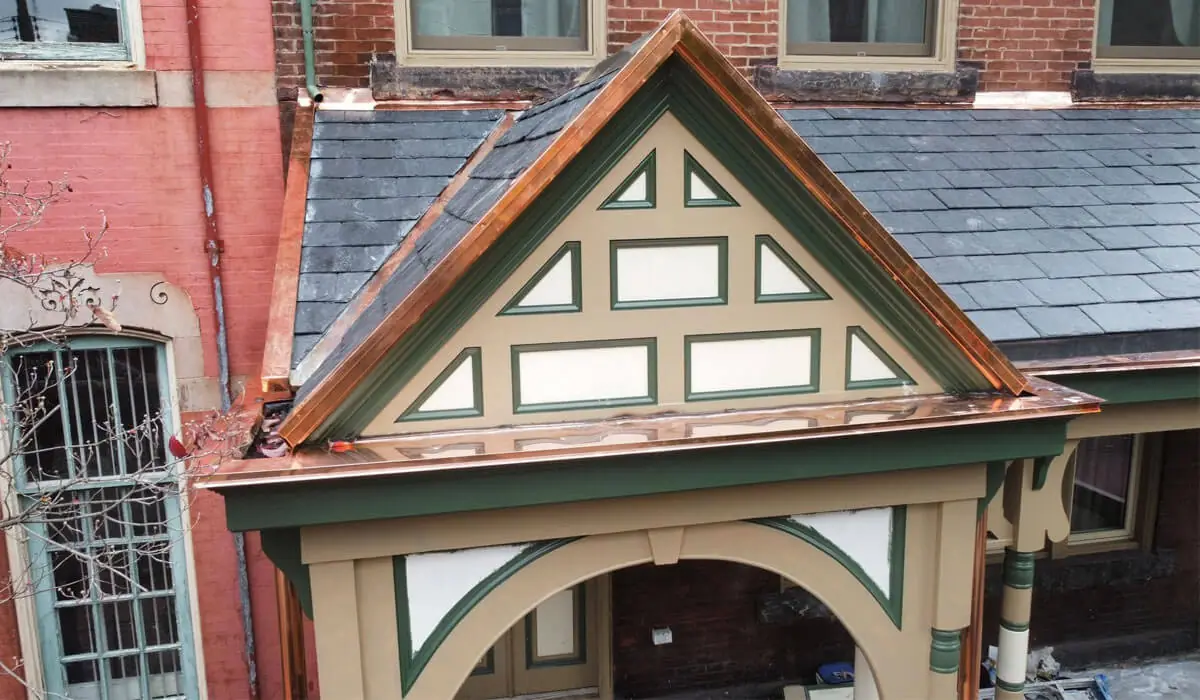
Older homes add to it. Brick chimneys, dormers, rowhouse party walls and porch roofs all have joints where two surfaces meet, and that's where flashing fails first. A proper repair seals those joints instead of covering them with tar. In Bellevue we sealed leaking box gutters with a silicone coating, and in Morningside we rebuilt a porch roof.
A repair is the right call when the damage is limited to one area and the rest of the roof is in good shape. That covers most flashing leaks, a few blown off shingles and isolated storm damage.
A repair stops making sense when leaks keep showing up in new places, shingles are curling and losing granules across the whole roof, or the decking is soft in several areas. We'll tell you which side of that line your roof is on and show you photos so you can see it yourself.
Call or send the form with what is happening and where.
Free inspection
We check the roof, flashing and attic to find the real source.
Written repair estimate
You get the fix, the price and photos of the problem in writing.
Repair with matching materials
Damaged shingles, flashing or boots are replaced, not just sealed.
Check the area around it
We look over nearby shingles and seals so nothing is missed.
Cleanup and review
Debris and nails are picked up and we walk you through the work.
ON THE JOB
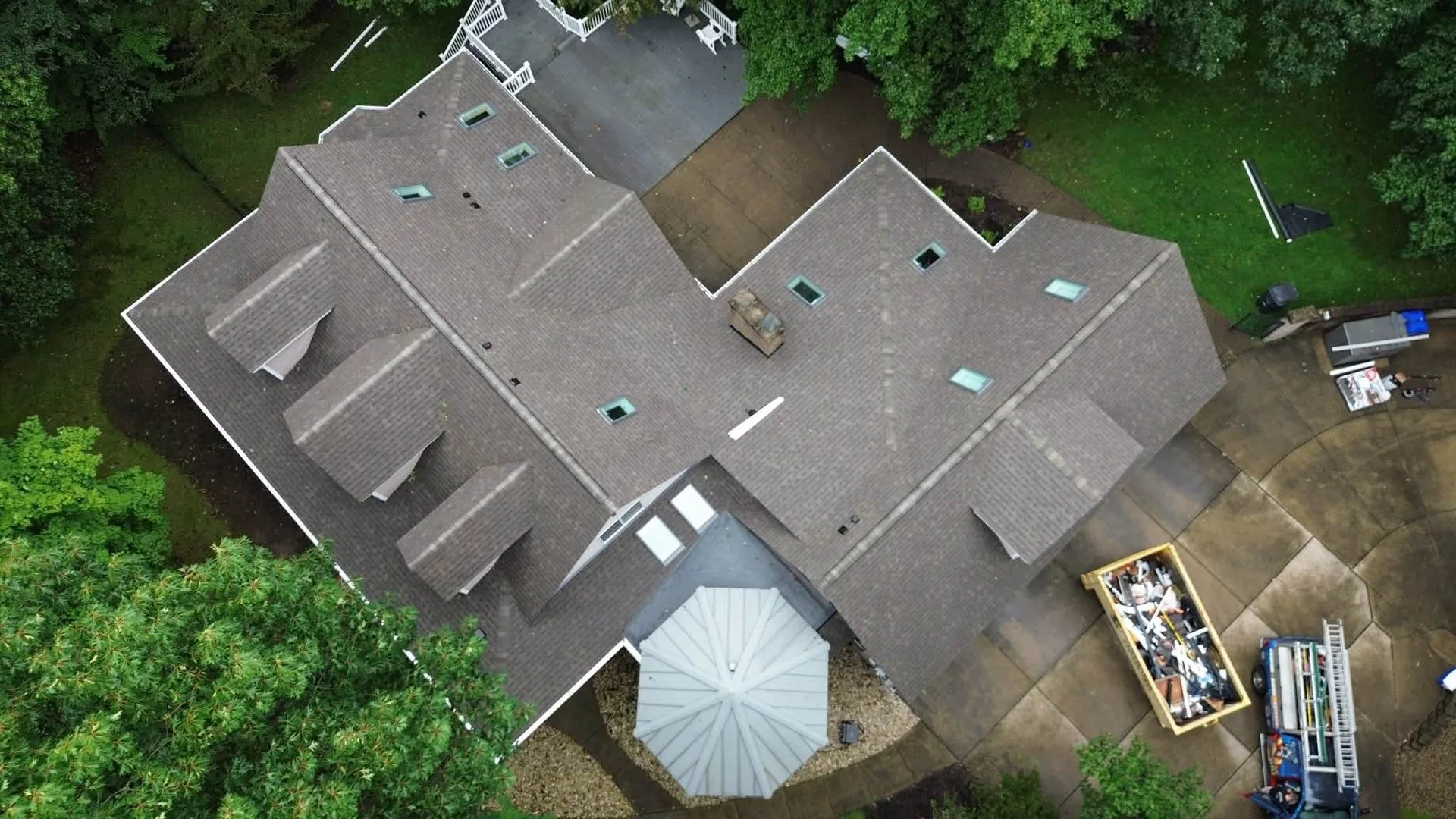
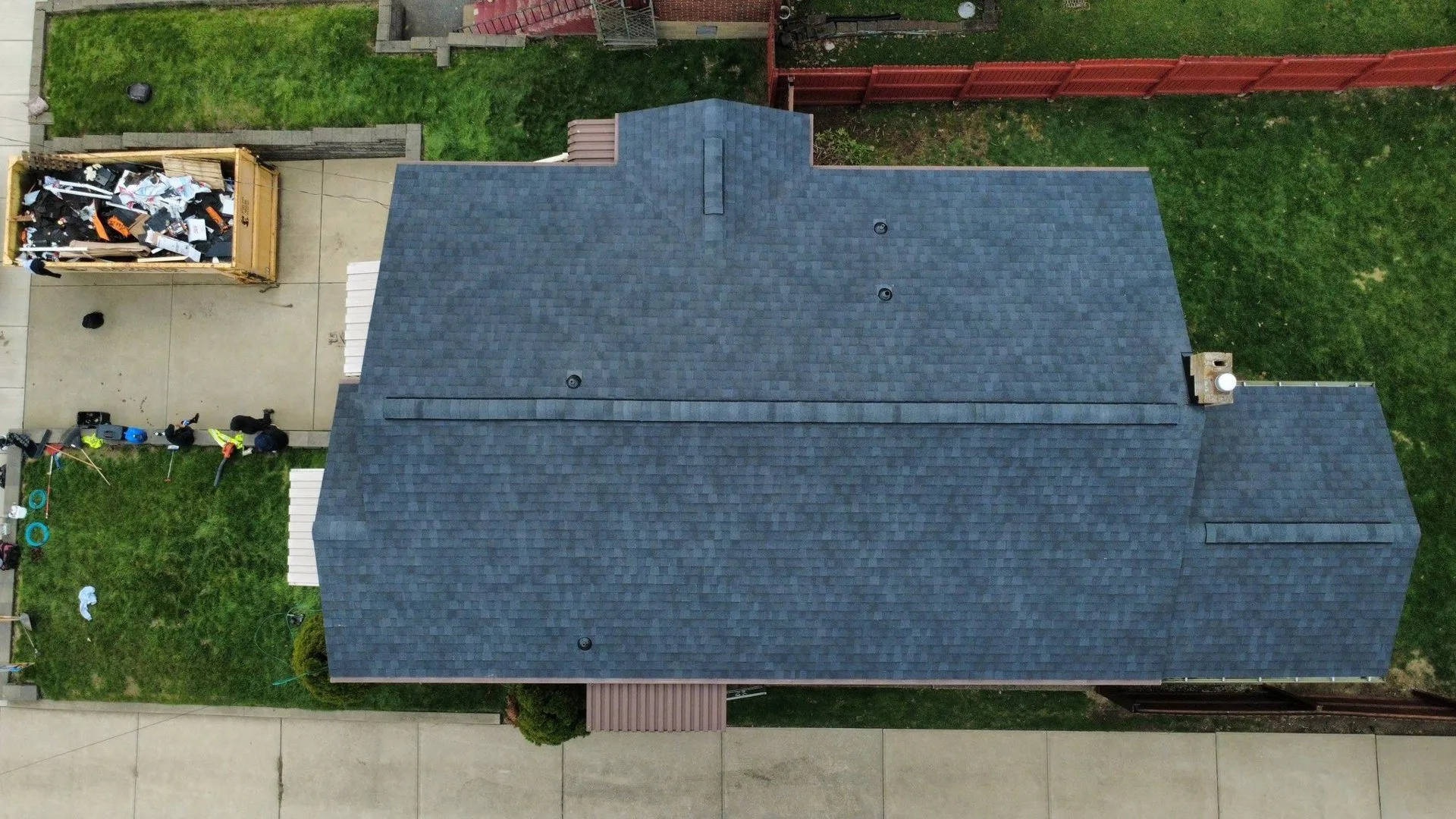
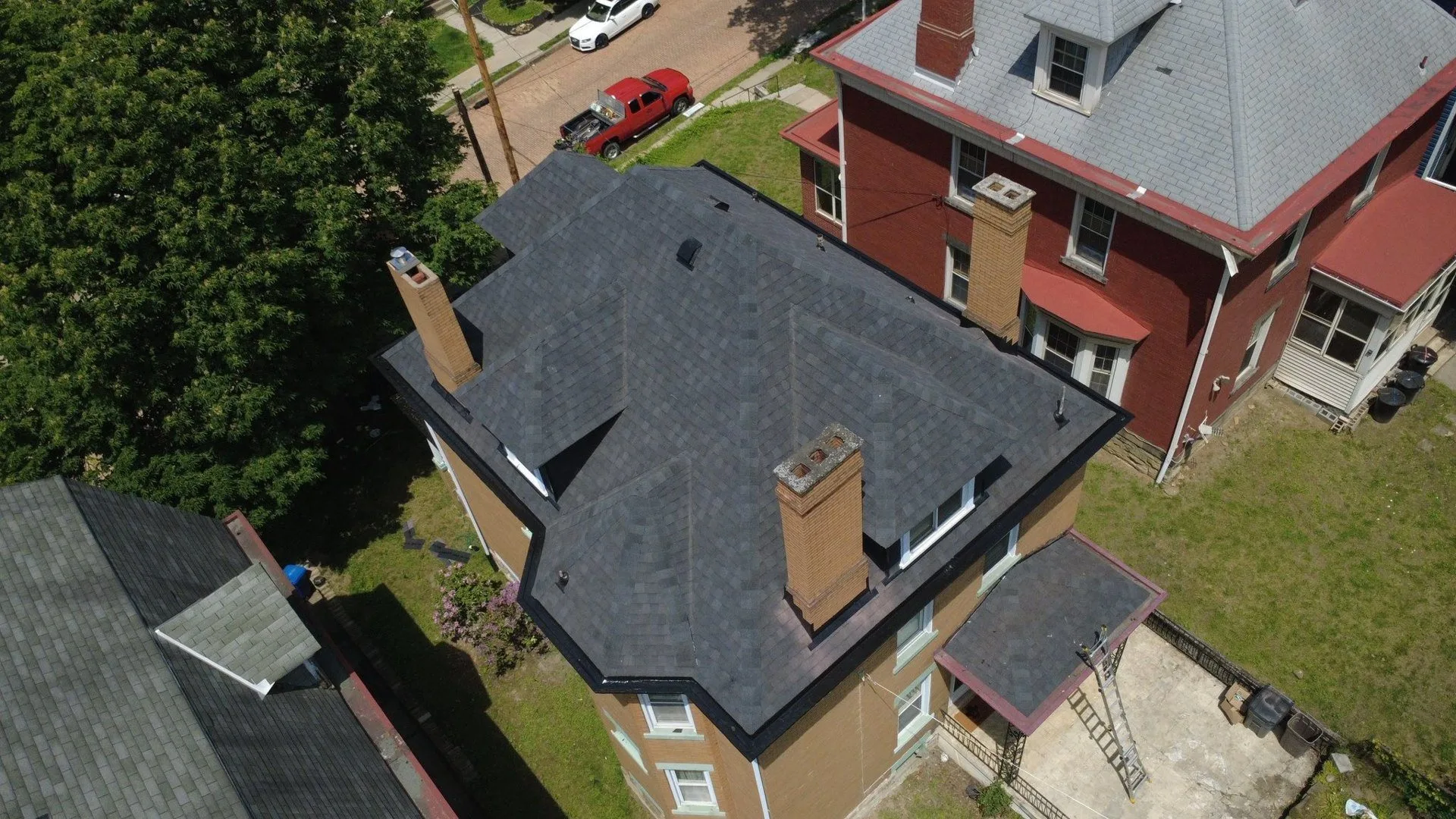
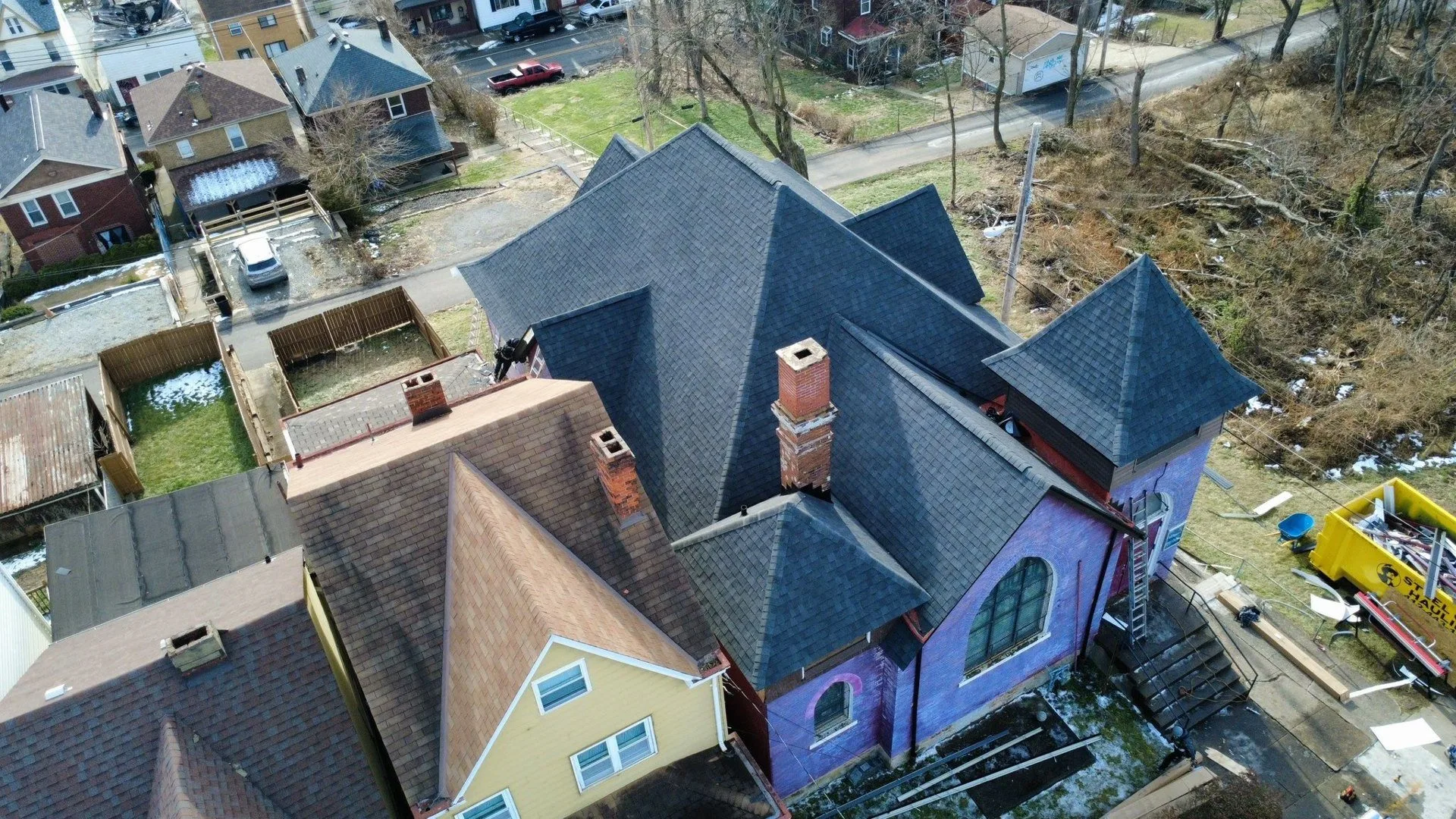
How a Malick Repair Comes Together
STEP 1
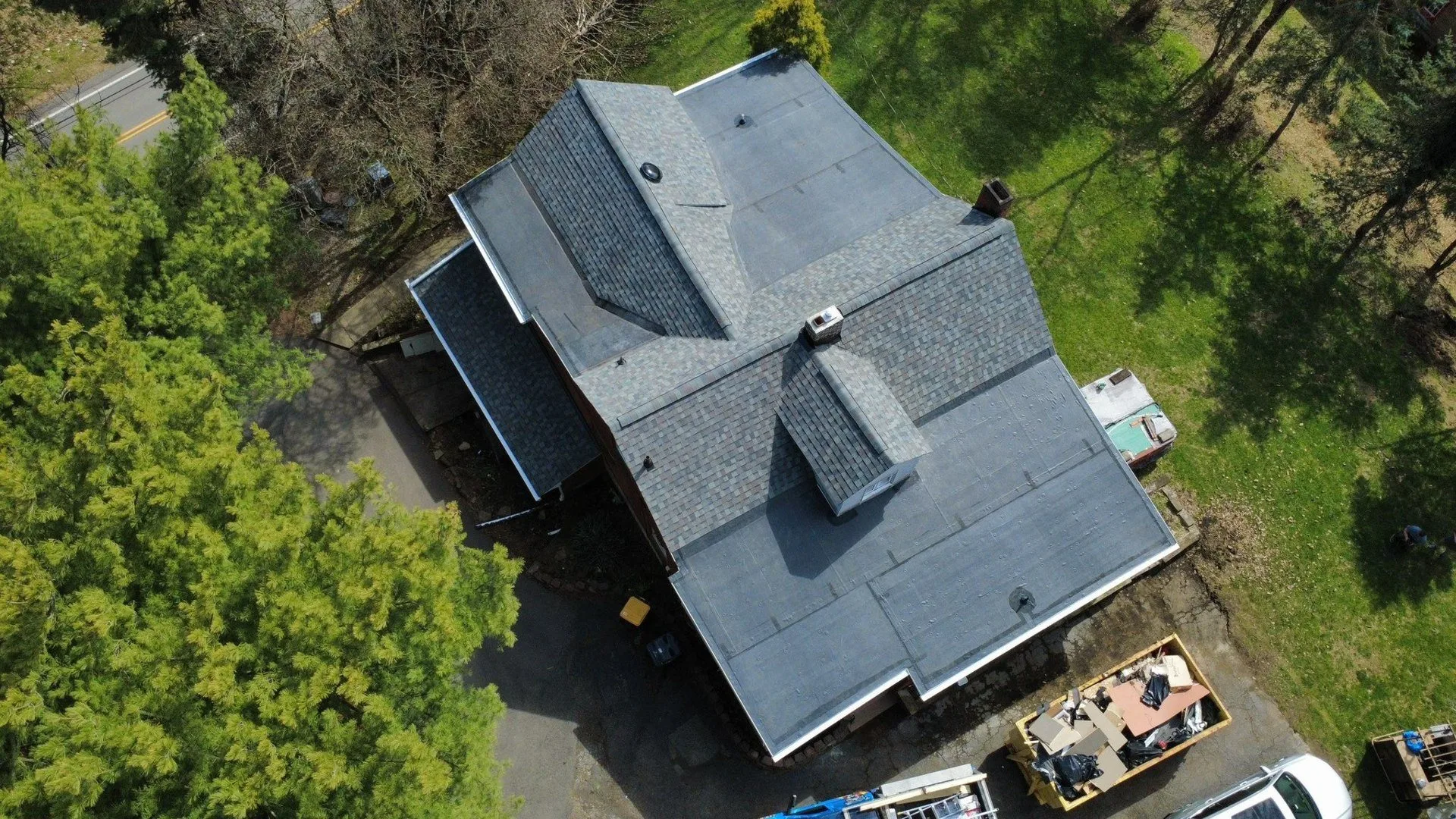
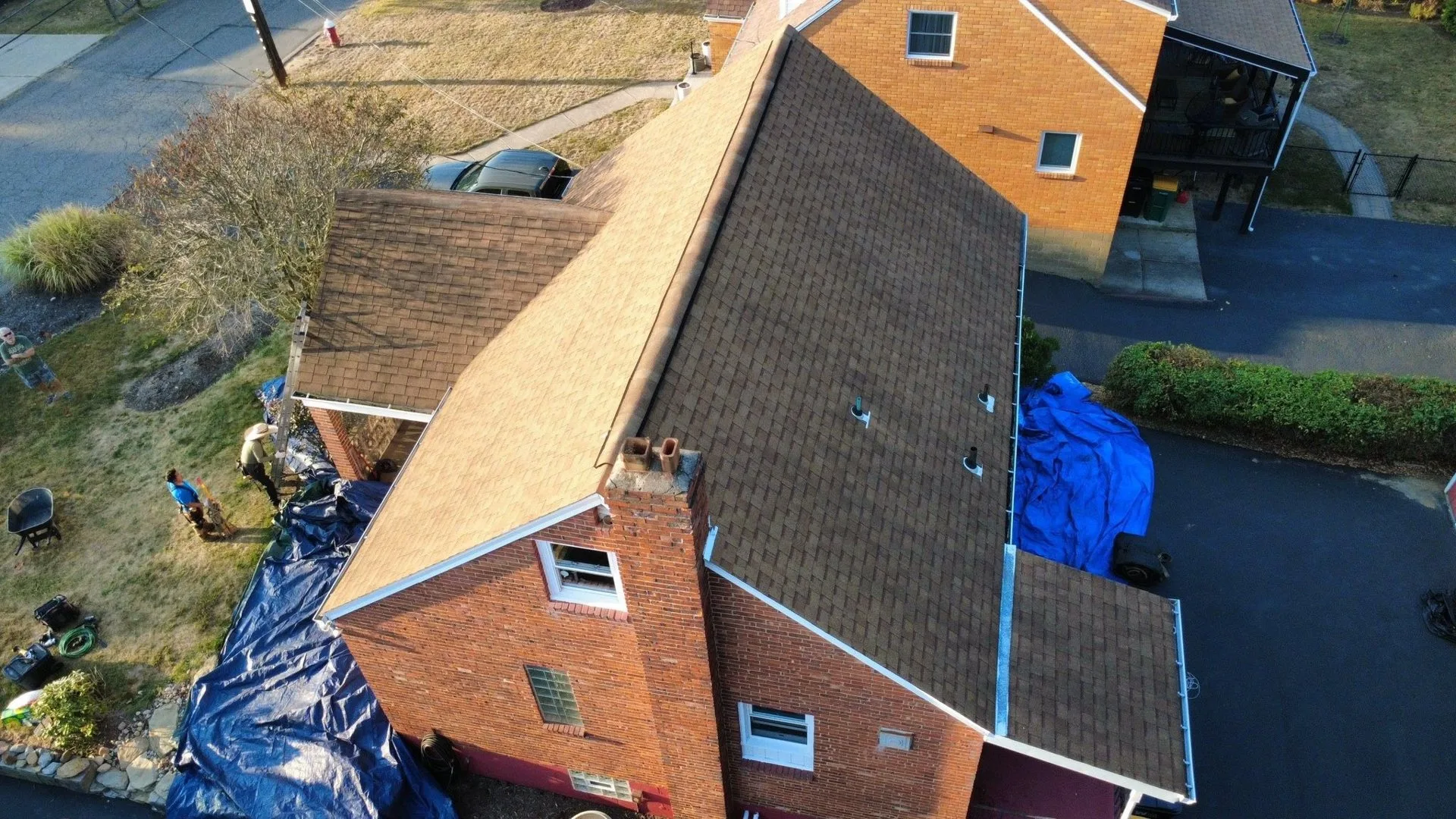
Finding the source of the problem
STEP 2
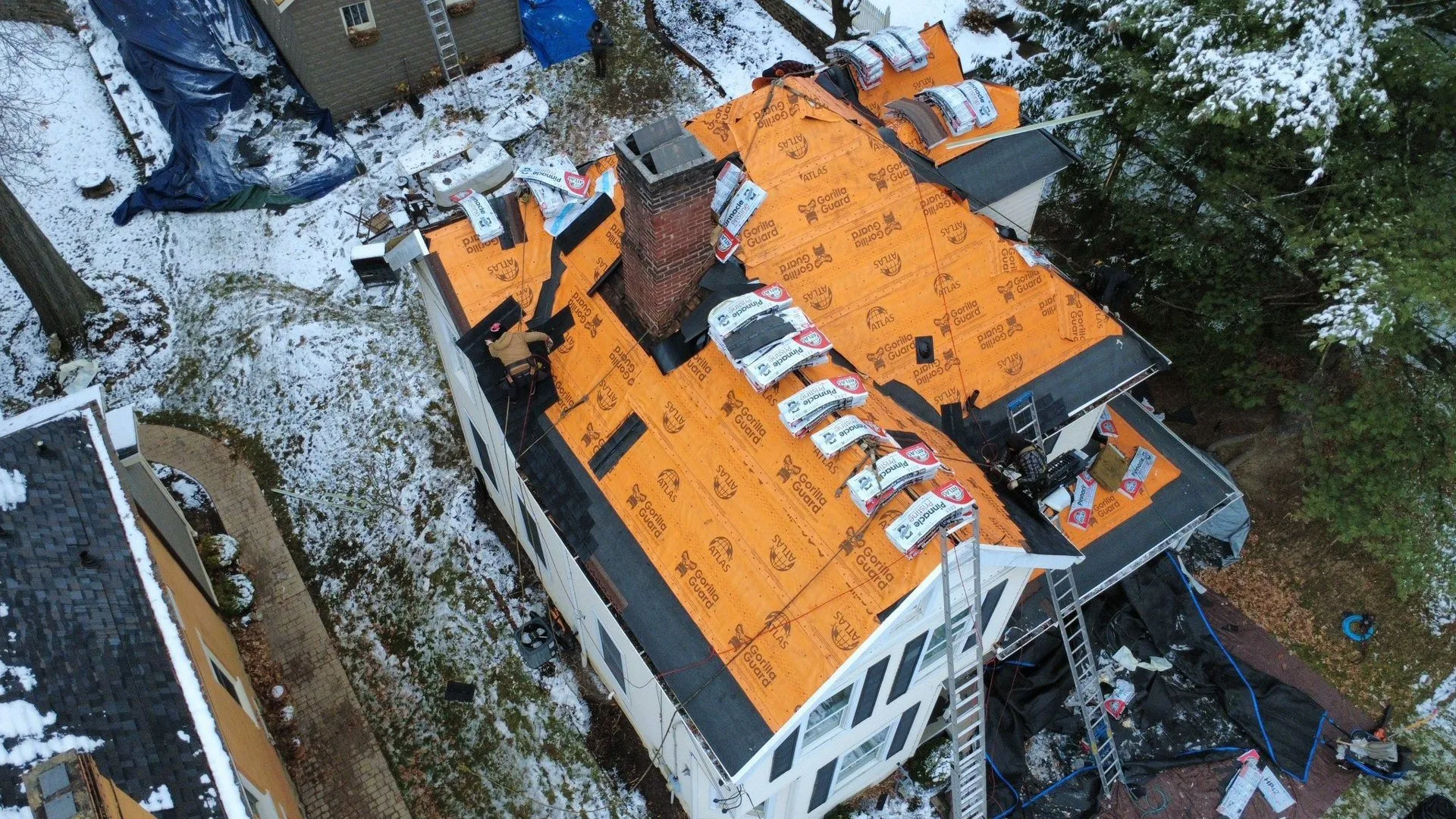
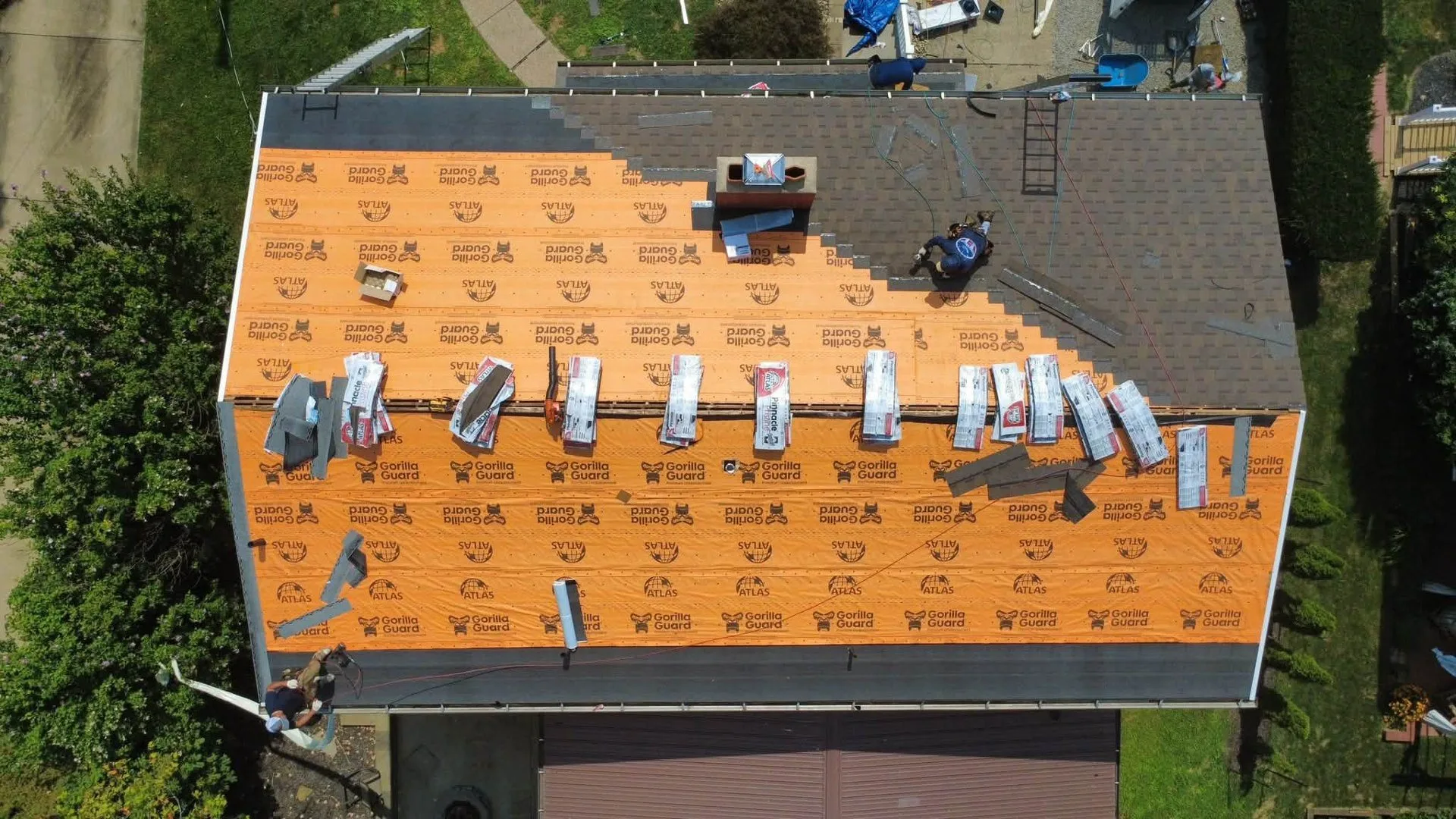
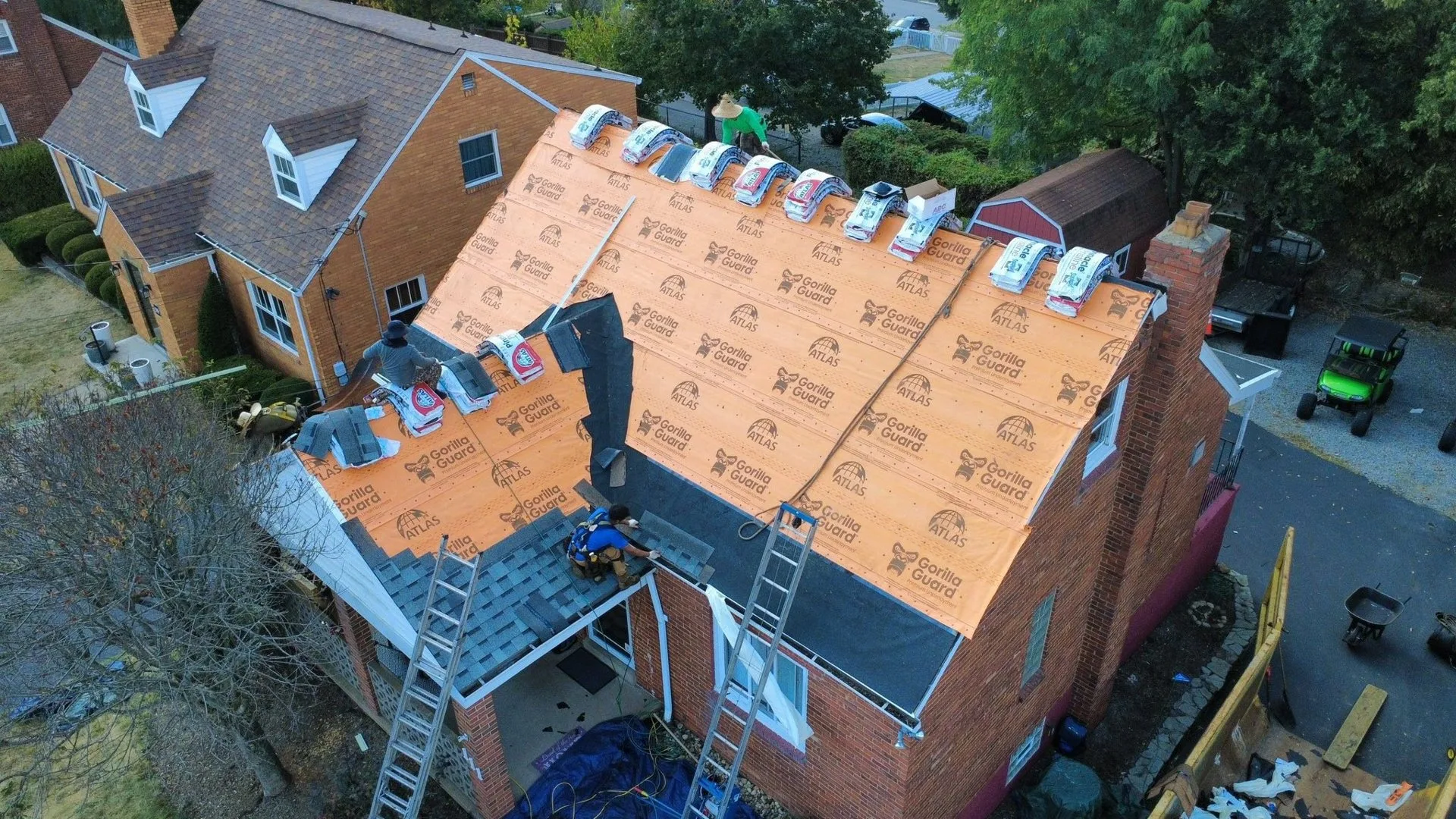
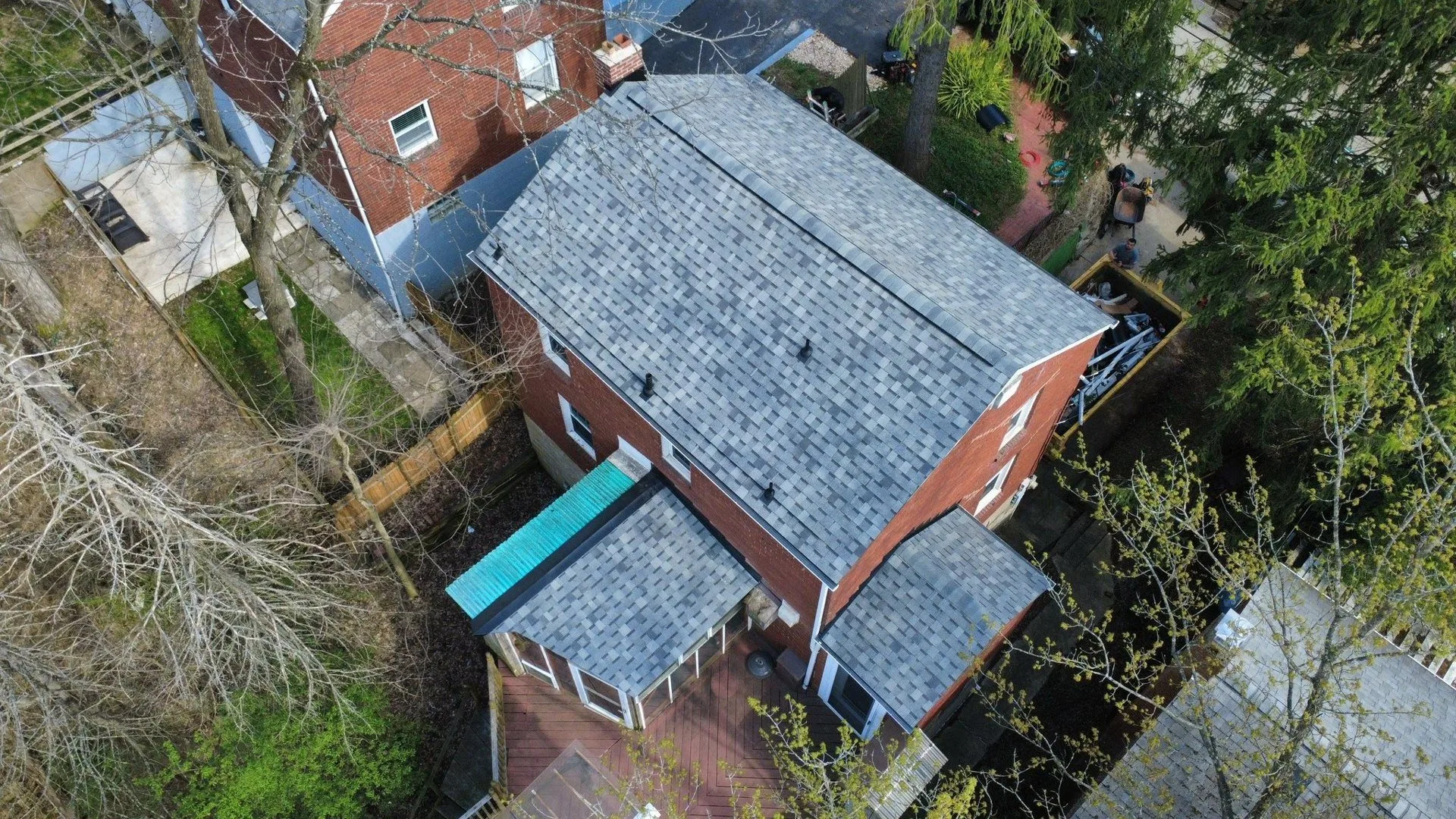
New underlayment and shingles going in
STEP 3
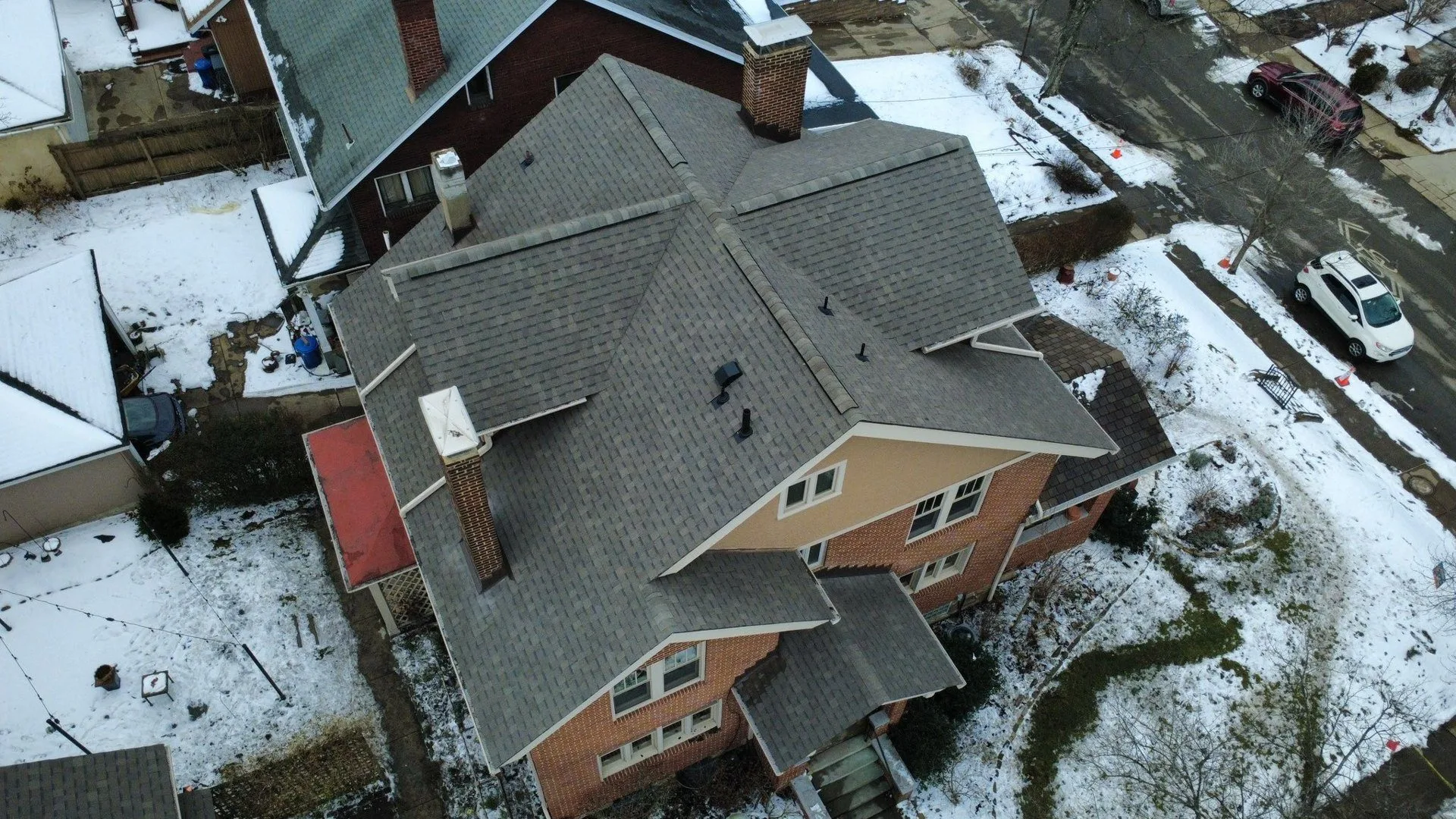
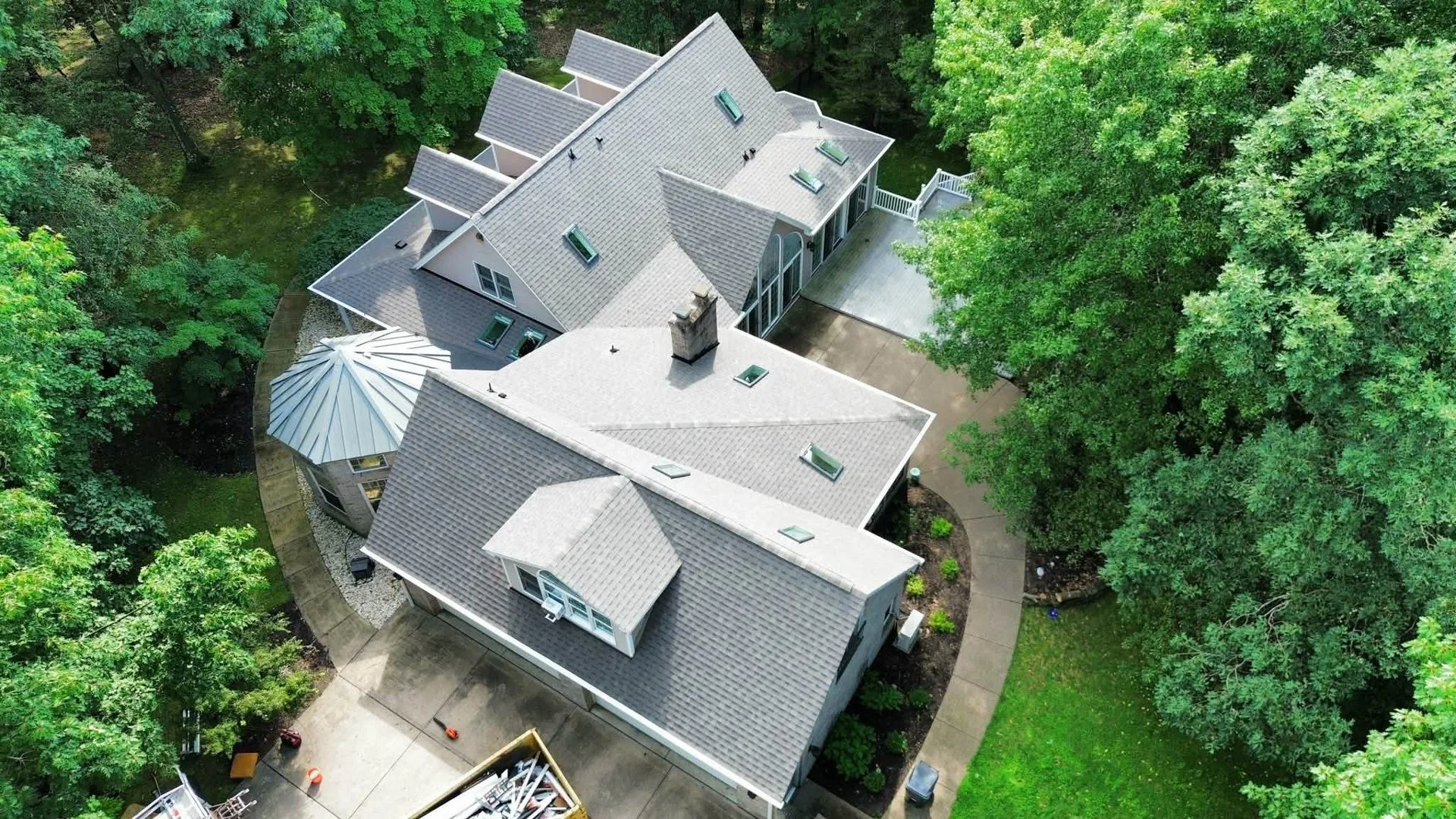
Flashing and shingles sealed tight
ROOFS WE REPAIR
Repairs for Every Type of Home Roof
We repair the materials found on Pittsburgh homes and match new pieces to what is already there as closely as possible.
Asphalt Shingles
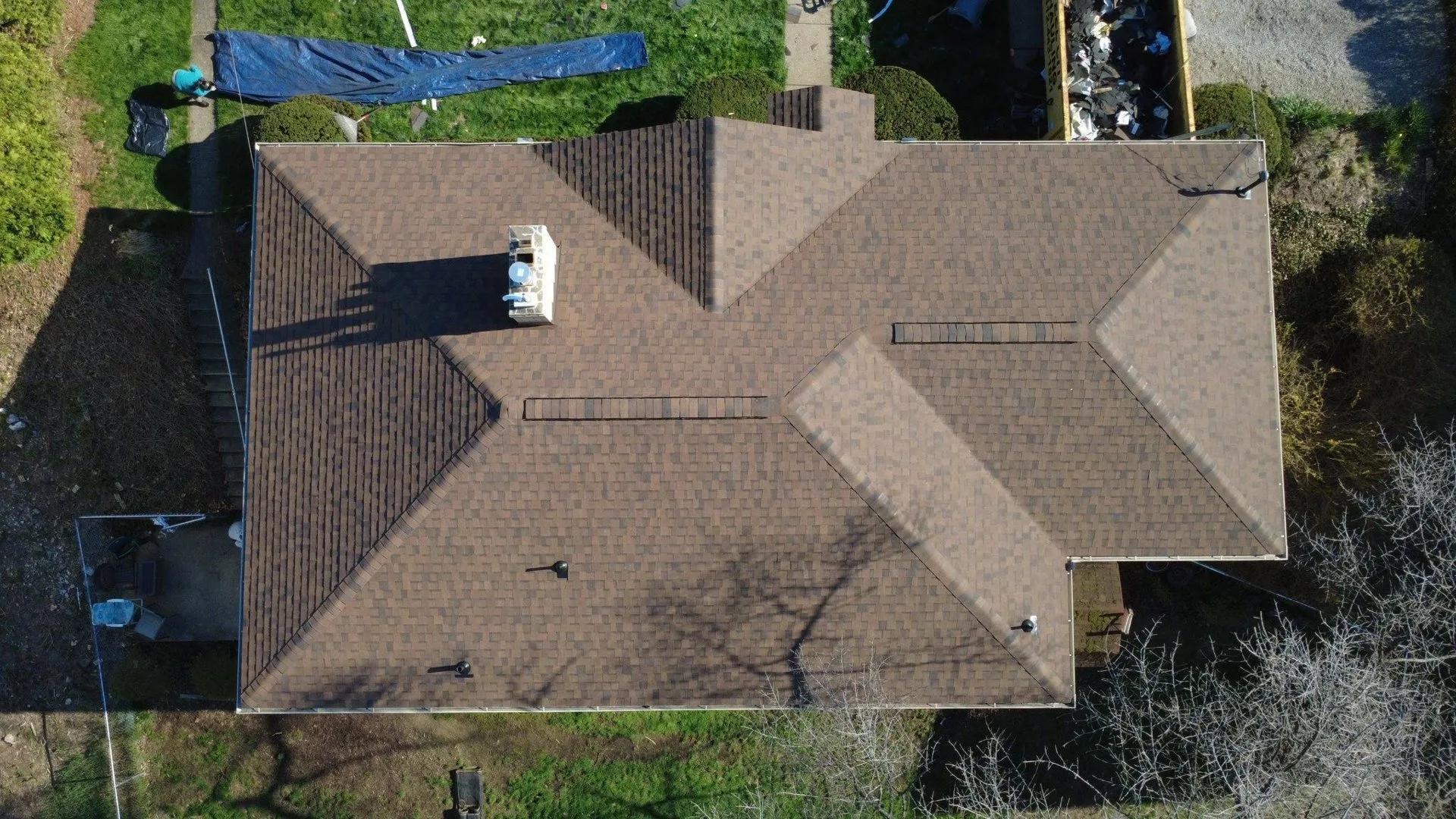
The most common roof in the area. We replace damaged shingles, ridge caps and flashing and blend them in with the rest of the roof. Learn more about asphalt shingles.
Metal Roofing
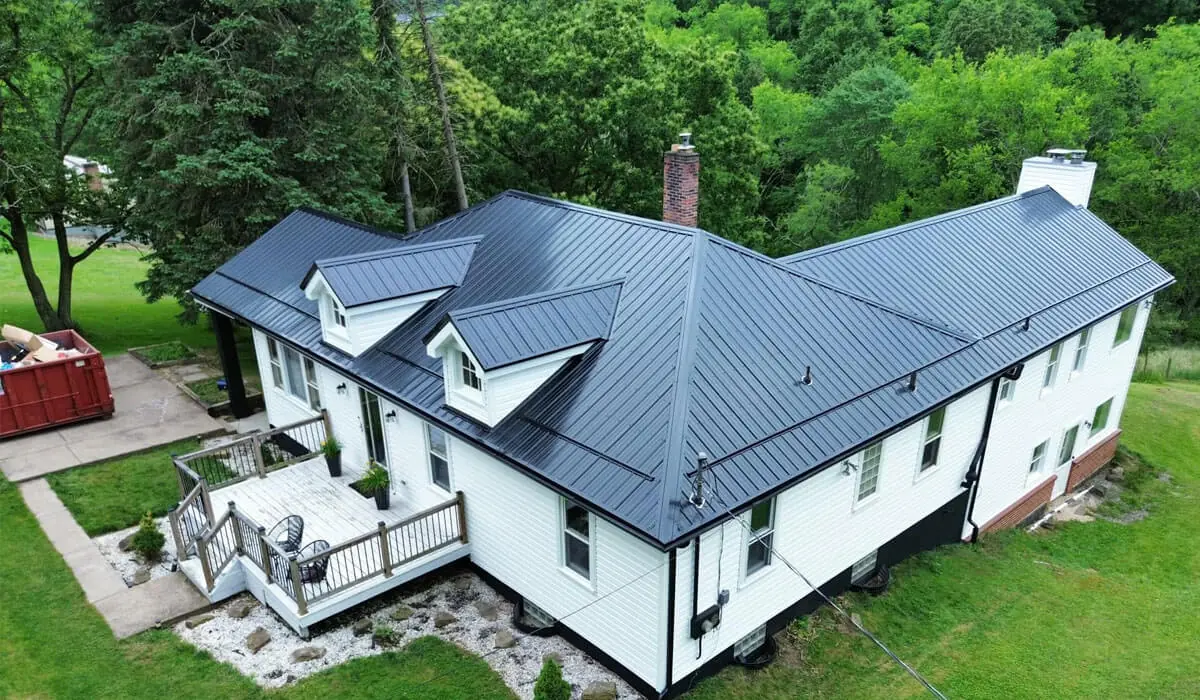
Metal roofs can leak at loose fasteners, worn seals and flashing. We tighten, reseal and replace the parts that let water in. Learn more about metal roofing.
Slate Roofing
Many older Pittsburgh homes still have slate. Cracked or slipped slates and worn flashing can often be repaired without replacing the roof. Learn more about slate roofing.
Roof Leaking? Call for a Free Inspection
(412) 616-0191
DONE RIGHT THE FIRST TIME
What Every Malick Brothers Roof Repair Includes
A repair should stop the leak for good, not until the next storm. Here is what you get every time.
Source, Not Just the Stain
Water travels before it drips. We trace the leak back to where it starts on the roof.
Real Parts, Not Just Caulk
Damaged shingles, flashing and pipe boots are replaced with new material.
Photos You Can See
We show you the problem we found and the finished repair.
Labor Warranty
Our repair work is backed by our labor warranty on the workmanship.
COST
What Affects the Cost of a Roof Repair?
No two leaks are the same, so we price repairs after we have seen the roof in person. These are the things that change the price the most:
If wind, hail or a falling tree damaged your roof, the repair may be covered by your homeowners insurance. We document the damage with photos and a written report and work with your adjuster so nothing gets left out of the claim.
Every repair we make is backed by our labor warranty on the workmanship, and new materials carry their manufacturer warranty. If a repair turns into a bigger project, flexible financing is available through a trusted regional lender.
I was having a roof leak emergency I reached out to the malick brothers I had the pleasure of speaking with Zack malick at the time and he immediately handled the situation I was dealing with!...
Ryan and his team Arrived on time and did the repairs in a timely manner. They cleaned up well and I I would highly recommend Ryan in his crew
My ceiling was leaking from the ice dams on my roof and I called Malick brothers roofing yesterday and they made time out of their busy schedules to get me in today...
After the recent snow storm, we had roof damage and this company responded quickly and professionally...
SERVICE AREA
Roof Repair Across Pittsburgh
Our crews recently silicone coated box gutters in Bellevue, rebuilt a porch roof in Morningside and worked on roofs in Mt. Washington, West View and Ross Township.
From our home base at 500 Perry Highway, we repair roofs throughout Pittsburgh, the North Hills and nearby communities in Allegheny, Beaver, Butler and Washington counties, including:
It depends on what is damaged, how big the area is, your roofing material, how steep and high the roof is and whether decking underneath has rotted. We inspect for free and give you a written price before any work starts.
How long does a roof repair take?
Many common repairs, such as replacing a few shingles, a pipe boot or a section of flashing, are finished in a single day. Larger repairs, rotted decking or work that waits on matching materials can take longer. We give you a clear timeline with your estimate.
Can you find a leak that other roofers couldn't?
Water often enters far from where the stain shows up inside. We check the roof, flashing, vents and attic to follow the path back to the source, then fix that spot.
Will my repair match the rest of my roof?
We match the type, style and color of your existing material as closely as possible. On older roofs new pieces may look slightly different at first because the old shingles have faded.
Should I repair or replace my roof?
Repair when the damage is limited to one area and the roof is otherwise sound. Replacement is usually the better value when leaks keep returning, shingles are worn everywhere or the decking is soft in several places. We give you an honest answer either way.
What is the 25% rule for roof repairs?
Some states require replacing a whole roof section once more than a quarter of it needs repair. Pennsylvania has no statewide 25% rule, but insurance policies can still affect what gets repaired or replaced. We explain what applies during the inspection.
Does homeowners insurance cover roof repairs?
Insurance often covers sudden damage from wind, hail or a fallen tree. It usually doesn't cover normal wear or long term neglect. We document storm damage with photos and a report and work with your adjuster on the claim.
What should I do if my roof is leaking right now?
Move valuables away from the drip, catch the water and take photos. Don't climb onto a wet or icy roof. Then call us at (412) 616-0191. We work all winter, so we can schedule an inspection and stop the leak.
Are roof repairs covered by a warranty?
Yes. Our repairs are backed by our labor warranty on the workmanship, and new materials carry the manufacturer warranty. We explain the coverage in your estimate.
Are you licensed and insured?
Yes. Malick Brothers Exteriors is fully licensed (PA HIC# PA174918) and insured to protect our crew and your property.
GET STARTED TODAY
Schedule Your Free Roof Repair Inspection
Tell us what is happening with your roof and we'll schedule a free inspection and written repair estimate. Prefer to talk? Call (412) 616-0191.