Commercial roofs in Pittsburgh face a demanding environment. The region’s weather shifts from humid summers to icy winters, and these changes create stress on roofing materials. Understanding how long your commercial roof should last comes down to the type of roofing system, the quality of installation, and how well it is maintained over time. When building owners track these elements proactively, their roofs consistently outperform the average commercial roof lifespan. When ignored, even the best systems decline far sooner than expected.
How long should a roof last on a commercial building?
Most commercial roofs fall into predictable lifespan ranges by material. Single-ply membranes like TPO, PVC, and EPDM dominate many flat or low-slope buildings, while built-up (BUR), modified bitumen, and metal roofing systems round out the common options. In general, a commercial roof can last anywhere between 15 and 70 years depending on what it is made of and how well it is cared for. For businesses in the Pittsburgh roofing climate, the lifespan tends to land in the mid-range of national averages unless careful maintenance practices are followed consistently. The environment doesn’t have to determine the outcome, but it absolutely influences it.
Typical Commercial Roof Lifespans
| Roofing System | Typical Lifespan |
|---|---|
| Built-Up Roofing (BUR) | 20–30 years |
| Modified Bitumen | 15–30 years |
| TPO (Single-Ply) | 15–30 years |
| PVC (Single-Ply) | 20–30 years |
| EPDM (Single-Ply) | 25–30 years |
| Spray Polyurethane Foam (SPF) | 15–40 years |
| Metal Roofing | 40–70 years |
These ranges assume correct installation and regular maintenance. Poor workmanship or clogged drainage can reduce even a premium system’s performance significantly.
What is the lifespan of a commercial flat roof?
Flat and low-slope buildings typically use single-ply membranes because they provide a reliable, watertight barrier with flexibility for rooftop equipment. However, how long do flat roofs last depends on routine upkeep. If ponding water remains on the surface for more than 48 hours after rain, it speeds up wear, promotes algae growth, and increases the chance of membrane seams loosening. A consistent inspection schedule dramatically improves outcomes. By identifying minor seam, flashing, or drainage issues before they spread, property managers often extend the commercial roof lifespan by several years.
How Long Does a Commercial Roof Last in Pittsburgh? (Regional Factors)
Pittsburgh experiences freeze–thaw cycles, heavy snow accumulation, shifting wind patterns, and intense summer humidity. Each factor affects roofing differently. Snow and ice put weight on the roof and push moisture into small openings. Heat causes materials to expand, while sudden cold snaps force them to contract. This ongoing movement stresses seams and edges over time. For this reason, the commercial roof lifespan in Pittsburgh benefits greatly from twice-annual roof inspections—once in spring and once before winter.
How long do commercial metal roofs last?

Metal roofing systems are among the longest-lasting solutions for Pittsburgh commercial buildings, often performing 40–70 years. They handle snow, wind, and temperature swings exceptionally well when properly installed. Their weakness is not the panels themselves, but the details: fasteners, seals, transitions, and penetrations. Routine inspection ensures these small components remain secure and watertight. When maintained, metal dramatically increases long-term durability, making it a wise investment for buildings expected to remain in service for decades.
Warning Signs That Indicate Roof Aging or Decline
Commercial roofs don’t usually fail suddenly—there are warning signs long before leaks appear. Key indicators include:
- Repeated leaks in different areas
- Membrane blisters, punctures, or seam separation
- Ponding water that lingers for days
- Saturated insulation or spongy roofing surfaces
- Discolored interior ceiling tiles or mold growth
Once insulation becomes wet, R-value drops and energy costs rise. At that stage, patching offers diminishing returns. This is often the point where replacement planning begins.
Maintenance vs. Replacement: When to Decide
Maintenance works best when executed proactively. Clearing drains, inspecting flashings, repairing punctures, and documenting moisture levels can extend the life of nearly any commercial system. However, if repair costs start reaching 5–10% of what full replacement would cost annually, it is time to evaluate next steps. At that point, building owners often save money by choosing replacement rather than continuing patch-after-patch repairs.
For context on residential comparison, you may also find this resource helpful:
How Long Do Roofing Shingles Last in Pittsburgh Weather?
Planning a Roof Replacement Timeline
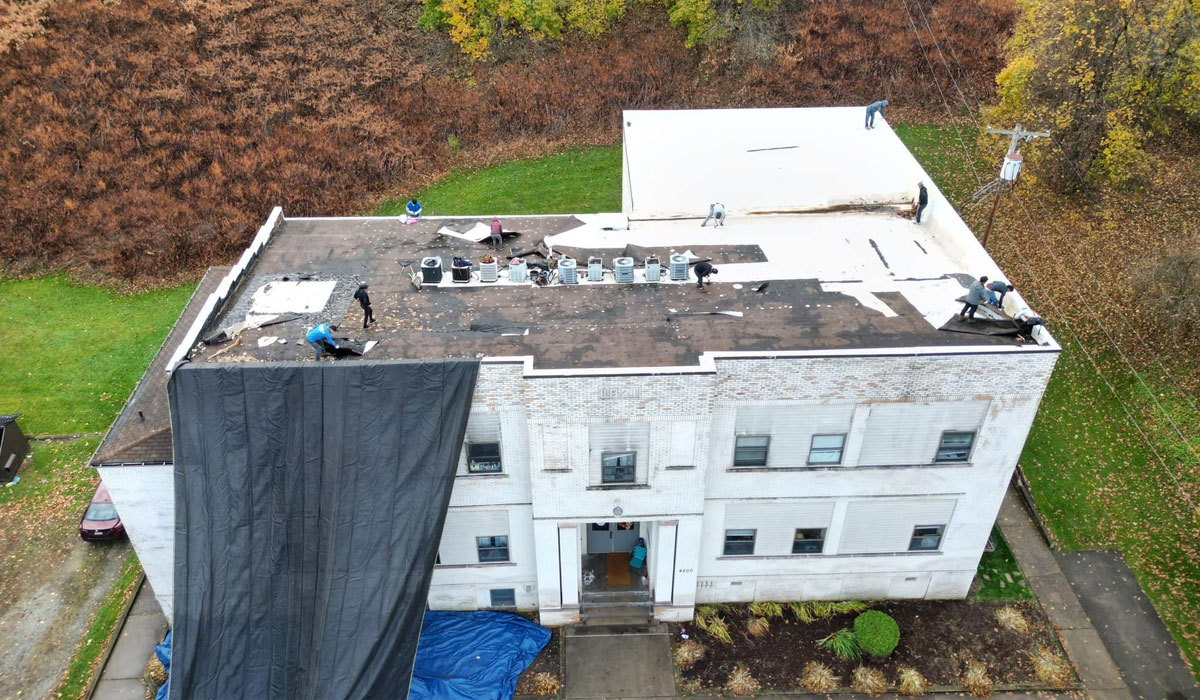
When planning a replacement, begin with a full condition assessment. Determine whether the existing assembly is dry enough for an overlay or whether saturated insulation requires a tear-off. Scheduling matters too. Late spring and early fall often offer the most consistent installation conditions in Pittsburgh. If the building remains occupied during replacement, communication with tenants or departments reduces disruption and preserves access to HVAC or mechanical systems.
Adding Value During Replacement
Replacement is also the best time to increase insulation R-value, improve energy efficiency, or switch to reflective or longer-lasting materials. For facilities expected to remain in service for decades, upgrading during reroofing has a strong return on investment. A strategic selection can extend the commercial roof lifespan well beyond the minimum standards associated with your current roof system.
External Resource for Additional Guidance
For further general reference on commercial roofing system performance, The National Roofing Contractors Association provides a helpful overview of commercial roofing assemblies:
https://www.nrca.net/
Final Thoughts
So, How Long Does a Commercial Roof Last in Pittsburgh? That answer depends on material selection, workmanship, maintenance discipline, and climate exposure. Flat roofs can often last 20–30 years, while metal systems extend much further. With regular inspections, prompt repairs, and smart planning, commercial owners can avoid emergency replacements and budget surprises. When in doubt, rely on experienced professionals who understand the demands of the Pittsburgh environment and can help extend the life of your roof with strategic care.