
A sagging roof is a roof that has lost its straight lines. The ridge dips in the middle, a slope looks wavy, or one area sinks between the rafters. It always means something underneath the shingles has weakened: the decking, the framing, or both. The good news is that most sagging roofs can be fixed, and many do not need a full structural rebuild. The key is finding out which layer has failed before the problem spreads.
We are Malick Brothers Exteriors, a family owned roofer based in West View, and we see this problem often on the older homes across the city and the North Hills. This guide explains what causes a roof to sag, how to check your own home safely, how the repair works, and when roof repair in Pittsburgh is enough versus when replacement makes more sense.
What Does a Sagging Roof Indicate?
A roof is built in layers. Rafters or trusses form the frame. Decking (also called sheathing) is nailed across the frame. Underlayment and shingles go on top. A sag tells you that one of the structural layers is no longer carrying the load the way it was built to.
Where the sag shows up is the best clue to the cause:
| What you see | Most likely cause | Typical fix |
|---|---|---|
| Dips or soft spots between rafters, a wavy or warped look across a slope | Decking that is rotted, delaminated, too thin, or old plank boards that have cupped | Replace the damaged decking, often during a reroof |
| Ridge line that bows down in the middle (a swayback look) | Rafters spreading or deflecting, missing or undersized ties, a weak ridge board | Framing repair: sistering rafters, adding ties or bracing |
| One isolated low area, often near a chimney, valley or plumbing vent | A long term leak that has rotted the wood below | Fix the leak source, replace the rotted wood |
| Sagging eave or roof edge | Rotted rafter tails and fascia, usually from overflowing or failed gutters | Replace rafter tails, fascia and the gutter |
| Sudden sag after heavy snow, with cracking sounds or new ceiling cracks | Overloaded or broken framing | Leave the house and call for help right away |
Signs of a Sagging Roof You Can Check Yourself
You do not need to climb on the roof, and you should not. A roof that is sagging may not hold your weight. Check from the ground and from the attic instead.
From the street
- Stand across the street and look along the ridge. It should be a straight line from end to end.
- Look across each slope in low morning or evening light. Shadows make dips and waves easy to see.
- Check the eaves and gutters. A gutter line that droops or pulls away often means the wood behind it is soft.
Inside the house
- New cracks in ceilings or at the tops of walls on the upper floor.
- Upstairs doors or windows that have started to stick.
- Ceilings that bow, or water stains that keep coming back.
In the attic
- Decking that bends down between the rafters, or that looks dark, stained or moldy.
- Rafters that are cracked, split or visibly bowed.
- Daylight showing through the roof boards, or damp insulation.
If you find any of these, the next step is a professional roof inspection so the cause is confirmed before anyone quotes a repair.
Why Is My Roof Sagging? The Common Causes
Water damage and rotted decking
This is the cause we find most often. A small leak at flashing, a valley or a vent pipe soaks the wood a little at a time. Plywood delaminates, OSB swells and crumbles, and plank boards rot. Poor attic ventilation does similar damage from the inside, because warm, moist air condenses on the underside of the deck in winter. The shingles can look acceptable from the ground while the wood under them has gone soft.
Too much weight
Snow and ice are the obvious loads in Western Pennsylvania, especially wet snow followed by rain. A less obvious load is extra roofing. Many older homes here have a second layer of shingles nailed over the first, and some have shingles over old wood or slate era decking that was never designed for it. Every layer adds weight the frame carries all year.
Undersized or altered framing
Some older roofs were framed with smaller rafters, wider spacing or fewer ties than a builder would use today. Others were changed later: a collar tie cut out to finish an attic, a wall removed below, a dormer added without proper support. Over decades the rafters deflect and the ridge drops.
Insects
Termites and carpenter ants can weaken rafters and decking, usually where the wood is already damp. If an inspection finds insect damage, a pest professional should treat the cause before the wood is replaced.
Why Pittsburgh Homes Are Prone to Sagging Roofs
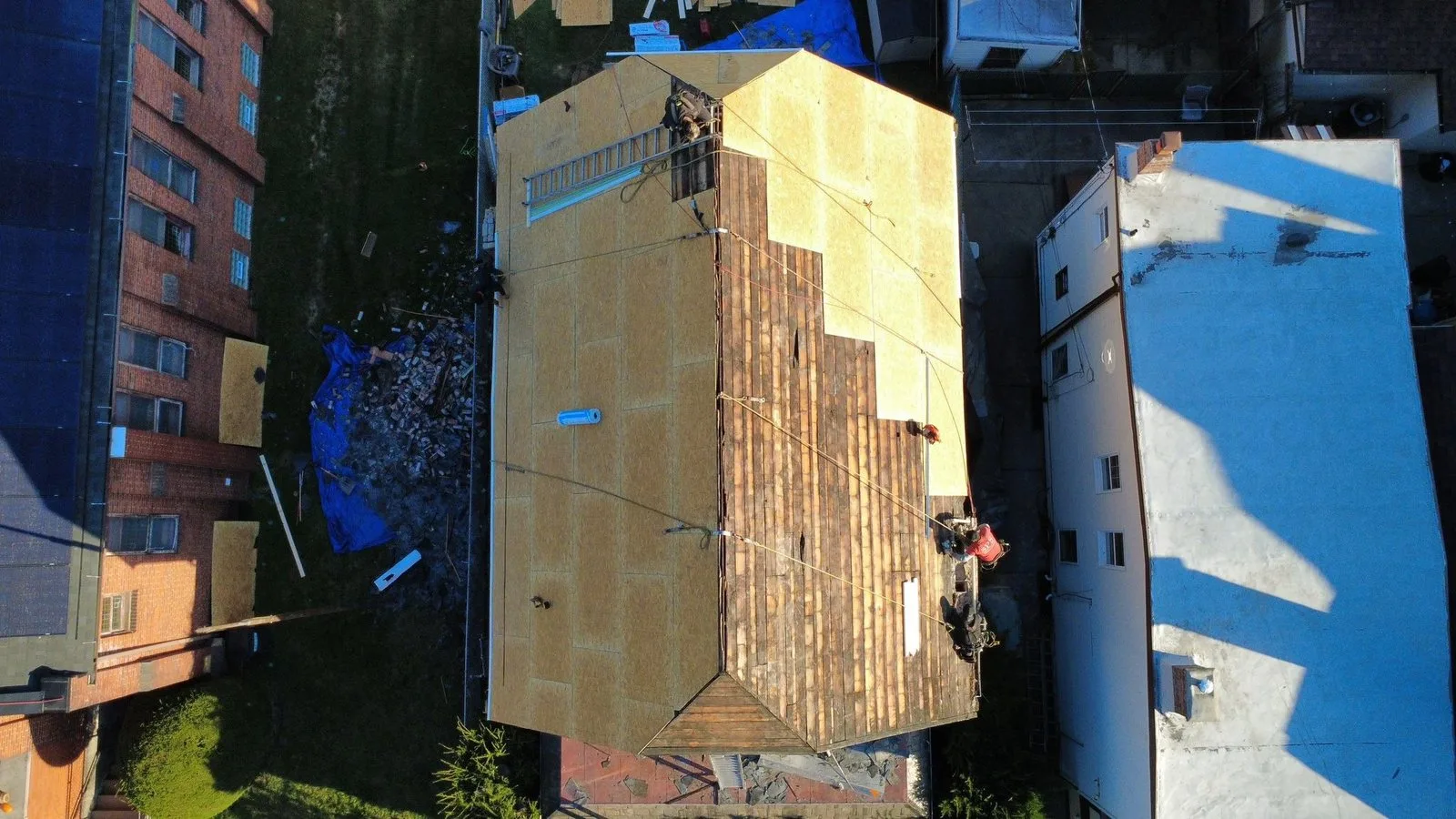
A large share of the homes in Pittsburgh and its older suburbs were built before plywood was standard. Their roof decks are individual plank boards with gaps between them. Those boards hold up well when dry, but after several reroofs they are full of old nail holes, and any that have been wet tend to cup, split or rot. New shingles nailed to boards like that will not lie flat and will not hold nails the way the manufacturer requires.
Our weather adds to it. Winters here bring repeated freeze and thaw cycles, wet snow, and ice at the eaves. Many older houses also have low slope rear additions and porch roofs where water drains slowly. Those sections are usually the first place we find soft decking.
A Real Example: New Decking on a Morningside Roof
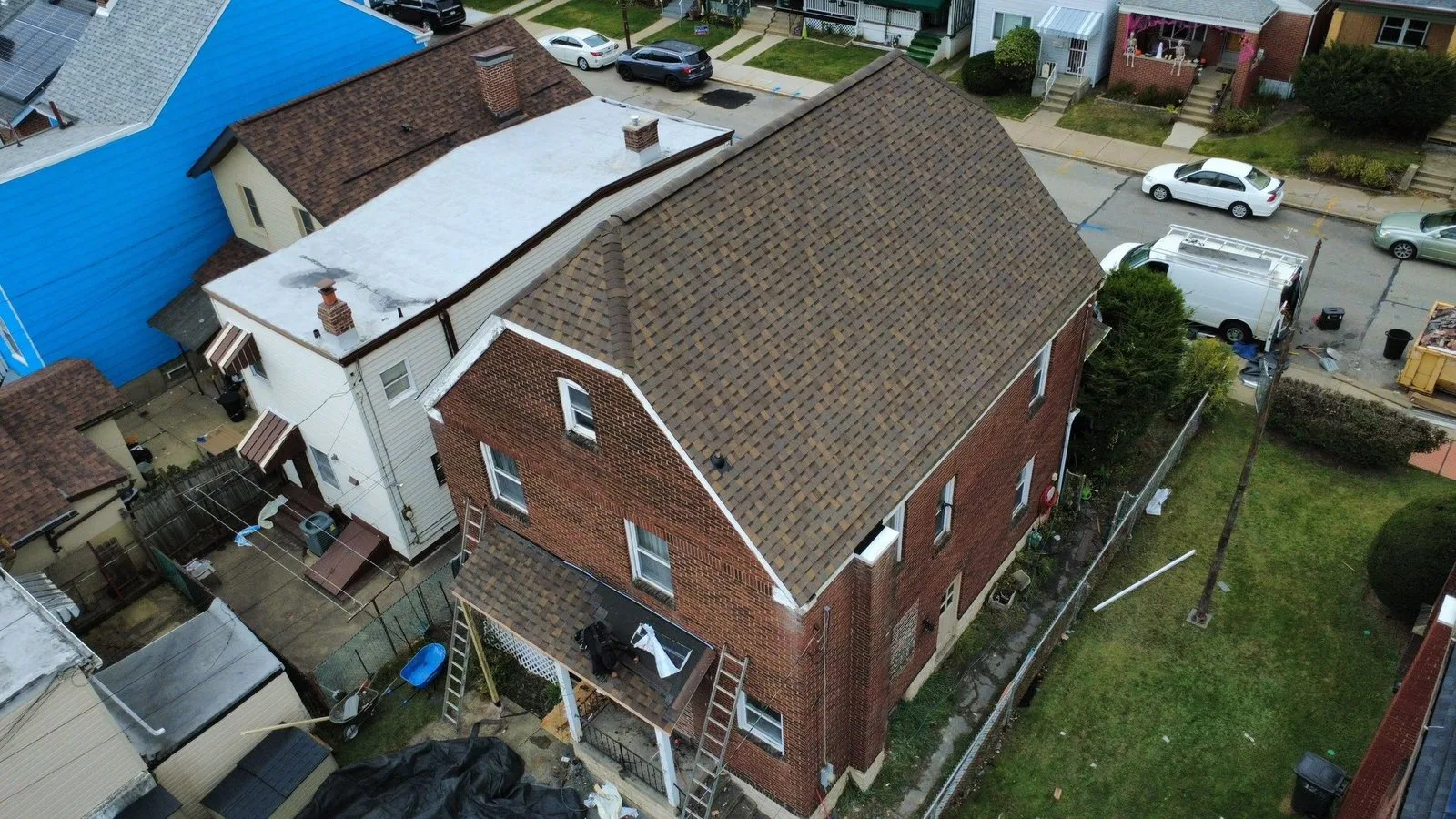
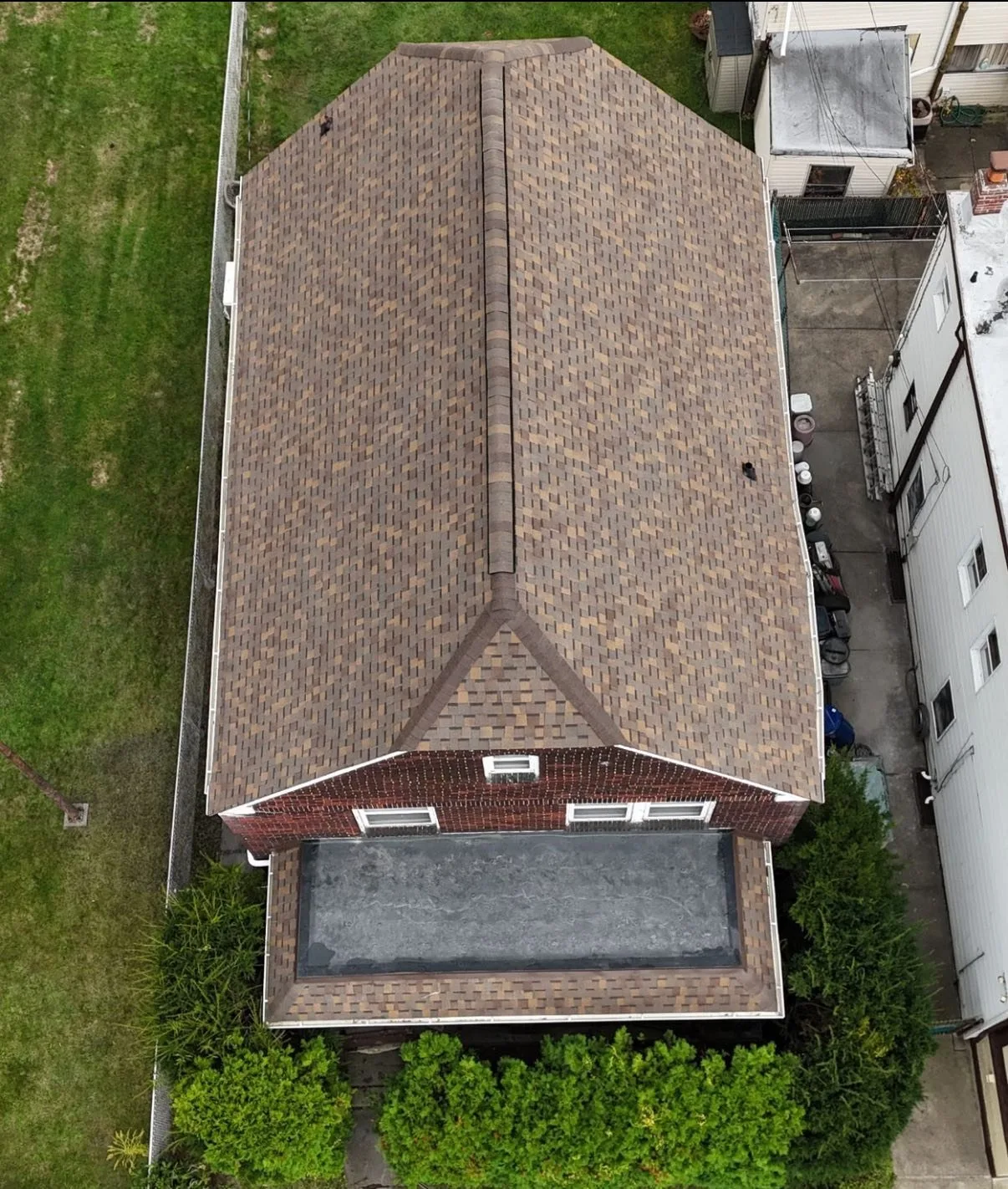
In October 2025 we replaced a roof on a brick home in the Morningside neighborhood of Pittsburgh. Once the old shingles came off, we re-sheeted the entire roof with new decking. Patching a few boards would have left the new roof sitting on wood we could not trust, so we installed new decking across the entire roof before the underlayment and shingles went on.
The back porch roof on the same house had the same problem at a smaller scale, so we rebuilt it as part of the job. The result is a roof with straight lines and a solid nailing surface from ridge to eave.
Sagging Roof Repair: How the Fix Works
The right sagging roof repair depends entirely on which layer failed. A good contractor will tell you which of these applies to your home and show you photos.
- Find and stop the cause. If a leak, a ventilation problem or a failed gutter rotted the wood, that is repaired first. Otherwise the new wood will fail the same way.
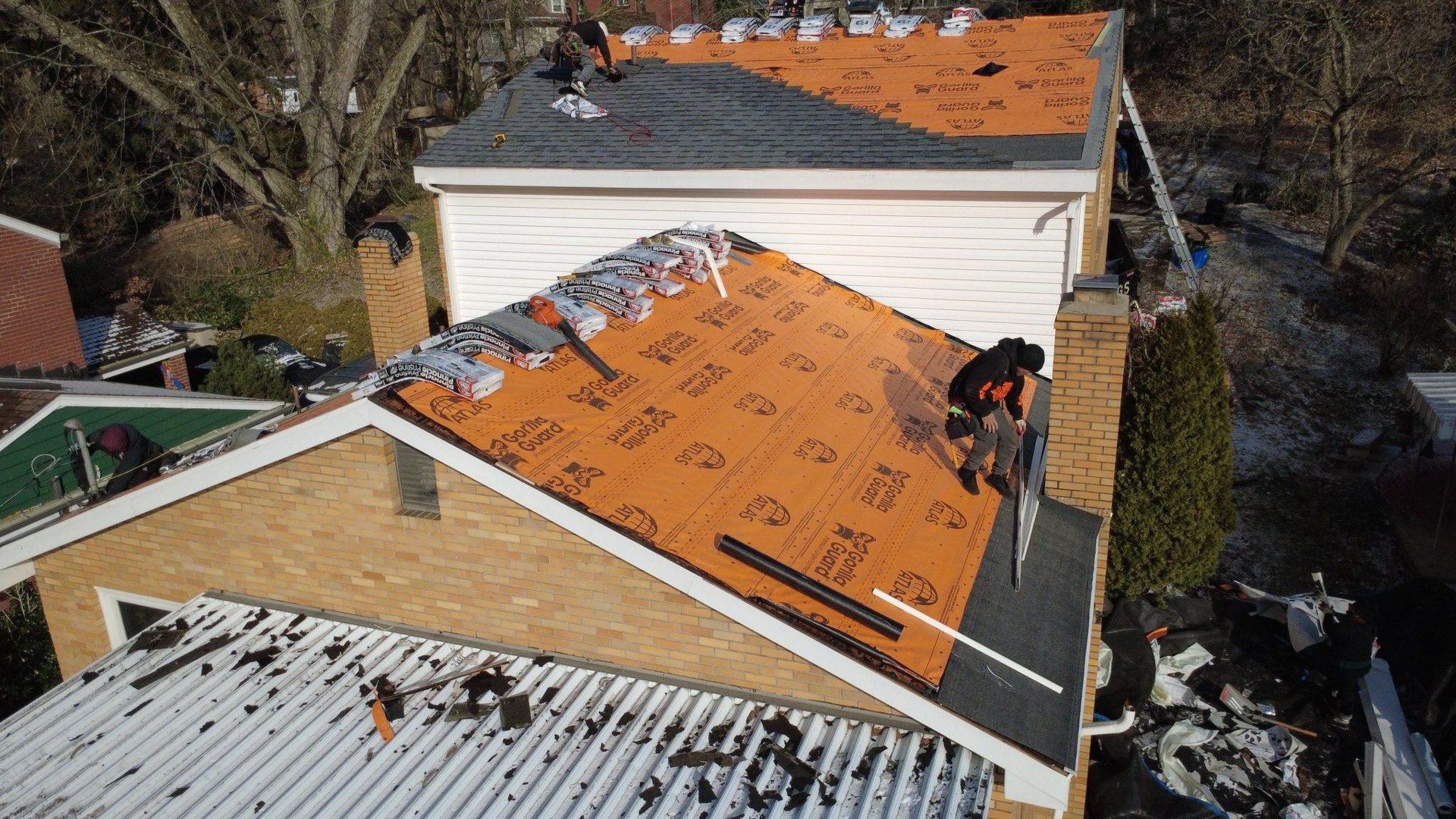
- Replace damaged decking. Shingles and underlayment come off the affected area, the bad sheets or boards are cut out, and new decking is fastened to the rafters. When damage is widespread, the whole roof is decked new, as on the Morningside job above.
- Repair the framing where needed. A cracked or bowed rafter is usually reinforced by fastening a new full length rafter alongside it, which carpenters call sistering. Spreading rafters may need new ties or bracing. Significant framing problems should be reviewed by a structural engineer, and structural work may require a permit from your municipality.
- Rebuild the roof system. New underlayment, flashing, shingles and ventilation go on over the sound deck.
Temporary supports inside the attic can stabilize a roof for a short time, but they are a safety measure, not a repair.
Repair or Replace a Sagging Roof?
A repair is usually the right call when the sag is limited to one area, the cause is clear, and the rest of the roof still has years of life left. We open that section, replace the wood, and tie the new shingles into the old.
Roof replacement makes more sense when:
- Soft or wavy decking shows up in several places.
- The roof already has two layers of shingles.
- The shingles are near the end of their life anyway, so paying to remove and reinstall them around a repair would be money spent twice.
- The deck is old plank board that will not hold nails reliably.
What drives the cost of either option is how much wood has to be replaced, whether framing work or an engineer is involved, how steep and tall the roof is, and how many layers have to be torn off. Hidden decking damage cannot be measured exactly until the old roof is off, so ask how your contractor handles it in writing. We provide a free written estimate and explain how any additional decking is handled before work starts. Financing is available for larger projects.
Is a Sagging Roof Dangerous?
It can be. Most sags develop slowly and give you time to act, but a weakened roof has less margin when a heavy snow arrives. FEMA lists sagging roof members, cracked or split wood, popping and creaking noises, new cracks in walls, and doors or windows that will no longer open or close as warning signs of an overstressed roof. If you notice those during or after a storm, FEMA's snow load safety guidance says to leave the building and have it inspected.
How to Prevent a Roof From Sagging
- Fix small leaks quickly. Most rotted decking started as a minor flashing or vent leak.
- Keep gutters clean and draining so water does not back up into the roof edge. Our gutter services team installs 5 and 6 inch seamless gutters.
- Make sure the attic is ventilated so moisture does not collect under the deck.
- Do not add another layer of shingles over an old roof. Tear off, inspect the deck, and start clean.
- Have the roof inspected after severe weather and every few years as it ages.
Sagging Roof Frequently Asked Questions
Can a sagging roof be fixed?
Yes, in most cases. If the decking has failed, the damaged wood is replaced and the roof is rebuilt over it. If rafters have cracked or bowed, they are reinforced or replaced and the ridge is braced. The repair only lasts if the original cause, such as a leak, poor ventilation or excess weight, is corrected at the same time.
How expensive is it to fix a sagging roof?
It depends on what failed. Replacing a section of decking during a repair is a modest job. Replacing all of the decking during a reroof costs more, and framing repairs that need an engineer cost more again. Roof size, pitch, height and the number of old layers also matter. An inspection and a written estimate are the only way to get a real number for your home.
Is a sagging roof covered by insurance?
Homeowners policies generally cover sudden, accidental damage, such as a tree strike or a covered storm event, and generally exclude damage from age, wear, long term leaks or lack of maintenance. Every policy is different, so read yours and ask your agent or insurer. Dated photos and a written inspection report help if you do file a claim.
What is the difference between a sagging roof and a warped roof?
People use both terms for the same thing. A warped or wavy roof usually points to the decking: sheets that have swollen, buckled at the seams or dipped between rafters. A true sag in the ridge line points to the framing. Decking problems are more common and simpler to correct, which is why identifying the layer matters.
Can I put new shingles over a sagging roof?
No. New shingles will follow the shape of whatever is under them, so the sag will still be visible, the added weight makes the problem worse, and shingles nailed into soft wood can blow off. Shingle manufacturers also require a sound, flat deck for their warranties to apply. The wood has to be fixed first.
Who should I call for a sagging roof?
Start with a licensed roofing contractor who will inspect the attic as well as the roof surface. If the framing is involved, the roofer should bring in a structural engineer. In Pennsylvania, confirm that any contractor is registered by searching the Attorney General's home improvement contractor database. Our registration number is PA174918.
Get a Sagging Roof Checked Before It Gets Worse
If you see a dip, a wave or a soft spot in your roof, we will inspect it, show you photos of what we find, and give you a free written estimate for the repair or replacement that actually fits the problem. Malick Brothers Exteriors is BBB A+ accredited and works across Pittsburgh and the North Hills all year. Contact us to schedule your inspection.