Roof maintenance in Pittsburgh is a different job than roof maintenance in Phoenix or Atlanta. Our roofs sit under wet springs, humid summers, leaf heavy falls, and winters that swing above and below freezing dozens of times. Add the mature trees that shade most North Hills and city neighborhoods and you have a climate that finds every loose shingle, open seam, and clogged gutter. This guide is the one we give our own customers: a seasonal checklist, what the local weather actually does to a roof, what you can safely check from the ground, and what should wait for a roofer.
We are Malick Brothers Exteriors, a family owned roofing company based at 500 Perry Highway in West View. We replace and repair shingle, metal, slate, and flat roofs across Allegheny and Butler counties, and we see the same maintenance failures over and over. If you would rather skip the checklist and have a trained eye look at your roof, you can schedule a roof inspection in Pittsburgh with us and we will walk the roof, photograph what we find, and tell you honestly whether it needs anything at all.
Why roof maintenance in Pittsburgh matters more than most places
A shingle roof is built to shed water, not to hold it. Almost every roof failure we repair started as a small opening that let water sit where it should have run off: a lifted shingle tab, a cracked pipe boot, a rusted piece of flashing, a gutter packed with maple seeds. In a dry climate those openings can go years without causing a leak. In Pittsburgh they get tested by rain within the week and by ice within the season.
Maintenance is catching those openings early. It lets a roof reach the service life its manufacturer designed it for and keeps a small repair from turning into wet decking, ruined insulation, and a stained ceiling. It also protects your warranty, since manufacturer warranties expect the owner to keep gutters clear and address damage promptly.
What Pittsburgh weather does to a roof
You cannot separate the maintenance from the reason you need it. Here is what each part of our climate does to a roof.
Freeze and thaw cycles
Western Pennsylvania winters rarely stay frozen. Daytime sun melts snow on the roof, meltwater runs to the colder eaves and gutters, and it refreezes overnight. Water that has worked under a lifted shingle or into a hairline crack in sealant expands when it freezes and pries the opening wider. Repeat that all winter and a minor flaw becomes a leak. Ice at the eaves also backs water up under the shingles, which is why ice and water shield at eaves and valleys is standard on every roof we install.
Wind
Spring and fall storms, and the occasional straight line wind event in summer, lift shingles at the edges and ridges first. Once a tab breaks its seal strip it flaps, and a flapping shingle will eventually tear off and take the nail holes with it. Wind also drives rain sideways into places gravity never would, such as under drip edge and behind step flashing at sidewalls.
Tree cover
Most of our service area is heavily treed. Shade keeps a roof wet longer after rain, which feeds moss and algae growth on the north slope. Falling branches scrape granules off shingles. Leaves and seed pods fill gutters in a few weeks each fall, and clogged gutters are the single most common cause of the ice damming and fascia rot we repair.
Rain, humidity, and summer heat
Long wet stretches keep attic humidity high. Summer sun then bakes the shingles, and daily expansion and contraction loosens sealant around vents, pipe boots, and skylights. A hot, poorly vented attic shortens shingle life from underneath on top of everything the weather does from above.
Seasonal roof maintenance checklist for Pittsburgh homes
You do not need to climb on the roof for most of this. Work through each season from the ground, from a ladder at the gutter line if you are comfortable and have a spotter, and from inside the attic.
Spring (March to May)
- Walk the yard after the snow is gone and look for shingle pieces, granule piles at downspout outlets, and fallen branches.
- From the ground or with binoculars, scan each slope for lifted, curled, or missing shingles and for shingles that look darker than their neighbors, which usually means they are holding water.
- Clean gutters and flush downspouts. Winter leaves behind grit and whatever the fall cleaning missed.
- Check the attic on a rainy day for drips, dark streaks on the rafters, or wet insulation.
- Look at flashing around the chimney, pipe boots, and any wall where a lower roof meets siding. Rust, gaps, or lifted sealant are the first places a roofer should look.
Summer (June to August)
- Trim branches back so nothing touches or hangs within a few feet of the roof surface.
- Look for moss or algae streaking on shaded slopes. Do not pressure wash shingles; it strips granules. A roofer can treat it or you can have zinc or copper strips installed at the ridge.
- Confirm attic vents and soffit vents are open and not blocked by insulation or paint. A properly vented attic in July should not feel like an oven.
- After any storm with high wind or hail, repeat the ground scan and check the gutters for an unusual amount of granules.
Fall (September to November)
- Clean gutters after the leaves are down, not before. In most of our area that means a second pass in late November.
- Make sure downspouts discharge away from the foundation and that extensions are attached.
- Reseal exposed nail heads on ridge caps and vent flanges if you can reach them safely, or have us do it during a fall inspection.
- This is the best time of year for a professional inspection. Anything found can be repaired before the ground freezes.
Winter (December to February)
- Watch the eaves after a snow. Thick icicles and a ridge of ice at the gutter line mean heat is escaping the attic and an ice dam is forming.
- Use a roof rake from the ground to pull snow off the first few feet above the eaves. Never chip at ice with a hammer or shovel.
- Check the attic after a thaw for new stains or frost on the underside of the roof deck, which points to a ventilation problem.
- Note any leak immediately and photograph the ceiling. Winter leaks are often ice related and show up only during a thaw.
What a homeowner can do from the ground
We would rather you never set foot on a wet or steep roof. Nearly everything that matters can be done without it.
- Look, twice a year and after storms. Binoculars from the yard and a slow walk around the house catch most visible shingle and flashing problems.
- Keep gutters and downspouts clear. This is the highest value task on the list. If ladders are not for you, a gutter cleaning service or properly installed gutter guards are worth it. We install 5 and 6 inch seamless gutters and can size them for the roof area and the tree cover on your lot.
- Manage the trees. Keep limbs off the roof and out of the gutters. Remove dead limbs over the house before winter.
- Check the attic. A flashlight and ten minutes during a hard rain tell you more than an hour on the roof.
- Keep records. Dated photos each spring and fall make storm claims far easier.
- Rake snow at the eaves. A long handled roof rake, used from the ground, prevents most ice dams.
Maintenance Jobs That Need a Roofer
Some tasks need the tools, the footing, and the eye of someone who does this every day. Call a licensed contractor for:
- Any walk on the roof itself, especially on slate, metal, or steep pitches.
- Replacing lifted or missing shingles. Done wrong, the new shingle leaks worse than the old one.
- Flashing repairs at chimneys, skylights, sidewalls, and valleys. This is where most leaks on otherwise sound roofs originate.
- Pipe boot replacement. The rubber collar on a plumbing vent cracks long before the shingles around it wear out.
- Ice dam removal, which is a job for a steaming crew, not for a shovel or a hammer. We do not offer it, but we fix the ventilation and roof edge problems that cause the dams.
- Sealant and coating work on flat or low slope roofs, which have their own maintenance needs.
- Ventilation changes, such as adding ridge vent or opening blocked soffits.
In Pennsylvania, any contractor doing this work on your home should be registered with the Attorney General as a Home Improvement Contractor. You can verify a registration number on the PA Attorney General HIC lookup. Ours is PA174918.
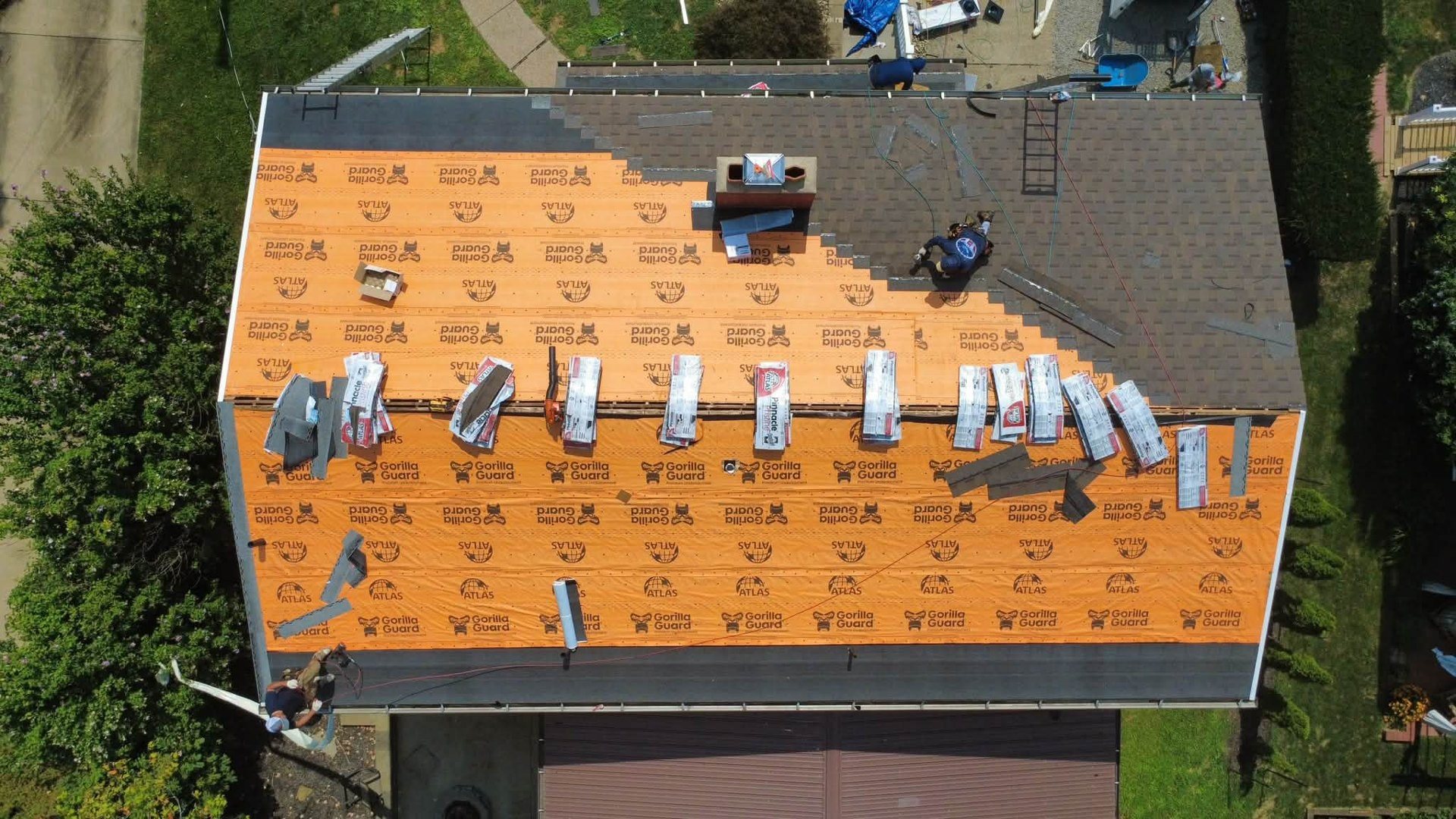
Maintenance by roof type
| Roof type | What to watch for | Typical maintenance |
|---|---|---|
| Asphalt shingles | Granule loss, lifted tabs, cracked pipe boots, algae streaks | Twice yearly visual check, gutter cleaning, spot shingle and flashing repair |
| Standing seam metal | Loose fasteners on exposed fastener panels, sealant at penetrations, debris in seams | Keep panels clear of leaves, check fastener gaskets and sealant every few years |
| Slate | Slipped or cracked slates, rusted nails and flashing, failed valley metal | Never walk it; have a slate roofer replace individual slates and renew flashing as needed |
| EPDM and flat roofs | Ponding water, open seams, cracked sealant at drains and curbs | Clear drains each fall, inspect seams yearly, recoat or reseal before leaks start |
How often should a roof be inspected in Pittsburgh?

Twice a year from the ground, in spring and fall, plus a look after any storm with strong wind or hail. A professional inspection once a year is worth it for any roof over ten years old, for slate and flat roofs, and for any home with heavy tree cover. If you are buying a home, a roofer will tell you how many years are actually left far better than a general home inspector.
Our inspections cover the roof surface, flashing, penetrations, gutters, and the attic when it is accessible. You get photos and a written summary. If a repair is warranted we quote it in writing, and if the roof is fine we tell you that.
Frequently asked questions
What does roof maintenance include?
Clearing gutters and downspouts, removing debris from the roof surface and valleys, checking shingles for lifting or loss, inspecting flashing and sealant at chimneys, vents, and walls, confirming attic ventilation is working, and repairing small problems before they spread. On flat roofs it also includes clearing drains and checking seams.
How long does an asphalt shingle roof last in Pittsburgh?
It depends on the shingle grade, the installation, ventilation, and how well it is maintained. Architectural shingles from major manufacturers carry long warranties, but a poorly vented attic, clogged gutters, and ignored storm damage take years off any roof here. A maintained roof generally reaches the life its manufacturer intended; a neglected one usually does not.
What causes roof leaks in Pittsburgh homes?
Flashing failures at chimneys and sidewalls, cracked pipe boots, ice dams at the eaves, wind lifted shingles, and clogged gutters that push water back under the shingle edge. Worn out shingles across the whole roof are a less common cause than most homeowners expect, which is why an inspection often finds a repair rather than a replacement.
Can I do roof maintenance myself?
Ground level tasks, yes: visual checks, gutter cleaning from a stable ladder with a spotter, tree trimming, attic checks, and snow raking. Anything that requires walking the roof, replacing shingles, or working on flashing is roofer work, both for safety and because mistakes there create the leaks you were trying to prevent.
Does skipping maintenance affect my roof warranty?
It can. Manufacturer warranties cover material defects, not damage from neglect, clogged gutters, or unrepaired storm damage. Keeping the roof clear and fixing problems promptly keeps the warranty intact. We register Atlas warranties on complete Atlas systems we install and can explain what yours requires.
Do you offer roof maintenance plans in Pittsburgh?
We handle maintenance as scheduled inspections and repairs rather than a prepaid plan. Most homeowners are best served by a fall inspection each year with any needed repairs done at the same visit. Call us and we will set up a recurring schedule that fits your roof.
Schedule your inspection
A roof in Pittsburgh does not get a season off. If it has been more than a year since anyone looked at yours, or if a storm has come through, contact Malick Brothers Exteriors to schedule an inspection. We will tell you what we find, show you the photos, and give you a free written estimate only if something actually needs work. Whether it is a roof repair, new seamless gutters, or eventually a roof replacement, we are the local crew that will still be here next season.