I’ve seen it happen more times than I can count. A building manager notices a small stain on a ceiling tile, shrugs, and says they’ll deal with it next quarter. Six months later, they’re staring at tens of thousands of dollars in structural damage. The truth about delayed roof repair risks is that they compound fast. What starts as a minor fix can spiral into a crisis if you let it sit.
How Commercial Roof Damage Progression Starts Small and Gets Expensive
Most commercial roof problems don’t announce themselves with a dramatic collapse. They whisper. A tiny crack in the membrane lets moisture seep in, saturating the insulation beneath. Wet insulation loses nearly all of its thermal value, and suddenly your HVAC system is running overtime. Over weeks and months, commercial roof damage progression moves from a surface issue to a structural one.
Wood decking rots. Steel corrodes. Ceilings sag. At that point, you’re no longer looking at a patch job. You’re looking at tearing out entire sections and rebuilding from the deck up.
What Is the Most Common Roof Repair?
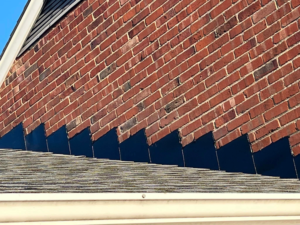
Leak repair and flashing replacement top the list. Flashing protects every joint, seam, and penetration point on your roof, and it takes the brunt of thermal expansion and weather exposure. When flashing fails, water finds its way in almost immediately.
Beyond flashing, membrane patching, sealing punctures, and addressing ponding water are everyday fixes. Single-ply systems like TPO and EPDM perform well on flat commercial roofs, but they’re not immune to punctures or shrinkage. Catching these issues during routine inspections keeps them in the “quick fix” category.
The Real Risks of Ignoring Delayed Roof Repair
Let me be direct: ignoring delayed roof repair risks puts your entire operation at stake. Water damage travels through your building, ruining drywall, flooring, electrical systems, and inventory. I’ve talked to business owners who lost more money replacing damaged equipment than they would have spent on the original repair ten times over.
Then there’s mold. Persistent moisture degrades indoor air quality and can trigger serious health problems for occupants. In a commercial setting, that means employee sick days, tenant complaints, and potential legal liability.
How Much Do Roof Repairs Cost on Average?
The cost of a commercial roof repair depends on the type of work, the roofing system, and how far the damage has spread. A minor fix like re-sealing a seam or patching a small puncture is relatively affordable. But once water has reached the insulation or decking, the price jumps significantly because you’re now dealing with multiple layers of damage instead of one.
A full commercial roof replacement costs many times more than a targeted repair. That gap only widens the longer you wait, because what starts as a single point of failure eventually affects the entire system. Understanding roof repair consequences makes the decision simple: address the problem while it’s small, or pay dramatically more when it’s not.
What Is Involved in a Roof Repair?
It starts with a thorough inspection. Contractors assess the membrane, flashing, drainage, and penetration points. Many use infrared moisture scanning to detect trapped water beneath the surface that you’d never spot visually.
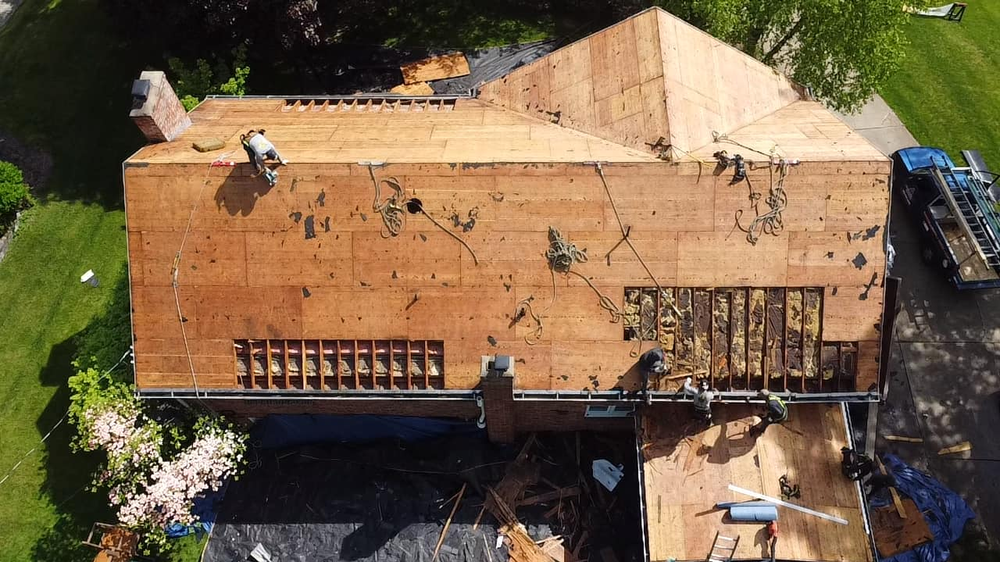
The scope depends on findings. It might be re-sealing seams or replacing damaged flashing. More involved cases require cutting out wet insulation, patching membrane sections, or re-coating the surface. A final inspection confirms everything is watertight.
What Happens If You Delay Commercial Roof Repairs and Insurance Gets Involved?
Here’s something that catches building owners off guard. Most commercial property insurance policies include maintenance clauses. If your insurer determines damage resulted from neglect rather than a covered event, they can deny your claim. Some cancel coverage entirely. The roof repair consequences extend well beyond the roof itself.
Tenants also have legal grounds to pursue action over losses caused by maintenance failures. Between denied claims, legal fees, and lost rental income, the financial exposure is enormous.
Energy Costs and the Hidden Drain of a Compromised Roof
This one sneaks up on you. When insulation becomes saturated, your building loses its thermal barrier. Heat escapes in winter. Cool air escapes in summer. Your HVAC system compensates by working harder, month after month.
Over a year, those increased costs add thousands to your operating budget. Multiply that over several years, and you’ve quietly spent enough to fund the original repair multiple times. Commercial roof damage progression doesn’t just threaten structure. It drains your budget.
Warning Signs You Should Never Ignore
Water stains on ceiling tiles are the earliest indicator. Sagging areas suggest trapped moisture or structural weakening. Damaged flashing around vents, HVAC units, and edges means water has a direct path inside.
Bubbling on the membrane points to moisture trapped between roofing layers. Unexplained energy bill increases could signal insulation failure. If you notice any of these, act immediately. For more on why timing matters, The Real Cost of Delaying Roof Repairs in Western PA breaks down the financial impact in detail.
What Happens If You Delay Commercial Roof Repairs Long Enough?
The worst-case scenario is real. Prolonged neglect leads to catastrophic structural failure. Roof sections can collapse under the weight of trapped water or weakened decking. A collapse shuts down operations for weeks or months. The delayed roof repair risks at that stage are safety risks, not just financial ones.
Even short of collapse, extensive damage means a complete tear-off and replacement. According to the GLE Associates commercial roof cost guide, hidden substrate damage discovered during tear-off can significantly inflate costs beyond initial estimates. That’s money you could have saved by acting early.
The Bottom Line on Protecting Your Commercial Roof
Delaying commercial roof repairs is one of the most expensive decisions a building owner can make. Every week of inaction accelerates commercial roof damage progression and pushes you closer to a replacement costing ten or twenty times more than the original fix. The roof repair consequences touch every part of your operation.
My advice is simple. Schedule inspections twice a year. Address issues the moment they’re found. Partner with a qualified commercial roofing contractor who understands your building. The cost of prevention is always a fraction of the cost of recovery.