Choosing a roof for your business affects energy bills, maintenance costs and the protection of everything inside. In recent years, flat roofs with single‑ply membranes have become the standard for commercial buildings because they are affordable, durable and quick to install. However, not every building benefits from the same material. This guide explains why single‑ply membranes dominate commercial roofing and outlines when other options make sense. Understanding these differences can prevent costly mistakes when it’s time to invest in a new roof.
Understanding commercial roofing systems
Most commercial roofs are either flat/low‑slope or steep‑slope. Flat roofs have a slight pitch for drainage and are common on warehouses and offices. Low‑slope roofs offer similar advantages with a bit more pitch, while steep‑slope roofs resemble residential designs and are chosen for aesthetics or special structural needs. Regardless of slope, a commercial roof must resist harsh weather, support mechanical equipment and comply with building codes.
What is the most common commercial roof type?
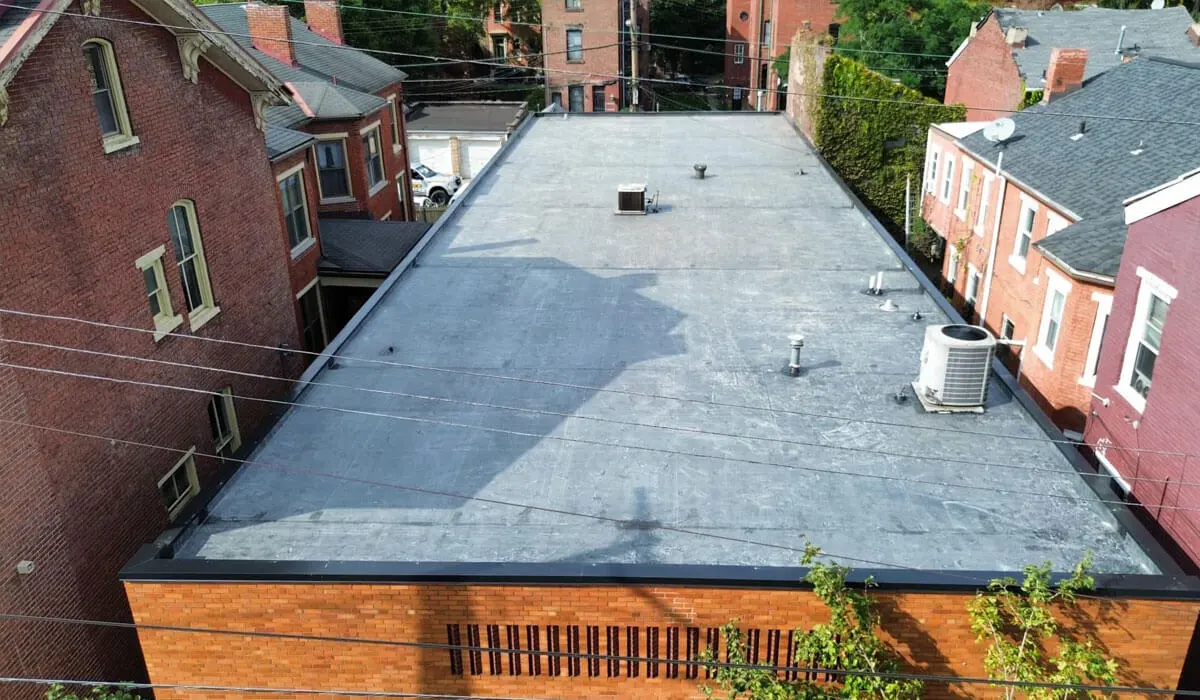
The most prevalent choice is a flat roof covered with a single‑ply membrane like TPO, PVC or EPDM. TPO alone accounts for roughly 40 % of new commercial roofs. These membranes are installed in wide sheets and sealed together, forming a continuous waterproof surface. Single‑ply systems combine low material costs, quick installation and easy maintenance while delivering energy efficiency through reflective surfaces. That’s why they’re often recommended when researching commercial roofing systems, types of commercial roofs or flat roof systems.
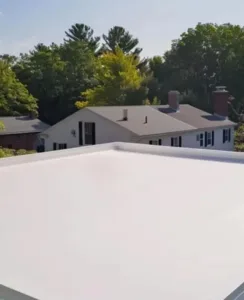
EPDM, TPO and PVC
EPDM is a rubber membrane that lasts 25–30 years and resists UV rays and temperature extremes. TPO is a white membrane that reflects sunlight and resists chemicals, helping lower cooling costs. PVC is heat‑welded at the seams and stands up to oils and industrial pollutants. Each material offers a different balance of durability, energy efficiency and chemical resistance.
Other materials used in commercial roofing
Alternatives to single‑ply membranes include modified bitumen, built‑up roofing (BUR), metal roofing and premium asphalt shingles. Modified bitumen combines asphalt with polymers and handles foot traffic and punctures better than basic membranes but typically lasts only 15–20 years. BUR layers asphalt and reinforcing fabric; it is extremely durable and fire‑resistant but heavy and labor‑intensive to install. Metal roofs can last 40–60 years and offer a distinctive look, though they’re more expensive and may be noisy in storms. Premium asphalt shingles are used on steep‑slope commercial roofs; they’re affordable and attractive but have shorter lifespans.
Central Roofing’s 2025 cost guide lists typical ranges: TPO at $4–$8 per square foot, PVC at $5–$9, modified bitumen from $4.50–$9 and BUR from $5.50–$10. Costs vary with roof size, structural complexity and local codes, but single‑ply membranes generally remain the most cost‑effective option.
Which of the following types of roofs is most commonly used in commercial construction?
Contractors almost always install flat roofs topped with single‑ply membranes because they simplify maintenance and provide accessible space for equipment. In cold climates where snow load is a concern, modified bitumen or BUR systems may perform better. Metal roofs are chosen when longevity and architectural style matter, but single‑ply membranes remain the dominant option because they balance cost and performance. For a deeper look at these options, read this comprehensive guide to commercial roof types from Johnson Restoration.
When do other roofs make sense?
Even though single‑ply membranes are standard, other materials excel in specific situations. Modified bitumen suits low‑slope roofs expecting moderate foot traffic and increased toughness. BUR is ideal for high‑traffic warehouses or manufacturing facilities requiring maximum durability and fire resistance. Metal roofs serve buildings that prioritize longevity and aesthetics. Understanding your building’s needs and environment will guide you toward the right choice.
What is the best roof for a restaurant?
Restaurants and commercial kitchens emit grease and vapors that can damage some membranes. PVC is often the top choice because it resists oils, chemicals and fire. TPO also performs well with its reflective surface and heat‑welded seams. Modified bitumen may be selected if there will be significant foot traffic. Avoid EPDM near grease vents, as certain oils can soften rubber.
What is considered commercial roofing?
A commercial roof is designed for businesses, schools or industrial facilities and must support mechanical systems, resist weather and meet rigorous codes. It can be flat, low‑slope or steep and use materials ranging from single‑ply membranes to metal panels. Commercial roofing is engineered for durability and safety rather than simply scaled‑up residential roofing.
Factors to consider when choosing a commercial roofing system
Selecting a roof involves more than comparing prices. Climate matters: reflective membranes like TPO or PVC excel in hot regions, while modified bitumen or BUR can be better in cold, snowy climates. The building’s structure dictates how much weight the roof can bear, and complex layouts may influence material choice. Consider not only installation costs but also long‑term energy savings and maintenance. Foot traffic, exposure to chemicals or grease, and desired aesthetics also shape your decision.
Choosing the right commercial roof for your business
There is no universal best roof. A flat roof with a single‑ply membrane often offers the best balance of cost and performance for warehouses or offices. If your roof will host equipment or green spaces, reinforced membranes or BUR might be necessary. Metal roofing is an excellent investment when longevity and style are priorities. For a step‑by‑step guide to evaluating materials, see How to Choose the Right Commercial Roofing System for Your Business. Working with a qualified contractor ensures the roof you choose will protect your business, improve energy efficiency and enhance curb appeal.