Ice dams in Pittsburgh show up the same way every winter. A storm drops snow, the afternoon climbs above freezing, the night drops hard, and a few days later there is a ridge of ice along the gutter line and a brown stain spreading across a bedroom ceiling. The ice is the symptom. The cause is almost always heat leaking from the house into the attic and warming the roof deck from below.
This guide covers how ice dams form, why older North Hills and city homes get them so often, what actually prevents them, and what to do when one is already dripping into the house. We are Malick Brothers Exteriors, a family owned roofing company based in West View, and we work all winter. When an ice dam has pushed water under the shingles, that is a job for roof repair in Pittsburgh, not a bag of rock salt.
How ice dams form on a roof
An ice dam needs three things: snow on the roof, a warm roof deck higher up, and a cold roof edge. Heat from the living space rises into the attic, warms the underside of the roof sheathing, and melts the bottom layer of snow. That meltwater runs downhill under the snow blanket until it reaches the eave. The eave hangs out past the heated walls, so it stays at the outdoor temperature. The water refreezes there and builds up a ridge of ice.
Each melt and freeze cycle makes the ridge taller until water pools behind it with nowhere to go. Shingles shed water running downhill; they do not hold back standing water, so the pool works under the shingle laps and into the deck, insulation, wall cavities and drywall. The National Weather Service guidance on preventing roof ice dams comes down to the same fix we recommend: keep the roof deck cold.
Why Pittsburgh homes get ice dams so often
Pittsburgh winters are not the coldest in the country, and that is exactly the problem. Many winter days here cross back and forth over 32 degrees, and a snow pack that melts a little every afternoon and freezes every night is the perfect recipe for a dam.
The housing stock makes it worse. Across West View, Bellevue, Ross Township, Shaler and the city neighborhoods, most homes were built before 1960. Those houses typically have:
- Little or no attic floor insulation, or old insulation that has settled to a fraction of its original depth.
- Finished third floor rooms and knee wall attics with no air space between the ceiling and the roof deck.
- Soffits that were closed in or painted over, so there is no intake ventilation at the eaves.
- Box gutters built into the roof edge, which hold ice and meltwater right where the roof is most vulnerable.
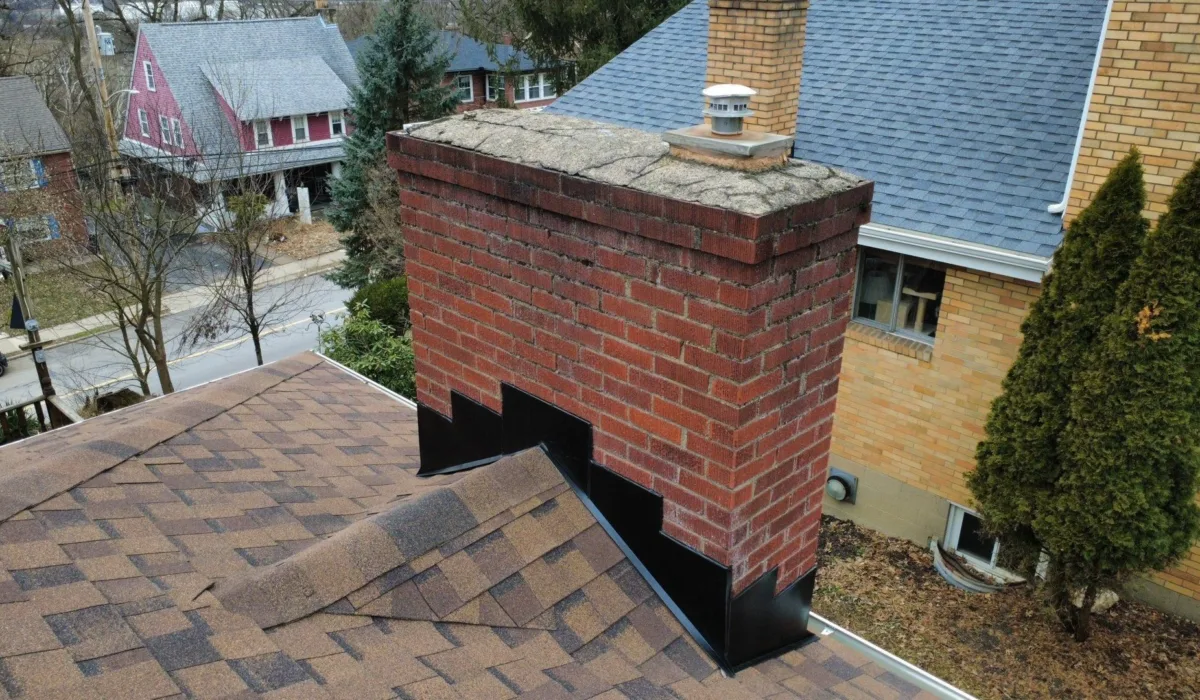
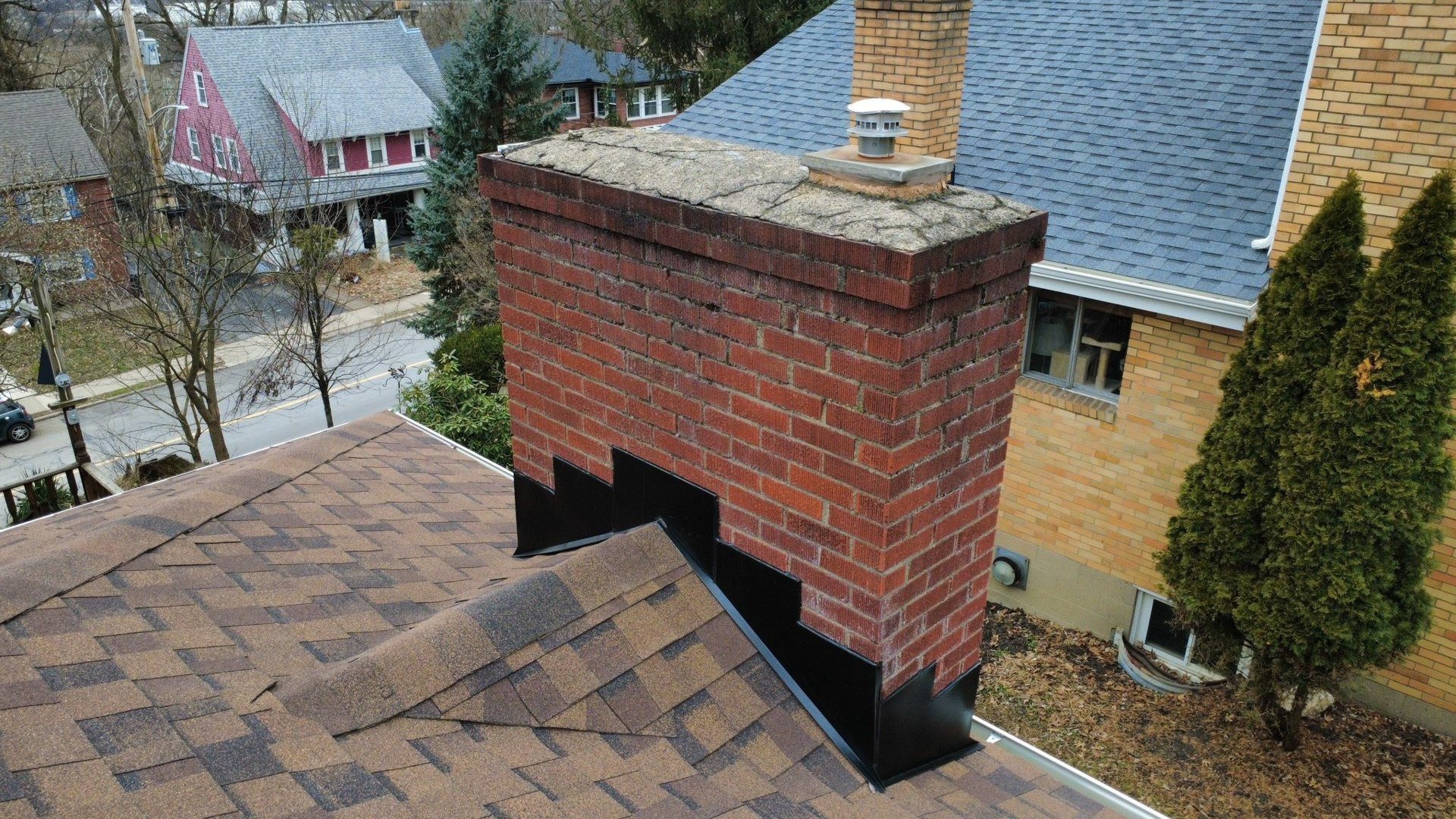
- Chimneys, plumbing stacks, recessed lights and attic hatches that leak warm air straight into the attic.
Newer homes in Cranberry Township, Mars and McCandless are not immune. We see ice dams on 20 year old houses where bathroom fans dump into the attic, where insulation was pushed into the eaves and blocked the soffit vents, or where a north facing valley sits in permanent shade.
Ice Dams: Recent Posts and Insights from Malick Brothers Exteriors
Look for a continuous ridge of ice along the gutter line, icicles forming behind the gutter against the fascia, bare patches of roof above a snow covered eave, and water stains at the top of an exterior wall or along the ceiling edge.
The water that gets past a dam does its damage quietly. Wet decking delaminates. Wet insulation loses most of its value and stays wet for months. Water in a wall cavity feeds mold behind the drywall. Gutters packed with ice pull away from the fascia. On older homes with box gutters, ice opens seams in the lining and sends water into the cornice. If you only patch the ceiling stain, you will do it again next winter.
How to prevent ice dams: start in the attic
Every reliable ice dam prevention method comes down to one goal: keep the whole roof surface at the same temperature as the outside air so snow does not melt from below. Three things get you there.
1. Air sealing
Warm air leaking into the attic carries far more heat than conduction through the ceiling. Weatherstrip the attic hatch, seal around plumbing stacks, wiring and the chimney chase, and make sure bathroom, kitchen and dryer fans vent outside, never into the attic.
2. Attic insulation
Pittsburgh sits in climate zone 5. The U.S. Department of Energy recommends attic insulation in the range of R49 to R60 for our zone, which works out to roughly 14 to 18 inches of blown fiberglass or cellulose depending on the product. Many homes we inspect have 3 or 4 inches. The Department of Energy insulation guide covers the targets by zone. Add insulation only after air sealing, and keep it out of the eaves with baffles so the soffit vents can breathe.
3. Balanced attic ventilation
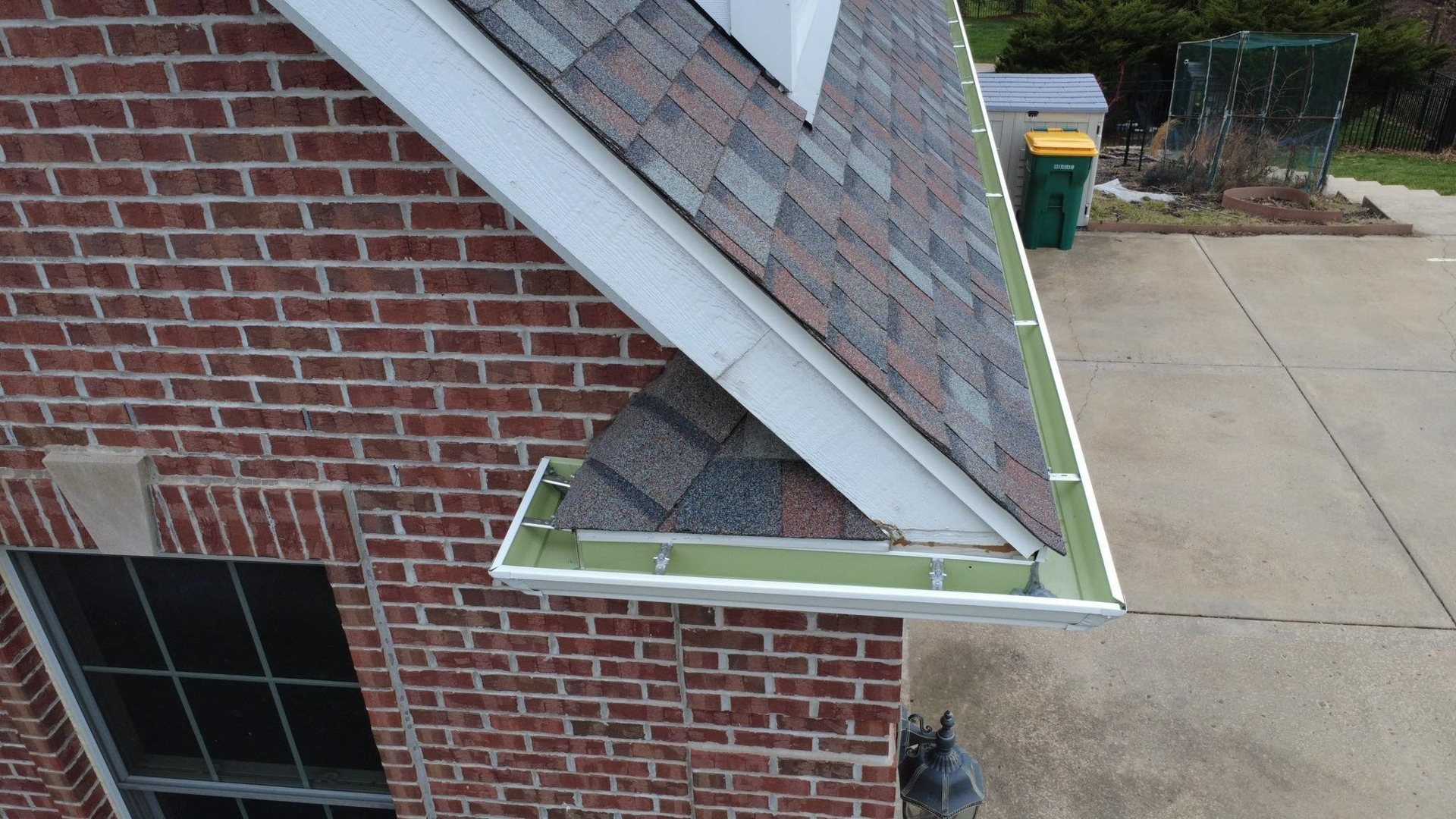
Ventilation flushes out whatever heat does reach the attic. The system needs intake at the soffits and exhaust at the ridge in roughly equal amounts. The International Residential Code calls for 1 square foot of net free vent area for every 150 square feet of attic floor, or 1 for every 300 when the vents are balanced between eaves and ridge. A ridge vent with no working soffit intake moves almost no air.
This is the part of the fix we handle most often. When we replace soffit and fascia, we install vented soffit panels and clear the insulation back from the eave. On a roof replacement we install the Atlas system as it is designed: shingles, underlayment and ridge ventilation as one package.
Roof level defenses against ice dams
Attic work stops the melting. Roof level work limits the damage when a dam forms anyway, which still happens in a bad week of weather.
Ice and water shield
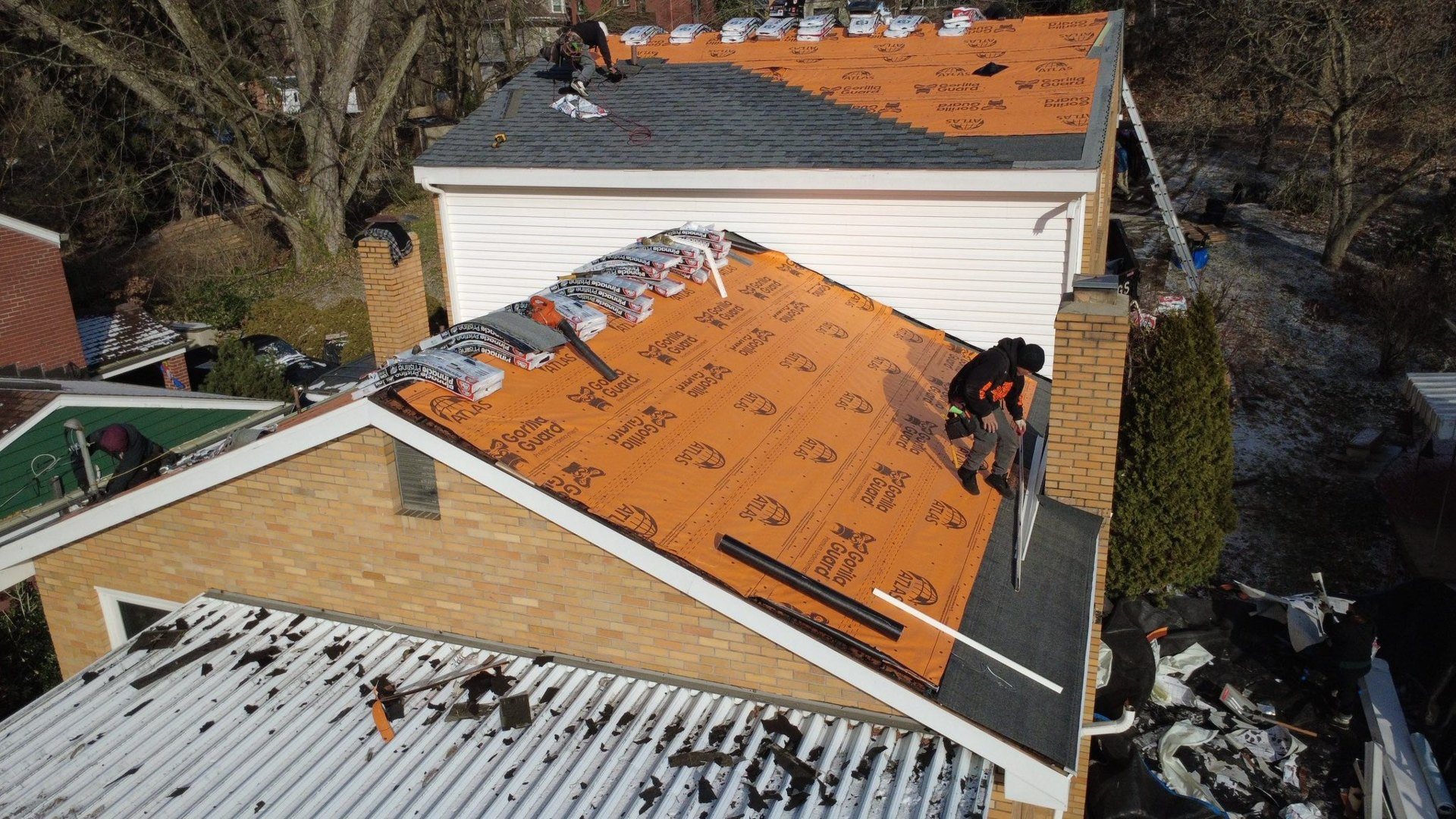
Ice and water shield is a self adhering rubberized membrane applied to the bare deck at the eaves before the shingles. It seals around every nail and keeps standing water from reaching the wood. The International Residential Code (section R905.1.2) requires an ice barrier in areas with a history of ice forming along the eaves, running from the roof edge to at least 24 inches inside the interior face of the exterior wall. We also run it in every valley and around chimneys and skylights.
If your roof was installed without it, there is no way to add it without lifting the shingles, which is one reason an older roof that dams every winter is often better replaced than patched. Our roof replacement work includes ice and water shield at the eaves and valleys as standard.
Gutters and downspouts
Clean gutters do not prevent ice dams, because the dam forms on the roof above the gutter. They do keep meltwater moving and stop the gutter from becoming a frozen trough that backs water onto the shingles. Clear leaves before the first snow. If your gutters are undersized or pulling loose, our gutter services include 5 inch and 6 inch seamless replacements.
Box gutters on older homes
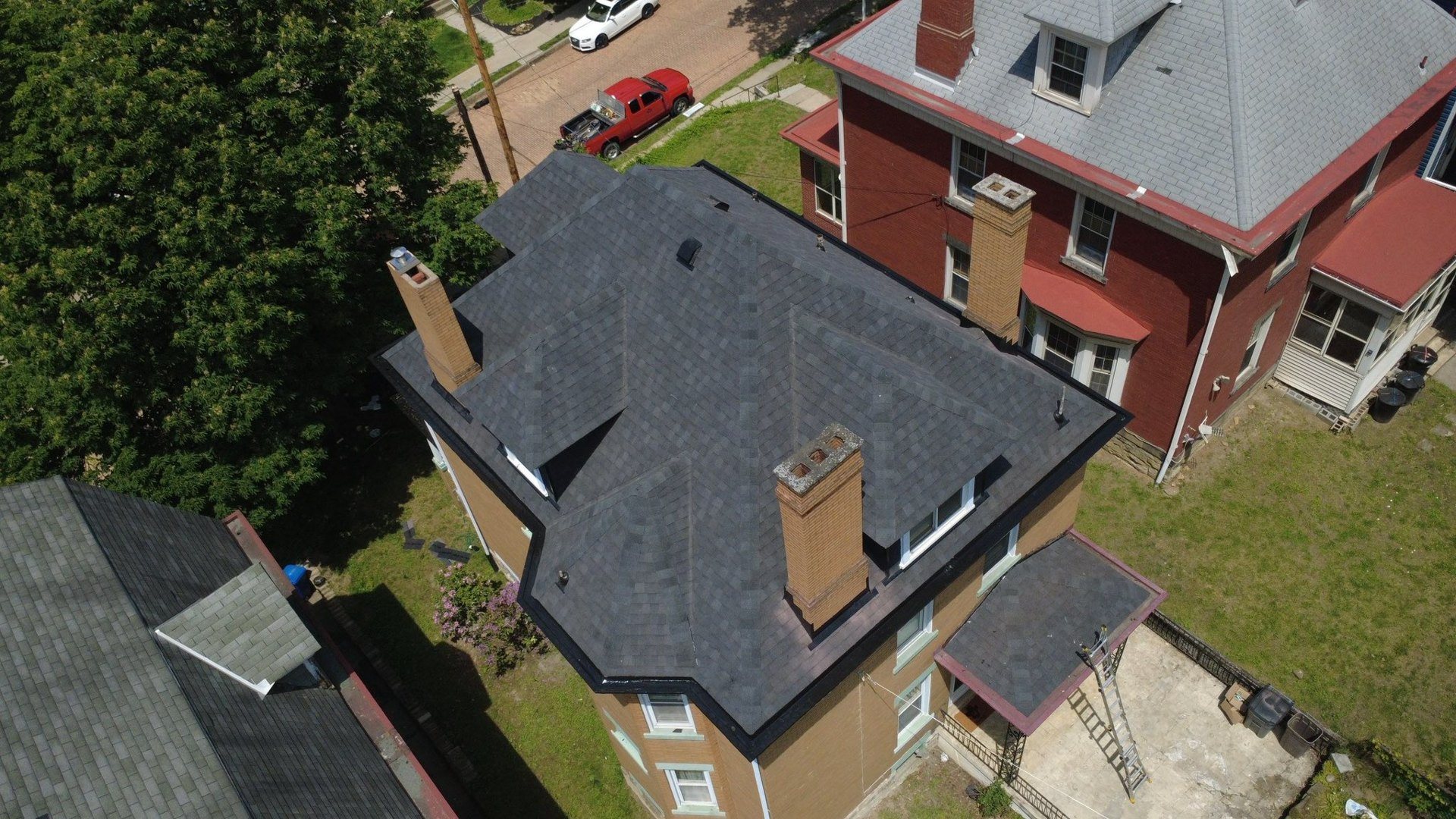
Many pre war homes in Bellevue, West View, Ben Avon and the city have box gutters built into the roof edge and lined with metal. Ice sits in them all winter and works at every seam, and when the lining fails, water runs into the cornice and the wall below. Our repair division handles box gutters, and on several homes we have sealed the lining with a MuleHide silicone coating as part of a new roof, giving the gutter a continuous waterproof surface that ice cannot pry open.
Safe ice dam removal when you already have one
If water is coming in now, the goal is to open a channel so the pool behind the dam can drain. What works:
- Pull snow off the lower 3 to 4 feet of roof with a roof rake from the ground. Leave a thin layer so the rake does not scrape the shingles.
- Fill a leg of pantyhose with calcium chloride ice melt and lay it across the dam so it hangs over the edge. It melts a drainage channel in a few hours. Do not use rock salt, which corrodes metal and damages shingles.
- Run a box fan in the attic aimed at the leak. Cold air on the underside of the deck freezes the water in place and buys time.
What not to do: climb on a snow covered roof, chip at ice with a hammer, hatchet or shovel, or spray hot water from a hose. Chipping shatters shingles, and a chunk of ice coming off a second story eave can take a gutter or a person with it. Low pressure steam by a removal contractor is the only method that reliably clears a dam without harming the roof.
Our crews are roofers, not ice removal specialists. After the January 2026 storms we did offer roof snow removal, but our normal winter work is finding where the water got in, repairing the damage and fixing the roof so the dam does not come back. If you have a leak right now, call us and we will get a tech out to tarp or repair the area and schedule a full roof inspection once the weather allows.
What Malick Brothers does about ice dams
We do not sell attic insulation and we do not advertise ice dam removal. What we do is fix the roof and the roof edge, which is where the water does its damage. On an ice dam call we:
- Inspect the attic for wet sheathing, thin or missing insulation, blocked soffit vents and exhaust fans dumping into the attic.
- Inspect the roof edge for lifted shingles, missing ice and water shield, failed drip edge, damaged fascia and gutters pulled out of line.
- Repair what is leaking, usually new shingles and membrane along the affected eave, new drip edge and resecured gutters.
- Recommend ventilation work where it is missing: vented soffit, ridge vent and baffles.
- Recommend replacement when the roof is near the end of its life or was installed without an ice barrier. A complete Atlas system installed by an AtlasPro+ Platinum Select contractor like us carries the Atlas 50 year warranty.
Every job starts with a free written estimate. We are BBB A+ accredited, a registered Pennsylvania home improvement contractor (PA174918), and our shop is at 500 Perry Highway in West View, so our crews are already in the North Hills when the snow hits.
Frequently asked questions about ice dams
What can I put on my roof to stop ice dams?
Nothing on top of the roof stops the cause. Ice and water shield under the shingles keeps water out of the deck, and heat cables can melt drainage channels. The real fix is under the roof: seal attic air leaks, bring insulation up to the recommended R49 to R60 and balance soffit intake with ridge exhaust.
Does homeowners insurance cover ice dam damage?
Most standard policies cover sudden interior water damage from an ice dam, such as ruined drywall and flooring. They generally do not pay to remove the ice or to repair a roof that failed from age or lack of maintenance. Document the damage with dated photos, call your agent, and have a roofer write up the roof condition for the adjuster.
How do roofers get rid of ice dams?
Removal specialists use low pressure steam to cut channels through the ice without touching the shingles. Chipping, pressure washing and hot water are not safe for the roof. Roofers like us focus on what comes next: finding where the water got in, repairing the eave and fixing the ventilation so the dam does not return.
Are roofers responsible for ice damming?
Only if the roof was installed wrong. A roof missing the ice barrier the code requires, or with a ridge vent and no soffit intake, is an installation problem. In most homes the cause is heat loss from the house, which is an insulation and air sealing issue rather than a roofing defect. A good inspection tells you which one you have.
Will a new roof stop ice dams?
A new roof with ice and water shield at the eaves, proper drip edge and balanced ventilation will stop the leaks and reduce the dams. It cannot fully stop them if the attic still leaks heat and has thin insulation. The best results come from doing the roof and the attic together.
Get the roof edge fixed before the next freeze
If you had an ice dam last winter, the time to fix it is now, while the roof is dry and the attic is easy to work in. We will inspect the roof and the attic, show you photos of what we find and give you a free written estimate for the repair or replacement that fits the house. Contact Malick Brothers Exteriors or call (412) 616-0191 to schedule an inspection anywhere in Pittsburgh and the North Hills.