Frost on the nails, damp insulation and dark stains on the roof sheathing are classic signs of attic condensation. Warm, moist air from the living space rises into a cold attic, hits the underside of the roof deck and turns into water. Left alone, that moisture can rot decking, flatten insulation and grow mold, even when the shingles above are in good shape.
The fix is rarely a single product. Good attic condensation repair stops moist air from getting into the attic and gives the attic a clear path to vent it out. If the deck has already been damaged, it becomes a job for roof repair in Pittsburgh before the problem spreads.
Why Does Attic Condensation Happen in Pittsburgh Homes?
Pittsburgh winters swing between freezing nights and milder days, and that swing is exactly what condensation needs. Showers, cooking, laundry and even breathing put moisture into the air. When that warm air leaks through gaps around light fixtures, bath fans, attic hatches and plumbing stacks, it reaches the coldest surface it can find, which is usually the roof deck.
Older homes across the North Hills and the city often have little or no soffit intake, blocked vents or bath fans that dump straight into the attic. Each of those makes condensation more likely.
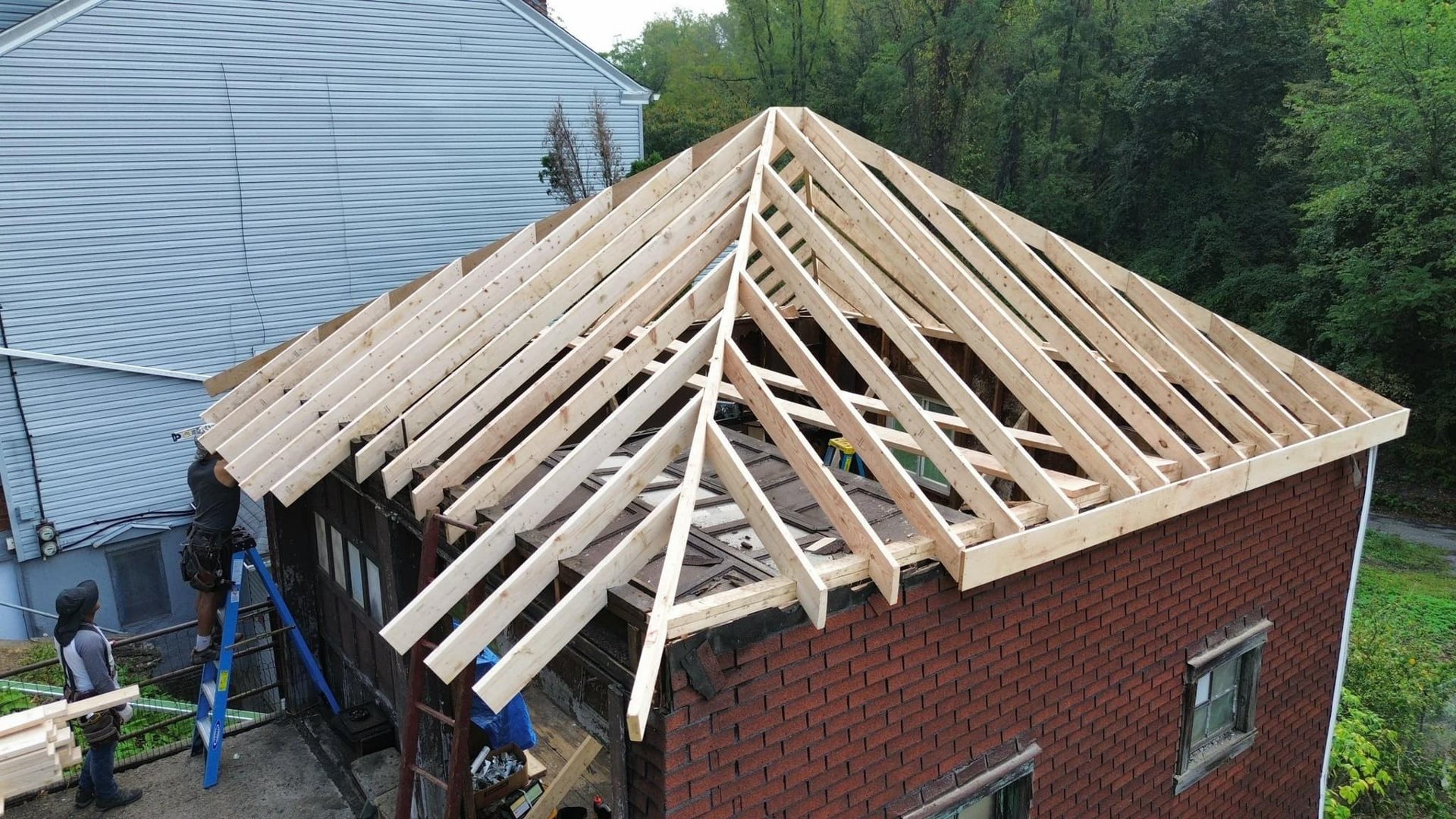
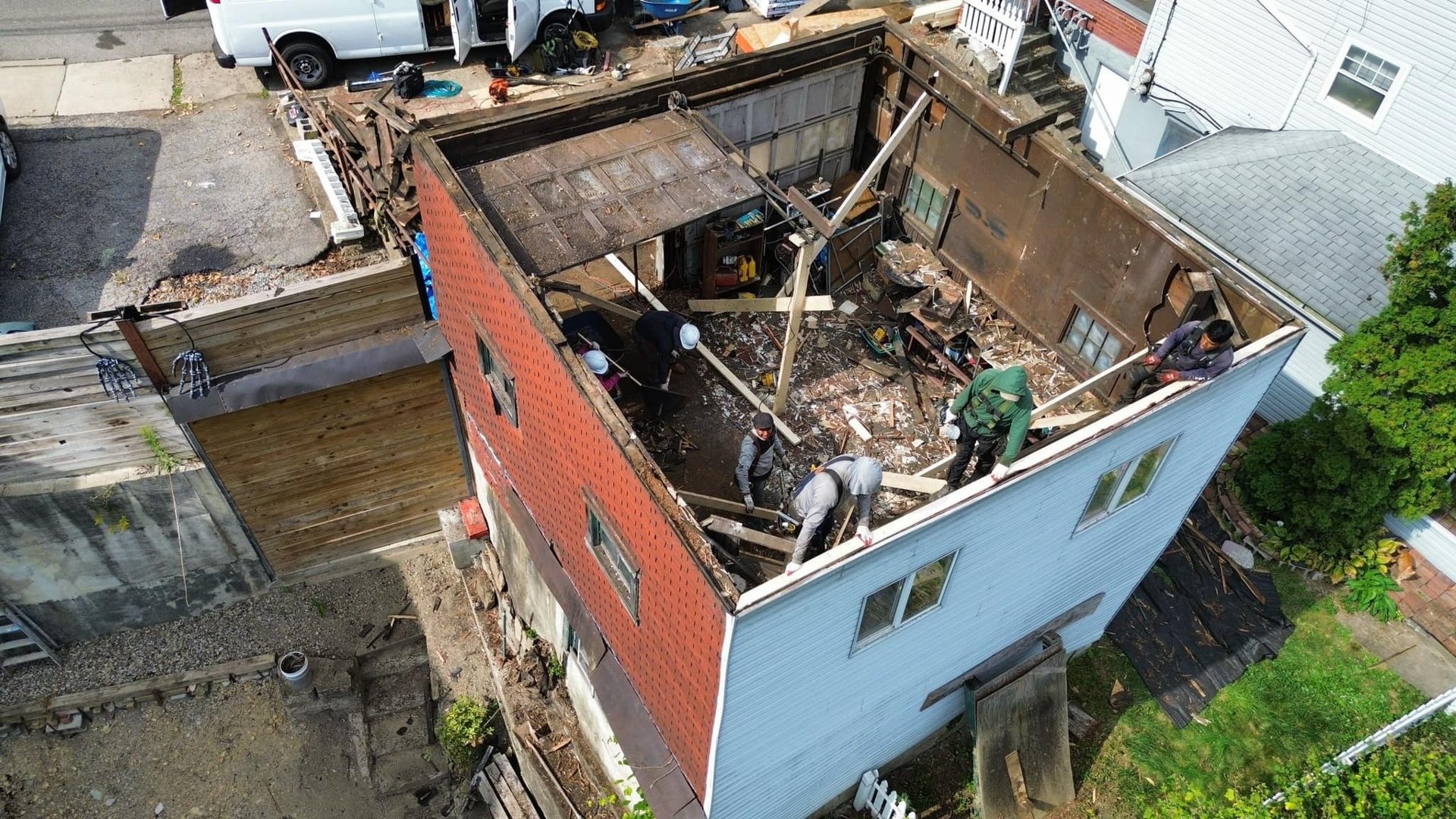
Open framing on a Malick job shows how the roof deck sits right above the attic.
Is It Condensation or a Roof Leak?
The two can look alike from inside, so it helps to look at the pattern. Condensation tends to show up evenly across large areas of the sheathing, often on the north side, and it gets worse on the coldest mornings. A leak usually shows up in one spot, follows a path downhill from a penetration or valley, and gets worse when it rains.
Frost on nail tips
Rows of frosted or rusty nail points poking through the deck point to moisture in the attic air, not water coming through the shingles.
Evenly damp insulation
Wet insulation spread across the whole attic floor usually means condensation. One soaked patch under a pipe or chimney points to a leak.
Stains after cold snaps
If stains grow after a few frigid nights with no rain, condensation is the likely cause.
Drips during rain
Water that only appears during or right after rain is almost always a roof leak that needs a repair.
How Attic Condensation Repair Works
The first step is finding where moist air gets in. Sealing gaps around ceiling fixtures, the attic hatch and pipes cuts off the supply. Bath and kitchen fans should vent all the way outside, never into the attic.
The second step is ventilation. Air should come in low at the soffits and leave high at the ridge. If insulation blocks the soffit vents or the ridge has no exhaust, the attic holds moisture no matter how much you seal below.
When sheathing is too far gone, the damaged boards come off and new decking goes down.
When the Roof Deck Needs Work
Light staining on otherwise solid sheathing can often be dried out and left alone once the cause is fixed. Soft, delaminated or moldy boards are a different story. Those boards can no longer hold nails well, and shingles fastened to them may start to lift.
Replacing damaged decking means removing the shingles over that area, so it is often paired with ventilation upgrades done from the roof side, such as adding a ridge vent. If the roof is near the end of its life anyway, that is the moment to talk about a full replacement.
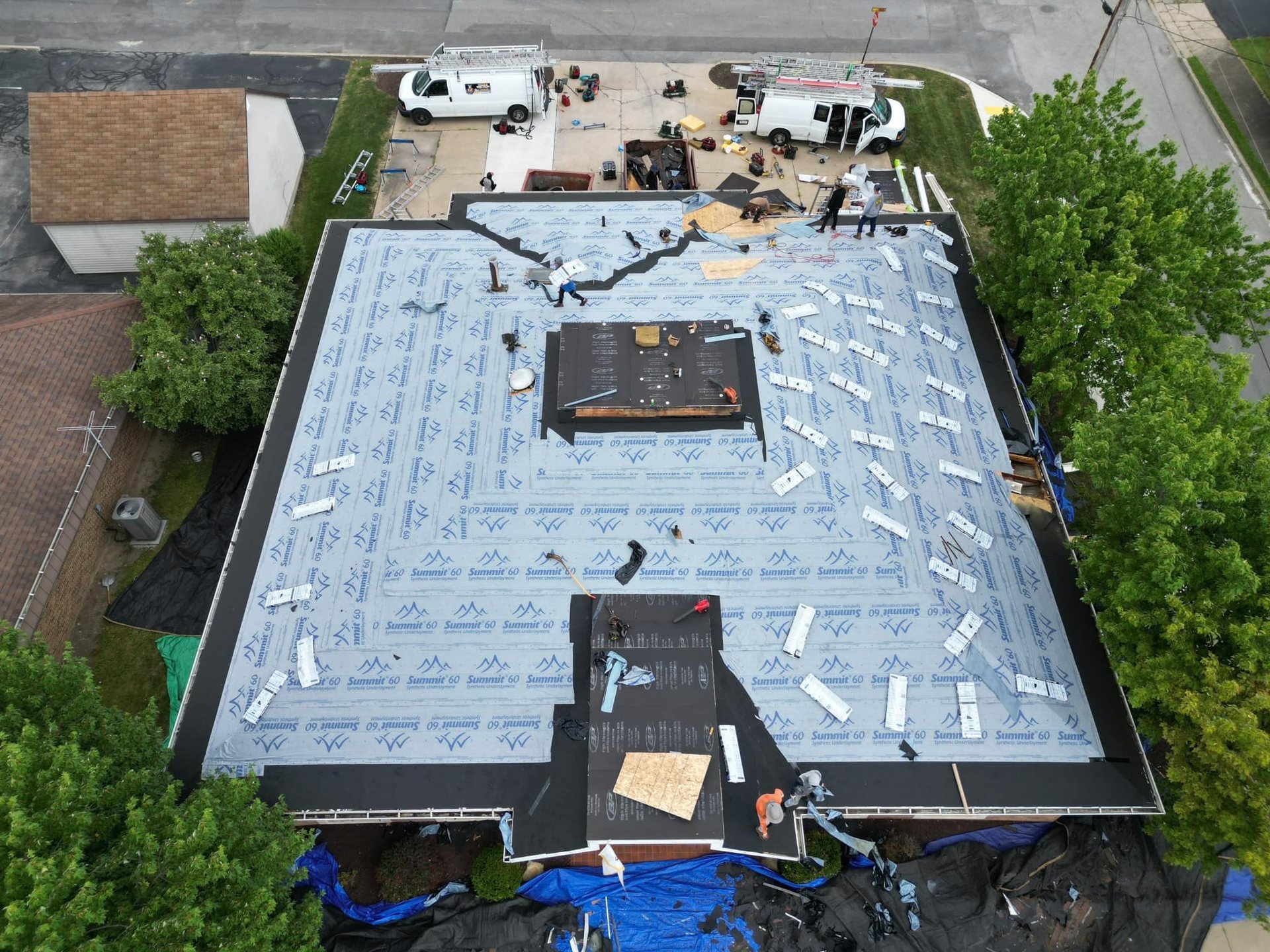
Fresh underlayment and vent openings on a Malick roof before the shingles go on.
Why Bathroom and Kitchen Fans Matter
Bath fans are one of the biggest moisture sources in an attic. A single shower puts a lot of water vapor into the air, and many older fans were installed with a short duct that ends in the insulation or just points toward a soffit. All that damp air settles in the attic instead of leaving the house.
Every bath and kitchen fan should run through an insulated duct to its own exterior cap on the roof or wall. Running the fan for a while after each shower helps too. Fixing fan ducts is often the single change that stops condensation in a home that otherwise looks well vented.
Common Attic Ventilation Mistakes
Ventilation only works when air can travel from low to high. One of the most common mistakes is mixing exhaust types, such as a ridge vent alongside gable vents or a powered fan. The vents can end up pulling air from each other instead of from the soffits, which leaves the lower part of the attic stagnant and damp.
Another mistake is adding exhaust without intake. A ridge vent on a house with no soffit vents has nothing to pull air through, so it does very little. Blocked soffits are just as bad. Insulation pushed into the eaves during a past project can cut off airflow completely without anyone noticing.
Baffles, sometimes called rafter vents, keep a clear channel open between the insulation and the roof deck at each rafter bay. They are inexpensive and make a big difference in older homes where insulation has been added over the years.
How Condensation Affects Your Roof Over Time
Moisture in the attic does its damage slowly. Each winter the sheathing absorbs a little more water and dries out a little less. Over several seasons the wood softens, the layers of plywood or OSB start to separate and nails lose their grip. Shingles fastened to weakened decking can start to lift, buckle or leak even though the shingles themselves are fine.
Mold is the other concern. Dark spotting on the sheathing is a sign that moisture has been sitting long enough for growth. Fixing the cause comes first. After that, damaged boards can be replaced and the attic can be cleaned up so the problem does not come back.
This is why condensation is worth dealing with as soon as you notice it. Catching it early often means sealing a few gaps and fixing a fan duct. Waiting can mean replacing sections of the roof deck.
Keep the Attic Hatch Sealed
The attic hatch or pull down stairs is often the largest single gap between the house and the attic. A loose panel lets warm, moist air flow straight up every time the heat runs. Weatherstripping around the opening and an insulated cover over the hatch cut that airflow and are simple ways to reduce condensation.
What You Can Check Before Calling a Roofer
On a cold morning, take a flashlight into the attic and look at the underside of the roof deck and the nail tips. Check whether insulation is pushed up against the soffit vents and whether any fan ducts end in the attic. Take photos so a roofer can see what you saw.
- Frost, droplets or rust on nail points
- Dark staining or mildew on the sheathing
- Damp or matted insulation
- Fan ducts that stop short of the outside
- Soffit vents blocked by insulation
Related reading: roof ventilation in Pittsburgh and adding soffit vents.
Attic Condensation FAQs
Is attic condensation normal in winter?
A little frost on the coldest nights can happen, but regular dripping, wet insulation or stained sheathing means too much moisture is getting into the attic.
Will more insulation stop attic condensation?
Not on its own. Insulation helps, but the attic still needs air sealing below it and balanced intake and exhaust ventilation.
Can condensation damage a new roof?
Yes. Moisture attacks the decking from underneath, which can loosen nails and shorten the life of the shingles above it.
How long does it take an attic to dry out?
Once moist air is sealed off and ventilation is working, a damp attic usually dries over a few weeks of normal weather. Badly soaked insulation may need to be replaced.
Do I need a roofer or an insulation contractor for attic condensation?
It depends on what the attic shows. If the roof deck is damaged or the roof needs better exhaust or intake vents, a roofer is the right call. Air sealing and insulation work inside the house may also be part of the fix. A roofer can tell you which side of the problem needs attention first.
Does a whole house fan cause attic condensation?
It can if the attic cannot exhaust the air it receives. A whole house fan pushes large amounts of indoor air into the attic, and in cooler months that air carries moisture. The attic needs enough exhaust area to let it out, and the fan should have a tight, insulated cover for the months it is not running.
Get Your Attic Checked by Malick Brothers
Not sure whether that water in the attic is condensation or a leak? We will look at the attic and the roof and tell you which one it is.
Malick Brothers Exteriors is a family owned roofing and exterior contractor at 500 Perry Highway in the North Hills, rated 4.9 on more than 350 Google reviews. Contact us or call (412) 616-0191 to schedule a free inspection and written estimate.