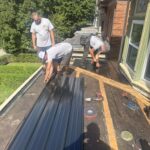
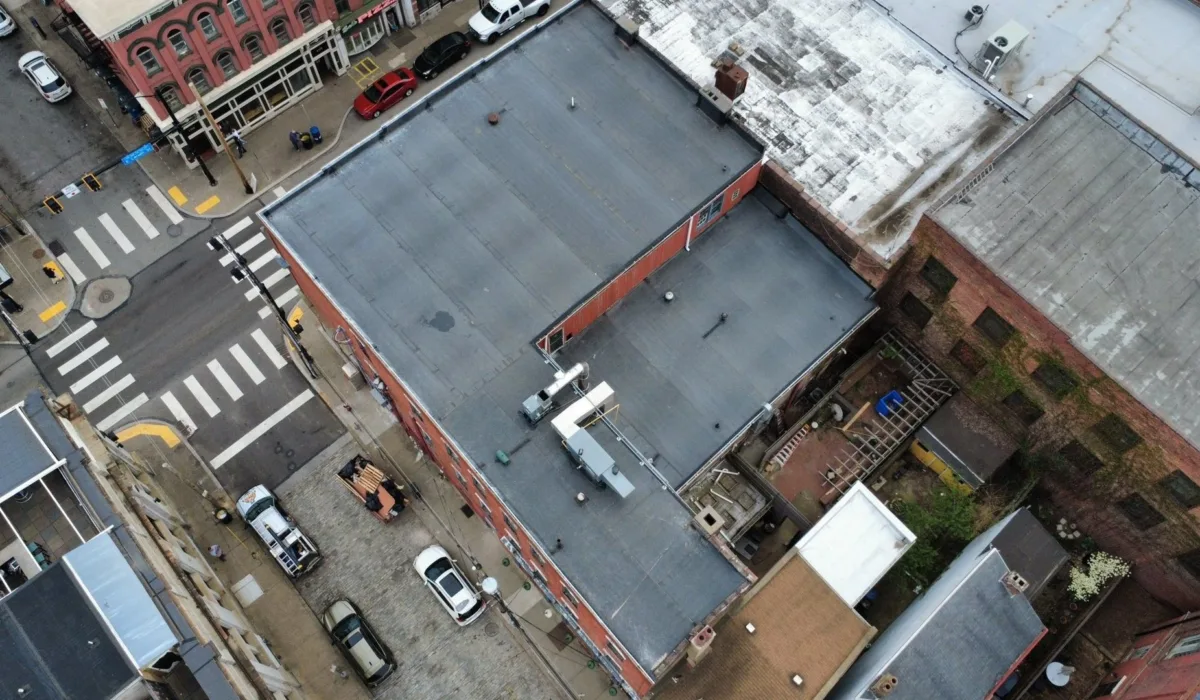
Yes. Most commercial roof repairs in Cranberry Township can be completed during normal business hours while your building stays open, staffed, and operating. Crews work above the roof deck, not inside your space, so the majority of the job happens over your ceiling instead of in your lobby. Noise and access are managed, not eliminated.
That last part is where expectations matter. Building owners often assume "open during repairs" means "nobody will notice." It rarely works that way. With a decent plan, the difference between a smooth repair week and a miserable one comes down to sequencing, communication, and picking a contractor who has done this before on an occupied building. Our commercial roofing crews work out of our shop on Perry Highway in West View, a short drive down Route 19 from Cranberry, and we plan every occupied building job around the people inside it.
So, Can a Commercial Roof Be Repaired During Business Hours in Cranberry Township?
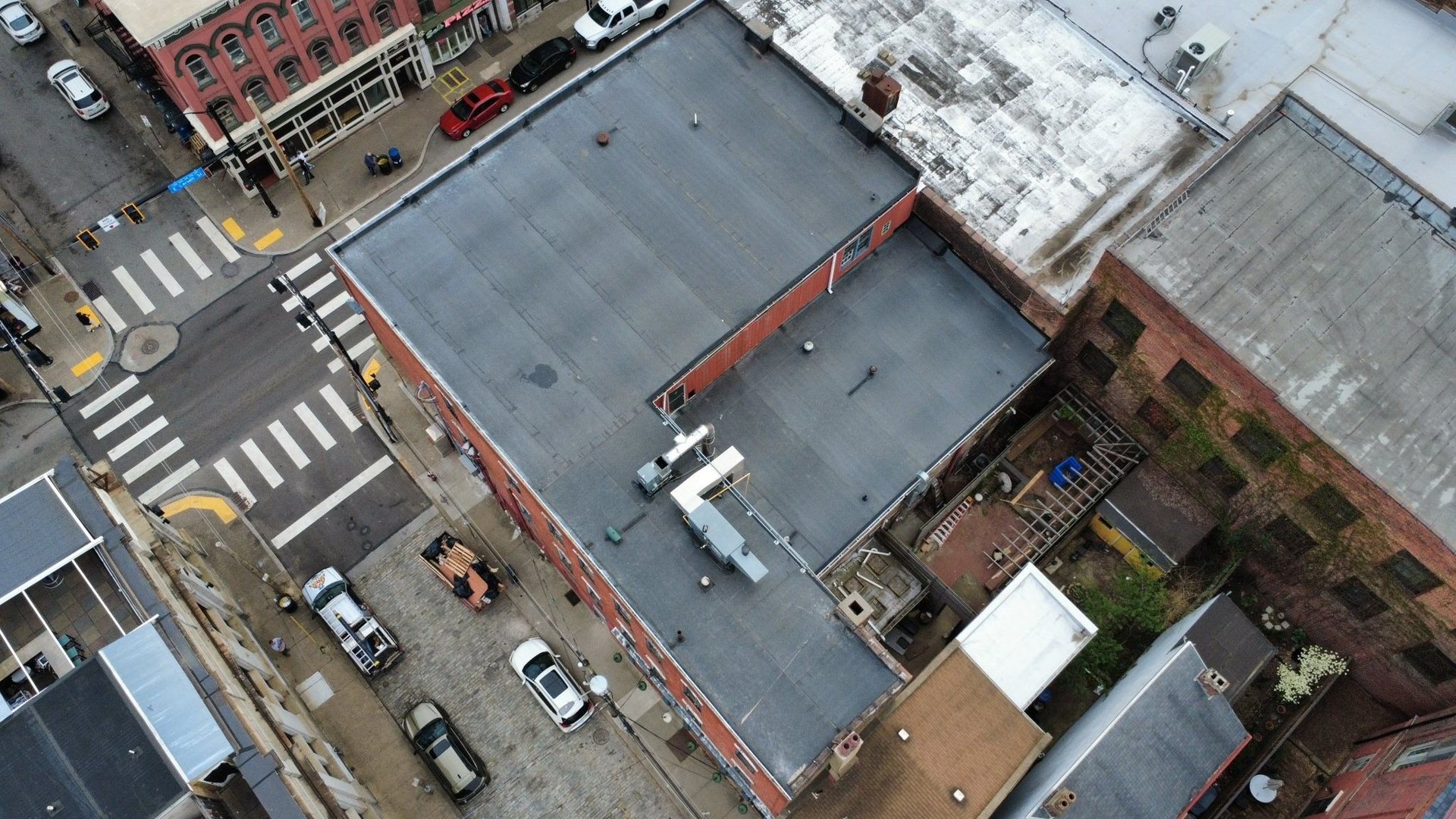
For the vast majority of projects, the answer is a straightforward yes. Leak repairs, seam work, flashing replacement, drain work, and membrane patching all happen on the roof surface. Your employees keep working. Your customers keep coming in.
The exceptions are narrow but real. Full tear offs over occupied space, deck replacement, and any work requiring interior scaffolding or ceiling removal will push into after hours or weekend scheduling. Hot asphalt work on built up systems also creates odor that can travel through rooftop HVAC intakes, and that one catches people off guard.
What Actually Disrupts Your Workday (And What Does Not)
Here is the honest breakdown of what your tenants will and will not notice during a typical repair.
| Type of Work | Typical Duration | Disruption While Open |
|---|---|---|
| Leak diagnosis and inspection | 2 to 4 hours | Almost none |
| Seam repair or membrane patch | 1 day | Light foot traffic overhead |
| Flashing and penetration resealing | 1 to 2 days | Minor noise near work zone |
| Drain or scupper replacement | 1 to 2 days | Localized noise, possible water shutoff |
| Coating or restoration | 3 to 7 days | Odor near HVAC intakes |
| Partial tear off and deck repair | 3 to 10 days | Significant noise and vibration |
| Full replacement | 2 to 6 weeks | Phased, staging area required |
Noise is the most common complaint, and it is usually worse in single story buildings with open ceilings, such as retail strips along Route 19 or medical offices near the Cranberry Woods corridor. Two story buildings with drop ceilings and insulation absorb far more sound. Ask your contractor to identify the loudest phases up front so you can schedule around them.
Can a Roof Be Repaired in a Day?
Often, yes. A single leak with a clear source, an isolated puncture, or a failed pipe boot can be diagnosed and permanently fixed in one visit.
What extends a one day job into a three day job is almost always what is hiding underneath. Saturated insulation, rotted decking, or a leak that traveled twenty feet before it showed up on your ceiling tile all change the scope. A good crew will open the roof at test spots, find the actual moisture boundary, and tell you before they start tearing anything off.
Weather is the other variable. Membrane adhesives and seams need dry surfaces and reasonable temperatures. In Western Pennsylvania, that means late fall and early spring repairs sometimes stall for a day or two waiting on conditions.
What Time Do Roofers Usually Start Working?
Most commercial crews arrive early in the morning and are working by about 8:00 a.m. That is not arbitrary. Early starts let crews get the loudest and most physical work done before summer heat builds on a black membrane, and before your parking lot fills up.
For occupied buildings, this timing is useful. If your business opens at 9:00 or 10:00, the crew has already staged materials, set up safety perimeters, and finished setup noise before your first customer walks in. Some owners request a later start to protect early meetings. That is a reasonable ask, but it can add a day to the schedule.
If you are weighing off hours options, it is worth reading Do Commercial Roofing Companies Work on Weekends in Pittsburgh? for how weekend work is typically scheduled.
How Cranberry Township Rules and Weather Shape the Schedule
Cranberry Township requires building and zoning permits for most construction, though straightforward replacement of a roof covering generally does not trigger a building permit. Structural work, deck replacement, and system changes are a different story. Those need review, and review takes time. Build that into your timeline rather than discovering it on day one, and confirm the current rules with the township before work starts.
Noise is regulated locally in Pennsylvania rather than at the state level, which means daytime construction is broadly acceptable while early morning and late evening work can draw complaints. That is actually an argument in favor of business hours repair. Working 7:00 a.m. to 4:00 p.m. keeps you clearly inside the window where nobody is calling the township.
Then there is weather. Butler County gets meaningful snow, freeze and thaw cycling, and humid summers, and all three punish flat roofs. The practical takeaway: schedule non emergency commercial roof repair in Cranberry Township for late spring through early fall when you can.
What Does a Fair Commercial Roof Repair Quote Look Like?
We do not publish price lists for commercial repairs, because two leaks that look alike from inside can have very different causes on the roof. What drives the number on your quote:
- The size of the affected area and how far moisture has spread into the insulation below.
- The roof system, such as EPDM rubber, a two ply low slope system, or an older built up roof.
- The number of penetrations, curbs, and HVAC units the repair has to work around.
- Whether any decking needs to be replaced once the roof is opened.
- Access, staging, and any scheduling limits your business needs.
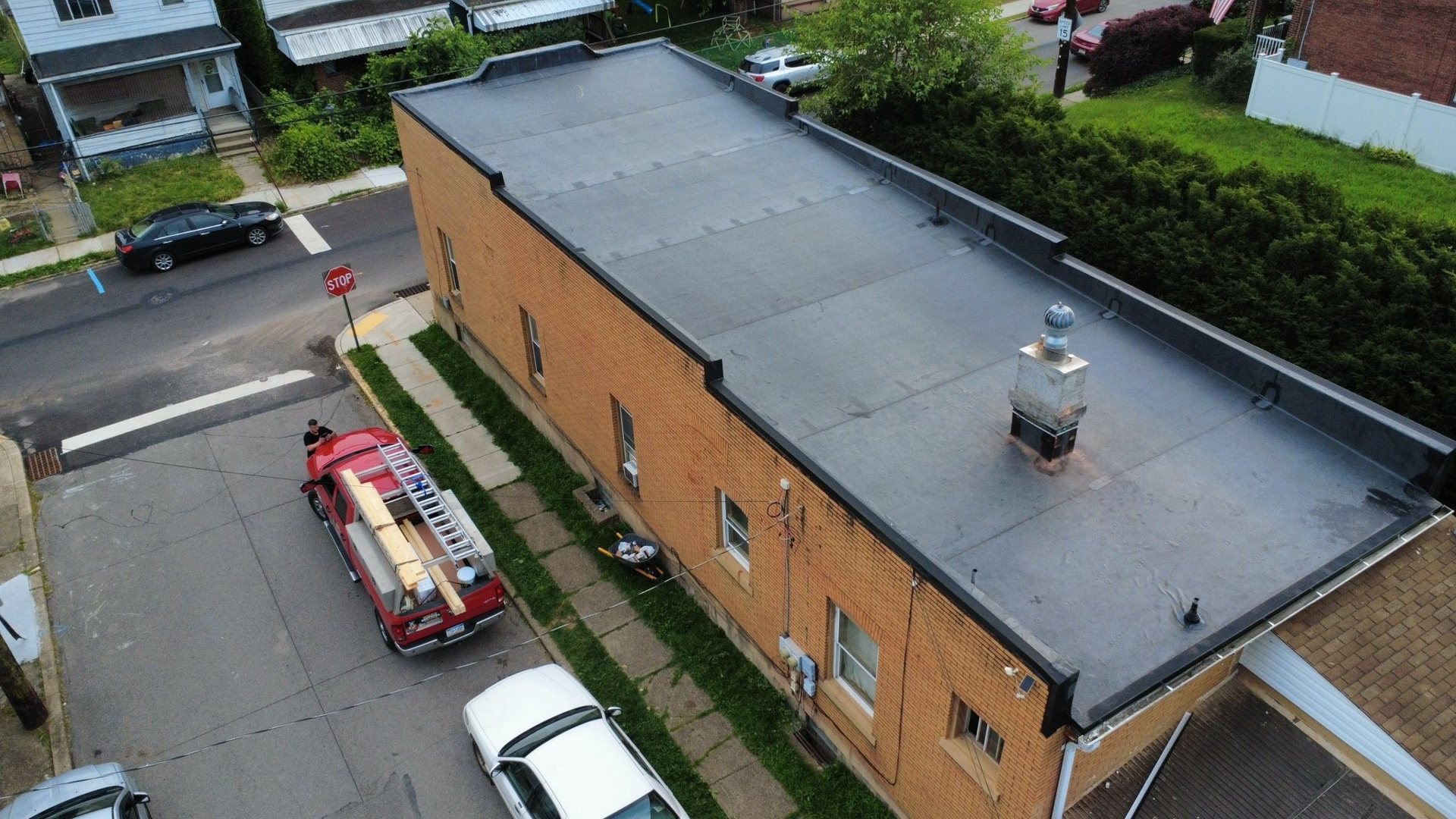
On a structurally sound roof with widespread minor wear, a coating or restoration system is often the smarter move than a string of patches. We install MuleHide silicone coatings for that reason. When the roof is past saving, replacement with MuleHide .060 EPDM or a MuleHide two ply low slope system is the better long term answer.
A fair quote includes diagnosis, not just labor. If a bid arrives without an explanation of why the roof failed, you are buying a patch, not a repair. Ask for photos, the findings, and a written scope. Any competent commercial roofer in Pittsburgh will provide all three without being asked twice. Our free written estimate includes them.
Building Types That Need Extra Planning
Not every occupied building tolerates daytime work equally well. A warehouse in the Thorn Hill industrial area barely registers a roof crew overhead. A pediatric dental practice absolutely does.
Medical and dental offices need noise windows negotiated around procedures. Restaurants need grease exhaust and makeup air units protected, plus assurance that nothing falls into food prep areas. Schools and daycares require hard perimeter control and clear rules for who is on site. Data centers and labs need vibration limits and dust protocols in writing.
Multi tenant properties add another layer. Every tenant needs notice, and at least one will have a legitimate conflict you did not anticipate. Give them two weeks.
How to Prep Your Staff and Tenants Before Crews Arrive
Preparation costs you an hour and saves you a week of friction. Start with a written notice that includes dates, daily hours, expected noise phases, and a contact name.
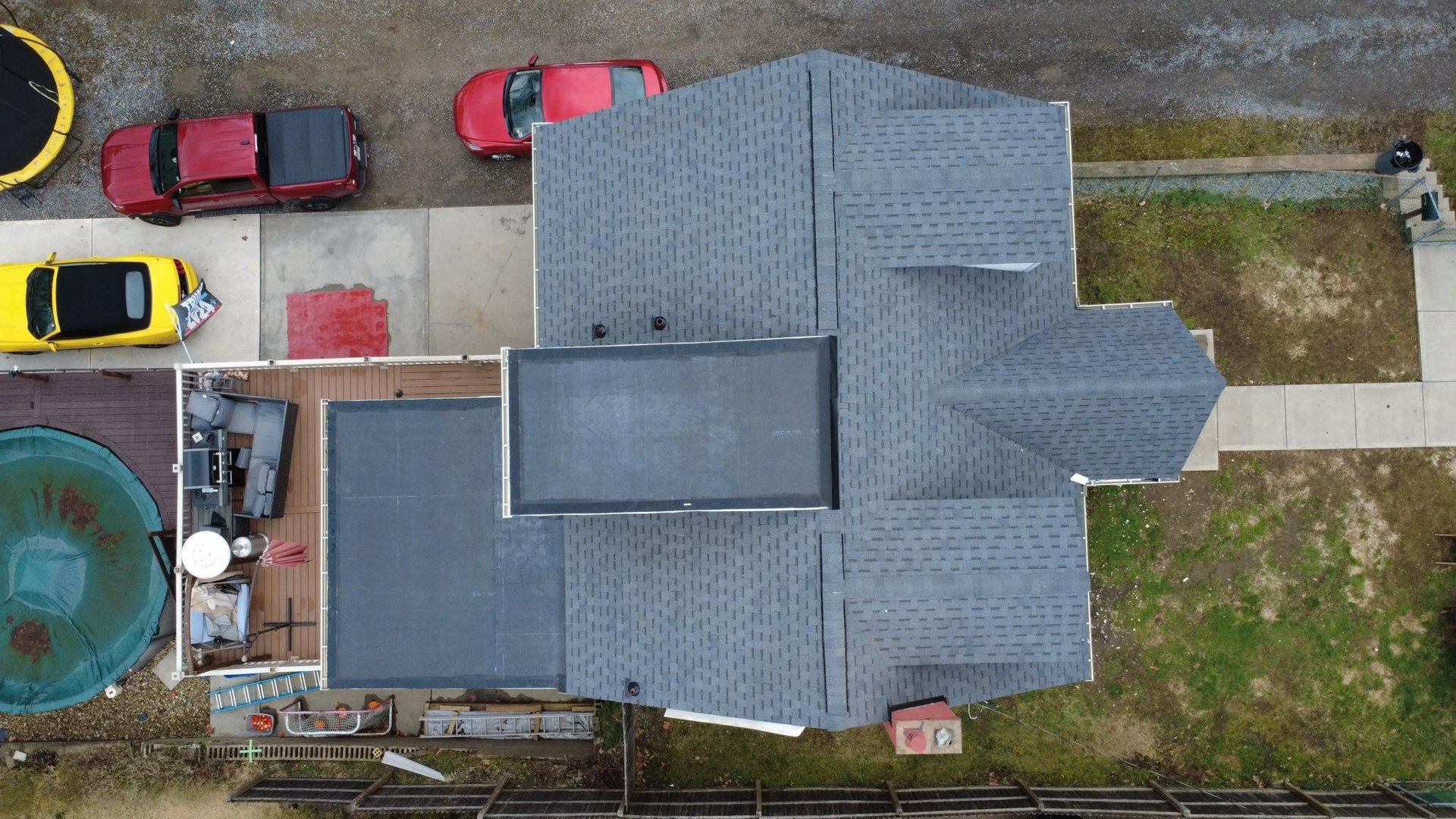
Move sensitive equipment and inventory out from under the work zone, since vibration can shake dust loose from open ceilings. Reserve parking spaces for the dumpster, material staging, and crew vehicles, because this is the most common day one conflict. Confirm who has roof access authority and who does not. Finally, ask whether rooftop HVAC units will be shut down at any point, and for how long.
Cover interior contents near the immediate work area if your ceiling is open deck. It is a cheap precaution.
Questions to Ask Before You Sign
Do you have a safety plan for occupied buildings? What are your daily start and stop times? Which phases are loudest, and can they be scheduled around our peak hours? How do you protect the building overnight if weather moves in mid repair?
Ask about workmanship warranty terms separately from manufacturer warranty terms, because they are different documents with different obligations. Ask for certificates of insurance naming your entity, and check the contractor's Pennsylvania registration. Ours is PA HIC PA174918. And ask how they handle change orders when hidden damage appears, because on flat roofs, it appears often.
Industry guidance on contractor selection and workmanship standards is available through the National Roofing Contractors Association, which is a useful reference for owners evaluating bids.
Frequently Asked Questions
Will my business have to close during a commercial roof repair?
Usually not. Most repairs happen on the roof surface while you stay open. Closures are rare and tend to involve deck replacement or interior work over occupied space.
What commercial roof systems does Malick Brothers work on?
We are MuleHide certified and install MuleHide .060 EPDM rubber, MuleHide two ply low slope systems, and MuleHide silicone coatings. Our repair division also handles flat roofs and box gutters.
How do I find out what my repair will cost?
Ask for a free written estimate. We inspect the roof, photograph what we find, and give you a written scope so you know what is being fixed and why.
Do you work outside Cranberry Township?
Yes. We serve businesses across the Pittsburgh area, including the North Hills, Wexford, Warrendale, and Butler.
The Bottom Line
Business hours repair is the norm, not the exception. The real question is not whether a commercial roof can be repaired during business hours in Cranberry Township. It is whether your contractor plans for occupancy or just shows up and starts working.
Well planned business roof repairs protect revenue while protecting the building. Get the scope in writing, get the schedule agreed to in advance, and give your tenants real notice. Do those three things and most repair weeks pass with nothing worse than some overhead thumping and a full dumpster.
If your building has a leak or a roof that needs attention, contact Malick Brothers Exteriors for a free written estimate. We will look at the roof, tell you what we find, and plan the work around your business hours.