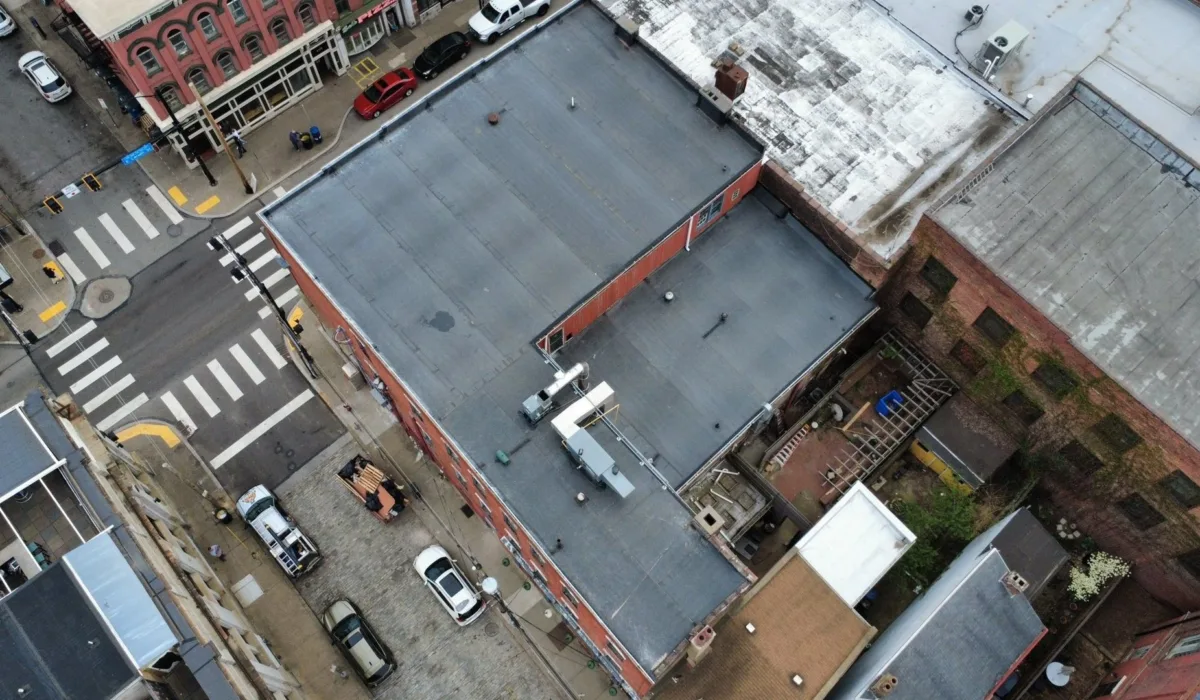
Do roofers work on weekends? For commercial buildings, the honest answer is that many do, but when and how depends on the job, the weather, the building and the rules of the municipality it sits in. If you manage a retail plaza, a medical office, a warehouse or a restaurant in Pittsburgh, you are not really asking about the calendar. You are asking whether a roof can be repaired or replaced without shutting your business down. This guide explains how commercial roofing crews actually schedule their days, what time roofers start and stop, when weekend and after hours work makes sense, and what to expect when a leak shows up at the worst possible moment. We handle commercial roofing in Pittsburgh from our shop at 500 Perry Highway in the North Hills, so the examples below come from the kind of buildings we see every week.
Do Roofers Work on Weekends? The Short Answer
Yes, many commercial roofing contractors work Saturdays, and some will work Sundays for emergencies or deadline driven projects. Saturday is the most common weekend workday in the trade. Sunday work is rarer because of crew rest, noise rules and the simple fact that most suppliers are closed, so a crew that runs short on material on a Sunday morning has no way to finish.
Weekend availability depends on:
- Whether the building is occupied on weekends. A warehouse that is empty Saturday is an easy weekend candidate. A restaurant with its busiest nights Friday and Saturday is the opposite.
- The size of the project. Large tear offs on low slope roofs often run six days a week until they are closed in.
- Crew size. A company with two crews can split weekend coverage; a company with one crew that has worked five ten hour days usually cannot.
- Local noise ordinances. Pittsburgh and the surrounding boroughs and townships each set their own rules for when construction noise is allowed, and weekends are often restricted more tightly than weekdays.
- Material delivery. Most roofing distributors in the Pittsburgh area run weekday hours, so weekend work has to be staged in advance.
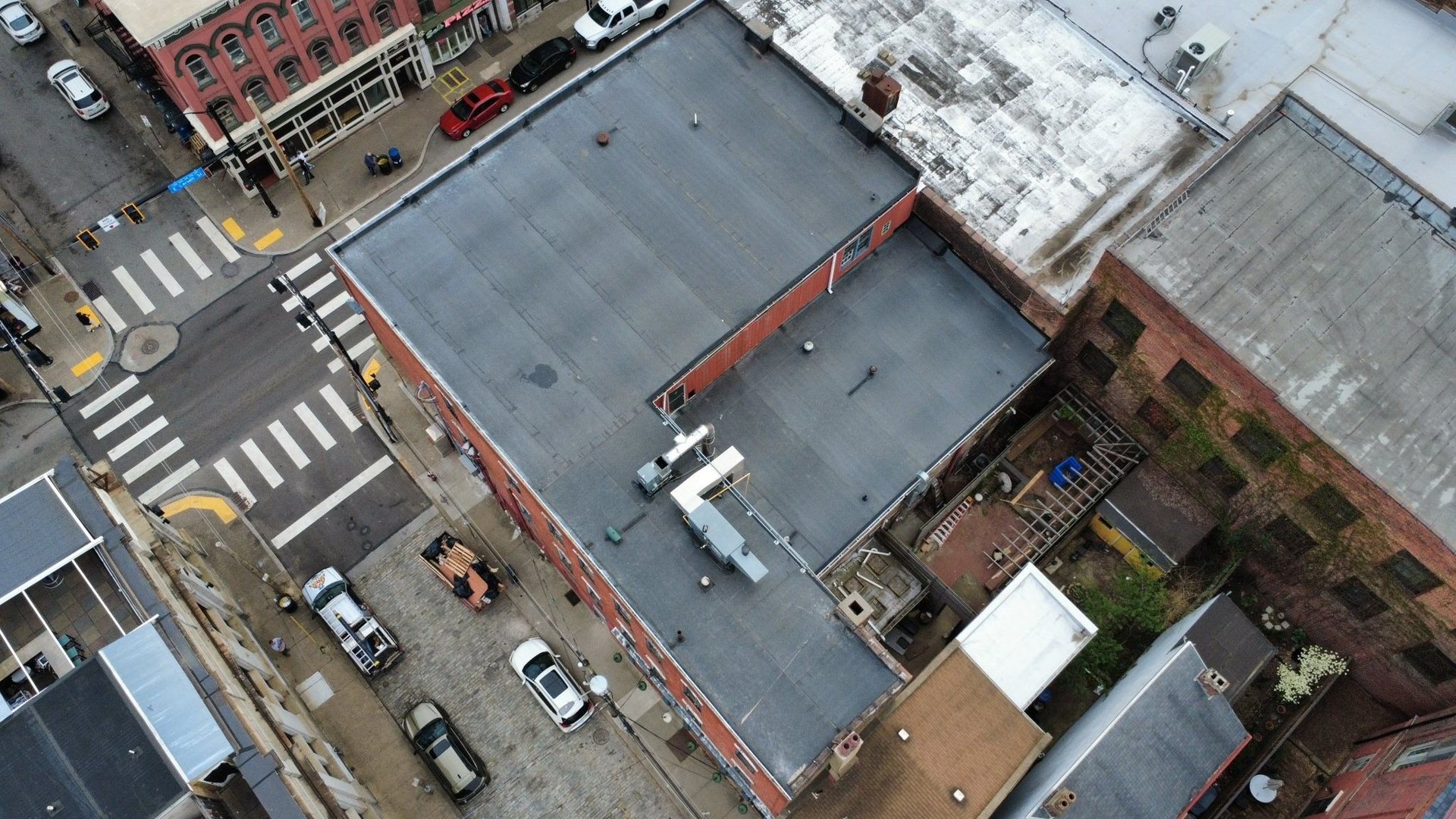
When you call a contractor, ask the question directly: "Can this job be done on a weekend, and what would have to be true to make that work?" A good estimator will tell you about delivery timing, noise rules and whether weekend labor changes the price before you sign anything.
What Time Do Roofers Start and Stop Working?
Commercial roofing crews are early risers. Most crews arrive between 7 and 8 a.m. and are on the roof as soon as the local noise ordinance allows power tools. The workday usually ends between 4 and 6 p.m., with the last hour spent on cleanup, securing loose material and making sure every open seam is sealed before the crew leaves.
Two things move those times around:
- Daylight. In June a Pittsburgh crew can work until 7 or 8 p.m. if the schedule demands it. In December the usable daylight is gone by 5 p.m., and nobody should be installing a membrane by headlamp.
- Heat and cold. On a black EPDM or asphalt roof in July, surface temperatures run far above the air temperature. Crews start earlier, take mandated water and shade breaks and often wrap up early afternoon. OSHA publishes heat exposure guidance that responsible contractors follow. In winter, adhesives, sealants and single ply membranes each have minimum application temperatures set by the manufacturer, so a cold morning may push the start to late morning or cancel the day.
How late roofers work also depends on the phase of the job. Tear off days end early because the crew needs time to dry in the deck. Install days can run long when a section is almost closed and the forecast calls for rain overnight.
Why Commercial Scheduling Is Different From Residential
On a house, the question is whether the homeowner can live with noise and a dumpster for a day or two. On a commercial building, the roof sits over employees, customers, tenants, inventory and equipment, and every one of those has a cost when it is disrupted.
Tenant and customer disruption
Roofing is loud. Tear off of an old built up or modified bitumen roof is the loudest phase, followed by fastening new insulation board and installing metal edge. A dental office cannot run a full schedule under that. A call center can, with warning. The right answer is usually to put the loudest phases outside the building's busiest hours, which is where weekend and after hours scheduling earns its keep.
Access and staging
Commercial jobs need room for a crane or conveyor, a dumpster, pallets of insulation and membrane and a place for the crew to park. On a tight parking lot, that can mean closing part of the lot. Scheduling the crane lift for a Saturday morning, when the lot is empty, is one of the most common reasons weekend work happens on commercial buildings.
Rooftop equipment and odors
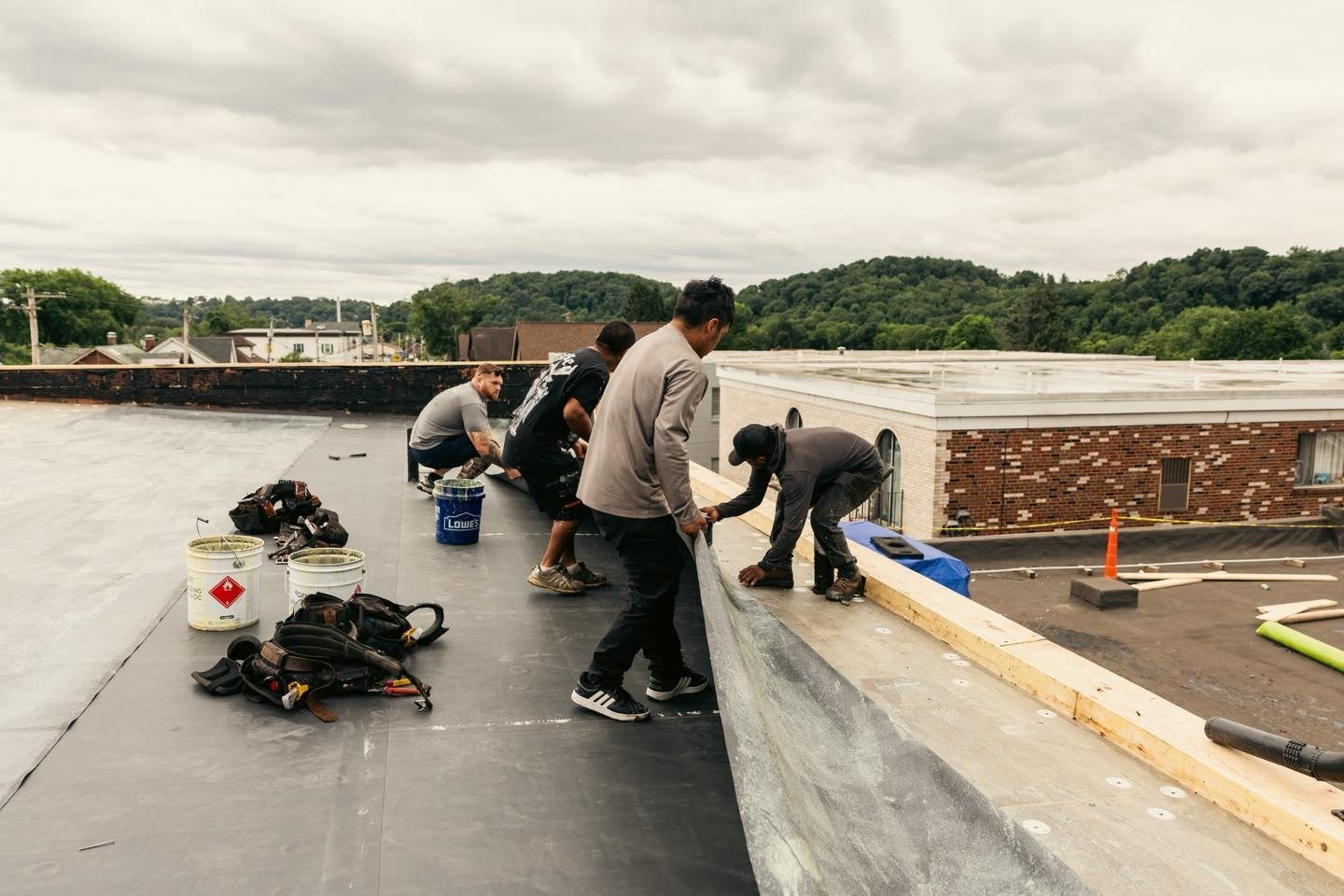
HVAC units, exhaust fans, gas lines and conduit all live on a commercial roof. Sometimes a unit needs to be lifted or disconnected, which requires a mechanical contractor on site at the same time, and adhesives on some systems are noticeable inside when rooftop units pull outside air in. Coordinating those shutdowns dictates the calendar on an occupied building, and the odor producing phases are good candidates for a Saturday.
Weekday, Weekend or After Hours: Which Is Right for Your Building?
There is no single best answer, so here is how we think through it with a property manager.
| Building type | Usual best window | Why |
|---|---|---|
| Warehouse or light industrial | Weekdays or Saturday | Shift schedules are predictable and noise tolerance is high. Loading docks must stay clear. |
| Medical or dental office | Saturday and after hours | Patients cannot be scheduled under tear off noise. Odor control matters. |
| Retail plaza | Early weekday mornings, Saturday mornings for crane lifts | Parking and storefront access are the constraints. Weekend afternoons are usually the busiest trading hours. |
| Restaurant or bar | Weekday mornings before open | Weekends are peak revenue. Exhaust fans and grease ducts need special handling. |
| Church or school | Weekdays in summer, or the days the building is empty | Churches are the one building type where Sunday is off the table and Monday through Saturday are wide open. |
| Apartment building | Weekdays, with written notice to tenants | Tenants are home on weekends and noise complaints rise. Weekday work with a clear schedule posted is the norm. |
In every case, the contractor should give you a written schedule showing which days are tear off, which days are install and when the roof will be watertight at the end of each day. If the contractor cannot commit to that, keep looking.
Emergency Commercial Roof Repair in Pittsburgh: What Actually Happens
Roof emergencies do not wait for business hours. A wind storm peels back a section of EPDM at 2 a.m., or a clogged drain backs up during a downpour and water comes through a ceiling tile onto a server rack.
Here is how an emergency call on a commercial roof usually unfolds:
- Stop the water inside. Move inventory and equipment, put containers under active drips and, if there is a ceiling bulge, poke a small hole to drain it before it collapses.
- Photograph everything. Interior damage, the ceiling, the roof if it can be reached safely. Insurance adjusters want time stamped photos.
- Call the roofer. Describe the building, the roof type if you know it, where the water is coming in and whether the roof is safely accessible.
- Temporary dry in. The first visit is about stopping the leak, not fixing it permanently. On a low slope roof that means clearing drains, patching with compatible membrane or sealant and tarping or ballasting a section that has lifted.
- Permanent repair. Once the weather clears, the roofer comes back to make a proper repair and to tell you honestly whether this was a one time event or the first sign of a roof at the end of its life.
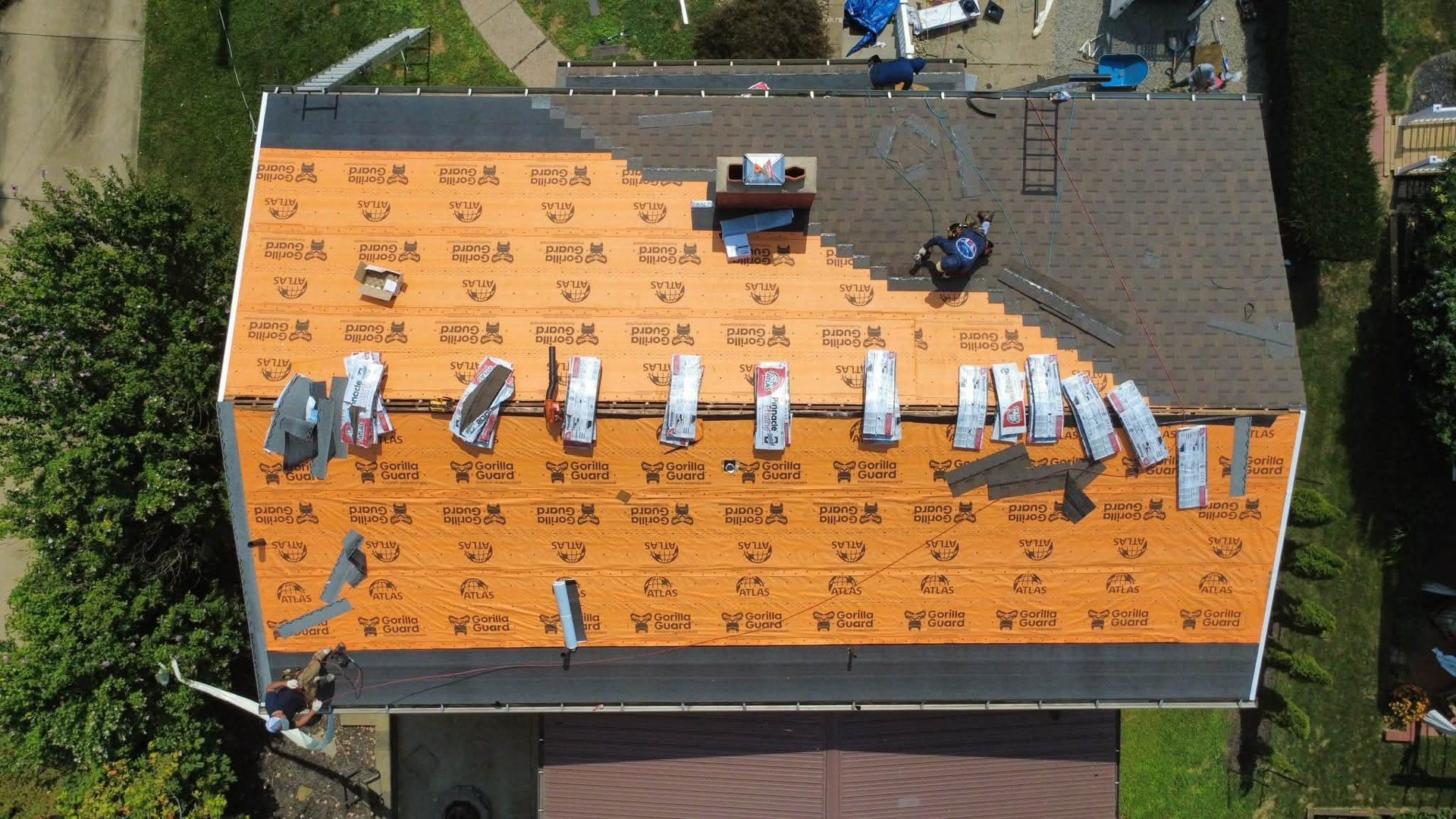
At Malick Brothers, leaks and storm damage are the calls we take most seriously. Customers in our reviews describe same day or next day response on leaks and storm damage and calls returned after hours. We are MuleHide certified for EPDM, two ply low slope systems and silicone coatings, so the material we patch with on an emergency visit is the same material we would use on a full EPDM roof or silicone restoration. We also run a roof inspection service, because the cheapest emergency is the one you catch in October before the snow.
How Pittsburgh Weather Shapes the Roofing Calendar
Pittsburgh has more cloudy days than almost any major city in the country, and that shows up in roofing schedules. A crew can lose two or three days in a week to rain in spring, and a project scheduled to finish on Friday stretches into Saturday. Most commercial contracts include a weather delay clause for exactly this reason, so read it before you sign.
- Spring (March to May): wet and unpredictable. Good for repairs and inspections, risky for multi day replacements without flexibility.
- Summer (June to August): the busiest season. Long days, but heat limits hours on dark roofs and afternoon thunderstorms are common.
- Fall (September to November): the best window for most commercial replacements. Moderate temperatures, lower humidity, fewer storms.
- Winter (December to February): repairs, snow removal and emergency work. Full replacements happen on clear, dry stretches above the manufacturer's minimum temperature, but they take longer and schedules move. We offered roof snow removal after the January 2026 storms because snow load and ice at drains are the two biggest winter threats to a low slope roof.
If you want a weekend only replacement, fall is the season where that plan is most likely to survive the forecast.
Questions to Ask a Commercial Roofer About Scheduling
Before you hire anyone for a commercial roof in Pittsburgh, ask these and write down the answers:
- Which days will you be on site, and what happens if it rains?
- Will the roof be watertight at the end of every workday?
- Who is my single point of contact after hours?
- Where will the dumpster, crane and material go, and for how long?
- Does weekend or after hours work change the estimate, and is that in writing?
- Are you insured for commercial work, and is your Pennsylvania HIC registration current? Ours is PA174918, and you can check any contractor at the Pennsylvania Attorney General's HIC search.
Be cautious of any contractor who promises a date without looking at the roof, asks for full payment up front or pressures you to sign the same day. Commercial decisions take time, and a legitimate roofer expects that.
Frequently Asked Questions
Do roofers work on Saturdays?
Most commercial roofing companies will work Saturdays when the project needs it, and many schedule crane lifts, tear off or odor producing phases on Saturday specifically to keep an occupied building running during the week. Confirm the start time, because many municipalities allow construction noise to begin later on Saturday than on weekdays.
What time do roofers usually stop working?
Commercial crews typically stop between 4 and 6 p.m., with the last hour used to clean up and seal the roof for the night. Summer days can run later with the extra daylight, and winter days end earlier. Heat, cold and rain all shorten the day, and the crew will never leave an open section overnight.
How late can roofers work in Pittsburgh?
That is set by the noise ordinance of the specific city, borough or township, not by the roofer, and the rules vary across Allegheny County. In practice, daylight is the real limit. Ask your contractor to confirm the allowed hours for your address before the job starts so there are no complaints or stop work orders.
Can a commercial roof be replaced in one day?
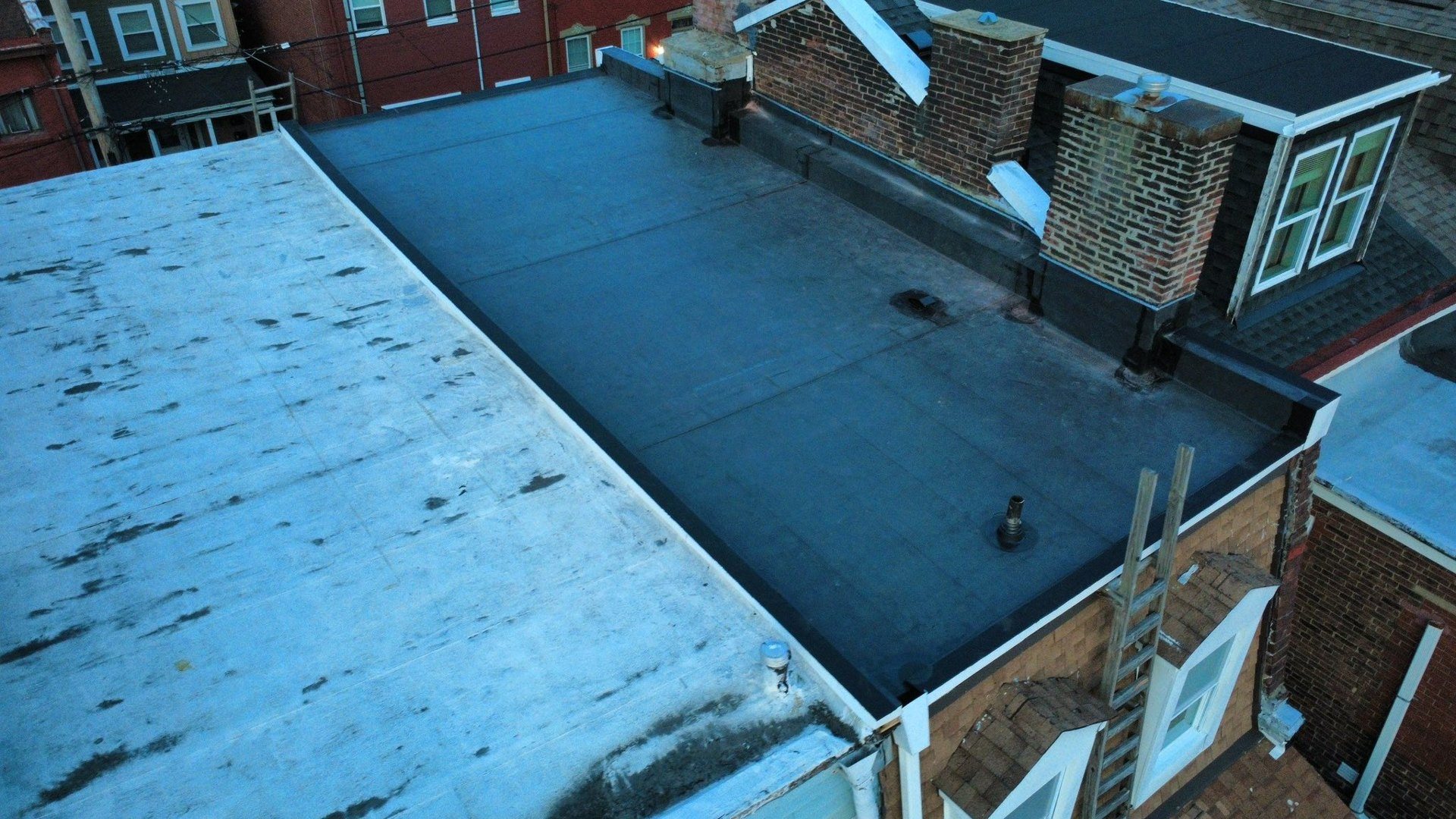
A small low slope roof on a single tenant building sometimes can. Most commercial replacements take several days to a few weeks depending on square footage, the number of layers coming off, rooftop equipment and weather. What matters more than the total is that each day ends watertight.
Do roofing companies charge more for weekend work?
Some do and some do not. Weekend labor and Saturday delivery can affect the estimate, and the only acceptable answer is a written one. We provide a free written estimate for every commercial job that spells out the schedule and anything that changes if work moves to a weekend.
Who do I call for emergency commercial roof repair in Pittsburgh?
Call a roofer who is certified on your roof type and who serves your area. Malick Brothers Exteriors is BBB A+ accredited, MuleHide certified for low slope systems and based in the North Hills. Describe the leak, send photos if you can and tell us whether the roof is safely accessible, and we will get a technician out as quickly as the weather allows.
Need Commercial Roof Work Scheduled Around Your Business?
We build every commercial schedule around the building, not around our calendar. If you have a leak today or a replacement you want handled with the least possible disruption to tenants and customers, contact Malick Brothers Exteriors or call (412) 616-0191. We will look at the roof, give you a free written estimate and a day by day plan, and tell you plainly which parts of the job can happen on a weekend.