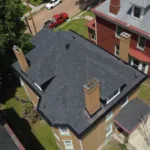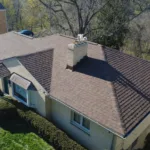
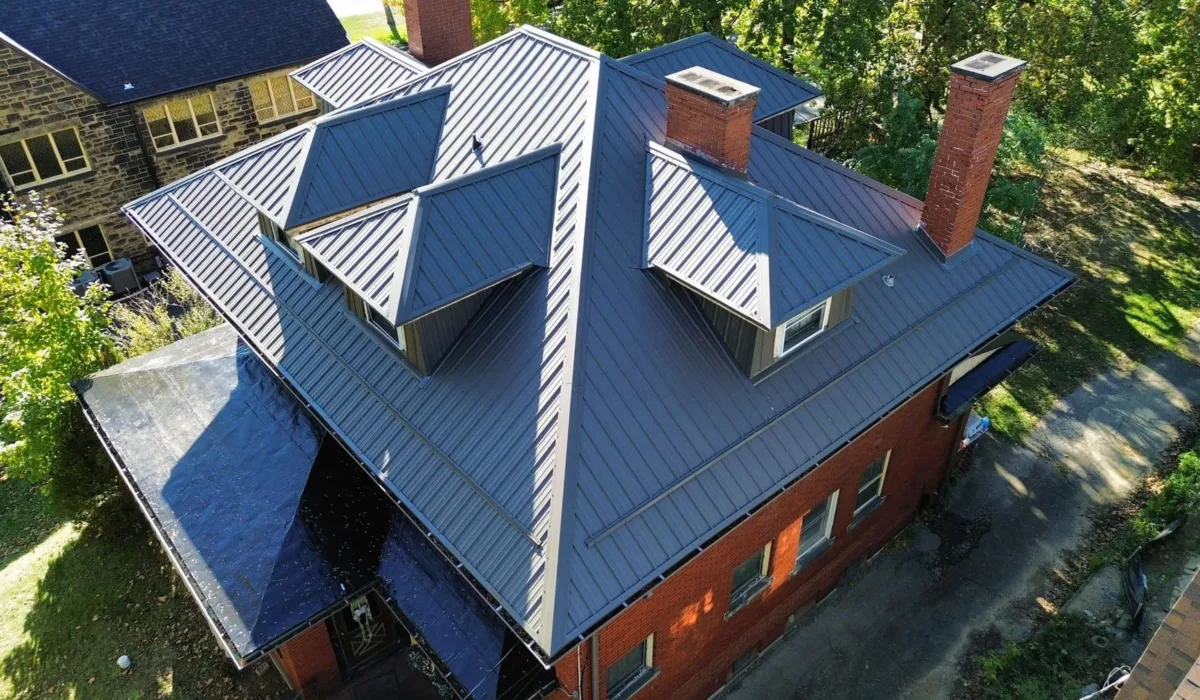
Chimney flashing is the set of metal pieces that seals the joint where a chimney passes through the roof. It is the most common leak point we find on Pittsburgh homes, and it fails for predictable reasons: old brick, soft mortar, tar patches and reroofs that reused the old metal. This guide explains how good chimney flashing is built, which metals hold up here, why old brick chimneys leak, what tar on the flashing tells you, and when flashing should be repaired on its own versus rebuilt during a reroof. If your ceiling already has a stain near the fireplace, our roof repair in Pittsburgh team can inspect the chimney and give you a written answer the same week.
What Chimney Flashing Is and Why It Matters
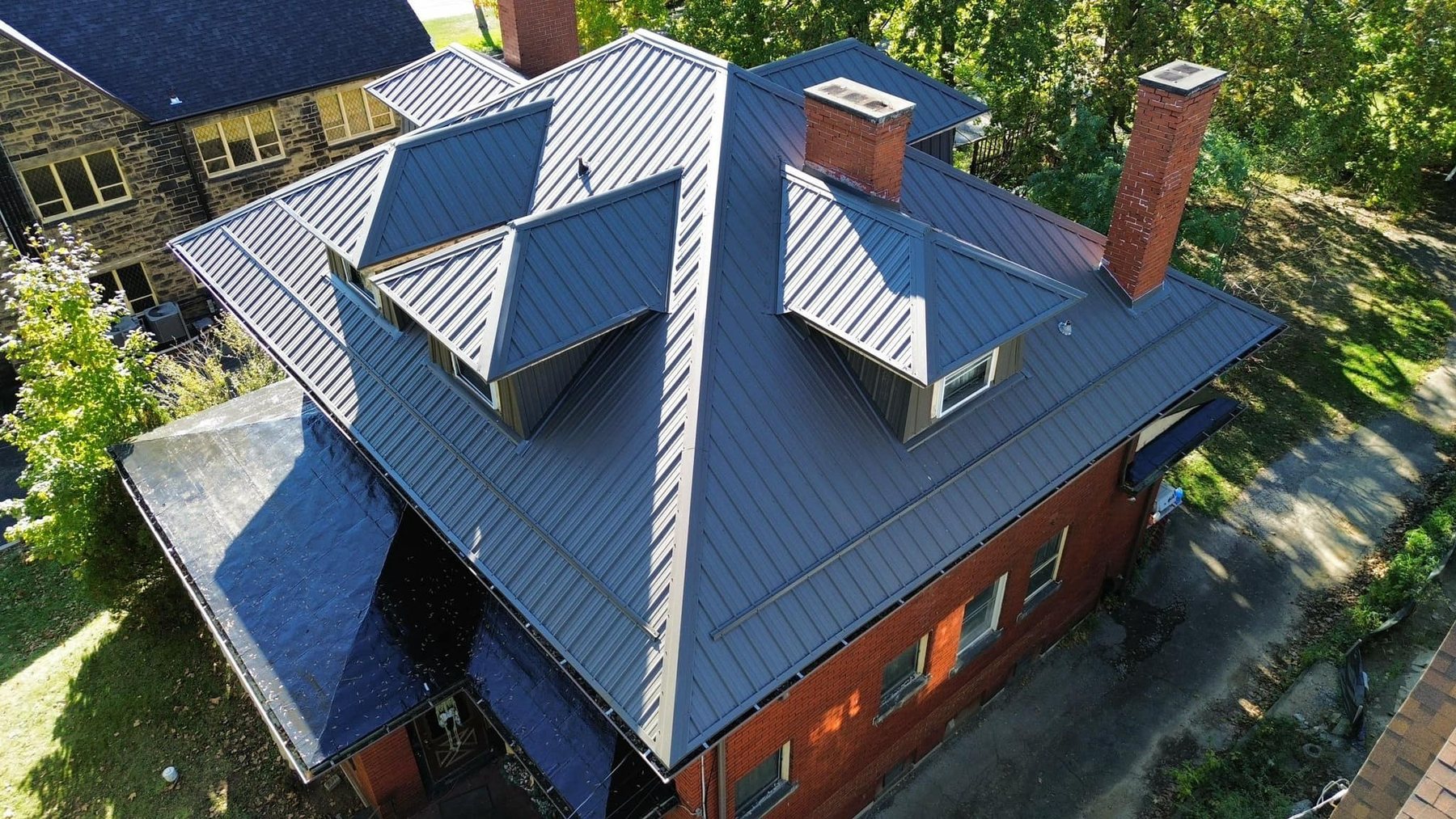
A chimney does not move with the roof. The roof deck expands, contracts and settles with the house frame, while a masonry chimney sits on its own footing and moves on its own schedule. Flashing has to bridge that joint and stay watertight while the two sides shift against each other. That is why proper chimney flashing is always a two part system: one layer fastened to the roof, a second layer fastened to the chimney, with the second lapping over the first and neither one rigidly tied to both.
When that system is missing, water follows the brick down into the attic. On older Pittsburgh houses the chimney often runs through the middle of the home, so the first sign is a stain on a second floor ceiling or damp plaster around the fireplace.
The Parts of a Proper Chimney Flashing System
A correctly flashed brick chimney has four pieces.
Apron (front base flashing)
A single piece of metal on the downhill face of the chimney. It runs up the front of the chimney several inches, bends out over the shingles below it and wraps a few inches around each corner.
Step flashing
Along the two sides of the chimney, individual L shaped pieces are woven in with every course of shingles. One leg lies flat on the roof under the shingle, the other leg stands up against the brick. Each piece overlaps the one below it so water stays on top of the metal all the way down to the apron. Step flashing is nailed to the roof deck only, never to the chimney. A long continuous strip along the side is a shortcut, not step flashing.
Counter flashing (cap flashing)
Counter flashing is cut into the mortar joints of the chimney, bent down over the top of the step flashing and the apron, and left hanging free at the bottom. Because it is anchored only to the masonry, the chimney and the roof can move independently without opening a gap. The American Society of Home Inspectors describes the standard this way in its guide to chimney flashings: base flashing secured to the deck, cap flashing secured to the masonry, with enough overlap between them to allow movement. Surface mounted counter flashing screwed to the face of the brick and caulked along the top is a cheaper substitute that depends entirely on the caulk.
Cricket (saddle)
On the uphill side of a chimney, water, leaves and snow pile up against the brick. A cricket is a small peaked roof built behind the chimney that splits that flow and sends it around both sides. The International Residential Code requires a cricket or saddle on any chimney more than 30 inches wide measured across the slope (see IRC R903.2.2). Many Pittsburgh chimneys are wider than that and were built before the rule existed. A chimney leaking only on its uphill side almost always needs a cricket.
Flashing Materials: Aluminum, Galvanized Steel and Copper
The metal matters at a chimney because the flashing touches mortar and sits in a spot that stays wet.
| Material | Where it belongs | What to know |
|---|---|---|
| Aluminum | Sided chimneys, chases, framed walls, kitchen and bath vent flashing | Light and easy to bend on site. It should not touch masonry: the lime in mortar corrodes aluminum. |
| Galvanized steel | Most brick chimneys on asphalt shingle roofs | Compatible with mortar, stiff enough to hold a reglet bend, available painted to match shingles. It rusts where the coating is scratched or where water stands, so a cricket matters. |
| Copper | Slate, tile and premium shingle roofs, historic homes, any roof expected to outlive one shingle cycle | Does not rust, solders into one continuous assembly and lasts for decades. It must be fastened with copper or brass nails. We installed copper chimney flashing with a MuleHide EPDM low slope section on a Mt. Washington home in 2025. |
Lead and lead coated copper also appear on slate roofs, where they are still appropriate. On a standing seam metal roof the step flashing becomes a continuous side flashing locked into the panel seams, with counter flashing still set into the masonry above it. A chimney wrapped in siding is flashed like a wall, and aluminum is fine there because nothing touches mortar. The one material that never belongs on a chimney is tar.
Why Old Brick Chimneys in Pittsburgh Leak
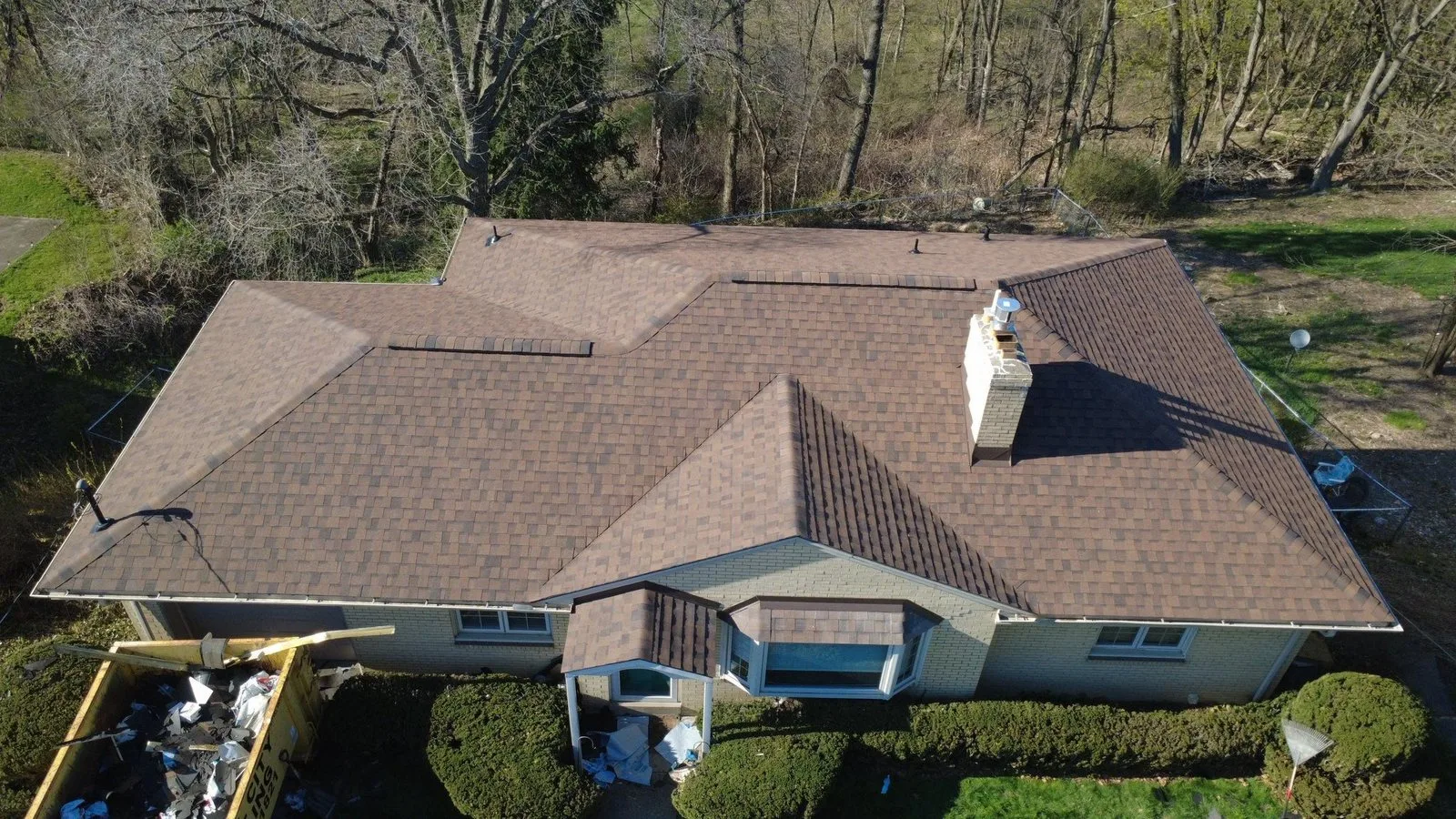
Pittsburgh, the North Hills and the river towns are full of brick houses built between 1900 and 1960. Those chimneys were built for coal furnaces and have been through 60 to 120 freeze and thaw winters. Several things go wrong at once.
- Soft mortar joints. Old lime mortar erodes. When the joints recede, counter flashing that was once set an inch into the mortar is now holding on by a sliver, and water runs behind it.
- Spalling brick. Water gets into the face of the brick, freezes, and pops the surface off. A spalled chimney cannot hold a clean reglet and sheds grit onto the flashing below.
- Missing or cracked crown. The concrete cap on top of the chimney cracks, water soaks down through the masonry and shows up at the flashing line even though the flashing itself is fine. Repointing and a new crown are masonry work; we will tell you when the leak is the chimney and not the roof.
- Chimneys abandoned after a furnace conversion. Many of the worst failures we see are on chimneys nobody has looked at since the gas furnace went in.
- Reroofs that reused the old metal. Each time a roof was replaced, the easy option was to leave the old counter flashing in the wall and slide new step flashing under it. After two or three cycles the counter flashing is bent, short and caulked.
Freeze and thaw does the rest: water behind loose flashing in December freezes, pries the metal farther from the brick, and the opening is bigger by March.
Tar on the Flashing Is a Warning Sign
If you look at your chimney from the ground or from a photo and see black roofing cement smeared along the base, or a bead of caulk running the full length of the counter flashing, the flashing has already failed once. Tar is a temporary patch. It sticks to dirty metal and brick for a season or two, then dries, shrinks and cracks, and the leak returns in the same spot. It also hides the metal underneath, so nobody can see whether there is step flashing at all.
Caulk has one legitimate role: sealing the top edge of counter flashing inside the reglet. When we find tar at a chimney, we assume the flashing needs to be rebuilt rather than add another layer on top.
How to Tell If Your Chimney Flashing Is Failing
- A water stain on the ceiling or wall within a few feet of the chimney, usually after a long rain rather than a brief storm
- Dark streaks or white efflorescence on the brick in the attic
- Rust colored streaks on the shingles below the chimney
- Counter flashing that has pulled away from the brick and leaves a visible shadow line
- Shingles cupping or curling right at the chimney, where water has been sitting
- Any tar or caulk visible from the ground
Not every stain near a chimney is a flashing leak. A cracked crown, a missing rain cap or an ice dam can put water in the same place. A roof inspection that includes the attic side of the chimney sorts out which one it is before anyone buys materials.
Repair the Flashing or Re Flash During a Reroof?
The honest answer depends on the age of the roof.
Repair flashing on its own when
- The shingles have ten or more years of life left and are in good shape around the chimney.
- The failure is isolated: one loose counter flashing piece, a cracked apron, a missing cricket.
- The masonry is sound enough to cut a new reglet.
A stand alone re flash means lifting the shingle courses along each side, removing the old step and counter flashing, grinding a fresh reglet, installing new base, step and counter flashing in a compatible metal, adding a cricket if needed, and re laying the shingles. On a healthy roof it is usually a one day job.
Rebuild the flashing during a roof replacement when
- The roof is within a few years of replacement anyway. Lifting old brittle shingles to re flash a chimney breaks them.
- More than one chimney, skylight or wall is leaking. That is a sign the whole flashing system is at end of life.
- The deck around the chimney is soft. That has to be replaced from above, which means a tear off.
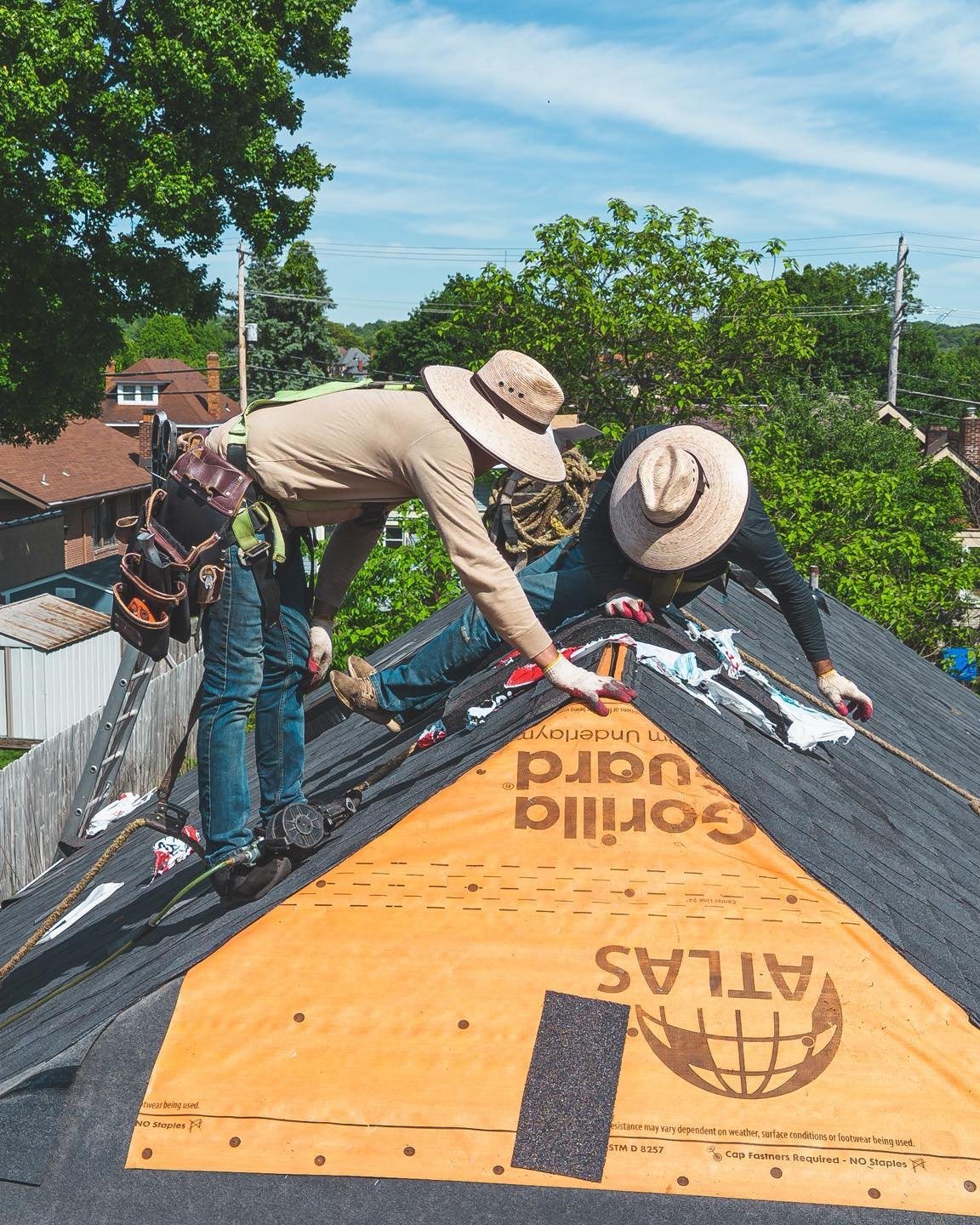
Every roof replacement we do includes new chimney flashing, ice and water membrane wrapped up the chimney and extended past both sides, and a cricket wherever the width calls for one. We do not reuse old counter flashing. On a complete Atlas system that flashing detail is part of what lets us offer the Atlas 50 year warranty.
Frequently Asked Questions
What is chimney flashing?
Chimney flashing is the system of metal pieces that seals the gap between a chimney and the roof around it. It has a base layer fastened to the roof (apron and step flashing) and a counter flashing layer set into the chimney mortar that laps over the base.
What is the correct way to flash a chimney?
Ice and water membrane on the deck around the chimney, an apron on the downhill face, individual step flashing pieces woven with each shingle course along the sides, a cricket behind a wide chimney, and counter flashing cut into the mortar joints and bent down over everything below it. Metal must match the masonry: galvanized steel or copper against brick, not aluminum.
Is chimney flashing necessary?
Yes. Shingles, metal and slate shed water downhill, but none of them can seal a vertical joint against masonry. Without flashing, rain runs down the face of the chimney into the attic. Code requires flashing at every roof to wall and roof to chimney intersection, and a cricket on chimneys more than 30 inches wide.
How long does chimney flashing last?
Properly installed galvanized flashing normally lasts the life of an asphalt shingle roof, and copper can last through two or three roofs. What shortens that life is mortar that erodes around the counter flashing, standing water behind a chimney with no cricket, and tar patches that trap moisture against the metal.
Can I just caulk or tar my chimney flashing?
You can, and it will probably hold for a season, but it is a patch, not a repair. Tar dries and cracks within a year or two, and each layer makes the eventual real repair harder. If tar is already on your chimney, plan on a proper re flash rather than another coat.
What drives the cost of chimney flashing repair?
The size and height of the chimney, whether a cricket has to be built, the metal chosen (copper costs more than galvanized), the condition of the mortar and whether masonry repair is needed first, roof pitch and access, and whether the shingles around the chimney can be lifted and reused. We give a free written estimate after seeing the chimney from the roof and from the attic, and we will tell you if the leak is a masonry problem rather than a flashing problem.
Get Your Chimney Looked At Before Winter
Malick Brothers Exteriors is a family owned roofing company based at 500 Perry Highway in West View. We repair and rebuild chimney flashing across Pittsburgh and the North Hills, we flash every chimney new on our roof replacements, and we are BBB A+ accredited and registered as PA HIC PA174918. If you have a stain near the fireplace or tar on the chimney, contact us for a free inspection and written estimate.