Commercial vs residential roofing is the first question a property owner has to answer before a roof project makes sense. A house in Ross Township and a warehouse in Glenshaw carry different loads, shed water in different ways and are covered by different materials. Industrial roofing, the third category people search for, pushes the commercial side even further. We handle all three from our shop at 500 Perry Highway in West View, so this guide explains the real differences, when shingles belong on a business, what an industrial reroof involves, and how to pick the right roofer. If you own a flat or low slope building, our commercial roofing in Pittsburgh page covers the systems we install and the warranties behind them.
What Is the Difference Between Commercial and Residential Roofing?
Residential roofing covers homes. Commercial roofing covers buildings where business happens: offices, retail strips, restaurants, churches, apartment buildings and warehouses. The building type drives everything else.
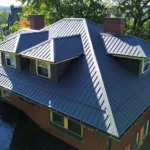
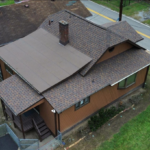
Residential roofs are steep. A typical Pittsburgh home has a pitch between 4/12 and 12/12, so rain and snow shed into the gutters on their own and the covering only needs to be water shedding, not waterproof. Asphalt shingles, metal panels and slate all work that way: water runs over overlapping pieces and off the edge.
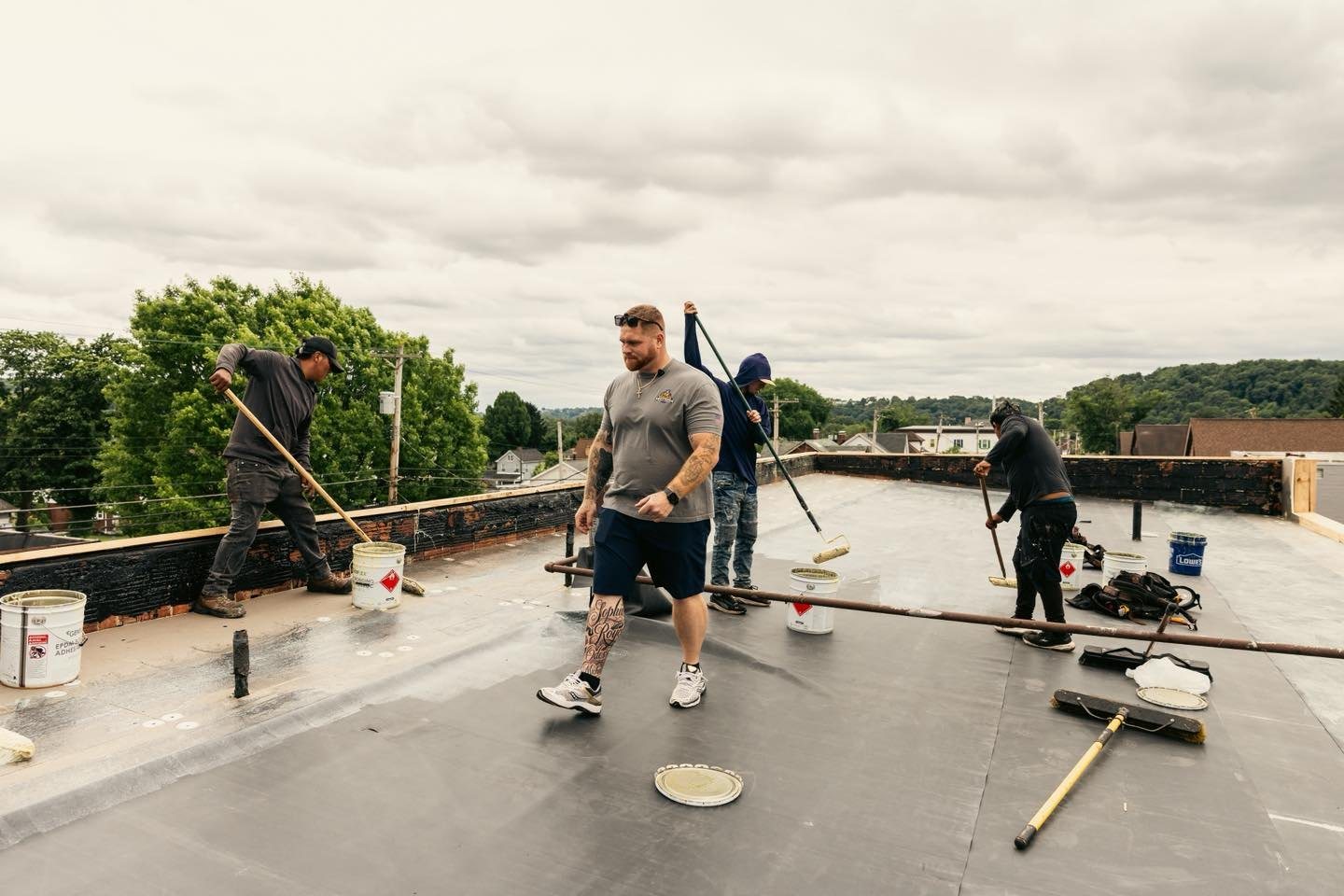
Commercial roofs are flat or low slope, usually under 2/12. Water does not run off quickly, so the covering has to be a continuous sealed membrane that can hold standing water without leaking. That one fact, slope, explains almost every other difference in commercial vs residential roofing: materials, crews, equipment, timeline and maintenance.
Commercial roofs also carry things a house never does. HVAC units, exhaust fans, gas lines, skylights and access hatches all sit on the membrane, and every one is a penetration that has to be flashed and sealed. A home roof might see a chimney, a few plumbing vents and a bathroom fan.
What Does Commercial Roofing Mean?
Commercial roofing means the installation, repair and maintenance of roofs on non residential buildings. In practice the term refers to low slope membrane systems, because that is what most commercial buildings have. The common systems are:
- EPDM, a black synthetic rubber sheet that handles Pittsburgh freeze and thaw cycles well and is easy to repair. We are MuleHide certified and install MuleHide .060 EPDM, the thicker commercial grade. See our EPDM roofing page.
- TPO and PVC, white single ply membranes with heat welded seams that reflect sunlight on large air conditioned buildings.
- Modified bitumen and 2 ply systems, asphalt based sheets in layers. We install the MuleHide 2 ply low slope system where a roof needs extra puncture resistance or gets more foot traffic.
- Silicone coatings, a liquid applied layer that restores an aging but sound membrane or metal roof instead of tearing it off. See our silicone roofing page.
- Metal, standing seam or screw down panels, used on commercial, residential and many industrial buildings.
The National Roofing Contractors Association publishes the technical manuals most low slope specifications are built on, and its guidance on membranes, insulation and drainage is the baseline we work from. Read more at the NRCA website.
Commercial vs Residential Roofing Shingles: Can a Business Use Shingles?
This is the most searched question in this topic and the answer is yes, with one condition: the roof has to be steep enough. Asphalt shingles need a minimum slope of 2/12 under the building code, and manufacturers want 4/12 or better for a full warranty. Below that, water sits in the overlaps and the roof fails.
So commercial shingle roofs are common on buildings that look like houses: churches, funeral homes, day cares, offices in converted homes, townhouse style apartments and restaurants with a mansard or gable. We replaced the roof on a Pittsburgh church in December 2025 with shingles, soffit, fascia and gutters because the sanctuary roof was steep.
There is no separate "commercial shingle" product. The same Atlas shingles we install on homes go on a commercial pitched roof. What changes is the scope: larger crews, more safety planning, hours arranged around the business, and often a shingle section that meets a flat section over a rear addition. That transition is where most leaks on mixed buildings start, and it needs a proper membrane tie in, not a bead of caulk.
The reverse is also true. Many Pittsburgh homes have a flat porch roof or a box gutter, and those get the same membrane a commercial building gets. On jobs in Observatory Hill, Mt. Washington and Glenshaw we installed Atlas shingles on the main roof and MuleHide EPDM or 2 ply on the flat sections of the same house.
Commercial vs Residential Roof: Side by Side
| Factor | Residential roof | Commercial roof |
|---|---|---|
| Slope | Steep, usually 4/12 to 12/12 | Flat or low slope, usually under 2/12 |
| How it keeps water out | Overlapping pieces shed water | Continuous sealed membrane holds water |
| Typical materials | Asphalt shingles, metal, slate | EPDM, TPO, PVC, modified bitumen, coatings, metal |
| Drainage | Gutters and downspouts | Internal drains, scuppers, tapered insulation, box gutters |
| Rooftop equipment | Chimney, vents, skylights | HVAC units, exhaust fans, gas and electrical lines, hatches |
| Crew and equipment | Small crew, nail guns, tear off tools | Larger crew, hot air welders, adhesives, cranes or lifts for materials |
| Timeline | Most homes in one day | Days to weeks, often phased around the business |
| Inspections | After major storms and every few years | Spring and fall, plus after any rooftop work |
| Warranty | Manufacturer system warranty | Membrane warranty through a certified installer |
Materials: Where the Real Differences Show Up
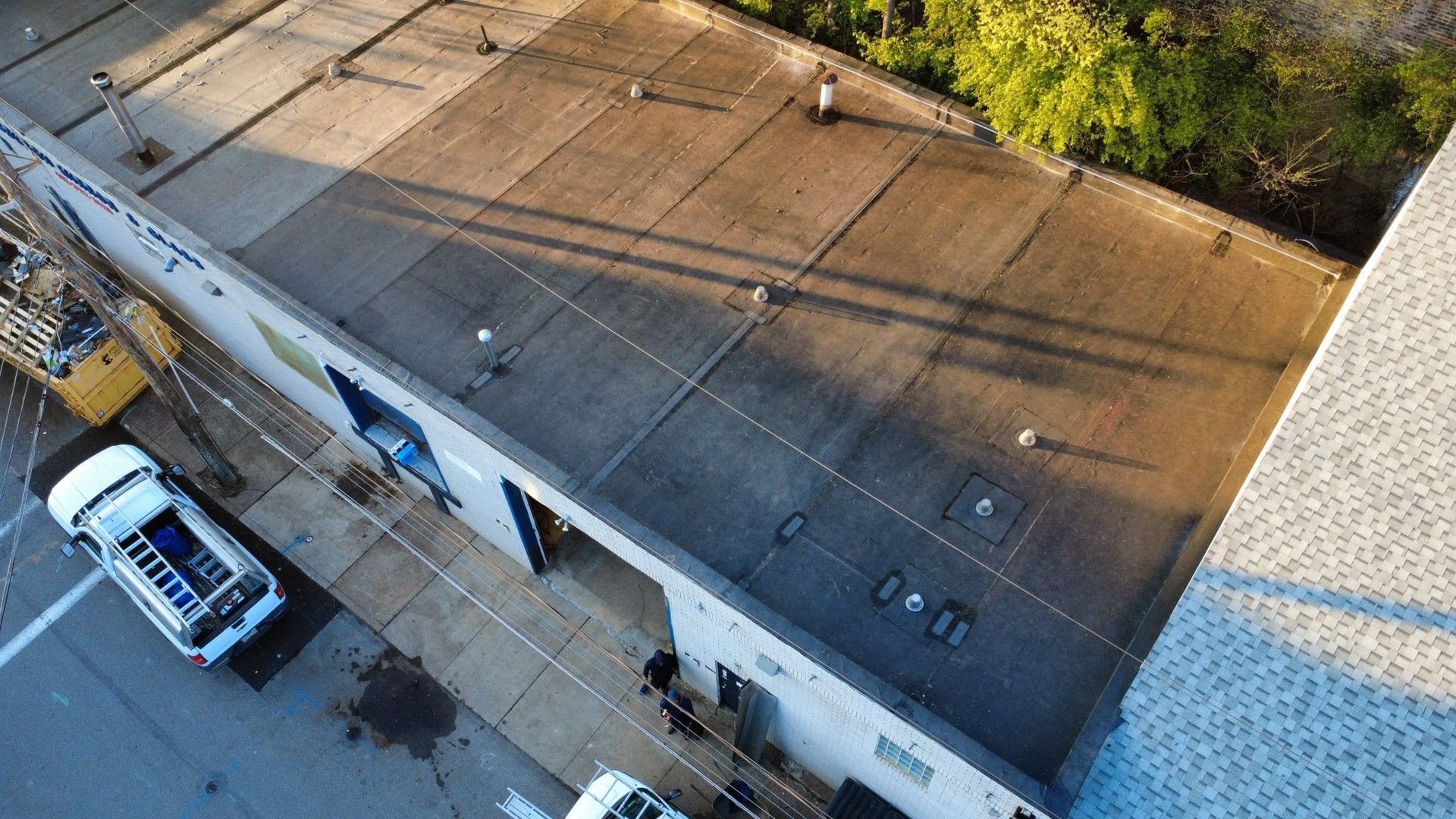
Residential roofing in the North Hills is dominated by architectural asphalt shingles. We install complete Atlas systems, shingles, underlayment and ventilation together, which lets us offer the Atlas 50 year warranty on the whole system. Metal has grown fast on homes in Wexford and Bellevue, and slate still covers many older Pittsburgh homes, where we repair it whenever the stone is sound. Our roof materials page compares all of them.
Commercial materials are chosen for different problems. A membrane has to survive ponding water, foot traffic from HVAC technicians, UV exposure across a huge open surface and thermal movement as a black roof goes from freezing to very hot in one spring day. Thickness matters, which is why we specify .060 EPDM rather than the thinner .045. Seams matter even more, because on a flat roof every seam is a potential leak with nowhere for water to go.
Installation, Drainage and Maintenance
A residential replacement is a fast, concentrated job. Our crews tear off, install ice and water shield, underlayment, shingles, ridge vent and flashing, and most homes are finished in one day. The work is covered on our residential roof replacement page.
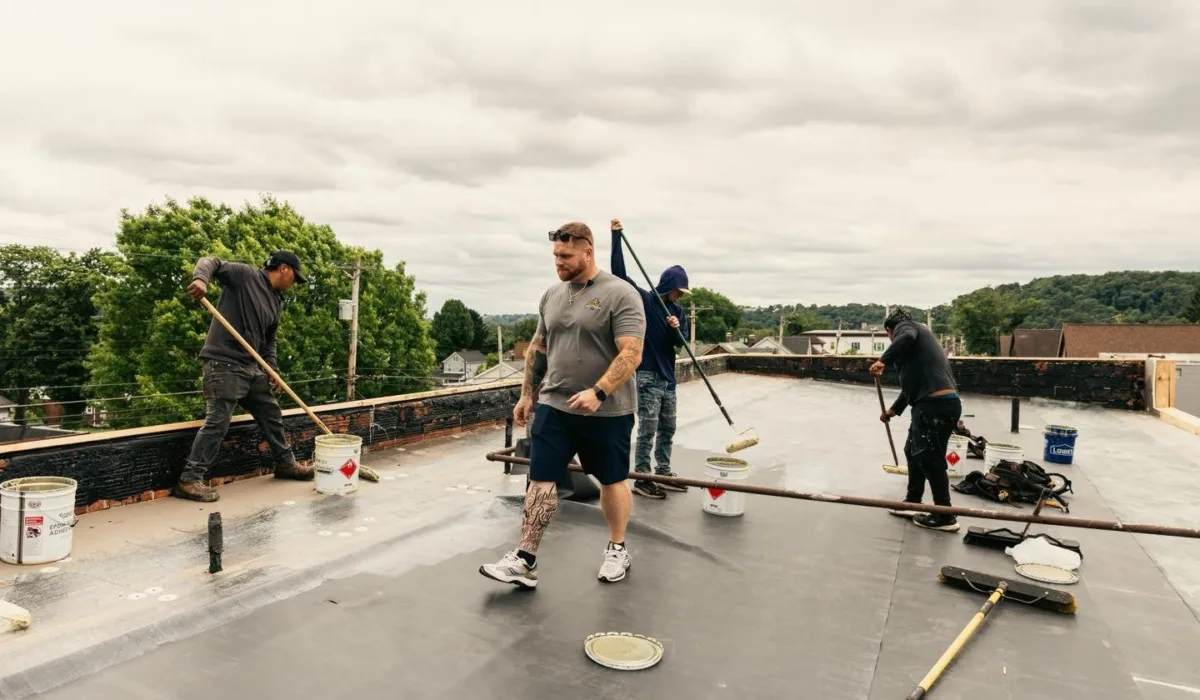
A commercial installation moves differently. Membrane arrives in heavy rolls that go up by lift. Insulation is often tapered to create slope toward drains on a roof built dead flat. Seams are heat welded or adhered, every curb and pipe gets a custom flashing, and the work is phased so the building stays open and dry underneath.
Drainage is the part commercial owners underestimate. A house sheds water to the gutters. A flat roof depends on internal drains, scuppers and sometimes box gutters that need to stay clear, and a clogged drain in November can leave water and ice on a membrane for weeks. That is why commercial roofs get inspected twice a year, while a residential roof mainly needs a look after a bad storm or a roof inspection when you buy or sell.
Industrial Roofing: How It Differs From Commercial
Industrial roofing is the heavier end of commercial roofing. An industrial building roof covers a factory, a distribution center, a food processing plant or a machine shop. From the street it looks like any flat commercial roof, but what happens underneath changes the specification.
- Loads. Industrial facility roofs carry process equipment, exhaust stacks, conveyors and heavier mechanical units. Point loads and vibration are engineering decisions made before a membrane is chosen.
- Exposure. Kitchen exhaust, animal fats, solvents and chemical fumes land on the roof. Standard EPDM does not tolerate oils and grease, so PVC or a protected system is specified in those zones.
- Size. Industrial roofs can run several acres, so long drainage runs and large wind uplift zones at the perimeter affect how insulation and membrane are laid out.
- Metal. Standing seam and screw down metal show up on industrial buildings more than on offices or retail. We install and repair metal, including coatings over sound metal roofs.
- Scheduling. An industrial reroof is phased around production, with hot work permits, night or weekend windows and temporary weatherproofing between phases.
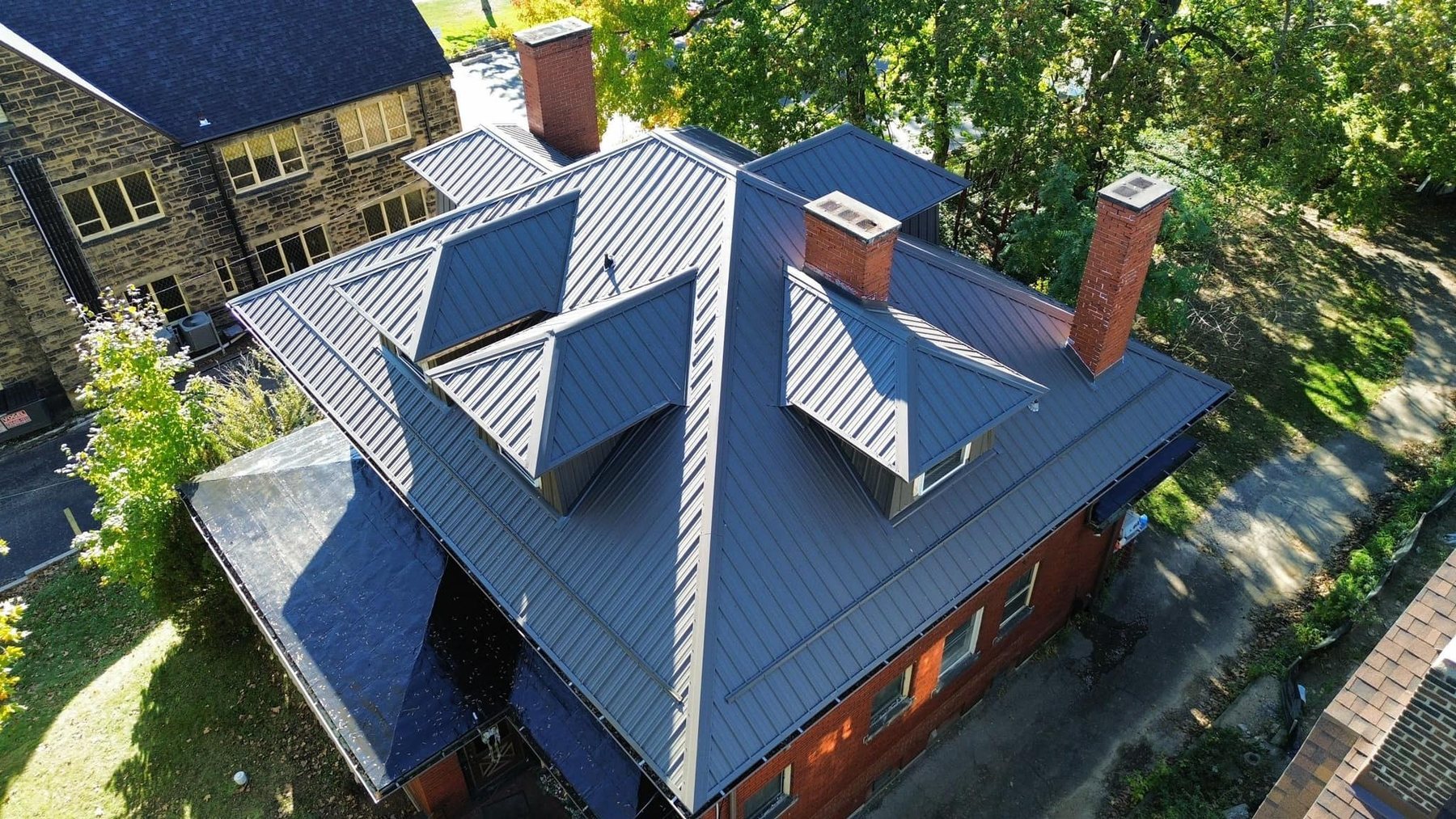
Commercial roofs for industrial buildings use the same families of material, but with heavier gauges, more redundancy and more detail work at penetrations. If your building has process exhaust, heavy rooftop equipment or production that cannot stop, tell your roofer up front. It changes the system we recommend.
Commercial vs Residential Roofers: Who Should You Hire?
A roofer who only installs shingles is not set up for a flat roof, and a large commercial contractor is often not interested in a single family home. Some companies, including ours, do both. Check certifications rather than claims.
- For a residential roof, ask whether the contractor is certified by the shingle manufacturer, because the long system warranties only come through certified installers. We are an AtlasPro+ Platinum Select contractor.
- For a commercial roof, ask which membrane manufacturer certifies them. We are MuleHide certified for .060 EPDM, the 2 ply low slope system and silicone coatings.
- For either, confirm the Pennsylvania Home Improvement Contractor registration. Ours is PA174918, and you can check any contractor at the Pennsylvania Attorney General HIC search.
- Ask for recent local jobs of the same type. A commercial reference should be a flat roof, not a house.
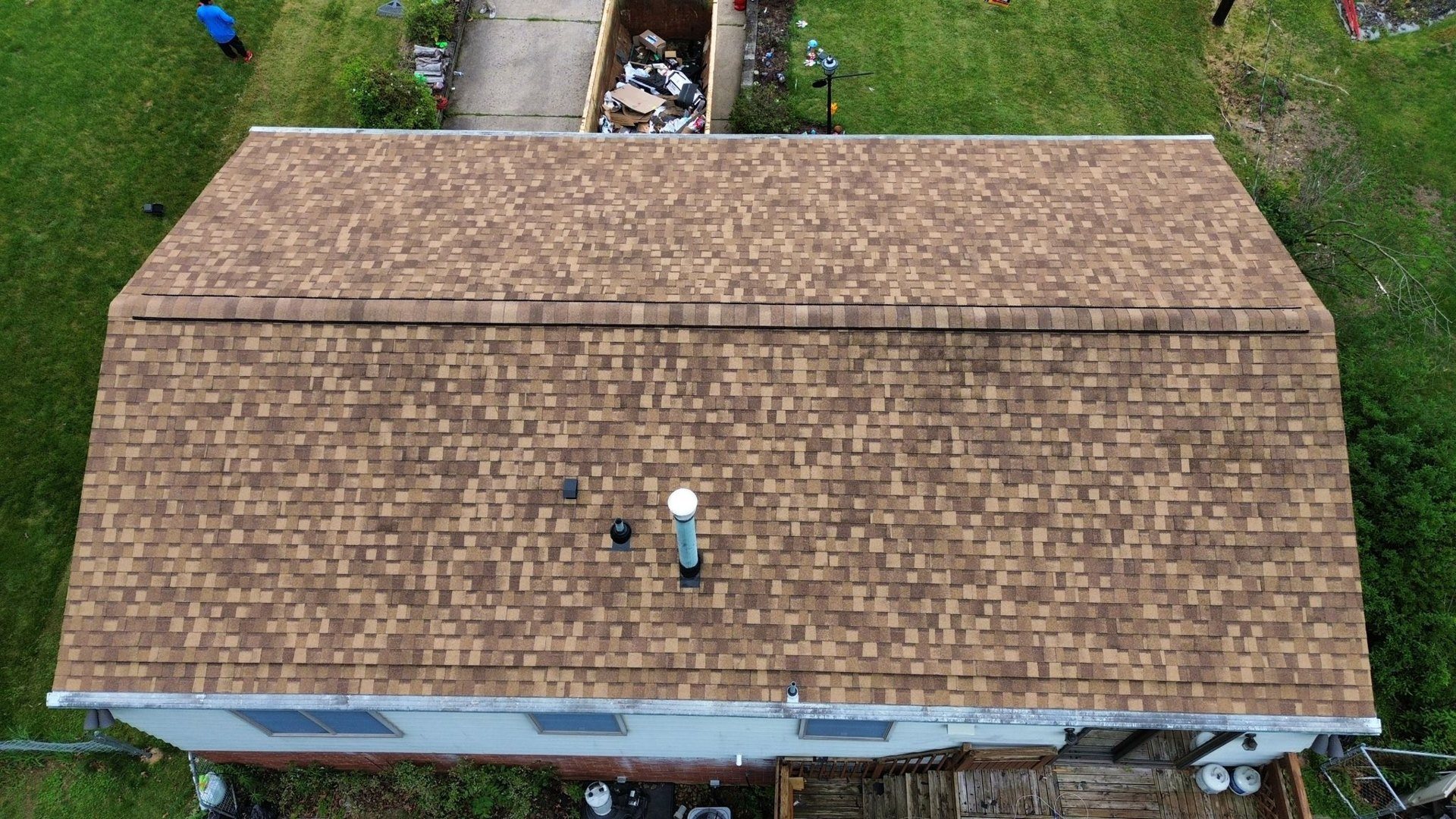
Malick Brothers Exteriors has been family owned since Ryan Malick founded it in 2022, is BBB A+ accredited, and runs a dedicated repair division for slate, tile, flat and shingle roofs and box gutters. Our commercial work includes EPDM roofs on a Pittsburgh glass company, an apartment building in McKees Rocks and a commercial building in Glenshaw.
What Drives the Cost Difference
Commercial roofs cost more per project because they are larger, the materials are heavier, the details take longer and the schedule bends around a business. Residential roofs cost less per project but more per square foot when the pitch is steep, the house has many valleys and dormers, or the decking needs replacement. On both, the biggest variables are square footage, the system chosen, the number of penetrations, tear off versus overlay, and access. We give a free written estimate for either, with the system, the warranty and the schedule spelled out, and financing is available on residential work.
Frequently Asked Questions
Can a residential roofer work on a commercial building?
Only if the roofer is trained and certified on low slope membrane systems. Shingle skills do not transfer to heat welded seams, tapered insulation and curb flashing. Ask which membrane manufacturer certifies the company and ask for a recent flat roof reference. A pitched commercial building, such as a church, is different and a qualified residential crew can handle it.
Can you put shingles on a commercial building?
Yes, when the roof slope is at least 2/12 and ideally 4/12 or more. Churches, funeral homes, small offices and townhouse style apartments often have shingle roofs. On a flat or very low slope roof, shingles fail because water sits in the overlaps, so those sections need EPDM, TPO, PVC, modified bitumen or a coating instead.
How many years does a commercial roof last?
It depends on the system, the thickness and the maintenance. A well installed .060 EPDM or 2 ply roof that is inspected twice a year and kept free of ponding water can serve for decades, and a silicone coating can extend a sound roof further. Neglected drains, unflashed equipment changes and foot traffic damage shorten the life of most flat roofs we repair.
What is an industrial reroof?
An industrial reroof is a replacement or recover of the roof on a manufacturing, processing or distribution facility. It is planned around production, usually in phases, with attention to heavy rooftop equipment, chemical or grease exposure and large drainage areas. The systems are the same families used on commercial roofs, specified heavier and with more redundancy.
Does Malick Brothers do both commercial and residential roofing?
Yes. We install Atlas shingle systems, metal and slate repair on homes, and MuleHide EPDM, 2 ply low slope systems and silicone coatings on commercial and flat roofs, plus seamless gutters, siding and soffit and fascia. We are based in West View and serve Pittsburgh and the North Hills across our service areas.
Get a Free Estimate for Your Roof, Commercial or Residential
Whether you own a home in Allison Park, a storefront in Bellevue or a warehouse in Glenshaw, we will inspect the roof, explain which system fits the building, and put the price, warranty and schedule in writing. Contact Malick Brothers Exteriors or call (412) 616-0191 for your free estimate.