If you have ever watched a roofing crew tear through a job site, you know just how fast things move. Bundles get hauled up the ladder, old materials fly off the edge, and by late afternoon the whole roof can look brand new. But for homeowners trying to plan a project, the real question is practical: how many shingles can a roofer actually install in a single workday? The answer depends on a handful of variables.
Understanding How Roofers Measure Their Work
Before we get into numbers, it helps to speak the language. Roofers do not measure progress in individual shingles. They use a unit called a "square," which covers 100 square feet of roof surface. A standard bundle of three-tab or architectural shingles typically requires three bundles per square, though some heavier products may need four or five.
How Many Shingles Can You Lay in a Day?
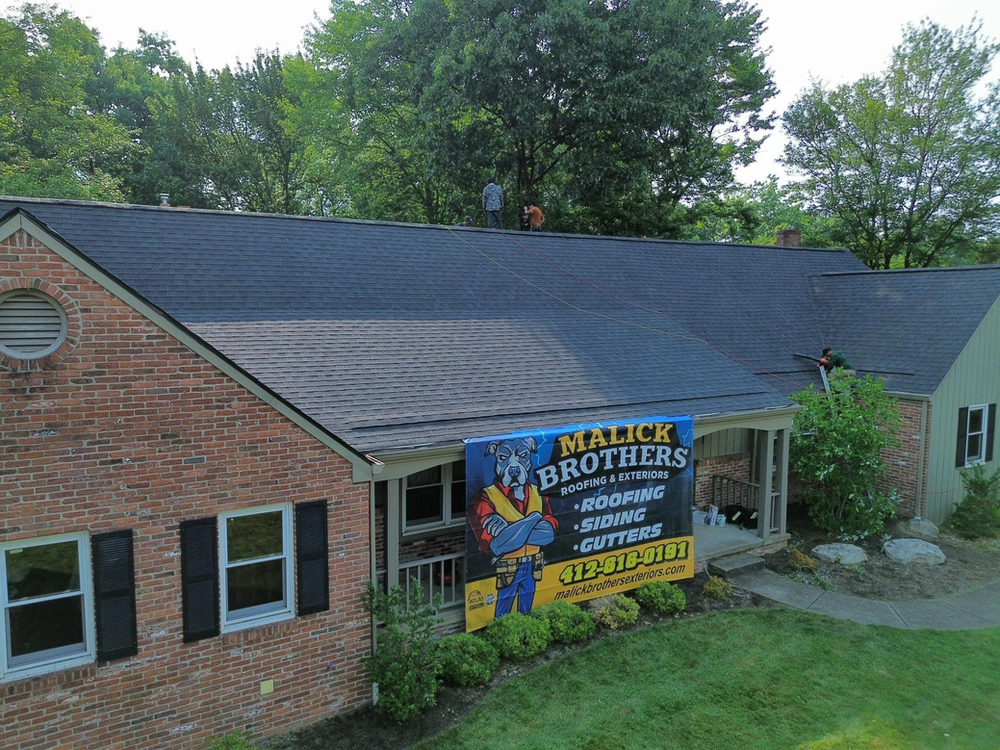
A single experienced roofer, working at a steady pace on a straightforward roof, can typically lay around 15 to 20 bundles per day. That translates to roughly 5 to 7 squares. It might not sound like much, but keep in mind that this figure accounts for setup, material staging, breaks, and the inevitable slowdowns that come with working on an angled surface in the sun. Shingle installation speed varies quite a bit from person to person, too. A newer laborer might manage half that output while learning the craft.
A full professional crew of six to eight people changes the equation dramatically. These teams often knock out 25 to 30 squares in a single day, sometimes more on simple gable roofs with minimal obstacles. That kind of roofer productivity per day is what allows many companies to complete an entire residential roof in one visit.
What Factors Affect Shingle Installation Speed?
Not every roof is the same, and that is the single biggest reason daily output varies so widely. A low-slope ranch-style home with a simple layout will go much faster than a steep colonial with dormers, valleys, and multiple chimney penetrations.
Roof Pitch and Complexity
Steep roofs slow everything down. Once pitch exceeds about 8/12, roofers often need toe boards or harnesses, which adds setup time and reduces movement speed. Complex rooflines with hips, valleys, and skylights require more precise cuts and flashing work. A roof with 20 penetrations will take noticeably longer than a clean, uninterrupted plane.
Weather and Deck Condition
Rain obviously stops work entirely. But even high humidity, extreme heat, or gusty wind can cut into production. If the crew pulls off the old shingles only to find rotted decking underneath, the job shifts from installation to structural repair. That unplanned plywood replacement can add hours to a project.
Can Roofers Finish a Roof in One Day?
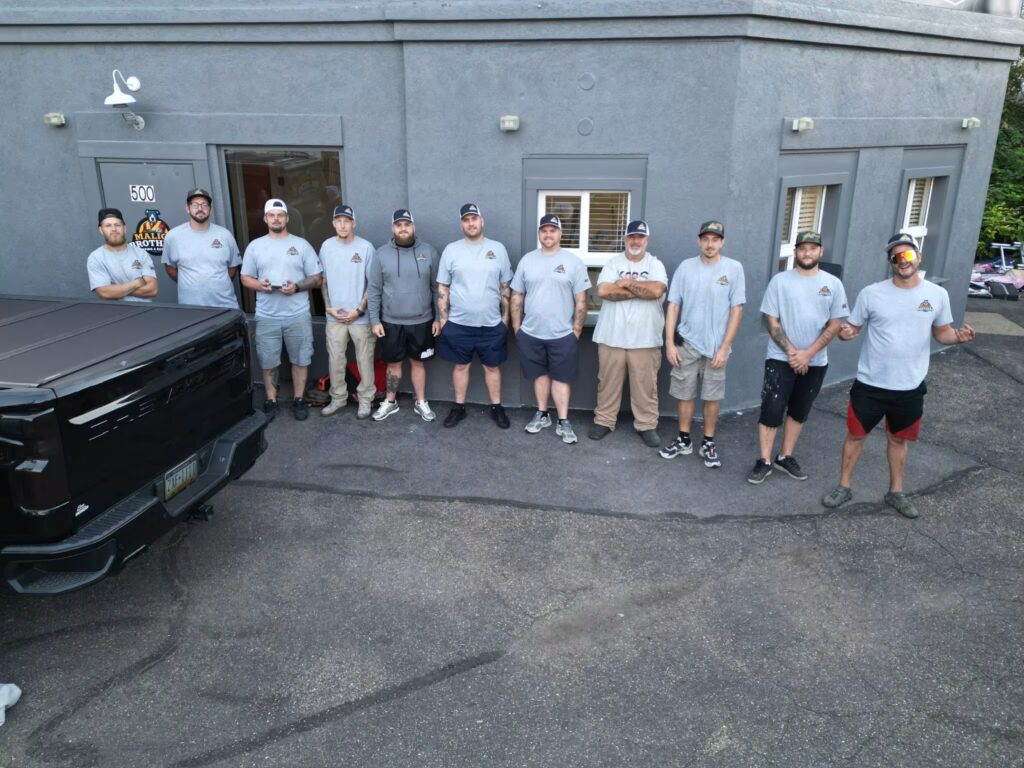
Yes, many professional crews complete a full tear-off and re-roof in a single day. For a standard 20- to 25-square residential roof, a well-organized team of six or more can strip the old material in the morning and have new shingles nailed down by the end of the afternoon. I have personally seen crews wrap up by 3 PM on straightforward jobs. It is genuinely impressive when everything clicks.
That said, "one day" is not a universal promise. Larger homes, multi-layer tear-offs, or roofs that need significant deck repair will push the timeline to two or even three days. If a contractor guarantees a one-day finish on a complicated roof without even inspecting it, that should raise a flag. For a detailed walkthrough of what a well-run project actually looks like, check out What to Expect in Your Roofing Project: A Step-by-Step Guide.
A Quick Reference for Roofer Output
| Scenario | Daily Output (Squares) | Equivalent Sq. Ft. |
|---|---|---|
| One experienced roofer, simple roof | 5 - 7 | 500 - 700 |
| Small crew (3-4 people) | 12 - 18 | 1,200 - 1,800 |
| Full crew (6-8 people), simple roof | 25 - 30+ | 2,500 - 3,000+ |
| Full crew, steep or complex roof | 15 - 22 | 1,500 - 2,200 |
What Is the 25% Rule in Roofing?
This comes up a lot, especially in states like Florida. The 25% rule is a building code guideline stating that if more than 25% of your total roof area is repaired, replaced, or recovered within a 12-month period, the entire roof or roof section must be brought up to current code. It was designed to ensure storm-damaged homes met modern wind-resistance standards.
Recent legislative changes in Florida have loosened this requirement for roofs built after March 2009, allowing homeowners to repair just the damaged section without triggering a full replacement. Older roofs still fall under the original rule. If you are dealing with storm damage, understanding this threshold can save you thousands of dollars.
How to Tell If a Roofer Is Lying
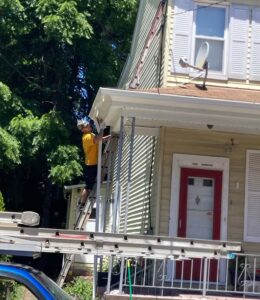
Unfortunately, the roofing industry attracts its share of bad actors. Storm chasers who knock on doors after severe weather are one of the most common problems. They show up uninvited, claim to spot damage you cannot verify, and push hard for an immediate signature.
Watch for these red flags: requests for large upfront payments, estimates dramatically lower than competitors, refusal to provide proof of licensing and insurance, and vague contract details. According to the National Insurance Crime Bureau, some dishonest contractors will even fabricate or exaggerate damage to inflate insurance claims. Get at least three written estimates and verify credentials independently.
How Long Does It Take to Roof a House?
The full timeline depends on more than just shingle installation speed. You also need to factor in the tear-off of old materials, inspection of the roof deck, installation of underlayment, and all the detail work around vents and flashing. For a typical 2,000- to 2,500-square-foot home with a single layer of old shingles, most professional crews finish in one to two days.
Homes with tile, slate, or multiple layers of existing roofing take longer. When you are evaluating bids, ask each contractor for a realistic timeline based on your specific roof. Understanding how long to roof a house helps you plan around the disruption and ensures your expectations line up with reality.
Maximizing Your Roofing Project
There are a few things you can do as a homeowner to help things go smoothly. Clear vehicles and outdoor furniture away from the house the night before. Make sure the crew has easy access to all sides of the roof. Confirm that your contractor has ordered the correct quantity of materials ahead of time. These small steps can genuinely speed up the process.
Communication matters, too. A good contractor will walk you through the scope of work before day one and keep you updated if anything unexpected comes up. I always tell homeowners to ask questions early. The more you understand about roofer productivity per day and what drives it, the better equipped you are to evaluate whether your project is on track.
Final Thoughts

So how many shingles can a roofer lay in a day? For one person, expect around 5 to 7 squares. For a full crew, that number jumps to 25 or more. But the real answer is always "it depends." Roof pitch, weather, deck condition, and crew size all play a role. Hire a reputable local contractor, get a clear timeline in writing, and prepare your property for an efficient workday.