The color on the outside of a house does more work than most people expect. It shapes how neighbors see the property, how buyers react from the curb, and how well built the home looks before anyone steps inside. The right shade makes a modest Pittsburgh brick or frame house feel stately. The wrong one can make a solid house look tired.
Homes that look expensive almost always rely on a few proven color strategies. They lean into deep, grounded tones, keep the palette restrained, and use contrast on purpose. On most Pittsburgh homes that color lives in the siding, so if you are planning siding installation, the color decision is part of the project, not an afterthought. The goal is not to chase a trend. It is to pick something that still looks right in fifteen years.
What Exterior Colors Make a House Look Expensive?
The colors that read as refined share a few qualities. They are muted rather than bright, they carry visual weight without overwhelming the house, and they usually come from the neutral or deep tone families. Charcoal gray, navy blue, forest green, crisp white and warm taupe are the steady performers.
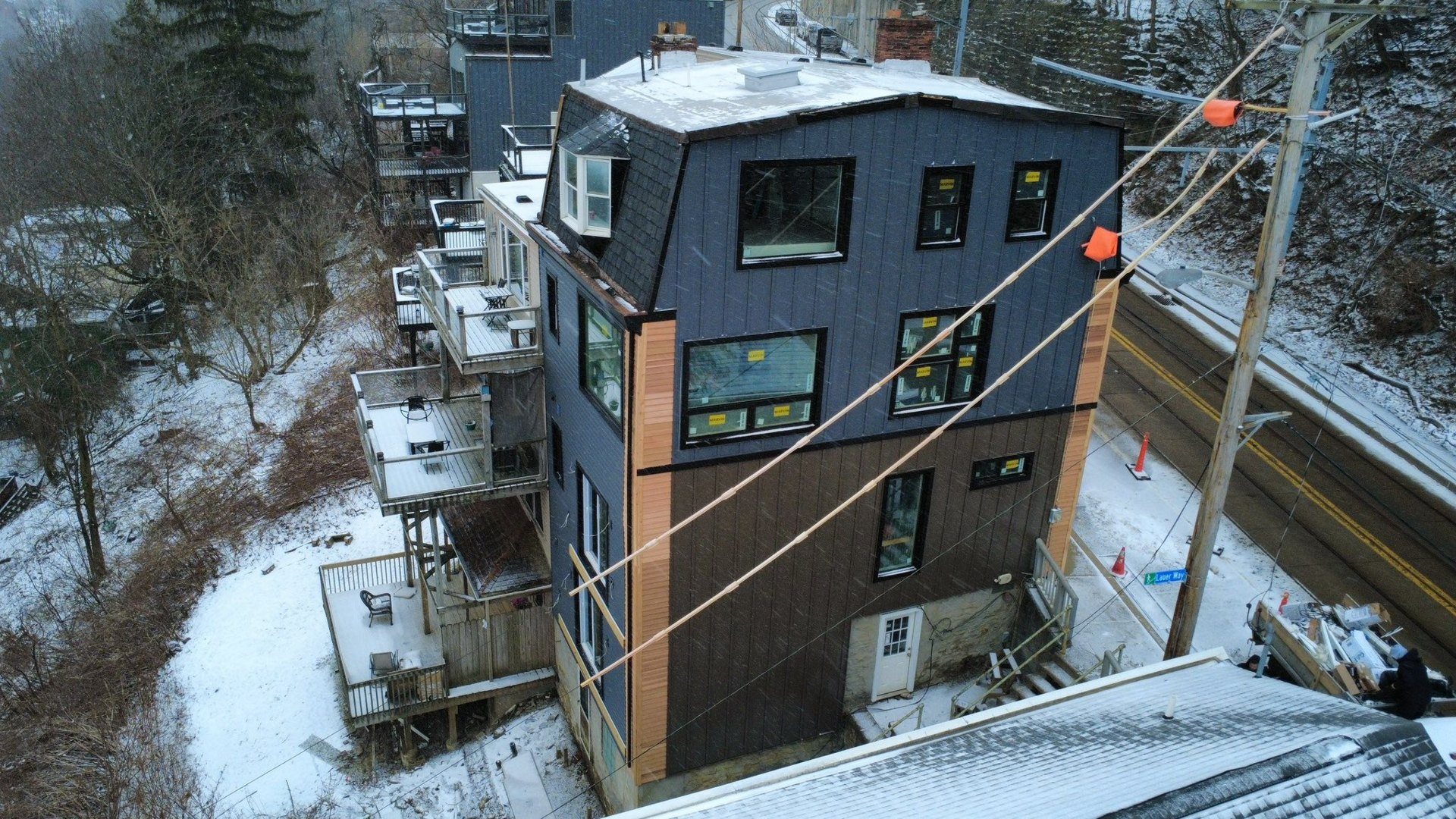
Charcoal gray with light gray trim is one of the most popular combinations on higher end homes. Navy blue with white accents gives a classic look that suits Colonials and Cape Cods alike. Deep green with brass or gold fixtures leans into a moody, curated feel. The common thread is restraint. Start with a scheme that prioritizes depth over brightness.
Color Palettes That Deliver an Upscale Look
Some pairings consistently lift a home's appearance. Here is a quick reference.
| Color Palette | Style | Best For |
|---|---|---|
| Charcoal Gray and Light Gray Trim | Modern, sleek | Contemporary and transitional homes |
| Deep Green and Gold Accents | Moody, historic | Craftsman and Victorian styles |
| Soft White and Black Trim | High contrast, tailored | Farmhouse and Colonial builds |
| Navy Blue and White | Classic, sophisticated | Traditional homes |
| Taupe and Natural Wood | Warm, organic | Ranch and split level homes |
Each palette works because it balances two or three tones without overcomplicating the look. The best combinations never compete with each other. They complement.
What Exterior Colors Help Home Value?
A fresh, well chosen exterior is one of the most visible upgrades you can make before listing a home, because it is the first thing a buyer sees in the listing photos and from the street. We will not quote a percentage, since every sale is different, but buyers clearly respond to homes that look cared for.
Neutral palettes are the safest choice for resale. Greige is a favorite among real estate agents because it appeals to a wide range of buyers. Warm whites signal cleanliness and care. A navy or black front door is an easy way to add a confident accent. If resale is part of your thinking, neutral and deep tones are your safest bet.
What Color Is Replacing Gray?
Gray has dominated exterior design for years. It is not disappearing, but it is evolving toward warmer, earthier versions, especially greige and warm taupe. These shades keep the same versatility but feel less sterile and more inviting.
Sage green is also gaining ground. It offers calm and neutrality with an organic quality that ties the house to the trees and hillsides so common around Pittsburgh. Cool, blue toned grays are fading. Warmth is in.
What Is the New Trend in Exterior House Colors?
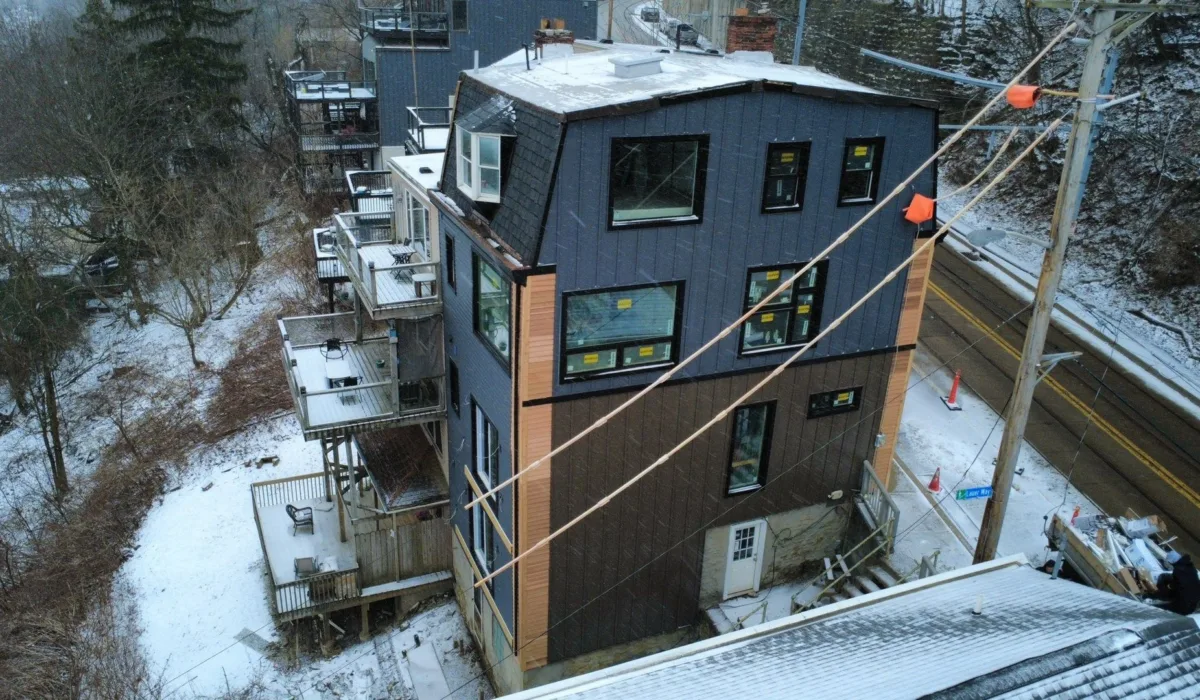
The biggest shift right now is toward deeper, more expressive tones. Forest green, midnight blue and even black exteriors are showing up more often. These darker palettes pair well with natural materials like stone, wood and copper hardware.
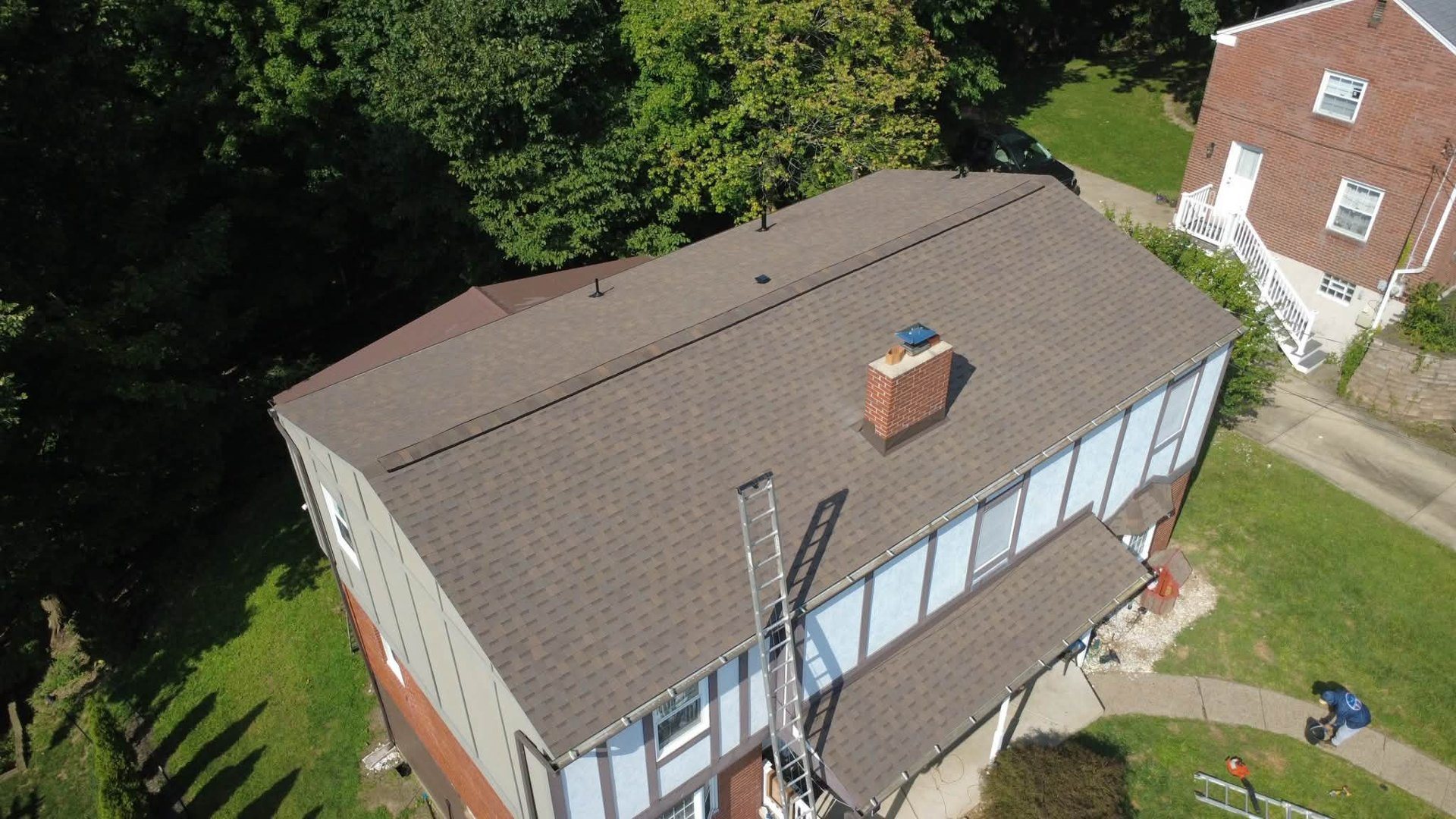
Earthy colors are rising too. Terracotta, warm brown, olive and cinnamon tones are replacing the cooler palettes of recent years. High contrast combinations are popular as well, with dark siding against bright white or cream trim to define the architecture. Your roof is part of this picture. If your roof is due alongside your siding, our asphalt shingles page covers the options we install, and our guide to Atlas Pinnacle Pristine shingle colors for Pittsburgh homes shows shingle colors that coordinate with these tones.
Why Finish and Material Matter as Much as Color
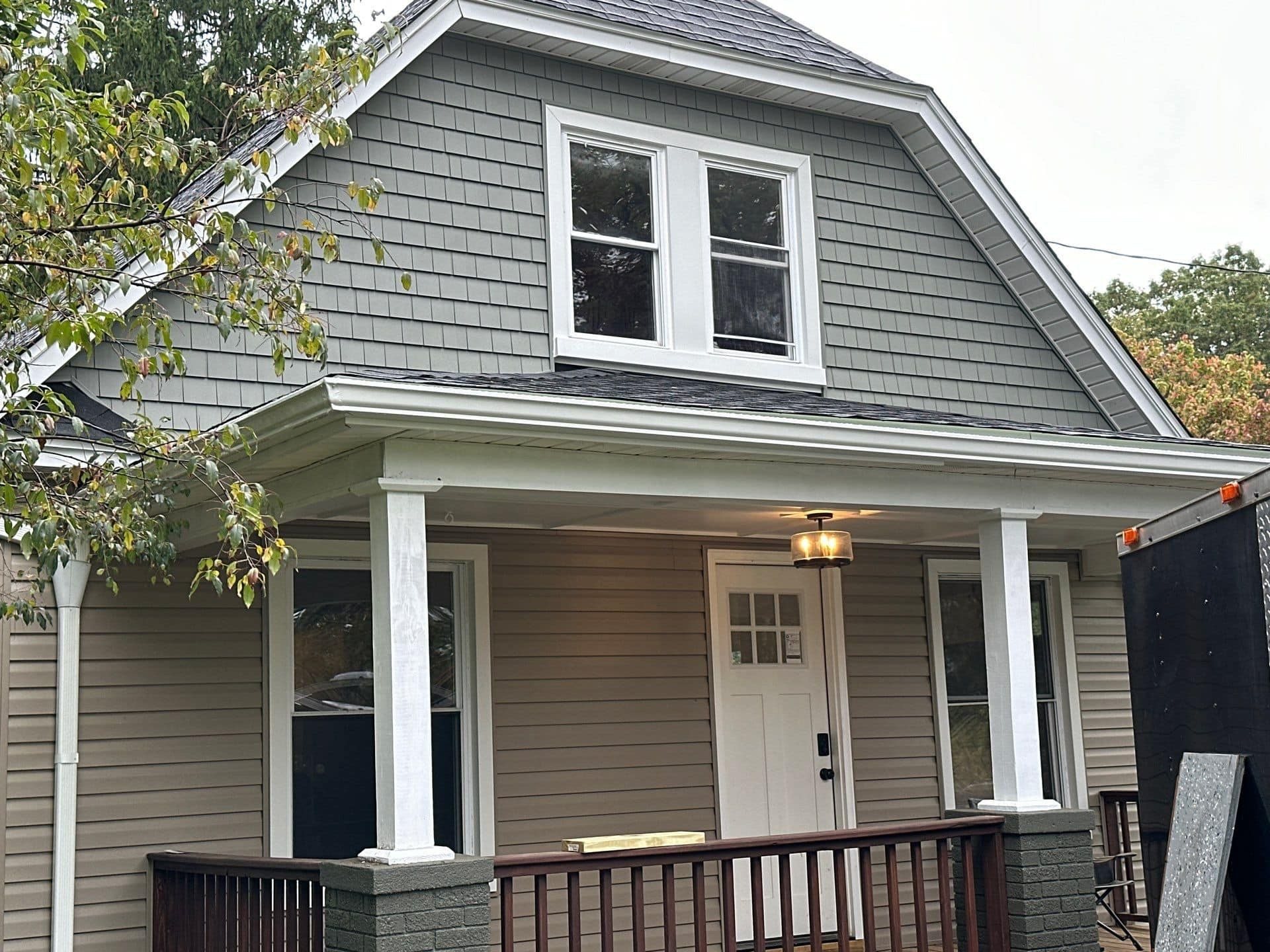
Color is only half the equation. Low sheen, textured finishes look more refined than shiny ones, and a glossy surface can cheapen even a great shade. Material matters just as much. Fiber cement siding such as James Hardie can carry a painted, wood like look with crisp shadow lines, while quality vinyl lines like Mastic offer deep colors with very little upkeep. We install both, and we bring samples so you can see them against your brick, stone and roof.
Texture pulls its weight too. Stone, brick and real wood accents lift any palette. A charcoal home with a stone accent wall looks far more expensive than the same charcoal on a flat, unbroken wall.
How Contrasting Trim Elevates Your Exterior
Trim is one of the most overlooked details, and it has an outsized effect. Bright white or creamy off white trim against a dark body color defines window casings, eaves and porch railings. It gives the eye something to follow and creates a sense of precision. On many Pittsburgh houses the trim work is done with aluminum wrap and new soffit and fascia, which lets the trim color stay crisp for years without repainting.
Without contrasting trim, even a beautiful siding color can fall flat. Think of trim as the frame around a painting. It does not need to be flashy, just deliberate.
Common Mistakes to Avoid
One of the fastest ways to undermine a house is a color that is too bright or unusual. Neon greens, vivid purples and hot pinks narrow buyer appeal sharply, and very trendy choices can feel dated in a few years.
Another misstep is ignoring the fixed elements. Your roof, brick, stone and landscaping all have colors your siding has to live with. Look at samples on your own house in morning and evening light, and on a gray Pittsburgh day, before you commit. Real estate writers, including Reader's Digest, recommend sampling and sticking with neutrals for the broadest appeal.
Frequently Asked Questions
Do dark siding colors fade faster?
Deep colors can show sun fading more than light ones on south and west walls. Many manufacturers now offer fade resistant finishes in their darker lines, and we will point out which products carry that protection when we review samples with you.
Should my siding match my roof?
It should coordinate, not match. A charcoal or black roof works with almost any palette in this article. Brown and weathered wood shingles pair best with warm taupe, cream and green.
Can I change color without replacing siding?
Painted wood or fiber cement can be repainted. Vinyl is usually best left in its factory color, so if you want a big change on a vinyl house, new siding is often the cleaner path.
What does a new siding color cost?
Cost depends on the size of the house, the material, how much trim and soffit work is involved, and the condition of the walls underneath. We give a free written estimate after we see the home.
Pulling It All Together
The homes that look most expensive share a simple formula. Deep, grounded colors with contrasting trim, natural materials for texture, and nothing flashy or temporary. Take your time with the choice, sample several shades, and consider how they work with your roof and your street.
If you would like to see siding colors and samples on your own house, contact Malick Brothers Exteriors for a free written estimate. We are a family owned contractor based in West View, and we install James Hardie and Mastic siding across the Pittsburgh area.