

Fall leaves and debris affect flat commercial roofs in Fox Chapel by clogging drains, trapping moisture against the membrane, and adding weight the structure was never meant to hold. Water backs up, seams soften, and a minor blockage becomes an interior leak. Clearing the roof before the first hard freeze prevents almost all of it.
Why Low-Slope Roofs Struggle Once the Trees Let Go
Fox Chapel is gorgeous in October, and that is exactly the problem. Mature oaks, maples, and sycamores overhang a large share of the borough's commercial buildings, and they all drop their load between late September and mid-November. A steep roof sheds most of that within a week. A flat roof, technically low-slope, often just a quarter inch of pitch per foot, holds onto it.
Leaves do not slide. They drift into corners, stack against curbs and parapet walls, and settle over drain baskets like a wet blanket. Add pine needles, seed pods, shingle grit blown off a neighboring building, and the occasional plastic bag, and you have built a dam nobody designed.
What can damage a roof?
Most people picture hail or a windstorm. On a commercial flat roof, the damage is usually slower and far less dramatic. Trapped water is the leading culprit, because a membrane that stays wet loses flexibility, and adhesives break down from the underside where nobody can see them.
Beyond standing water, the usual suspects are foot traffic from HVAC technicians, UV exposure that dries and cracks the top layer, biological growth in shaded areas that holds moisture in place, and mechanical damage from tools or equipment. Debris accelerates several of these at once. A pile of wet leaves shades the membrane, feeds algae, and keeps the surface saturated for weeks after a storm has passed.
Can tree branches damage a roof?
Yes, and not only when they break off. Branches that rest against or sweep across a roof act like sandpaper every time the wind picks up. Over a season or two, that abrasion wears through the granular surface of a modified bitumen roof or scuffs a single-ply membrane down to the reinforcement layer.
Falling limbs are the sharper risk. A dead branch dropping twenty feet onto a TPO or EPDM roof can puncture the membrane outright, and the tear often hides under the branch itself until someone moves it. My rule of thumb: nothing woody should be within ten feet of the roof surface. Trimming is cheaper than patching, and dramatically cheaper than a saturated insulation replacement.
What happens if gutters are full of leaves?
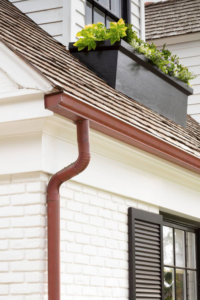
Plenty of flat commercial buildings drain to perimeter gutters or scuppers rather than interior drains, and those fill fast. Once a gutter packs solid, water overflows the back edge, runs down the fascia, and soaks into the wall assembly and insulation behind it. You will see stained ceiling tiles on the top floor long before anyone thinks to look outside.
The freeze-thaw cycle makes it worse in Western Pennsylvania. Water sitting in a blocked gutter expands as it freezes, pulling hangers loose and separating seams. Then the ice backs up onto the roof edge, where it lifts flashing and works into laps. One clogged downspout in November can cost a building owner a full edge detail rebuild by March.
How Fall Leaves and Debris Affect Flat Commercial Roofs in Fox Chapel Across a Single Season
The damage arrives in stages, which is why it is so easy to ignore. Here is what the progression typically looks like on a neglected roof:
| Timeframe | What is Happening | Warning Sign |
|---|---|---|
| Late September, October | Leaves accumulate around drains and curbs | Visible piles; slow drainage after rain |
| November | Rain saturates the debris; ponding begins | Dark rings, standing water 48+ hours |
| December, January | Ponded water freezes and expands | Seam separation, blistering, edge lifting |
| February, March | Thaw releases water into the assembly | Ceiling stains, damp insulation, odor |
| April onward | Insulation stays wet; deck begins corroding | Soft spots underfoot, higher energy bills |
Understanding flat roof debris Fox Chapel buildings deal with each autumn helps property managers budget realistically. This is not an emergency expense. It is a predictable seasonal cost, and it is far smaller than the repair that follows a skipped year.
What causes a roof to fall?
Structural failure on a flat roof almost always traces back to weight the design never accounted for. Water is heavy, roughly 5.2 pounds per square foot for every inch of depth. A shallow depression holding three inches of water across a 40-by-40-foot area is carrying more than 24,000 pounds.
Now stack a foot of wet snow on top of that ponded water, which is exactly what happens in a Pittsburgh January. The deflection deepens the low spot, which collects more water, which deepens it further. Engineers call this ponding instability, and it is the mechanism behind most flat roof collapses. Blocked drains are usually the trigger, not the underlying cause. Guidance from the National Roofing Contractors Association recommends that a properly functioning roof drain within 48 hours of rainfall ending.
The Fall Walkthrough I Recommend
You do not need to be a roofer to catch the big issues. Walk the roof twice, once in mid-October, once after the last leaves drop, and check a short list of things.
Start at the drains. Pull the strainers, clear anything underneath, and confirm the baskets are actually seated. Then walk the perimeter and look for debris packed against parapets, expansion joints, and equipment curbs. Check that scuppers are open and that downspouts run clear when you pour water down them.
Finally, look for evidence of past ponding: chalky rings, sediment lines, or patches of membrane that look duller than the surrounding area. Those tell you where water sits, which is where you will want to focus next season. Consistent fall roof care turns a guessing game into a routine.
When to Bring In a Professional

Some findings warrant a call rather than a broom. Soft or spongy areas underfoot mean the insulation below is already saturated. Visible seam separation, open laps, blisters larger than a dinner plate, or any puncture needs professional attention before winter.
I'd also call if water is still standing more than two days after a storm, because that points to a drainage design issue rather than a debris issue. Scheduled commercial roof maintenance catches these conditions while they are still repairs instead of replacements. Most building owners are surprised by how much life a twenty-year-old roof has left when it is been kept clear.
Getting Ahead of Next Year
The buildings that stay out of trouble are not the ones with newer roofs. They are the ones with a calendar. Two cleanings a year, one in late spring after the seed pods drop, one in late fall, plus a documented inspection after any major storm covers the vast majority of risk.
If you oversee several properties, the logistics get harder fast, and a written schedule stops being optional. Our guide on Commercial Property Maintenance: A Proactive Guide for Pittsburgh walks through how to build that rotation without doubling your workload.
The Bottom Line
Leaves are not a cosmetic issue on a low-slope roof. They are a drainage issue, a weight issue, and eventually a structural one. Knowing how fall leaves and debris affect flat commercial roofs in Fox Chapel gives you a clear, cheap intervention point every October.
Clear the drains. Trim the branches. Document what you find. That is most of the job, and it costs a fraction of what neglect does.