Table of Contents
A roof moisture survey helps Cranberry Township businesses find hidden damage by using infrared imaging and moisture meters to reveal wet insulation trapped beneath the roof membrane. It maps the soaked areas you cannot see from the ground. Catch those spots early, and you make small repairs instead of paying for a full replacement.
Most commercial roof failures do not start with a dramatic leak. They start quietly, months before a single drop reaches a ceiling tile. Water slips past a tired seam or a failed flashing detail, then spreads sideways through the insulation. By the time a stain shows up inside, the damage below is usually far bigger than the spot you can see.
What Is a Moisture Scan for a Roof?
A moisture scan is a non-destructive inspection that locates water trapped inside your roof system without cutting it open. Technicians use infrared thermal imaging, handheld moisture meters, or a mix of both, to map where insulation has gone wet. The membrane on top can look perfectly clean. Underneath, the story is often very different.
Here is the science in plain terms. During the day, your roof soaks up sunlight and heats up. After sunset, dry insulation cools fast and evenly, while wet insulation holds that heat and lets it go slowly. An infrared camera reads those lingering warm areas as bright signatures, turning invisible moisture into a picture you can actually act on.
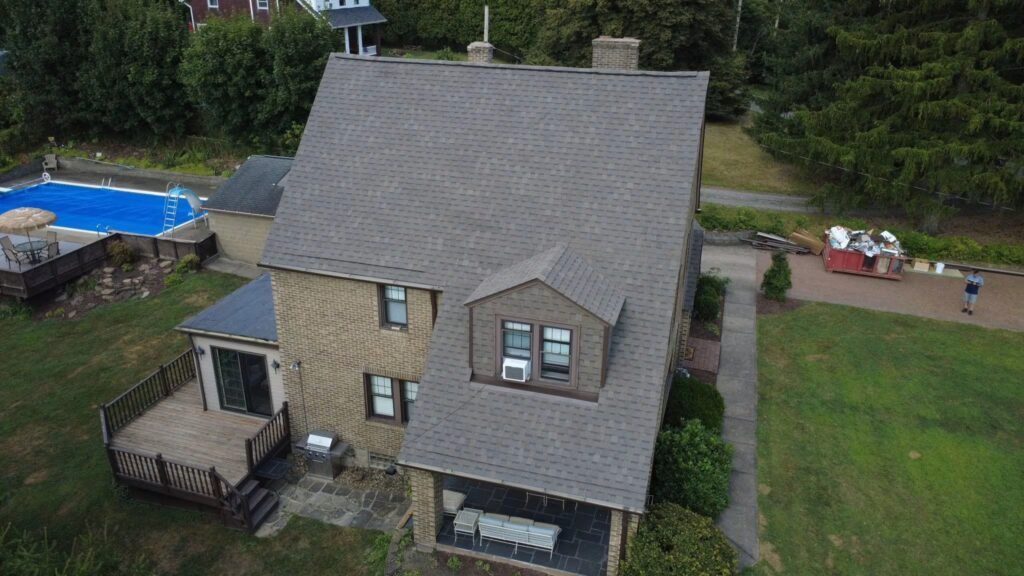
How Roof Moisture Surveys Help Cranberry Township Businesses Find Hidden Damage
I have walked plenty of flat commercial roofs where the owner swore everything was fine. The membrane looked spotless. Then the scan lit up like a map of small islands, each one a pocket of soaked insulation. That is the moment this kind of survey earns its keep, because it shows the problem while it is still cheap to fix.
For local owners, the payoff is simple. Understanding how roof moisture surveys help Cranberry Township businesses find hidden damage really comes down to timing — a scan catches hidden roof damage before it drains your budget, ruins inventory, or forces an emergency shutdown. It also hands you leverage. Instead of guessing, you get a documented map showing exactly where to repair, how far the water has traveled, and whether a targeted fix will hold.
Can Infrared Detect Moisture?
Yes, infrared can detect moisture, though with one important catch. Infrared does not “see” water directly. It reads temperature differences on the roof surface caused by the heat that wet insulation stores. Those warm patches flag probable moisture, which is why the industry standard, ASTM C1153, calls for trained thermographers and the right nighttime conditions.
There are limits worth knowing. Ballasted roofs, recent rain, standing water, and reflective coatings can all muddy the thermal picture. A good technician waits for a dry window, usually after a sunny day, then verifies the hot spots with a meter or a small core sample. Infrared narrows the search. Verification confirms it.
How to Check for Moisture in a Roof
You do not have to lean on one tool. Professionals combine methods, because each has its own strengths and blind spots. The table below shows how the common approaches stack up.
| Method | How it works | Best used for |
|---|---|---|
| Infrared thermal imaging | Reads surface heat from trapped water | Scanning large roofs quickly |
| Capacitance/impedance meter | Measures electrical properties tied to moisture | Confirming suspect areas |
| Nuclear moisture gauge | Detects hydrogen (water) in the roof buildup | Grid-mapping saturated zones |
| Core sampling | Cuts a small test section for a direct look | Final verification |
The smart play is layering these tools. A scan finds the suspects, a meter narrows them down, and a core confirms the verdict. That combination keeps you from tearing off a roof that only needs a few repairs. It also keeps you from patching a roof that is quietly finished.
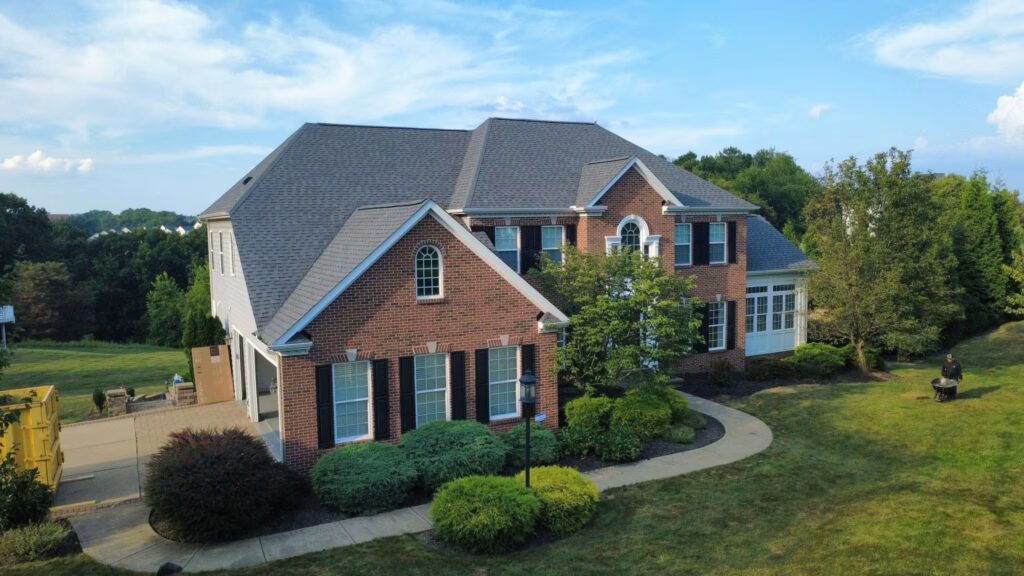
What Do They Do for a Roof Inspection?
A thorough commercial inspection is far more than a stroll across the surface. We start up top, checking seams, flashings, drains, penetrations, and the parapet walls where water loves to hide. Then we hunt for ponding, blistering, and soft spots underfoot, because a spongy feel often means wet insulation below.
From surface check to moisture map
From there, the survey takes over. Technicians run the infrared scan, mark the anomalies, verify them with meters or cores, and hand you a report with photos and a clear moisture map. You should walk away knowing the roof’s real condition, your repair options, and a rough timeline. If you want a deeper look at when a fix beats a tear-off, our guide on Signs Your Commercial Roof Needs Repair vs Replacement is a helpful next read.
Why Trapped Water Costs More the Longer You Wait
Water does not sit still. Once insulation gets wet, it loses its R-value, so your heating and cooling bills quietly creep upward. The moisture also feeds corrosion, rot, and mold, and it can spread well past the original entry point. A leak that starts the size of a dinner plate can soak hundreds of square feet before anyone notices.
There is a safety and liability angle too. Saturated roofs grow heavier, and a wet deck can weaken over the years. For a busy building, one failure can mean closed doors, damaged stock, and a very expensive weekend. Early detection is not just cheaper. It is a lot calmer.
When Cranberry Township Buildings Should Schedule a Survey
Our Western Pennsylvania weather is rough on flat roofs. We get heavy snow loads, sharp freeze-thaw swings, and long gray stretches that let small problems fester. Every time trapped water freezes and expands inside a seam, the gap widens a little more.
Good times to book a scan
I usually tell owners to scan after any major storm, before and after winter, and any time they spot a stain, smell mustiness, or notice climbing energy bills. A survey also makes sense before you buy a building, install rooftop solar, or file a warranty or insurance claim. Booking a commercial roof moisture survey Cranberry Township on a routine schedule turns roof care from a fire drill into a plan.
What Happens After the Survey: Repair or Replace?
Once the map is in your hands, the path forward usually gets clear. If moisture sits in just a few pockets, targeted repairs and fresh insulation can add years to the roof. If the wet area covers a large share of the surface, a full replacement is often the more honest and cost-effective call.
This is where an experienced local team matters. Good commercial roofing Cranberry Township crews read the data, weigh your budget, and give you a straight recommendation instead of an automatic upsell. For a broader view of how professionals standardize this work, the National Roofing Contractors Association’s technical overview of roof moisture surveys is a credible, no-nonsense resource.
The bottom line is control. Knowing how roof moisture surveys help Cranberry Township businesses find hidden damage trades guesswork for a plan, protects your building, and often pays for itself the first time it catches a problem early. For any local business with a flat or low-slope roof, that is money and stress well saved.