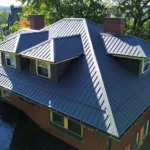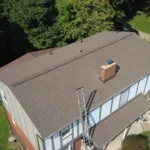
Pittsburgh has one of the deepest stocks of pre war housing in the country: Tudor Revivals in Squirrel Hill and Mt. Lebanon, Queen Anne Victorians in Allegheny West and Sewickley, and block after block of American Foursquares in Bellevue, Dormont and Ben Avon. Most were built with slate on the roof, metal flashing at the chimneys and box gutters hidden inside the eaves. A century later the question every owner faces is what to repair, what to replace and what to quietly modernize.
We are Malick Brothers Exteriors, a family owned roofing company based at 500 Perry Highway in West View. Our repair division handles slate roof repair and replacement, tile, flat roofs and box gutters. This guide covers how slate roof repair in Pittsburgh actually works, when a slate roof has reached the end of its life, and how to keep a Tudor, Victorian or foursquare looking right after the work is done.
Pittsburgh's historic housing and the roofs that came with it
Tudor Revival (roughly 1910 to 1940)
Steep gable roofs, decorative half-timbering, brick and stucco walls and tall chimneys with clay pots. Tudor roofs were almost always slate, sometimes laid in graduated courses. The steep pitch sheds water well but makes every repair a rope and ladder job, and the many valleys, dormers and chimney intersections mean a lot of flashing to fail.
Victorian (roughly 1870 to 1910)
Queen Anne and Second Empire houses have the most complicated roofs in the city: turrets, mansards, multiple gables, patterned slate and ornamental ridge cresting. Many still have their original box gutters.
American Foursquare (roughly 1900 to 1930)
The workhorse of Pittsburgh's streetcar suburbs: a low pitched hip roof, a large center dormer, deep overhangs and a full width porch with its own low slope roof. The low pitch holds snow and ice longer than a Tudor, so these roofs tend to fail at the dormer cheeks and the porch roof first.
Slate roof repair in Pittsburgh: what actually fails
Here is the most important thing to understand about an old slate roof: the stone usually outlasts everything holding it up. The National Park Service's Preservation Brief 29 on slate roofs gives hard slates a service life of 100 to 200 years and softer Pennsylvania slates 50 to 125 years. The nails, the flashing and the gutters do not last nearly that long. When a homeowner tells us the slate roof is leaking, the slate itself is the cause less often than one of these:
- Nail failure. Original steel nails rust through after a century and individual slates slide out, usually after a wind storm. A handful of slipped slates a year is normal maintenance, not a reason to replace the roof.
- Flashing failure. Chimney, valley and dormer flashing was galvanized steel or terne on most Pittsburgh houses, and both corrode. Copper lasts far longer, which is why we use it when we rebuild a chimney saddle or a valley on a slate roof.
- Box gutter rot. Once the metal lining opens up, water runs into the cornice, the rafter tails and sometimes the wall below. This is the most expensive problem we find on Victorians and Tudors.
- Delaminating slate. Soft slate eventually flakes in layers, turns chalky and absorbs water. Tap a bad slate and it sounds dull instead of ringing. When a large share of the field is delaminating, repair stops making sense.
How a proper slate repair is done
The method matters more than the material:
- Inspect the whole roof, not just the leak. We walk the attic first, because the stain on the ceiling is rarely under the failed slate. A roof inspection tells us whether we are looking at a dozen slates or a roof failing everywhere at once.
- Remove the damaged slate with a ripper. The ripper slides under the slate and cuts the nails so the neighbors stay in place. Nobody should be prying slates up with a flat bar.
- Match the replacement. We match thickness, size, color and exposure. Salvaged Pennsylvania slate is the best match for most Pittsburgh roofs.
- Hang the new slate on a copper hook or nail and bib. The slate is held by a hidden copper hook or by a nail covered with a copper bib. No exposed nail heads and no roof cement.
- Rebuild the flashing in copper. When a leak traces to a chimney or valley, we strip the old metal and install copper step flashing, counter flashing let into the mortar joint, and a copper cricket behind the chimney where needed. Copper weathers to a patina that looks correct on a historic house.
When a slate roof has reached the end of its life
Some slate roofs cannot be saved, and pretending otherwise wastes money. We recommend replacement when we find most of these together:
- Delamination across a quarter to a third of the roof field or more.
- Nails failing everywhere, so each repair uncovers two more slipped slates.
- Rotted or sagging roof deck, visible as a dip in the roofline or soft sheathing in the attic.
- Box gutters and cornices rotted so badly the eave itself must be rebuilt.
At that point the owner has three honest options: re-slate in new or salvaged natural slate, the correct choice in a historic district or on a high value Tudor or Victorian; install a synthetic slate or a heavy architectural shingle in a slate look, which keeps the color and profile from the street at a fraction of the weight; or install a standing seam metal roof, itself a traditional material on Pittsburgh porches, bays and turrets.
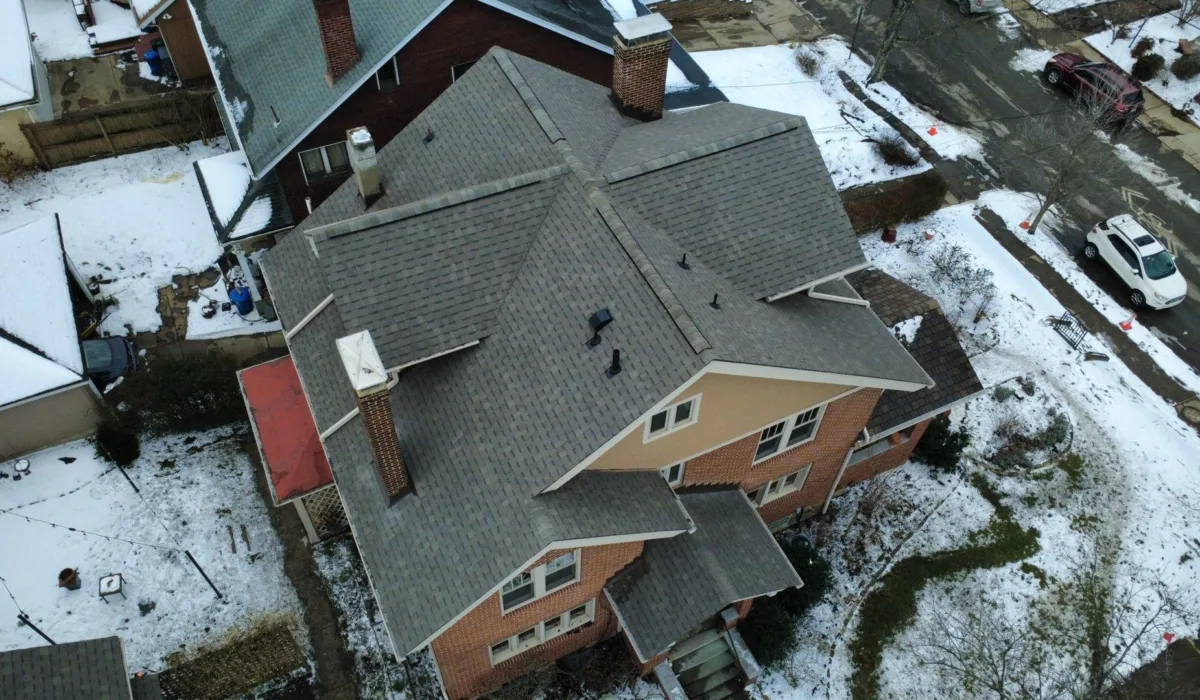
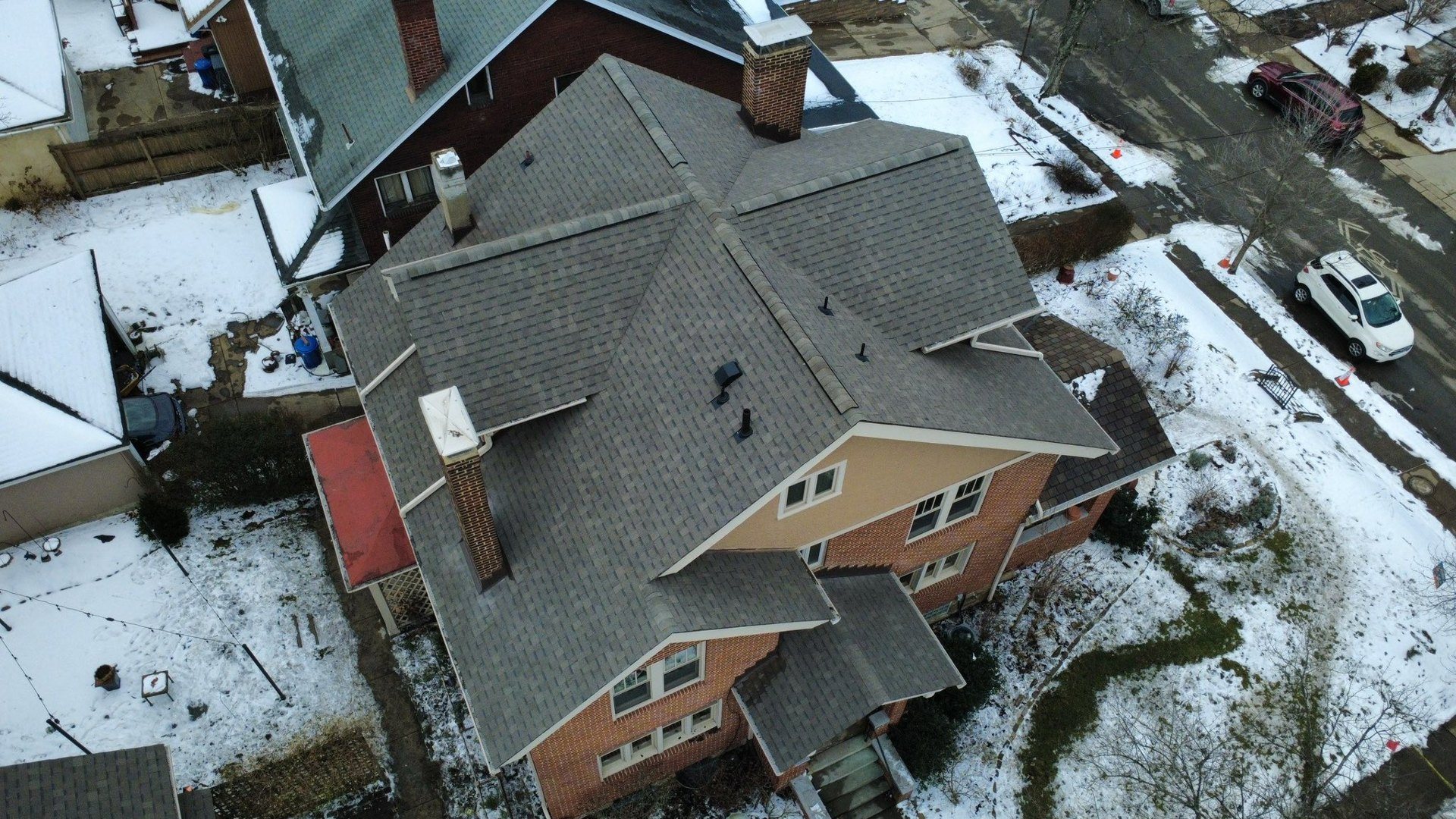
In January 2026 we replaced a roof in Squirrel Hill, the city's largest concentration of Tudor and Colonial Revival homes, with an Atlas Weathered Wood shingle system. A complete Atlas system let us offer the Atlas 50 year warranty we carry as an AtlasPro+ Platinum Select contractor, and we work through the winter, so a failing roof in January does not have to wait until spring.
Box gutters: the hidden problem on Tudors and Victorians
A box gutter, sometimes called a built in or Yankee gutter, is a metal lined trough framed into the eave behind the cornice. It is invisible from the street, which is why Victorian and Tudor builders used it, and once the lining pinholes or splits the damage stays hidden until the cornice sags or the plaster inside the wall goes soft. There are three ways to deal with one, and we do all three:
- Reline it. Strip the old metal, repair the wood trough and install a new liner. This preserves the original look where the cornice is a major part of the architecture.
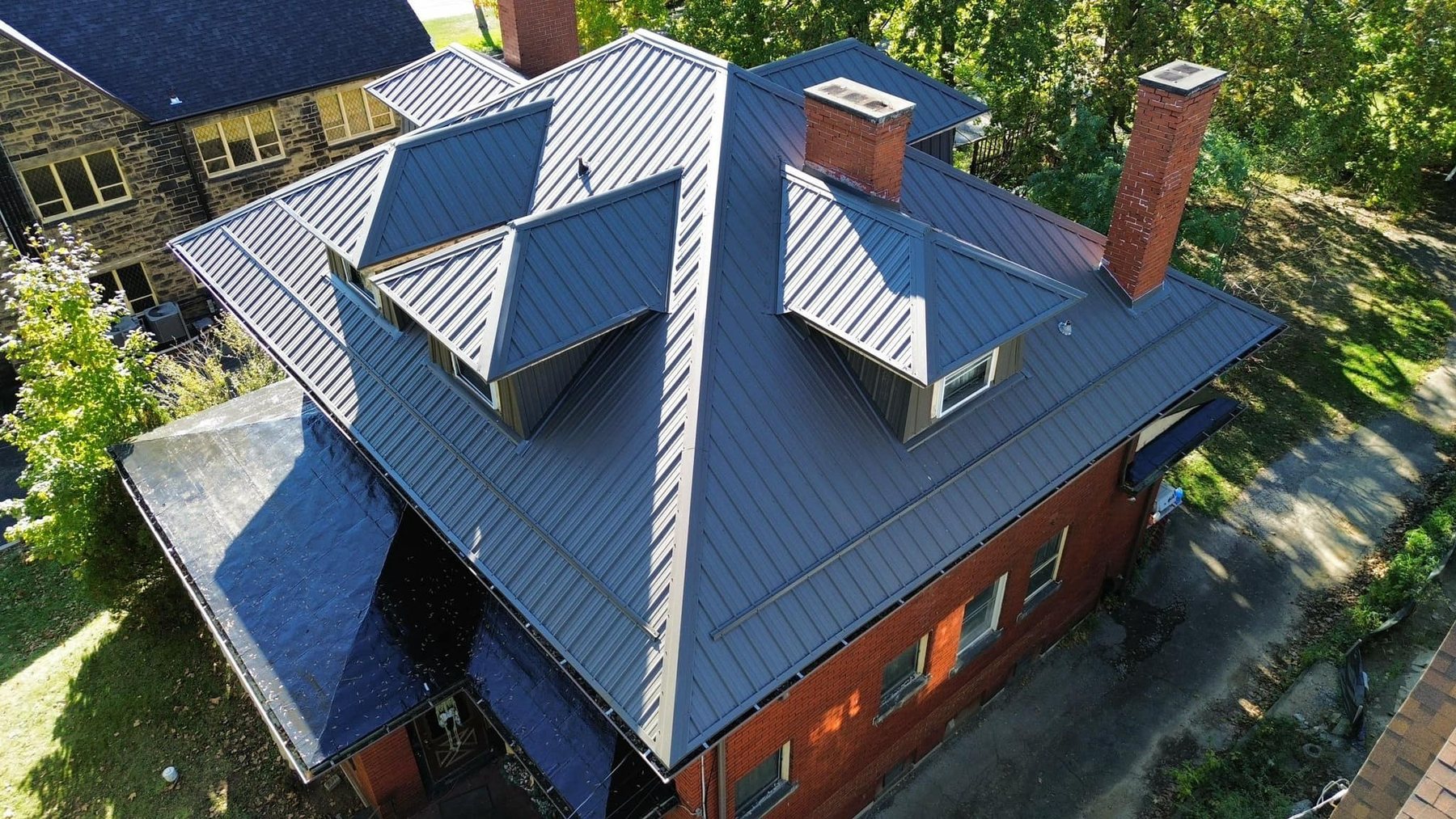
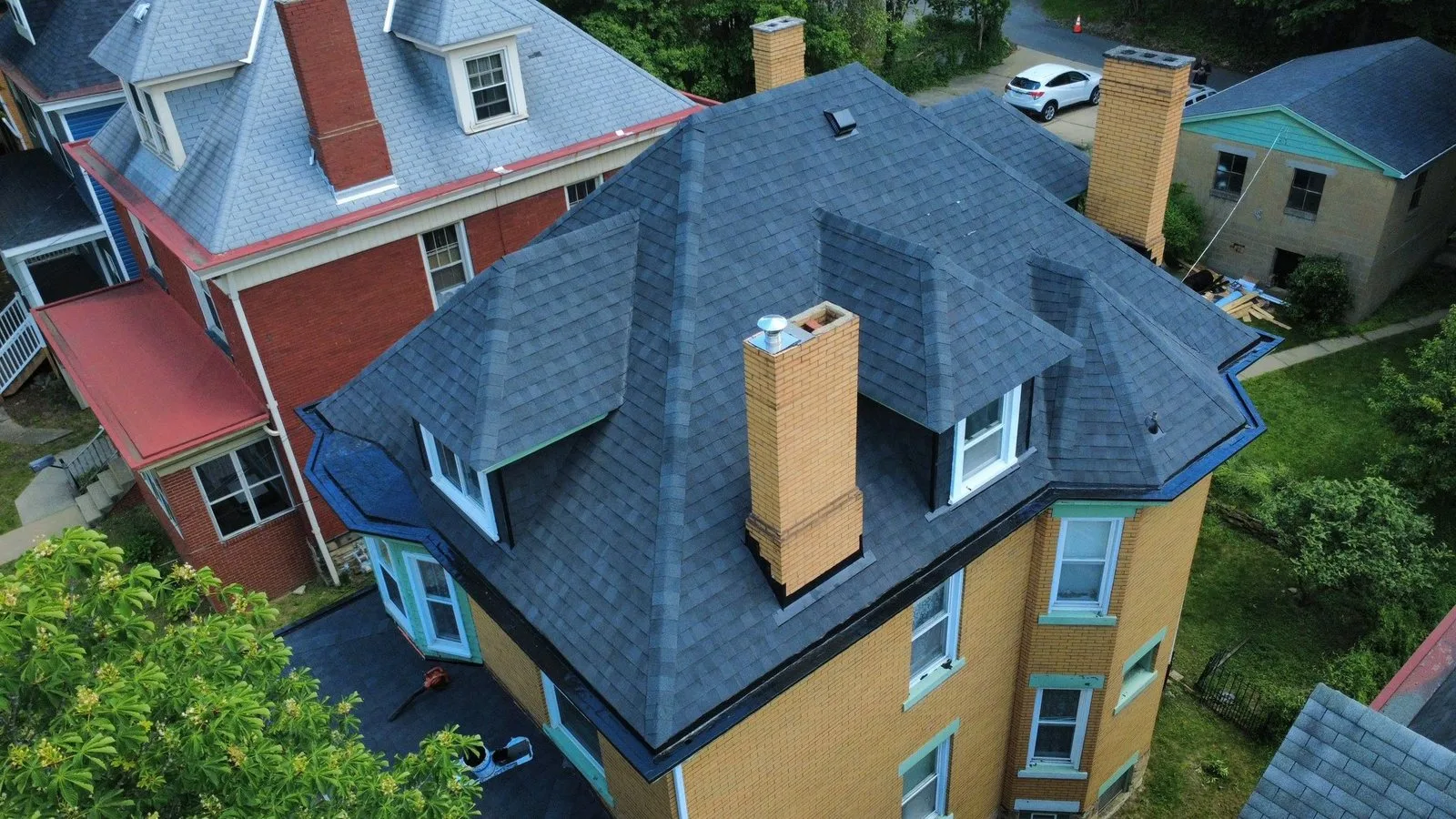
- Coat it. When the liner is sound but seams and pinholes are opening, a reinforced silicone coating seals the whole trough as one piece. We are MuleHide certified for silicone coatings; in May 2026 we installed an Atlas Black Shadow roof in Bellevue and silicone coated the box gutters in the same project.
- Close it and hang new gutters. On a foursquare or plainer Tudor, the trough can be decked over and 5 or 6 inch seamless gutters hung on the fascia. It is the most durable fix, but it changes the eave profile, so we do not recommend it on a formal Victorian cornice or in a historic district.
What to match and what to modernize
The goal is a roof that looks original from the sidewalk and performs like a 2026 roof underneath.
| Element | Match the original | Modernize |
|---|---|---|
| Roof covering on street facing slopes | Natural slate, or a slate look product in the same color and exposure | Only if the whole roof is being replaced and the look is preserved |
| Rear slopes, porch roofs, bays | Keep the profile and color | Standing seam metal or EPDM on low slope sections is acceptable and often better |
| Flashing | Copper, as most quality originals were | Modern soldered copper details, crickets behind chimneys, ice and water membrane beneath |
| Ventilation | Keep the look of the ridge and soffit | Add low profile ridge and soffit venting; old attics were never meant for modern insulation |
| Box gutters | Reline or coat on formal facades | Deck over and hang seamless gutters on plainer houses |
| Chimney pots and cresting | Keep, repair, reinstall | Never remove on a Tudor or Victorian |
Almost every historic attic in Pittsburgh has had insulation added since the house was built, which means more ice damming and condensation under the slate. Any time we open a historic roof we add soffit intake and ridge exhaust that is invisible from the street.
Historic districts and permits in Pittsburgh
If your house is inside a City of Pittsburgh historic district such as Allegheny West, Manchester, Mexican War Streets or Schenley Farms, exterior changes visible from the street, including roofing material, need a Certificate of Appropriateness from the Historic Review Commission before work starts. Like for like slate repair is normally approved quickly; a change from slate to another material on a street facing slope is where the review gets careful. We will tell you up front whether your address is affected.
Whoever you hire, confirm they hold a current Pennsylvania Home Improvement Contractor registration. Ours is PA174918, and any registration can be checked on the PA Attorney General HIC search. Ask whether the crew that will be on your roof has hung slate before. Slate work done by a shingle crew is the main source of the bad repairs we are called in to undo.
What drives the cost of historic roof work
No two historic roofs are alike, but these move the number on a written estimate: roof pitch and height; how many slates are slipped versus delaminating; the copper flashing to rebuild at chimneys, valleys and dormers; the condition of the box gutters and cornice; deck repair; and, on a replacement, the choice between slate, synthetic slate, architectural shingle or metal. Every job starts with a free written estimate, and financing is available for larger projects.
Frequently asked questions
Can a slate roof be repaired instead of replaced?
Usually, yes. Most slate roof leaks in Pittsburgh come from rusted nails, failed flashing or a leaking box gutter, not the slate itself. Replacing slipped slates on copper hooks and rebuilding flashing in copper can add decades to a roof. Replacement is the better choice only when a large share of the slate is delaminating or the deck and eaves are rotted.
How long does a slate roof last in Pittsburgh?
Hard slate commonly lasts 100 to 200 years and softer Pennsylvania slate 50 to 125 years, according to the National Park Service. Pittsburgh's freeze and thaw winters are hard on soft slate, so a 1920s roof is often at the end of its life, while a hard Vermont slate roof of the same age may have a century left.
What is the best roof for a Tudor style home?
Natural slate is the original and best match for a Tudor roof. When budget or structure rules it out, a synthetic slate or a heavy architectural shingle in dark gray, brown or weathered wood keeps the look. Steep Tudor gables show the roof prominently from the street, so color and texture matter more than on a low pitched foursquare.
Can I put asphalt shingles on a historic home?
Yes, outside a designated historic district, and it is the most common replacement in Pittsburgh. Choose a dimensional shingle in a color close to the original slate, keep the chimney pots, cresting and dormers, and have the flashing done in copper so the details still read as historic. Inside a city historic district you need approval first.
What is a box gutter and should I keep it?
A box gutter is a metal lined trough built into the eave behind the cornice. On a formal Victorian or Tudor facade it is part of the architecture and is worth relining or coating. On a plainer house, decking it over and hanging seamless gutters is cheaper to maintain and removes the most common source of hidden rot.
Do you work on historic roofs in winter?
Yes. We work all winter. Emergency slate repairs after wind or ice storms cannot wait for spring, and full replacements like our January 2026 Squirrel Hill project go on in cold weather with the right planning. Snow and ice are cleared from the roof before slate work starts.
Talk to a Pittsburgh roofer who repairs slate
If your Tudor, Victorian or foursquare has slipped slates, a leaking chimney or a box gutter dripping behind the cornice, we will walk the roof and the attic, show you photos of what we find and give you a written estimate for repair and, where it makes sense, for replacement. Contact Malick Brothers Exteriors or call (412) 616-0191 to schedule a free inspection anywhere in Pittsburgh and the North Hills.