A tree limb through the roof is one of the few roofing problems that cannot wait until the weekend. Tree damage roof repair starts within hours, not days, because every rain that follows the storm goes straight into the house through the hole. This guide explains what to do in the first hour, how to document the damage for an insurance claim, what a roofer looks for once the tree is off the house, and how to decide between a repair and a full replacement.
We are Malick Brothers Exteriors, a family owned roofing company based at 500 Perry Highway in West View. Our repair division handles shingle, slate, tile and flat roofs across the North Hills and the city, and we work all winter, when many of the worst wind storms arrive. If you need roof repair in Pittsburgh after a tree strike, the steps below will protect your family, your claim and your home while you wait for us to arrive.
What to Do in the First Hour After a Tree Hits Your Roof
Safety comes before the roof. A tree that has come to rest on a house can shift, and the framing under it may be carrying a load it was never designed for.
- Get everyone out of the affected part of the house. If the ceiling is sagging, walls are cracked or you hear the structure creaking, leave the house entirely and wait outside.
- Call 911 if anyone is hurt, if you smell gas, or if power lines are down. In Western Pennsylvania, falling trees take down service drops constantly. Treat every downed line as live.
- Shut off utilities if you can reach them safely. If the gas meter or electrical panel is in the damaged area, call the utility instead of going near it.
- Stay off the roof and leave the tree where it is. Do not climb up to look and do not start cutting limbs. Removing weight from one spot can cause the rest of the tree to roll or the roof to collapse.
- Take photos from the ground and from inside. Photograph the tree on the house, the hole from the attic or the room below, water stains, broken gutters and anything on the ground that came off the roof.
Once everyone is safe, call your insurance company and then call a roofer, both the same day. From here on the job involves up to three trades: a tree service to get the tree off, a roofer to secure and repair the roof, and sometimes a contractor for interior drywall.
Document the Damage Before Anything Is Moved
Clear photographs are the foundation of a successful claim. Take wide shots that show the whole roof and the tree, then close shots of every impact point. Open the attic hatch and photograph daylight through the deck, cracked rafters and wet insulation. Photograph the interior ceiling before it is cut open for drying.
Keep every receipt from this point forward: the tree service, the tarp, a hotel if you cannot stay in the house, and the roofer's emergency visit. Most homeowner policies reimburse reasonable costs to prevent further damage, but only when you can show what you spent.
Write down the date and approximate time of the storm. Adjusters check weather records, and matching your claim to a documented wind event makes the file move faster.
Tarping a Roof After Tree Damage
A tarp is a temporary roof. It keeps the next rain out of the house until a permanent repair is possible, and insurers expect you to take this step. Here is how we handle it on an emergency call:
- The tree or limb must be off the roof first. A tarp over a branch does nothing.
- The tarp runs from above the ridge, or well above the damaged area, down past the damage, so water sheds over it instead of under it.
- Edges are secured with furring strips screwed through the tarp into the roof deck, never with loose bricks or sandbags. Weighted tarps blow off in the first strong gust.
- Any hole through the deck gets a plywood patch under the tarp so the tarp cannot sag into the opening and pool water.
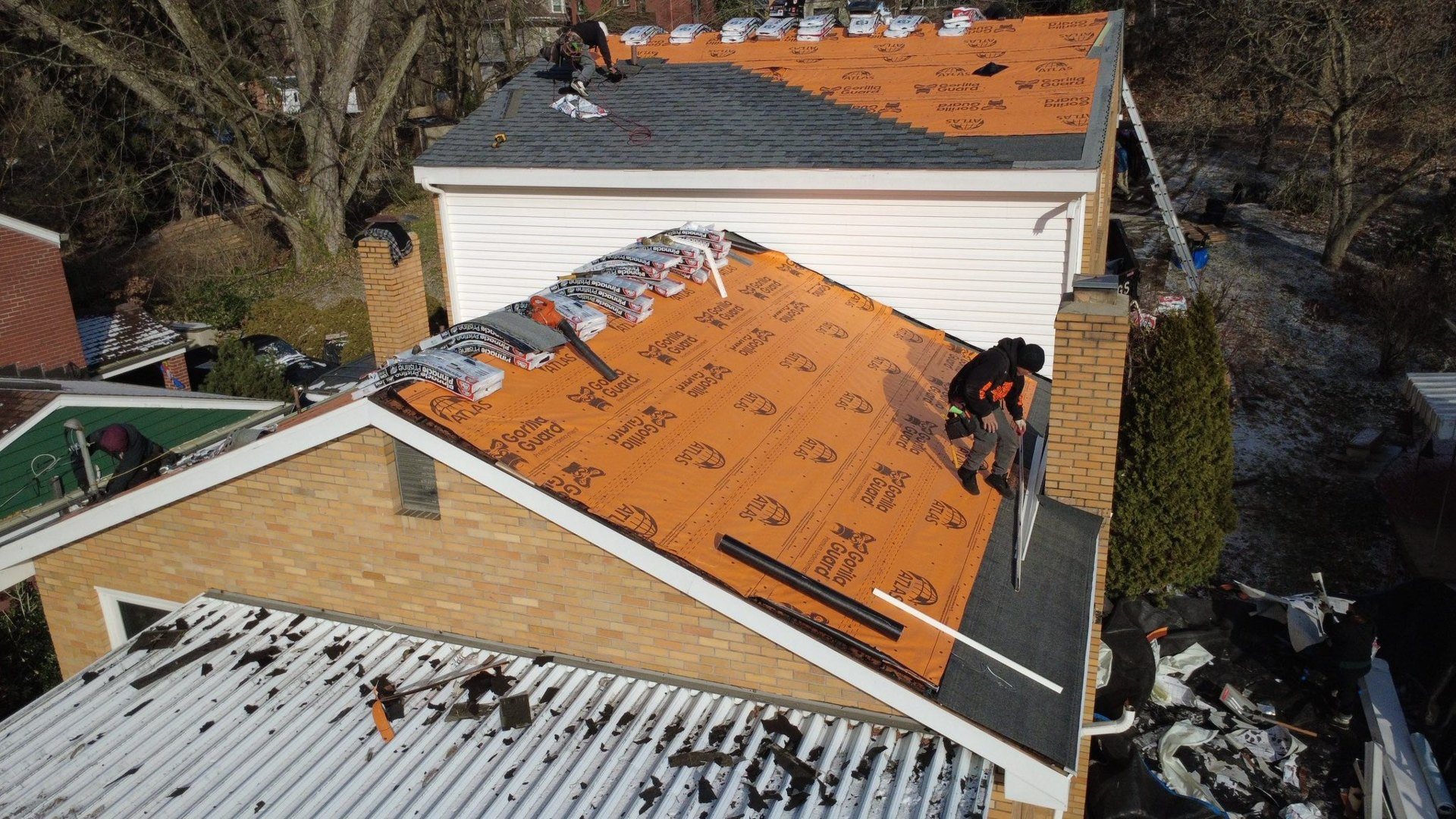
If you tarp the roof yourself, do it only in daylight, only when the roof is dry and never on a steep slope without a harness. Our crews carry tarps, strips and plywood on every truck, and tarping is included when you book an emergency roof inspection with us after a storm.
What a Roofer Inspects Once the Tree Is Off
Tree damage is rarely limited to the spot where the trunk landed. The impact travels through the roof system, and a careful inspection covers all of it:
- Shingles. Broken, creased and torn shingles are obvious. Shingles that look fine but have lost their granules under a dragged limb will fail within a year or two and need to be marked now.
- Roof deck. We check for cracked or punctured sheathing from inside the attic, and we walk the roof feeling for soft spots once it is safe.
- Rafters and trusses. A heavy trunk can crack a rafter or knock a truss out of plane without opening a hole. This is the damage that turns a shingle repair into a framing job.
- Flashing. Chimney, wall and valley flashing bends easily under a falling limb. Bent flashing leaks slowly, which is worse than a hole because you find it months later.
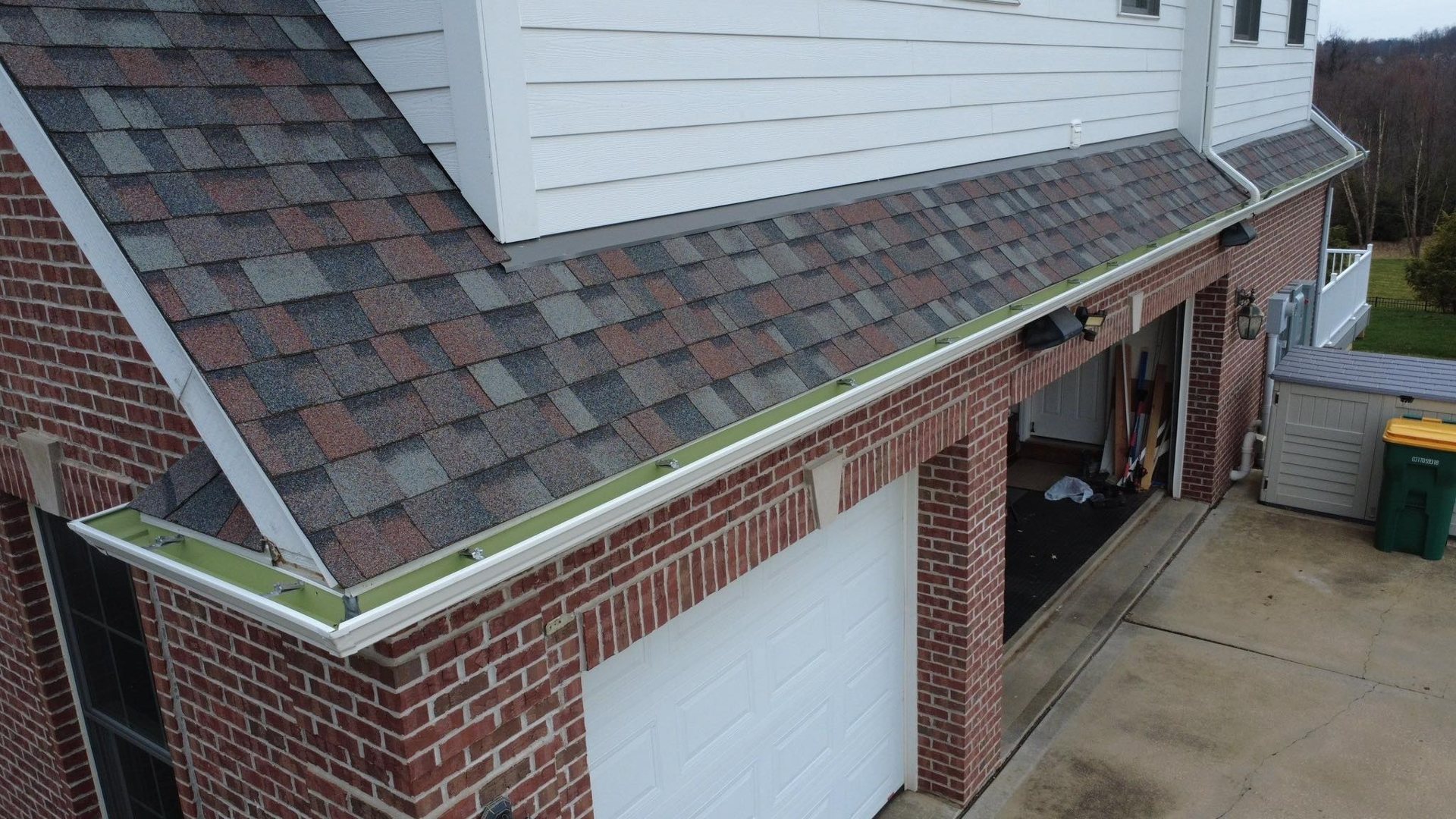
- Gutters, soffit and fascia. Limbs sliding off the roof take the gutter with them and often split the fascia behind it. We install seamless gutters and soffit and fascia, so one crew closes out the whole repair.
You will receive a written report with photos. Your adjuster works from that report, so it has to be specific: sheets of decking, length of rafter to sister, squares of shingle, feet of flashing and gutter.
Repair or Replace? How the Decision Is Made
Most tree strikes in our area are limb strikes, not whole trees, and most limb strikes are repairs. The decision depends on four things.
| Situation | Usual outcome |
|---|---|
| A limb cracked a few shingles, deck is sound | Shingle repair, matched to the existing roof |
| A limb punched through the deck in one area, framing sound | Deck patch plus shingle repair over the affected section |
| Trunk impact with cracked rafters or trusses | Framing repair first, then roofing; often a larger section of roof |
| Damage spread across several slopes on a roof already near end of life | Full replacement is usually the better use of the insurance payout |
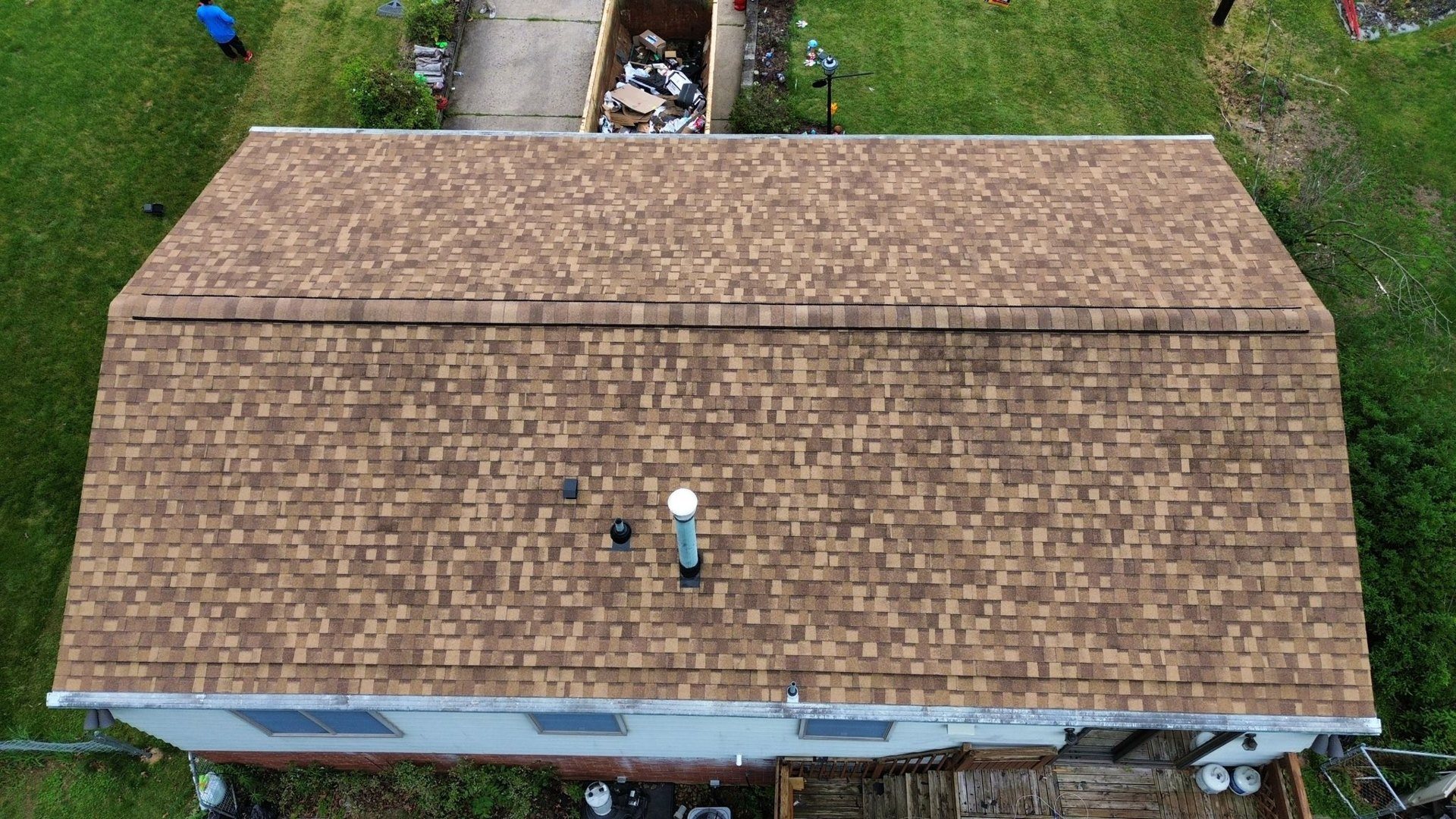
Two local factors push a repair toward a replacement. First, matching. Many Pittsburgh roofs are 20 to 30 years old and the shingle is discontinued; if a large patch cannot be matched, some policies pay to replace the slope or the whole roof. Second, the condition of what is left. If the surrounding roof is brittle, every nail driven into a repair cracks the neighboring shingles.
When replacement is the answer, we install complete Atlas systems as an AtlasPro+ Platinum Select contractor, which lets us offer the Atlas 50 year warranty on those roofs. You can read about the process on our roof replacement page and compare shingle, metal and slate options on the roof materials page.
Does Homeowners Insurance Cover Tree Damage to a Roof?
In most cases a standard homeowner policy covers sudden, accidental damage from a falling tree, including the roof repair, interior leak damage and removal of the part of the tree on the structure. Details vary by policy, so ask your agent, but these points come up on nearly every tree claim we work on:
- Whose tree it was usually does not matter. If a neighbor's tree falls on your house in a storm, your own policy handles the claim. The exception is a tree that was obviously dead or hazardous and that the neighbor was told about in writing.
- Tree removal is often limited. Policies commonly pay to remove the portion on the house and may cap the amount for the rest of the tree in the yard.
- Depreciation can apply. On an older roof, some policies pay actual cash value first and release the balance after the repair is complete. Ask which type you have.
- Neglect is excluded. Damage from limbs that have been rubbing on the roof for years, or from a tree the homeowner knew was rotten, can be denied. Keeping trees trimmed is part of keeping coverage.
Give the adjuster our written report and photos. If the adjuster's scope leaves out items we documented, we will meet the adjuster on site and walk the roof together.
Choosing a Contractor After a Storm
Big wind events bring out of town crews knocking on doors across the North Hills. Before signing anything, confirm the contractor holds a current Pennsylvania Home Improvement Contractor registration using the Pennsylvania Attorney General's contractor lookup. Our registration is PA174918. Ask for proof of insurance, a written scope that matches the inspection report, and a local address you can drive to. We are BBB A+ accredited and have been based in West View since 2022.
Preventing the Next Tree Strike
Most tree damage we repair comes from ordinary wind and ice events that hit Pittsburgh every winter and spring and bring down trees that were already weak. A few habits lower the odds:
- Trim limbs so nothing overhangs the roof or touches the shingles. Rubbing limbs wear granules off asphalt shingles and scratch metal roofing.
- Have large trees near the house looked at by an arborist every few years. Dead crowns, fungus on the trunk, a worsening lean and lifting roots are warning signs.
- Clean gutters in fall. Piled leaves hold water against the fascia and the edge of the deck, exactly where a limb strike does the most damage.
Frequently Asked Questions
What happens if a tree falls on your roof?
The roof deck takes the first impact and the framing below takes the rest. A limb usually breaks shingles and may punch through the sheathing. A trunk can crack rafters, shift trusses and open a hole large enough for rain to reach the living space within minutes. Get out of the affected area, call 911 if lines are down or anyone is hurt, then call your insurer and a roofer the same day.
Can a house withstand a tree falling on it?
Often yes, especially with a limb or a small tree. Wood framed roofs are strong, and a strike near the eave may only damage shingles and gutters. A full size trunk across the ridge can crush trusses. Nobody should go back into the house until the tree is off and the framing has been checked from the attic.
Who removes the tree, the roofer or a tree service?
A licensed, insured tree service removes the tree. Roofers are not equipped to rig and lower a trunk off a house, and doing it wrong causes more damage. We coordinate with the tree crew so our tarp goes on the same day the tree comes off.
How long does tree damage roof repair take?
Tarping is a same day job. A shingle and deck repair on one section is typically one day once materials arrive. Framing repairs add time for carpentry and for a permit inspection where required. The longest delay is usually insurance approval, not the work, which is why complete documentation at the start matters.
What if tree limbs are touching my roof but nothing has fallen yet?
Limbs that rub against shingles strip the granules and shorten the life of the roof in that spot, and they give squirrels a bridge to the attic. Have them cut back. If the shingles under them are already worn, a small repair now prevents a leak later.
Does the roof repair have to match the rest of the roof?
It should, and a good roofer will try. When the original shingle is discontinued, we bring samples of the closest current colors to the house. If no close match exists and the area is visible from the street, discuss slope or full replacement with your adjuster, since many policies include matching language.
Need Tree Damage Repaired in Pittsburgh?
If a tree or limb has hit your roof anywhere in the North Hills or the city, call us. We will tarp the roof, document the damage for your insurer and give you a free written estimate for the repair. Contact Malick Brothers Exteriors or call the shop in West View and we will get a crew to you.