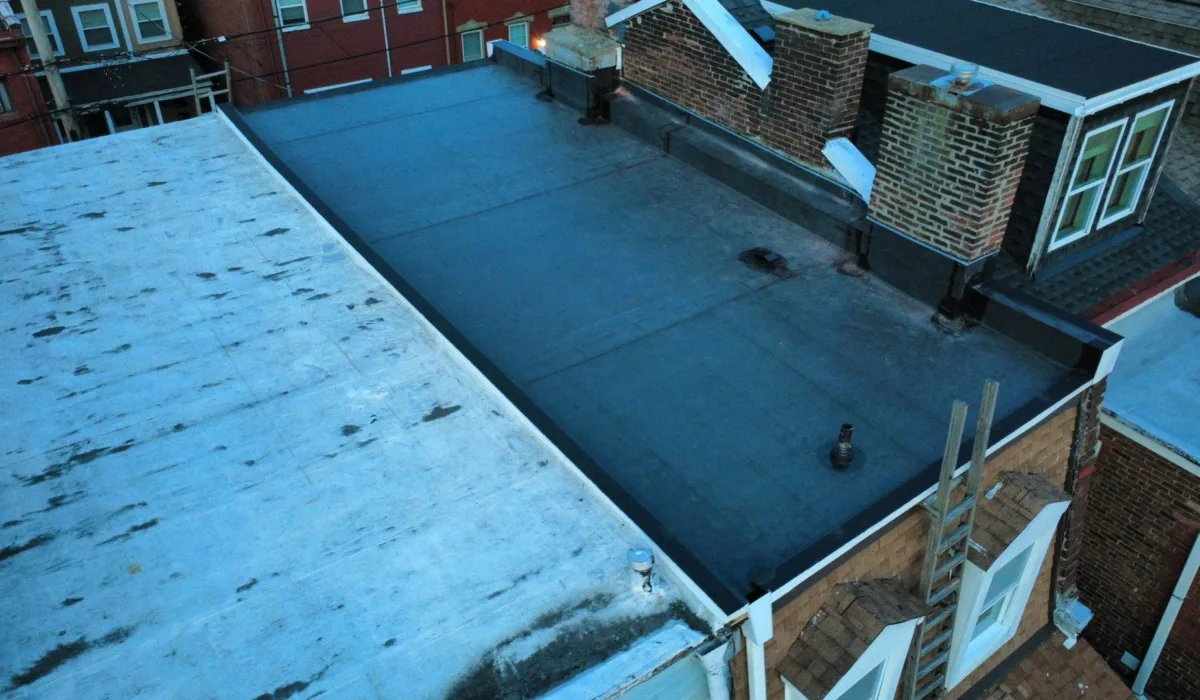
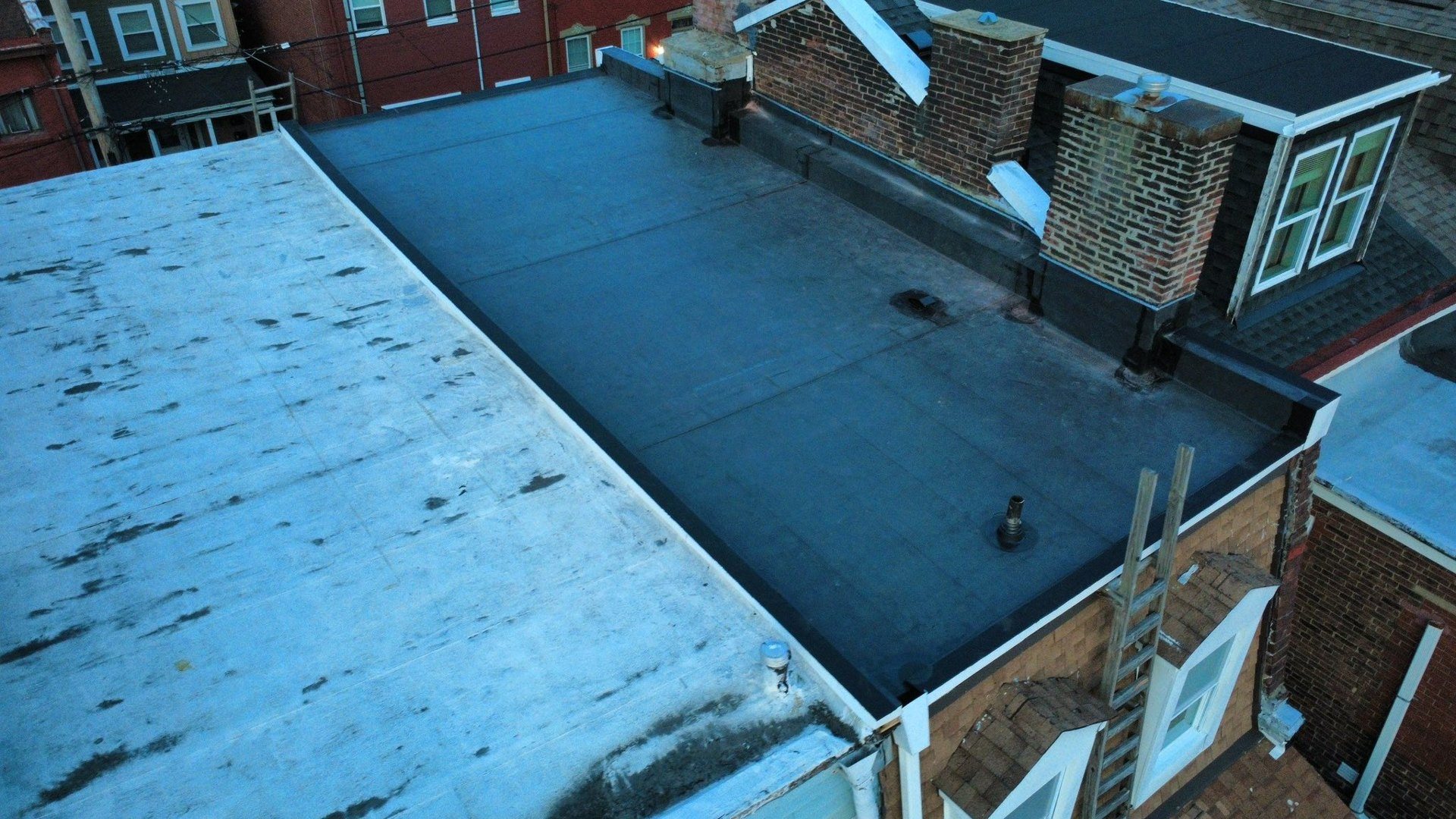
Rubber roofing in Pittsburgh shows up in more places than most homeowners realize: the back half of a rowhouse, the porch roof under a bedroom window, the kitchen addition, the dormer, the garage. These are the low slope spots where shingles fail first and where most of the stubborn leaks we are called to look at begin. This guide explains what a rubber (EPDM) roof is, where it belongs on a Pittsburgh home, how we repair and install it, and how to look after it so it lasts.
We are Malick Brothers Exteriors, a family owned roofer based at 500 Perry Highway in West View. We are MuleHide certified, and rubber roofing in Pittsburgh is a regular part of our work, usually on the same houses where we also install shingles on the steeper sections.
What a Rubber Roof Is
"Rubber roof" is the everyday name for EPDM, which stands for ethylene propylene diene monomer. It is a synthetic rubber sheet made for roofs that are flat or nearly flat. Instead of hundreds of overlapping pieces, the roof is covered with large black sheets that are glued to the surface below and joined at the seams with primer and seam tape. The result is one continuous waterproof layer.
We install .060 EPDM from MuleHide. The number is the thickness: 60 thousandths of an inch, the heavier of the two common residential thicknesses. A thicker sheet stands up better to foot traffic, fallen branches and the general wear a roof takes over the years. The MuleHide site lists the full system, including the adhesives, tapes and flashing parts that are meant to be used together.
Why Shingles Fail on Low Slope Roofs
Shingles shed water. They do not seal it out. They rely on gravity to move rain down and off the roof quickly. On a roof with very little pitch, water moves slowly, wind pushes it sideways and melting snow backs up under the laps. Shingle manufacturers set a minimum slope for their products for this reason, and many Pittsburgh porch roofs and rear additions fall below it.
If you have a shingled porch roof or addition that leaks no matter how many times it is patched, pitch is often the real cause. Rubber is built for that situation because it does not depend on overlap. Water can sit on it and drain slowly without finding a way in.
Where Rubber Roofing Fits on Pittsburgh Homes
Pittsburgh housing is full of roofs with two personalities: a steep front that everyone sees and a low slope back that nobody thinks about until it leaks. These are the places we install rubber most often.
| Part of the house | Common problem | Why rubber works |
|---|---|---|
| Rowhouse main roof (Lawrenceville, South Side, Bloomfield, the North Side) | Old rolled roofing or tar that has cracked, leaks along the parapet walls and chimney | Large sheets mean few seams, and the membrane turns up the walls to seal the edges |
| Front or back porch roof | Shingles on a pitch that is too low, leaks where the porch meets the house wall | Seals tight to the wall and handles slow drainage |
| Rear addition or kitchen bump out | Ponding water and stained ceilings | Tolerates standing water far better than shingles |
| Dormers and bay windows | Small low slope tops that are hard to shingle correctly | One piece of membrane can cover the whole area |
| Detached garage | Worn rolled roofing | Simple, durable and quick to install |
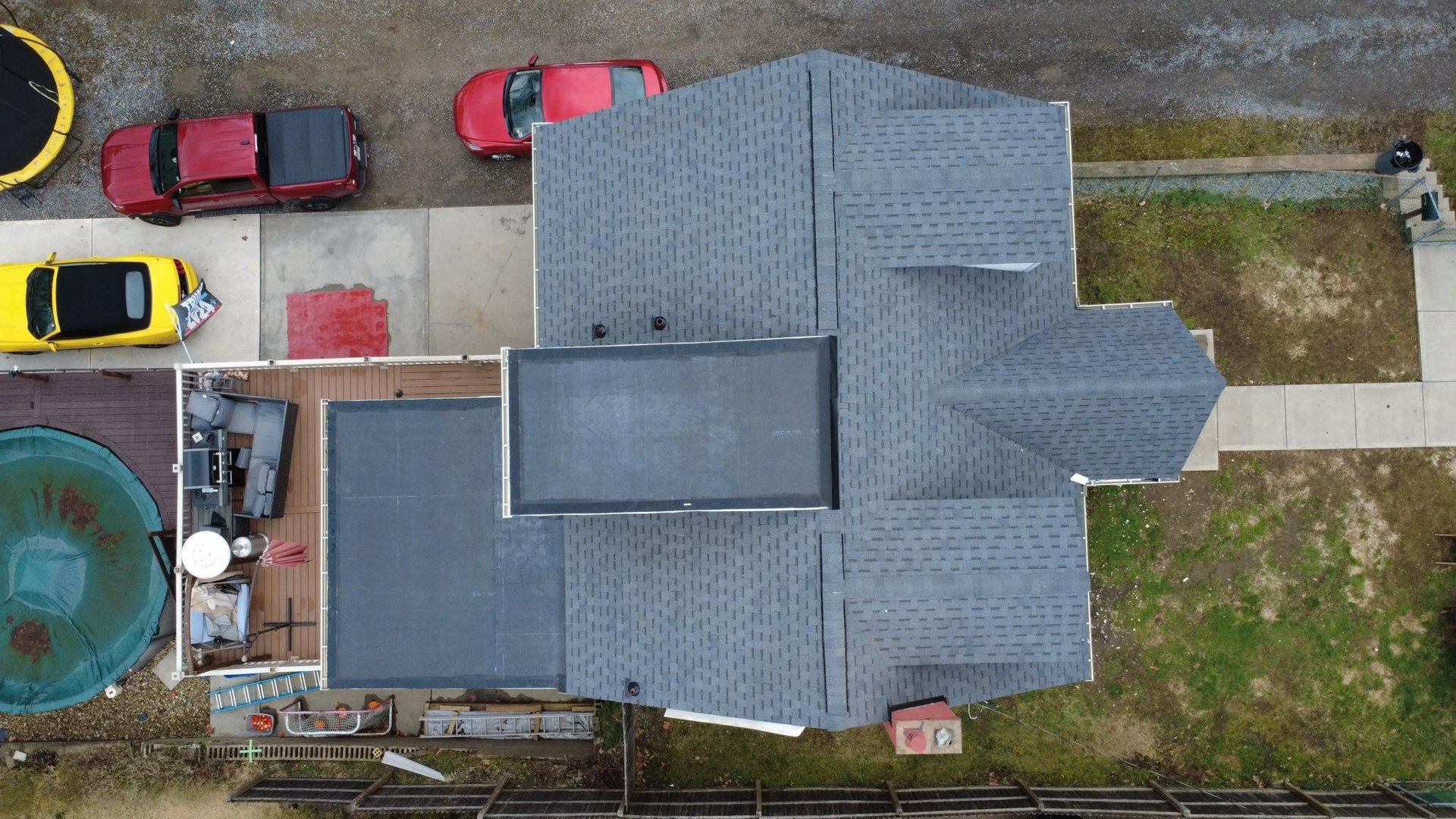
Many of our jobs combine both roof types on one house. In Mt. Washington in April 2025 we installed Atlas Black Shadow shingles together with MuleHide .060 EPDM and new copper chimney flashing. In Glenshaw in May 2025 we paired Atlas Pinnacle shingles with MuleHide EPDM. On an Observatory Hill home in April 2025 we used Atlas Pewter shingles with a MuleHide 2 ply low slope system, which is a different product that suits some roofs better than a single rubber sheet. The point is that the low slope section gets its own correct material instead of being treated as an afterthought.
How Rubber Handles Pittsburgh Weather
Our winters swing above and below freezing again and again. Every swing makes roofing expand and contract, and brittle materials eventually crack. EPDM stays flexible in the cold and stretches instead of splitting, which is the main reason it has replaced tar and rolled roofing on so many local buildings.
It also holds up to sun exposure and to the heavy spring and summer downpours that overwhelm a slow draining roof. Black rubber does absorb heat, so on a room with little insulation below it we look at adding insulation board under the membrane during installation.
Flat Roof Repair in Pittsburgh: Repair or Replace?
Not every leaking rubber roof needs to be replaced. Most leaks come from a handful of places, and many can be fixed in a single visit. Our repair division handles flat roofs along with slate, tile and shingles, so we see these same failure points every week:
- Seams. Older roofs were often joined with glue alone, which dries out. An open seam can be cleaned, primed and covered with new seam tape.
- Flashing. The rubber pulls away from a chimney, wall, skylight or vent pipe.
- Punctures. A dropped tool, a branch or a satellite dish mount goes through the sheet. These are patched with matching membrane.
- Edges and drains. Loose metal edging or a clogged drain lets water get behind the roof.
- Shrinkage. On an older roof the sheet can pull tight at the walls and corners. This usually signals that the roof is near the end of its life.
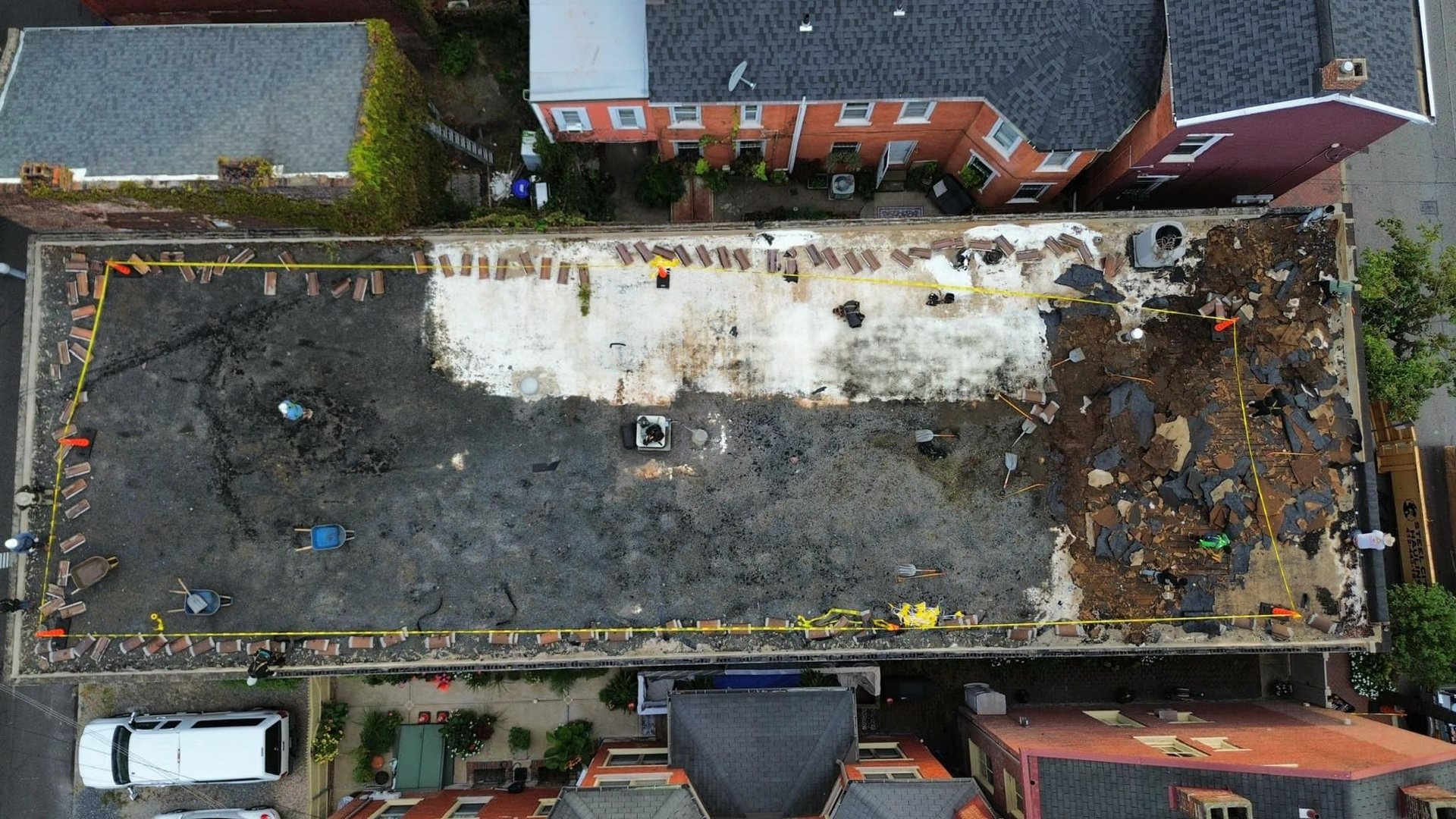
Repair makes sense when the membrane is still flexible, the damage is in one or two places and the roof deck below is dry and solid. Replacement makes sense when leaks keep returning in new spots, the insulation or wood below is wet, or the rubber has become brittle across the whole roof. We check all of this during a visit and tell you plainly which side of the line your roof is on. You can read more about how we approach leaks on our residential roof repair page.
There is also a middle option. A rubber roof that is aging but still sound can sometimes be restored with a silicone roof coating, which adds a seamless waterproof layer over the existing surface. We install MuleHide silicone coatings and will tell you whether your roof is a candidate.
How We Install a Rubber Roof
- Tear off and inspect. We remove the old roofing so we can see the wood deck. Rotted or soft boards are replaced before anything new goes down.
- Insulation or cover board. A smooth board is fastened over the deck. It gives the adhesive a clean surface and can add insulation value.
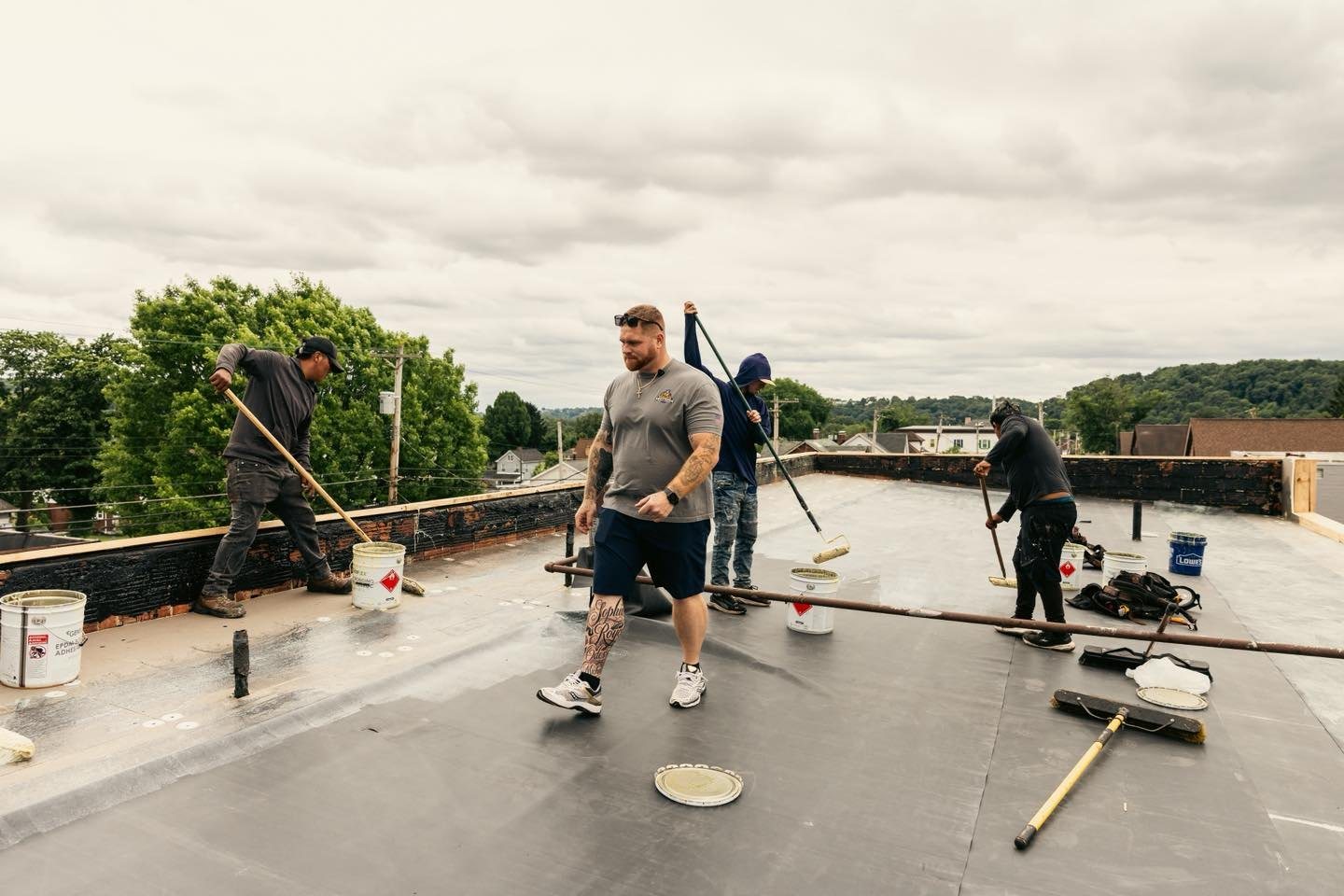
- Adhere the membrane. The .060 EPDM is rolled out, allowed to relax and then bonded to the board with adhesive.
- Seal the seams. Seams are primed and joined with seam tape, then rolled under pressure.
- Flash the details. The membrane is turned up walls, chimneys and curbs, and pipes get fitted boots. This is where most of the skill is.
- Finish the edges. Metal edging or a termination bar locks the perimeter, and we confirm that water has a clear path to the gutter or drain.
How Long Does a Rubber Roof Last?
A rubber roof that is installed correctly and looked after is commonly expected to last 25 to 30 years, and some last longer. What shortens that life is almost always workmanship or neglect: poorly sealed seams, weak flashing, clogged drainage or years of debris holding moisture against the surface. The EPDM Roofing Association publishes independent information on how the material performs over time.
Rubber Roof Maintenance: A Simple Seasonal Routine
Rubber is low maintenance, not zero maintenance. A few minutes twice a year prevents most of the repairs we are called for.
- Spring and fall: clear leaves, sticks and seed pods off the roof and out of the gutters, scuppers and drains. Debris holds water and hides damage.
- After big storms: look for branches, punctures or anything that has shifted.
- Check the seams and edges: look for lifted tape, gaps at walls and chimneys, and loose metal edging.
- Watch for ponding: water that is still standing two days after rain points to a drainage or sagging problem worth having checked.
- Look inside: a new ceiling stain under a flat roof is a reason to call right away. Small leaks soak insulation long before they drip.
- Protect the surface: wear soft soled shoes, do not drag furniture or grills across it and never use petroleum based products such as asphalt roof cement, which damages EPDM.
- Use a plastic shovel in winter if you must remove snow, and leave the last thin layer in place.
- Trim back overhanging branches so they cannot scrape or drop onto the roof.
Drainage matters as much as the membrane itself. If the gutter at the low edge is undersized or clogged, water backs up onto the roof. We install 5 and 6 inch seamless gutters and often replace them at the same time as the roof. If you would rather not climb up yourself, a yearly roof inspection covers the whole list.
What Drives the Cost of a Rubber Roof
We do not publish prices because two roofs of the same size can be very different jobs. The main factors are the size of the roof, how many layers of old roofing must be removed, the condition of the wood deck, how much insulation is added, the number of chimneys, walls, skylights and pipes that need flashing, and how hard it is to get materials up to the roof on a tight city lot. We measure the roof, look at all of these and give you a free written estimate. Financing is available for larger projects.
Choosing a Rubber Roofing Contractor
The membrane is only as good as the person sealing the seams and flashing. Before you hire anyone, ask three things:
- Are they certified by the manufacturer of the system they install? We are MuleHide certified.
- Are they registered with the state? Our Pennsylvania Home Improvement Contractor number is PA174918, and you can confirm any contractor on the Pennsylvania Attorney General HIC lookup.
- Can they handle the rest of the roof? Most homes need shingles and rubber tied together correctly. We are also an AtlasPro+ Platinum Select contractor and BBB A+ accredited.
Rubber Roofing FAQ
Is rubber roofing good for a flat roof?
Yes. EPDM rubber was designed for flat and low slope roofs. It forms a continuous sheet with very few seams, stays flexible through freezing and thawing and tolerates slow drainage that would defeat shingles. For most Pittsburgh porches, additions, rowhouse roofs and garages it is one of the most dependable choices available.
What goes underneath rubber roofing?
The membrane is not glued straight to old roofing. A typical build has the wood roof deck at the bottom, then insulation board or a thin cover board fastened to the deck, then the EPDM bonded on top with adhesive. The board gives the rubber a smooth, clean surface and can improve the insulation of the room below.
Can you put a new rubber roof over an existing flat roof?
Sometimes, but we usually recommend removing the old roof. Going over existing layers hides wet insulation and rotted wood, adds weight and can shorten the life of the new membrane. A tear off lets us inspect and repair the deck so the new roof starts on a sound, dry base.
Is it better to repair or replace a rubber roof?
Repair is the better choice when the rubber is still flexible and the leak comes from one seam, one puncture or one piece of flashing. Replacement is the better choice when leaks keep appearing in new places, the membrane has shrunk or turned brittle, or the materials under it are wet. An inspection settles the question.
What is the downside of a rubber roof?
Rubber can be punctured by sharp objects, the black surface absorbs heat, and it depends heavily on careful seam and flashing work. A plain black roof is also not decorative, which matters little on a rowhouse roof but may matter on a porch you can see from the street. Good installation and basic upkeep address most of these.
Get a Free Estimate on Your Rubber Roof
If you have a flat or low slope roof that is leaking, aging or simply overdue for a look, we will inspect it, show you photos of what we find and give you a written estimate for repair or replacement. Contact Malick Brothers Exteriors to schedule your visit.