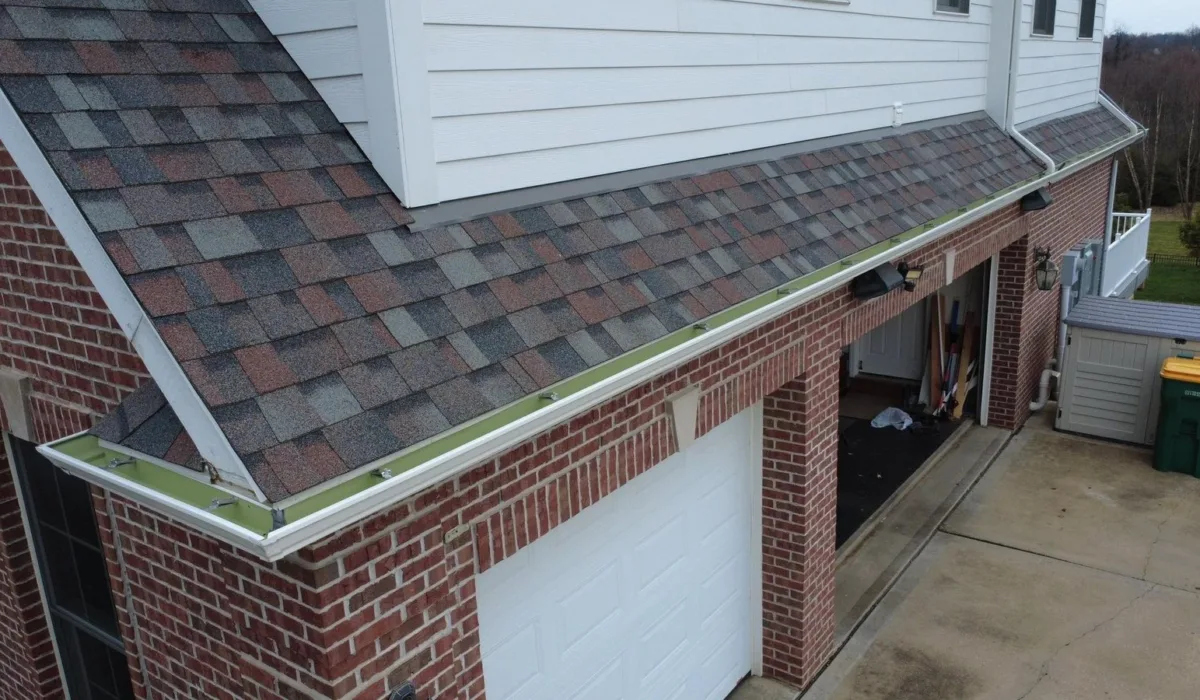
Search for gutterless gutters and you will find two very different things. One is a product: a louvered rain disperser that mounts where a gutter would normally hang. The other is a decision: taking the gutters off a house, or never installing them, and letting the roof drain straight to the ground. Both ideas promise the same reward, which is no more cleaning out leaves. Both carry the same risk, which is that all of the water from your roof lands within a few feet of your foundation.
We are Malick Brothers Exteriors, a family owned roofing and exteriors company in the North Hills. We handle gutter installation in Pittsburgh and the surrounding towns, and we also repair what water does to a house without gutters: rotted fascia, stained siding and wet basements. This guide explains what gutterless gutters are, where a gutterless roof can work, and the eight things that go wrong when a home in our climate goes without.
What Are Gutterless Gutters?
A gutterless gutter is a rain dispersal system. Instead of a trough, it is a strip of angled aluminum louvers fastened to the fascia board, a little like a narrow set of window blinds. Water running off the shingles hits the louvers, breaks into smaller drops and is thrown outward, so it lands in a band a couple of feet from the wall instead of pouring off in a sheet. There are no downspouts and nothing to hold leaves, which is the whole appeal.
The important point is what the system does not do. A gutter collects water and moves it to a place you choose. A disperser only spreads the water out. Every gallon still lands beside the house, and the ground has to deal with it.
That is a lot of water. One inch of rain on 1,000 square feet of roof is about 620 gallons. Pittsburgh receives roughly 40 inches of precipitation in a normal year, so even a modest roof sheds tens of thousands of gallons annually. Where that water goes is the real question behind any gutterless design.
Gutterless Gutters and Other Gutter Alternatives Compared
Rain dispersers are one of several alternatives people consider. Here is how the common options compare with a standard seamless gutter.
| Option | What it does | Where it falls short |
|---|---|---|
| Rain disperser (gutterless gutter) | Breaks roof runoff into drops and throws it away from the wall | Water still lands near the foundation; needs a wide overhang, good grading and a splash bed; does little in a downpour or on a tall wall |
| Drip edge only | Keeps water from curling back onto the fascia | Protects the roof edge only; does nothing for the ground below |
| Gravel drip path or French drain | Catches falling water at ground level and carries it away | Requires excavation and the right slope; walls and windows still get splashed |
| Rain chain | Guides water down from a gutter outlet in place of a downspout | Still needs a gutter above it; splashes in heavy rain and wind |
| Built in box gutter | Hides the gutter inside the roof edge, common on older Pittsburgh homes | Must be kept lined and sealed, or it leaks into the wall and cornice |
| Seamless gutter and downspouts | Collects all roof water and releases it where you choose | Needs cleaning, or a guard, where trees overhang |
Do You Need Gutters? When a Gutterless Roof Can Work
A roof without gutters is not always a mistake. It can work when most of the following are true:
- The climate is dry, with little rain and no real freeze and thaw cycle.
- The roof overhangs the walls by two feet or more.
- The ground slopes clearly away from the house on every side.
- The soil is sandy and drains fast.
- The house sits on a slab, with no basement or crawlspace.
- Concrete, stone or gravel surrounds the house where the water lands.
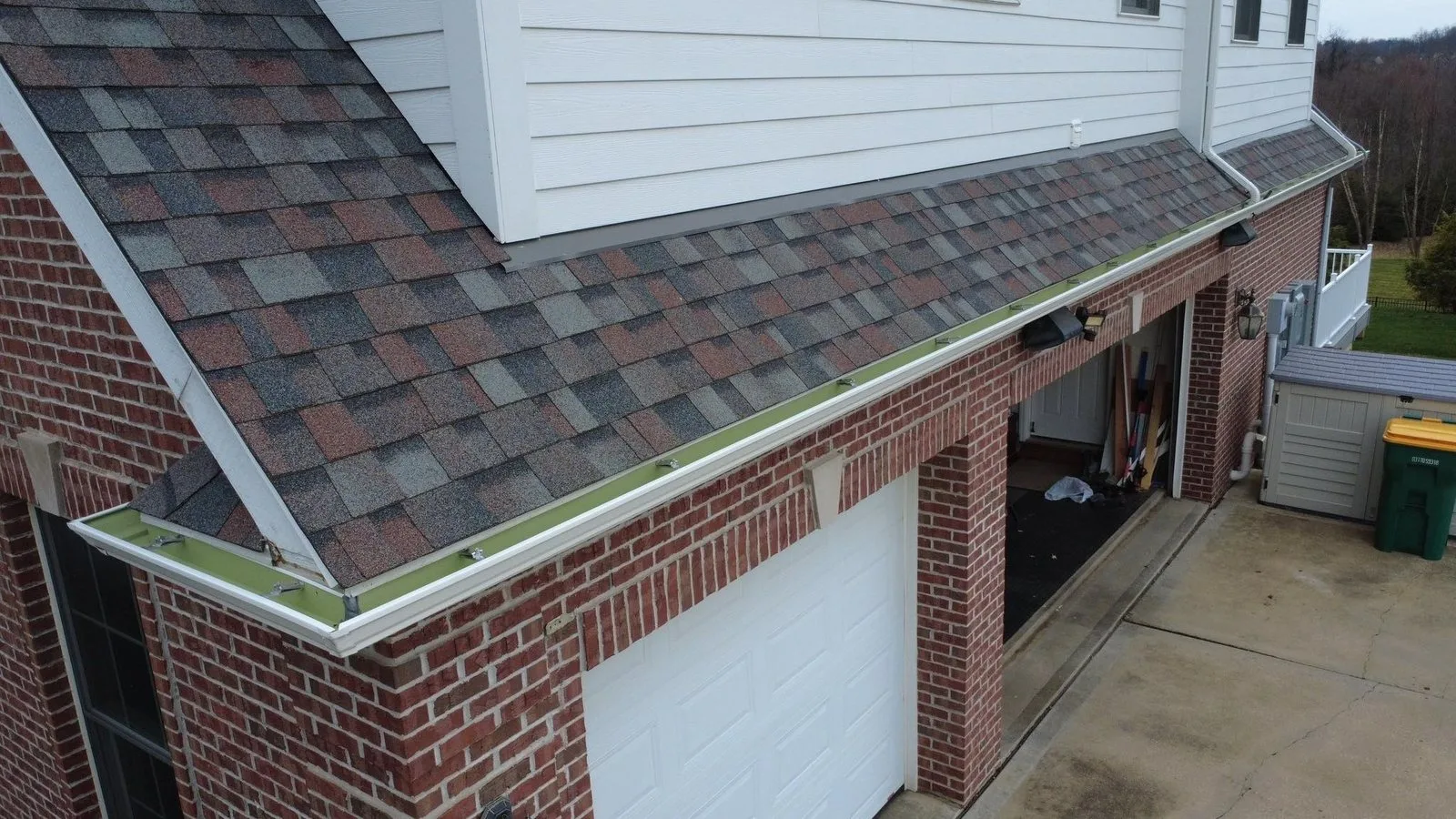
This is why you see so many gutterless houses in parts of Florida and the Southwest. It is also why the idea rarely fits here. A typical home in Allegheny or Butler County has a full basement, short overhangs, clay heavy soil that drains slowly, and a lot that slopes toward the house on at least one side. Add rain in every month of the year and a winter of freezing and thawing, and the answer to "do I need gutters" in the Pittsburgh area is almost always yes.
What Happens If You Do Not Have Gutters: 8 Consequences
1. Foundation Damage
This is the most serious consequence. Water that falls off the roof edge soaks the soil against the foundation again and again. Saturated soil washes out in some places and swells in others, and clay soil pushes hard against basement walls when it is wet. Over the years this shows up as cracks, bowing block walls and settling, which are among the most expensive repairs a house can need.
2. Basement Flooding
Without gutters and downspouts to carry water away, it follows the foundation wall down and finds every crack, joint and window well. A basement that was dry for decades can start taking water after gutters fail or are removed. Finished basements, furnaces, water heaters and stored belongings are all at risk.
3. Landscape Erosion
A roof edge without a gutter concentrates rain into a line. That line cuts a trench in mulch and soil, exposes roots, washes topsoil onto walks and driveways, and drowns the plants below it. On a sloped Pittsburgh lot the runoff keeps going and carves channels across the yard.
4. Siding and Exterior Damage
Water that hits the ground splashes back onto the lower wall, carrying dirt with it. Wind pushes the falling sheet of water against the siding, doors and windows. The results are stained brick and siding, peeling paint, rotted wood trim and door sills, and water working in behind the cladding. If the damage is already done, we handle siding installation as well as gutters.
5. Mold and Mildew Growth
Mold needs moisture more than anything else. Soil and walls that never dry out create damp basements and crawlspaces, and that is where mold and mildew take hold. The EPA lists keeping gutters clean and in repair, and making sure the ground slopes away from the foundation, among its basic steps for controlling moisture and mold in a home.
6. Pest Infestations
Standing water beside a foundation gives mosquitoes a place to breed. Damp wood and wet soil attract carpenter ants and termites, and rodents look for the same moisture. Keeping the perimeter of the house dry removes much of what draws pests to it.
7. Roof Edge, Fascia and Soffit Damage
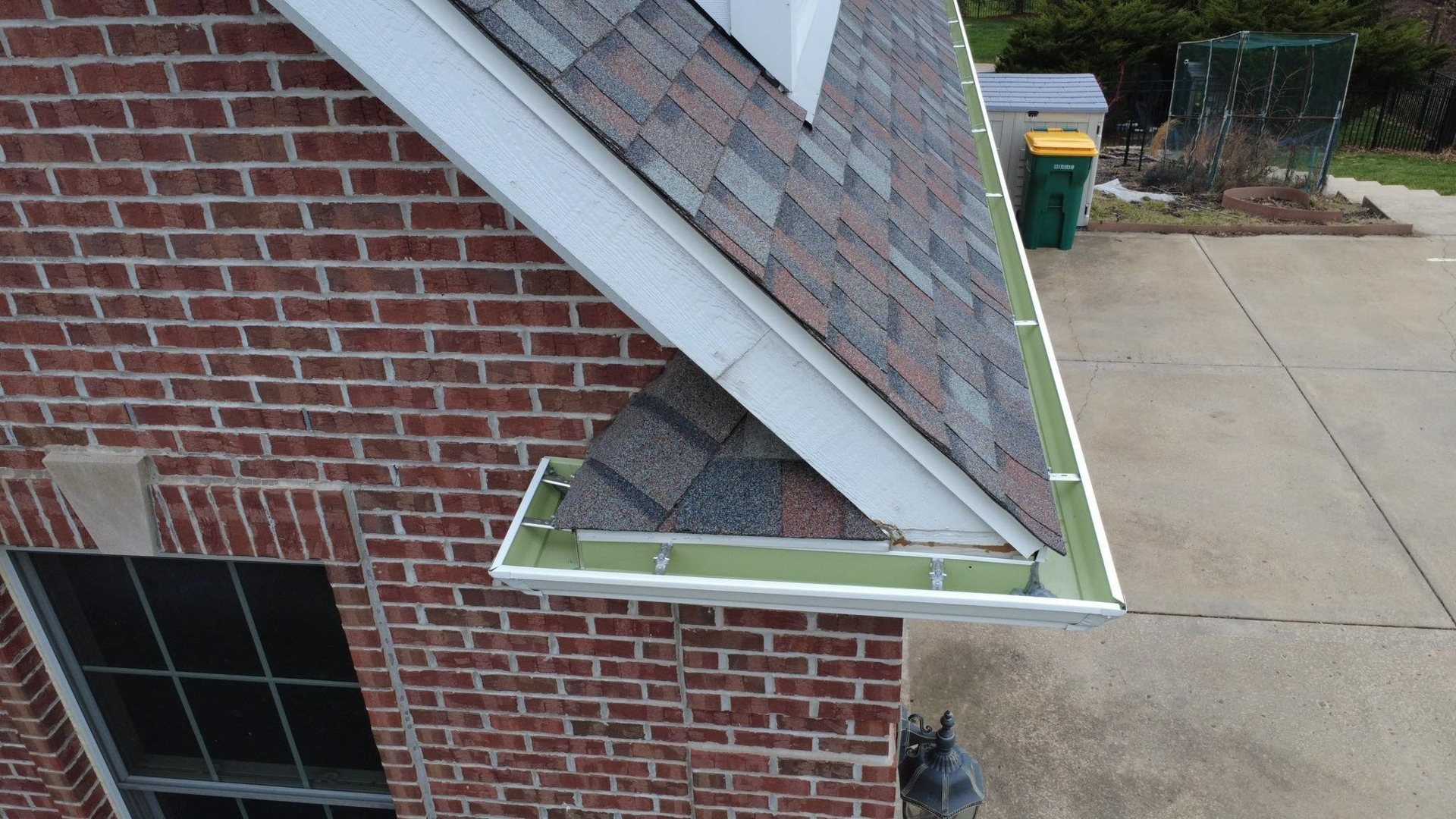
Without a gutter and a proper drip edge, water tends to curl back under the last row of shingles and run down the fascia board. The fascia rots first, then the soffit behind it, then the ends of the rafters and the edge of the roof deck. Once the wood is soft, water and animals can reach the attic, where wet insulation stops doing its job. We repair and replace soffit and fascia on many homes where this is exactly what happened.
8. Icicles and Ice
To be accurate, gutters do not prevent ice dams. Ice dams come from heat escaping the attic and melting snow on the roof. What a gutterless roof does in winter is drop meltwater along the whole edge of the house. It freezes into icicles at the eave and into sheets of ice on the steps, walks and driveway below, right where people walk. Gutters and downspouts move that meltwater to a spot where ice is less of a hazard.
Why We Install Seamless Gutters Instead
For homes in our area, a properly sized seamless gutter is the answer that works. A seamless gutter is formed on site from a single coil of aluminum, so each run is one continuous piece cut to the exact length of the roof edge. The only joints are at the corners and outlets, which removes most of the places where an older sectional gutter leaks.
We install 5 inch and 6 inch seamless K style gutters with matching downspouts in white, black and almond. The 5 inch size suits most homes. We recommend 6 inch gutters for large or steep roof sections, long runs, and valleys that send a lot of water to one spot.
One recent example: in March 2025 we installed 300 feet of white 5 inch seamless gutters on a brick home in McCandless. A house that size sheds a great deal of water in a storm, and every foot of that roof edge now drains to a downspout.
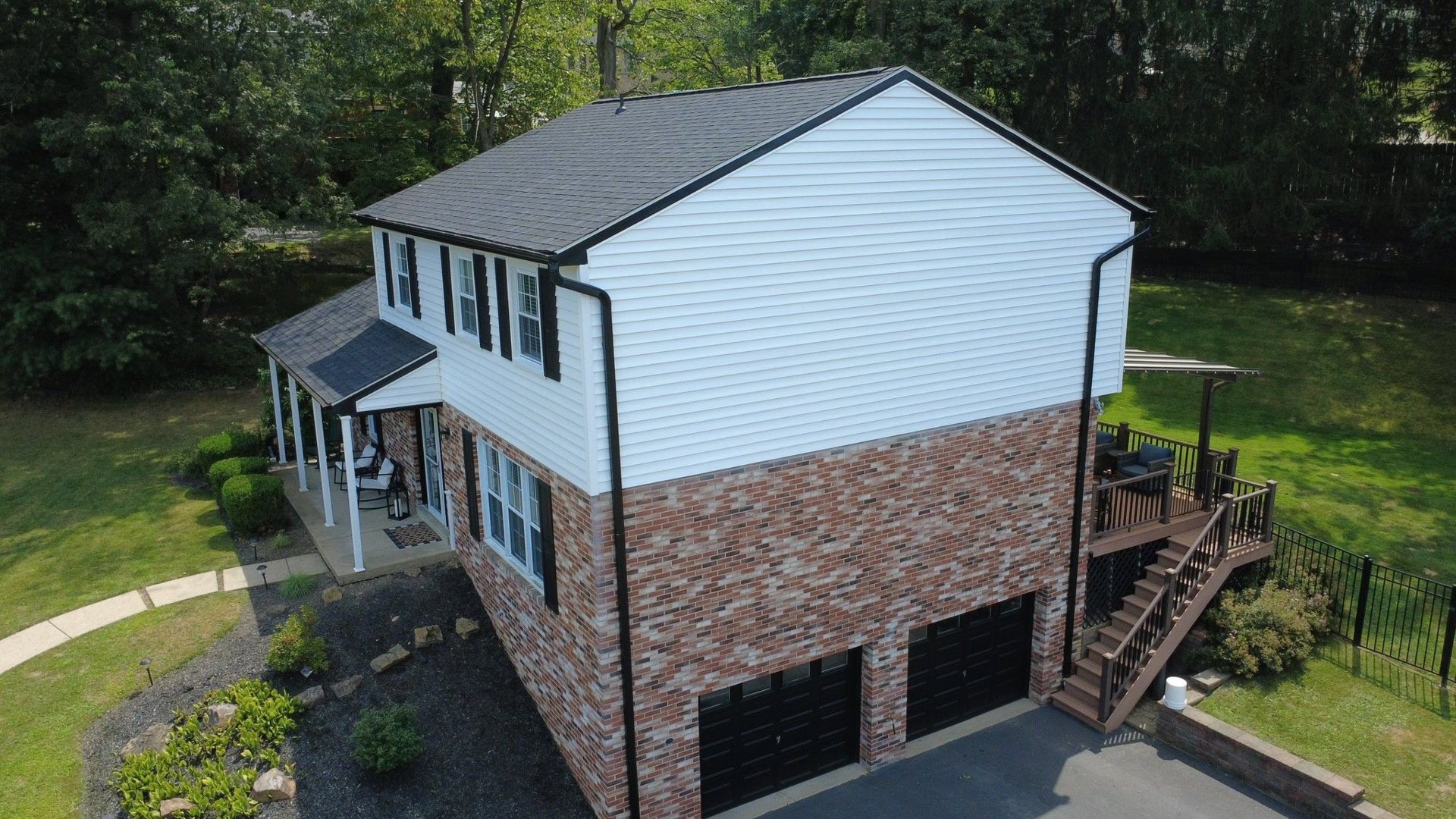
Many older homes in Pittsburgh neighborhoods and river towns have box gutters built into the roof edge. Those should not be abandoned either. Our repair division relines box gutters and seals them with a silicone coating so they keep carrying water the way they were designed to.
What drives the cost of a gutter project is simple: the total length, the gutter size, the number of downspouts and corners, the height of the house, and whether any fascia has to be replaced first. We measure all of it and give you a free written estimate.
Frequently Asked Questions
Is it normal for a house not to have gutters?
It depends on where the house is. In dry regions, and on slab homes with wide overhangs and sandy soil, a house without gutters is common and often fine. In western Pennsylvania it is unusual. Most homes here have basements, clay heavy soil and steady rain, so a gutterless house usually means the gutters were removed or never finished.
What is the best alternative to gutters?
No alternative fully replaces a gutter, because nothing else collects roof water and moves it. The strongest substitute is a combination: a wide overhang, a drip edge, ground that slopes away, and a gravel bed or French drain under the roof line. A rain disperser can help on a single story section where a gutter will not fit.
How do you divert rain without gutters?
You manage it at ground level. Grade the soil so it falls away from the foundation, place a band of stone or a paved surface where the water lands, and add a French drain if water still collects. A rain disperser at the roof edge can spread the flow. All of this reduces the problem without removing it.
How long can a house go without gutters?
A few weeks during a roofing or siding project is normally not a concern. Damage from missing gutters builds with each storm, so the risk grows with every season. If your gutters are down, extend any remaining downspouts, keep soil sloped away from the walls, and plan to have new gutters installed before winter.
Can you have gutters without downspouts?
No. A gutter without a downspout simply fills and overflows, which puts the water back at the foundation and adds weight that can pull the gutter off the fascia. Every run needs at least one outlet, and long runs need more. Downspouts should release water several feet from the house or into a drain line.
Are seamless gutters worth it?
For most homes, yes. Seams are where gutters leak, sag and collect debris, and a seamless gutter removes nearly all of them. Because each piece is formed on site to the exact length of the roof edge, it also fits better and looks cleaner than sectional gutters assembled from short pieces.
Get Your Gutters Checked Before the Next Storm
If your home has no gutters, or the ones you have are leaking, sagging or pulling away, we can help. Malick Brothers Exteriors is BBB A+ accredited and a registered Pennsylvania home improvement contractor (PA174918), with our shop at 500 Perry Highway in West View. Contact us for a free written estimate on seamless gutters, box gutter relining, or soffit and fascia repair.