
What does a roofing contractor do? In short, a roofing contractor takes responsibility for a roof from the first inspection to the final warranty paperwork. The contractor looks at the roof, writes the estimate, orders the material, pulls any permit the municipality requires, puts a trained crew on the roof, keeps that crew safe, hauls away the old roof, and stands behind the finished work. A roofer is the tradesperson on the ladder. A roofing contractor is the company that plans, performs, and guarantees the whole job.
We are Malick Brothers Exteriors, a family owned company founded in 2022 by Ryan Malick, with our shop at 500 Perry Highway in West View. As roofing contractors in Pittsburgh, we install our own roofs with our own crews, so this guide describes the work the way we actually do it, step by step, on homes and commercial buildings across the North Hills and the city.
What is a roofing contractor?
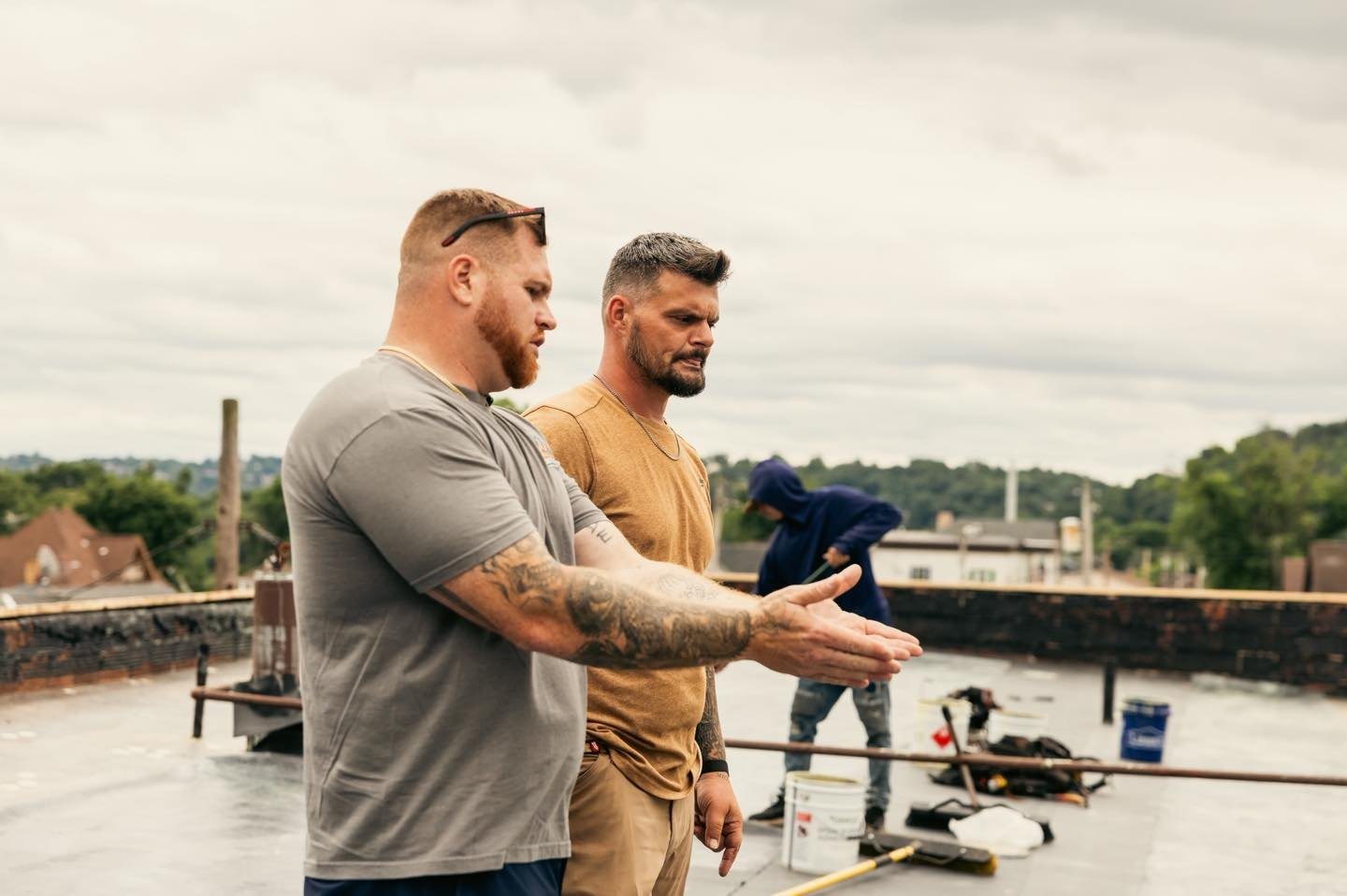
A roofing contractor is a business, not a single worker. In Pennsylvania, any company that performs more than a small dollar amount of home improvement work per year must register with the Attorney General under the Home Improvement Consumer Protection Act and carry liability insurance. Our registration number is PA174918, and you can check any contractor at the PA Attorney General HIC search.
Beyond registration, a roofing contractor usually holds manufacturer credentials. We are an AtlasPro+ Platinum Select contractor, which allows us to offer the Atlas 50 year warranty on complete Atlas roof systems, and we are MuleHide certified for EPDM rubber, two ply low slope systems, and silicone coatings. Those credentials matter because the manufacturer only backs an extended warranty when a trained contractor installs the full system to spec.
Roofer vs. roofing contractor vs. general contractor
The difference affects who is accountable when something goes wrong.
| Role | What they do | Who is accountable |
|---|---|---|
| Roofer | Tears off, repairs decking, installs underlayment, shingles, flashing, and vents. Skilled hands on labor, usually as part of a crew. | The company that employs the roofer. A roofer working alone for cash often has no registration or insurance behind the work. |
| Roofing contractor | Inspects, estimates, orders material, pulls permits, employs and supervises the crew, handles safety, cleanup, and warranties. Specializes in roofing. | The contractor, by contract, by state registration, and by manufacturer warranty. |
| General contractor | Manages whole building projects and hires subcontractors for each trade, including roofing. Broad knowledge, not a roofing specialist. | The general contractor, but the roof itself is usually done by a sub you never chose, with a management markup added. |
For a roof only project, hiring the roofing contractor directly removes a layer of cost and puts the specialist in charge. The U.S. Bureau of Labor Statistics describes the roofer trade itself at its Occupational Outlook Handbook roofers page.
What does a roofing contractor do, step by step?
Here is the sequence on a typical Malick Brothers roof replacement.
1. Inspection and diagnosis
A contractor starts by looking, not by quoting. We walk the roof when it is safe to do so, check the attic for moisture and ventilation problems, and photograph everything so you can see what we see. On Pittsburgh houses that often means checking valleys, chimney flashing, box gutters on older homes, and low slope sections over porches and additions. If a repair will solve the problem, we say so. Learn what a full residential roof inspection covers.
2. Measurement and written estimate
The contractor measures the roof in squares (one square is 100 square feet), counts penetrations, notes the pitch, and prices labor, material, disposal, and any decking replacement. A proper estimate is written, itemized, and names the exact shingle line, underlayment, ice and water barrier, ventilation, and warranty. Our estimates are free, and we encourage you to compare them line by line against any other bid.
3. Material selection and ordering
A roofing contractor knows which products hold up here. Pittsburgh roofs see freeze and thaw cycles all winter, heavy spring rain, and humid summers that feed algae streaks. We install complete Atlas shingle systems with Scotchgard algae protection, metal roofing, and slate repair on older homes. For flat and low slope roofs we install MuleHide .060 EPDM, two ply systems, and silicone coatings. Browse our roof materials to see the options we recommend and why.
4. Permits and code compliance
Many Allegheny County municipalities require a building permit for a full roof replacement, and some require one for decking replacement or structural repair. The contractor applies for the permit, schedules any inspection, and installs to the Pennsylvania Uniform Construction Code, which is based on the International Residential Code. Ice barrier at the eaves, proper nailing, drip edge, and ventilation are all code items a contractor is responsible for.
5. Tear off, decking, and installation
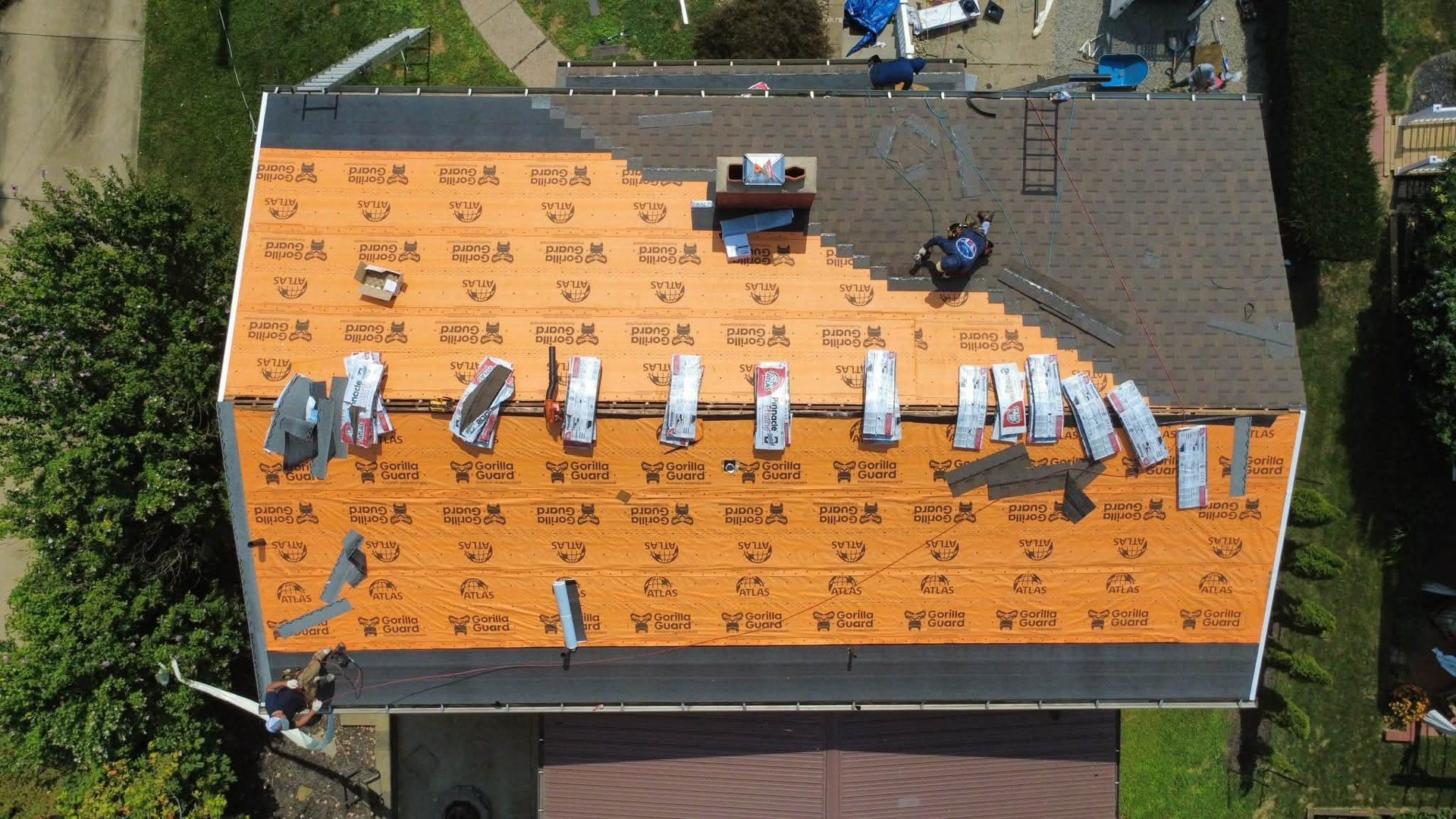
On installation day the crew protects the landscaping and siding with tarps, tears off the old roofing down to the wood deck, and replaces any soft or rotted sheathing. Then the layers go on in order: ice and water barrier at eaves and valleys, synthetic underlayment, drip edge, starter strip, shingles, step and counter flashing at walls and chimneys, pipe boots, ridge vent, and ridge cap. Most residential roofs we install are completed in one day, and we document the process with photos and video so you can see each stage. Details are on our residential roof replacement page.
6. Safety supervision
Roofing is one of the more dangerous trades, and the contractor is responsible for the crew. That means fall protection, ladder setup, keeping the yard clear of hazards, and a project manager on site who answers your questions.
7. Cleanup and disposal
A finished roof is not finished until the yard is clean. The contractor arranges the dumpster, hauls away the old shingles and underlayment, and runs magnets through the grass and driveway for nails. We walk the property with you before we leave.
8. Warranty and follow up
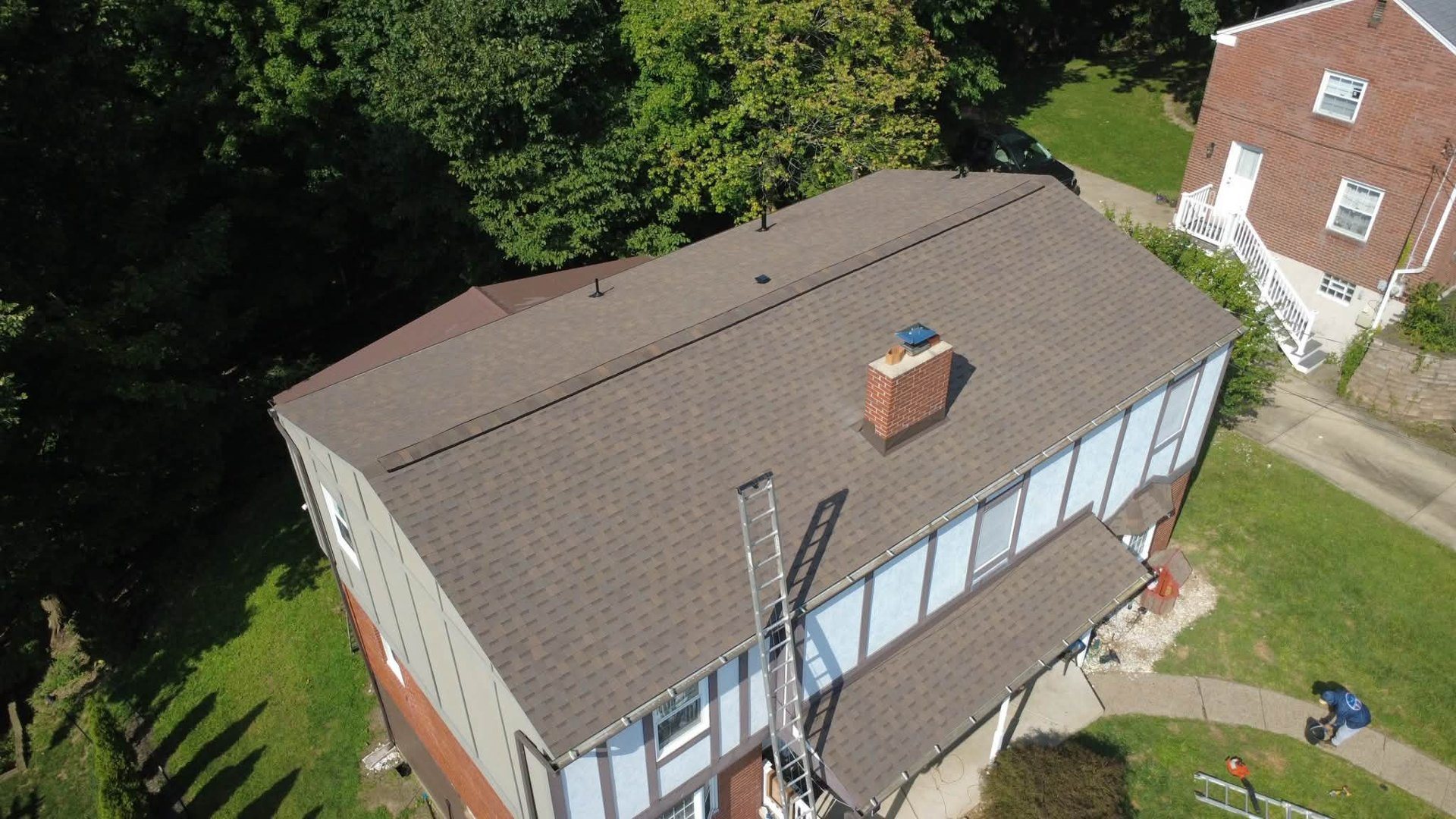
Two warranties come with a professionally installed roof: the manufacturer warranty on the materials and the contractor warranty on the workmanship. The contractor registers the manufacturer warranty, gives you the paperwork, and is the company you call if anything needs attention later. A contractor that will not put its workmanship warranty in writing is telling you something.
What kind of maintenance do professional roofing companies do?
Roofing contractors do more than replacements. The maintenance and repair work we handle most often in the Pittsburgh area includes:
- Leak diagnosis and repair at flashing, pipe boots, valleys, and skylights.
- Replacing wind damaged or missing shingles after storms.
- Resealing and reflashing chimneys, including copper flashing on older homes.
- Slate and tile repair, which needs a specialist rather than a general handyman.
- Silicone coating on box gutters and aging flat roofs to extend their life.
- Ridge vent, soffit vent, and attic ventilation corrections to stop ice dams and condensation.
- Gutter cleaning, resecuring, and replacement with 5 inch or 6 inch seamless gutters.
- Snow removal from roofs after major storms.
Our repair division handles slate, tile, flat, and shingle roofs. See residential roof repair for the common problems we fix.
Do roofing contractors do siding and gutters too?
Many do, and there is a practical reason. Roof, gutters, soffit, fascia, and siding all meet at the roof edge, and water problems rarely respect the line between trades. We install James Hardie and Mastic siding, aluminum soffit and fascia, and seamless K style gutters, so one crew can handle the whole exterior envelope and one company is accountable for it. A roofing contractor that also does exteriors can sequence the work correctly: roof first, then fascia and gutters, then siding. See our gutter services and siding installation pages.
Commercial roofing contractors
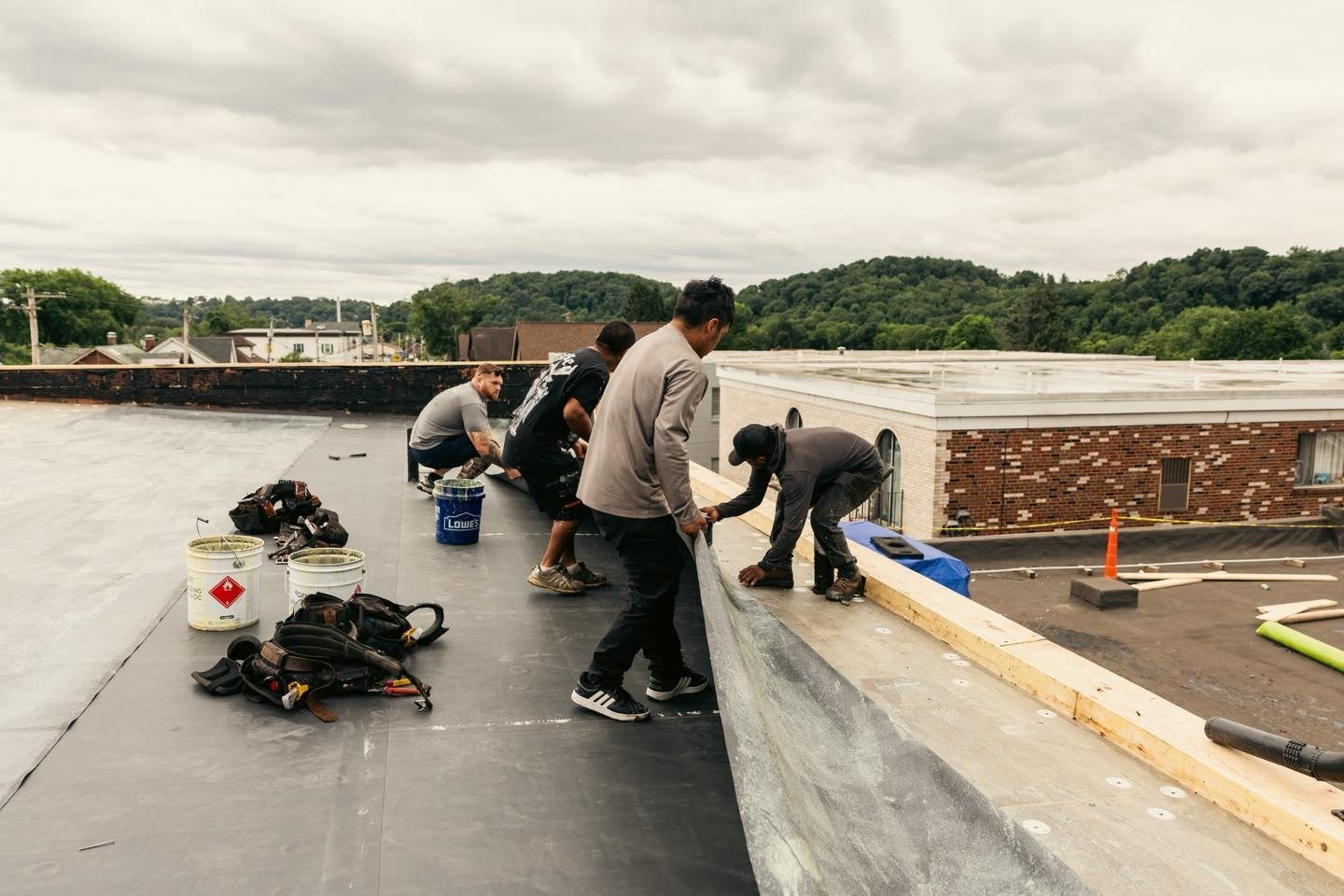
Commercial work follows the same steps with different materials. Low slope roofs on shops, apartment buildings, churches, and warehouses use membranes rather than shingles. We install MuleHide .060 EPDM rubber roofing, two ply low slope systems, and silicone restoration coatings, and we have done this work on apartment buildings, a glass company, and churches around Pittsburgh. A commercial roofing contractor also coordinates with tenants, schedules around business hours, and handles rooftop equipment and drains. Learn more on our commercial roofing and EPDM roofing pages.
What drives the cost of hiring a roofing contractor?
Every roof is priced on its own, and a reputable contractor will not quote over the phone. The factors that move the number are:
- Roof size and pitch. Steeper roofs take longer and need more safety equipment.
- Material. Architectural shingles, designer shingles, standing seam metal, and slate each sit at a different point.
- Layers to remove. Some older Pittsburgh homes have two layers of shingles, which doubles the tear off and disposal.
- Decking condition. Rotted sheathing is replaced per sheet and is only known once the old roof is off.
- Complexity. Valleys, dormers, chimneys, skylights, and low slope sections add flashing work.
- Ventilation and accessories. Ridge vent, new soffit vents, and gutter work can be added to the same job.
The right way to answer "is this too much for a roof" is to compare written, itemized estimates that specify the same materials and warranty. We offer free written estimates and financing options so the right roof is not delayed by timing.
Signs of a good roofing contractor and signs of a bad roofing job
Before you hire, look for a PA HIC registration number, proof of liability and workers compensation insurance, manufacturer certification, a physical local address, recent reviews, and a workmanship warranty in writing. Walk away from anyone who asks for full payment up front, pressures you to sign the same day, or cannot name the products they plan to install. The National Roofing Contractors Association publishes consumer guidance on choosing a contractor.
After the job, signs of poor work include shingles that do not lie flat, visible nail heads, uneven or wavy courses, flashing that is caulked instead of properly stepped, missing drip edge, no ridge vent where one was specified, and nails or debris left in the yard. A good contractor will come back and correct any of these under warranty without argument.
Frequently asked questions
What are the typical duties of a roofing contractor?
Inspecting and diagnosing the roof, writing an itemized estimate, selecting and ordering materials, obtaining permits, employing and supervising a trained crew, enforcing safety on site, installing or repairing the roof to code and manufacturer spec, cleaning up and disposing of debris, and providing both manufacturer and workmanship warranties with follow up service.
What is the difference between a roofer and a roofing contractor?
A roofer is the skilled worker who physically installs the roof. A roofing contractor is the registered, insured business that employs roofers, manages the project, and carries legal responsibility for the result. When you sign a contract, you are hiring the contractor, and the contractor is accountable for everything its roofers do on your property.
What is the 25 percent rule in roofing?
The 25 percent rule comes from certain state and local building codes, most notably in Florida, which required a full roof replacement when more than a quarter of the roof was repaired within a year. Pennsylvania does not have a statewide 25 percent rule. Here, a contractor follows the Uniform Construction Code and the permit rules of the local municipality for repairs versus replacement.
What skills does a roofer need?
Balance and comfort working at height, physical stamina, accurate measuring and cutting, knowledge of flashing details and water flow, and the ability to read a manufacturer installation guide. Most roofers learn on the job under experienced crew leads. Our crews are trained to the Atlas and MuleHide installation standards so the extended warranties on those systems apply.
Do roofers install gutters?
Many roofing contractors do, and we are one of them. We install 5 inch and 6 inch seamless K style gutters and downspouts, along with aluminum soffit and fascia. Doing gutters with the roof lets the contractor set the drip edge and gutter apron correctly so water goes into the gutter instead of behind it.
Talk to a Pittsburgh roofing contractor
If your roof needs an inspection, a repair, or a replacement, we will look at it, show you the photos, and give you a free written estimate with no pressure. Contact Malick Brothers Exteriors or call (412) 616-0191 to schedule a visit from our West View shop.