Single ply roofing is the most common roof system on commercial buildings in Pittsburgh, and it is the system we install most often on flat and low slope roofs across the North Hills. The name is literal: one flexible membrane, rolled out in wide sheets and sealed at the seams, does the waterproofing that older built up roofs needed several layers of tar and felt to do. This guide explains what a single ply roofing system is, the three membrane types (EPDM, TPO and PVC), how each one is installed, how they compare with modified bitumen, built up roofing and metal, and which one holds up best through a Western Pennsylvania winter.
We are Malick Brothers Exteriors, a family owned roofing company founded in 2022 by Ryan Malick and based at 500 Perry Highway in West View. We are MuleHide certified for .060 EPDM rubber, two ply low slope systems and silicone coatings, and EPDM roofing is the single ply membrane we put on most apartment buildings, storefronts, garages and warehouses around Pittsburgh. We will be honest below about where TPO and PVC beat it.
What Is a Single Ply Roof?
A single ply roof is a low slope roofing system made from one layer of factory made synthetic membrane. The sheets are typically 45 to 90 mils thick (a mil is one thousandth of an inch) and come in rolls 10 to 20 feet wide, so a roof has far fewer seams than a built up or modified bitumen roof. The membrane sits on rigid insulation and a cover board and is attached to the deck with adhesive, fasteners or ballast.
Two chemistries exist. Thermoset membranes, which means EPDM, are rubber cured at the factory, so seams are joined with tape or adhesive. Thermoplastic membranes, which means TPO and PVC, soften with heat, so seams are welded with hot air into one continuous sheet. That one difference drives most of the pros and cons that follow.
Building codes call any roof with less than 2 inches of rise per 12 inches of run a low slope roof; most people call it a flat roof. The National Roofing Contractors Association groups single ply, modified bitumen and built up roofing under that heading.
Types of Single Ply Roofing Membranes
There are three single ply roofing types in wide use. Each one is a good roof when it is matched to the right building and installed by a crew that works with it regularly.
EPDM (ethylene propylene diene monomer)
EPDM is the black rubber roof on most Pittsburgh apartment buildings, row house additions and small commercial buildings. It has been installed in the United States since the 1960s, so its track record is the longest of the three, and it stays flexible well below freezing, which matters because a membrane that goes stiff in January cracks at corners and flashings. We install MuleHide .060 EPDM, which is 60 mils thick, fully adhered with seams closed by factory seam tape and primer. White EPDM is available for buildings that want a reflective surface.
TPO (thermoplastic polyolefin)
TPO is a white or light gray membrane with hot air welded seams. It is the most installed single ply membrane in the country by square footage, mostly on big box retail and warehouses in warmer regions where its reflective surface cuts cooling loads. Formulations have changed several times since the 1990s, so quality varies by manufacturer more than with EPDM, and the welded seams need a trained crew with a calibrated welder.
PVC (polyvinyl chloride)
PVC is the premium thermoplastic. It also has hot air welded seams, and it stands up to grease, oils and many chemicals that soften EPDM and some TPO. That makes it the right membrane over a restaurant kitchen exhaust, a food plant or a lab. It carries strong fire ratings and the longest manufacturer warranties, and it is the most expensive of the three to buy and install.
We are straightforward about this: our certification and daily experience are with EPDM, the MuleHide two ply low slope system and silicone coatings. If a building truly needs a welded thermoplastic roof, for example a restaurant with heavy grease exhaust, we will tell you so rather than sell you a rubber roof that will not last there.
EPDM vs TPO vs PVC: Comparison Table
| Feature | EPDM | TPO | PVC |
|---|---|---|---|
| Material | Cured synthetic rubber (thermoset) | Thermoplastic polyolefin | Thermoplastic vinyl |
| Standard colors | Black, also white | White, gray, tan | White, gray |
| Seams | Seam tape and primer | Hot air welded | Hot air welded |
| Cold weather flexibility | Excellent | Good | Good |
| Grease and chemical resistance | Low | Moderate | Excellent |
| Reflectivity | Low in black, high in white | High | High |
| Typical service life | 25 to 30 years and often longer | 20 to 25 years | 25 to 30 years |
| Relative material cost | Lowest | Middle | Highest |
| Best fit in Pittsburgh | Apartments, offices, garages, most warehouses | Large cooling dominated buildings | Restaurants, food plants, labs |
How a Single Ply Roofing System Is Installed
From the deck up, a commercial single ply roofing system includes a vapor retarder where needed, one or two layers of polyiso insulation, a cover board, the membrane, and then flashings, edge metal, drains and walkway pads. The membrane is attached in one of three ways.
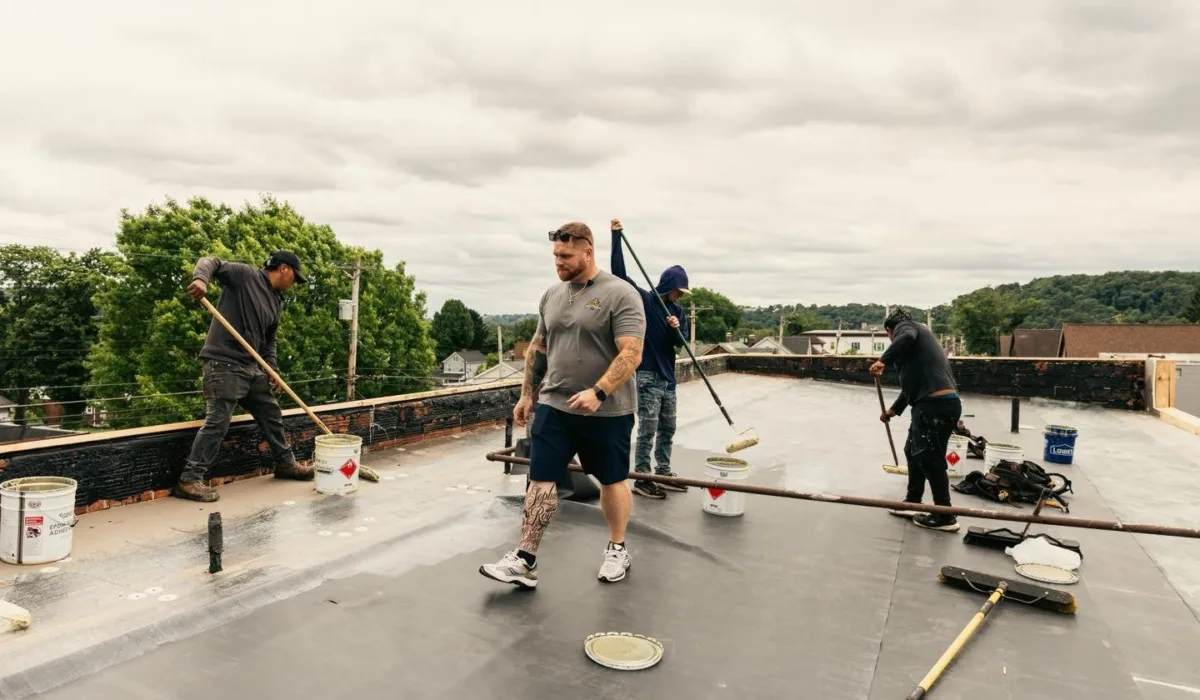
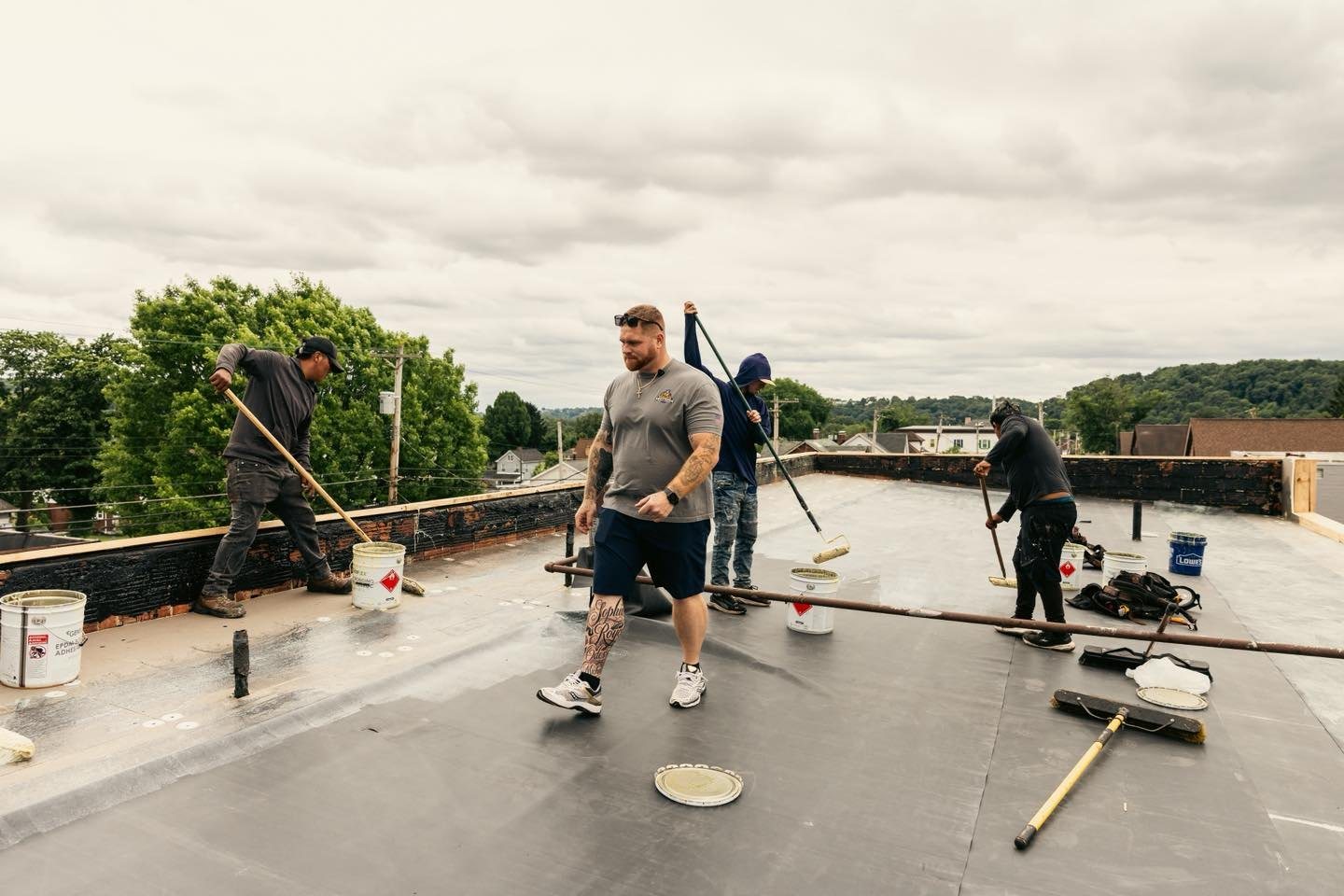
- Fully adhered. The membrane is glued to the cover board across its whole surface. Cleanest look, best wind uplift resistance, fewest fasteners through the roof. It is how we install almost every EPDM roof.
- Mechanically fastened. Screws and plates hold the membrane along each seam and the next sheet covers them. Fast and common on large TPO warehouse roofs, but the membrane flutters in high wind.
- Ballasted. The membrane is loose laid under river stone or pavers. The structure must carry the weight and leaks are hard to find, so we rarely recommend it on the older buildings common around Pittsburgh.
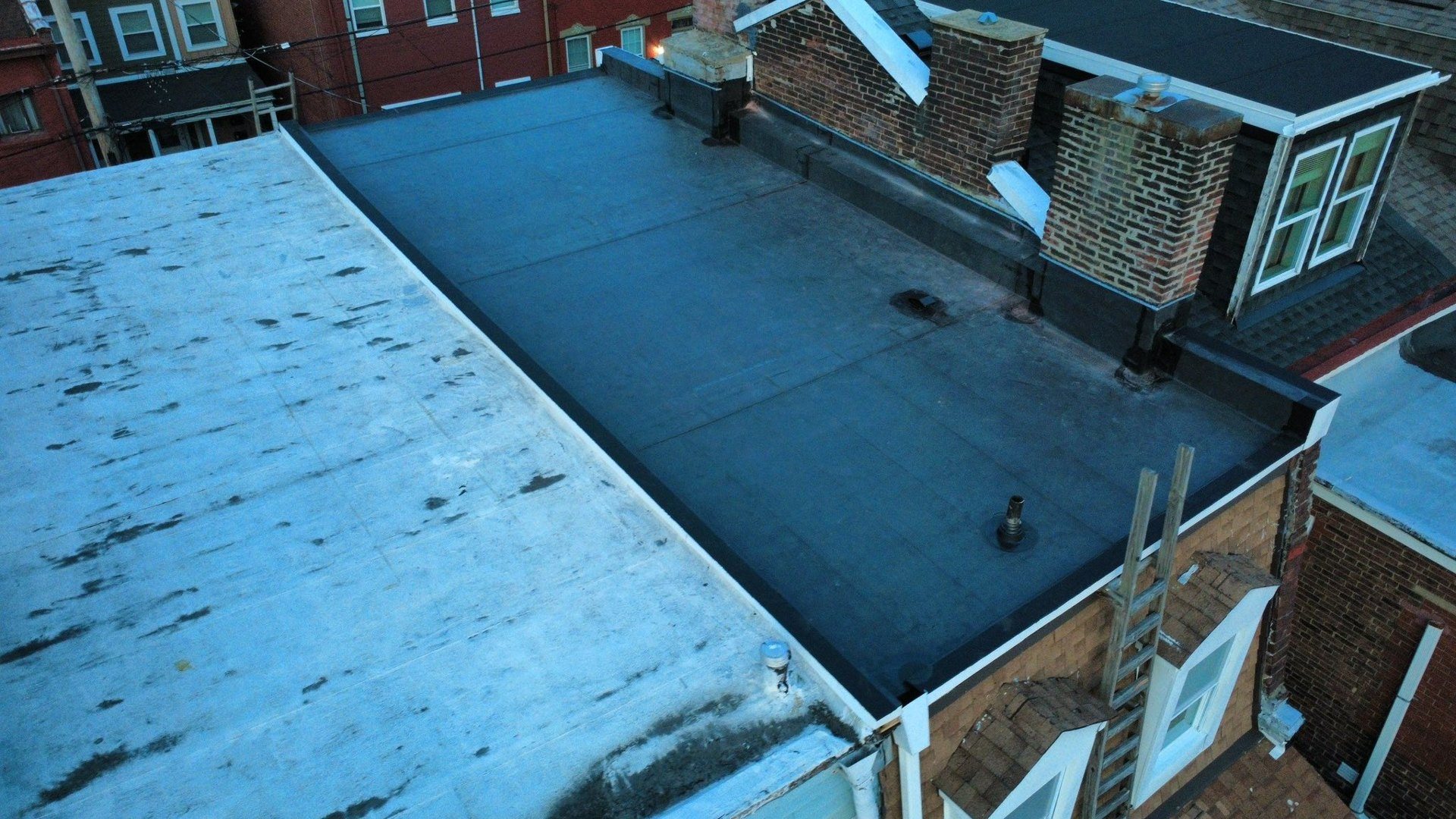
Commercial Roof Types: How Single Ply Compares With the Rest
Single ply membranes are the most common commercial roof type, but when people compare commercial building roof types or types of commercial flat roofs, these are the other systems on the list.
Modified bitumen
Asphalt blended with rubber or plastic polymers, reinforced with a mat and applied in two or more plies by torch, hot asphalt, cold adhesive or self adhering backing. It is thicker and more puncture resistant than a single membrane and patches easily. We install the MuleHide two ply low slope system on roofs with regular foot traffic or that need a granulated surface to match an older building. Expect 15 to 25 years.
Built up roofing (BUR)
The traditional tar and gravel roof: alternating layers of hot asphalt and felt under gravel. Heavy, slow and rarely chosen today, but many older Pittsburgh warehouses and schools still have one, and most are good candidates for a recover with EPDM or a silicone coating instead of a full tear off.
Metal
Standing seam metal is the longest lasting commercial roof when the slope supports it, which means real pitch rather than a flat deck. Many commercial buildings pair a pitched metal roof over the storefront with a membrane roof over the main floor plate.
Silicone coatings
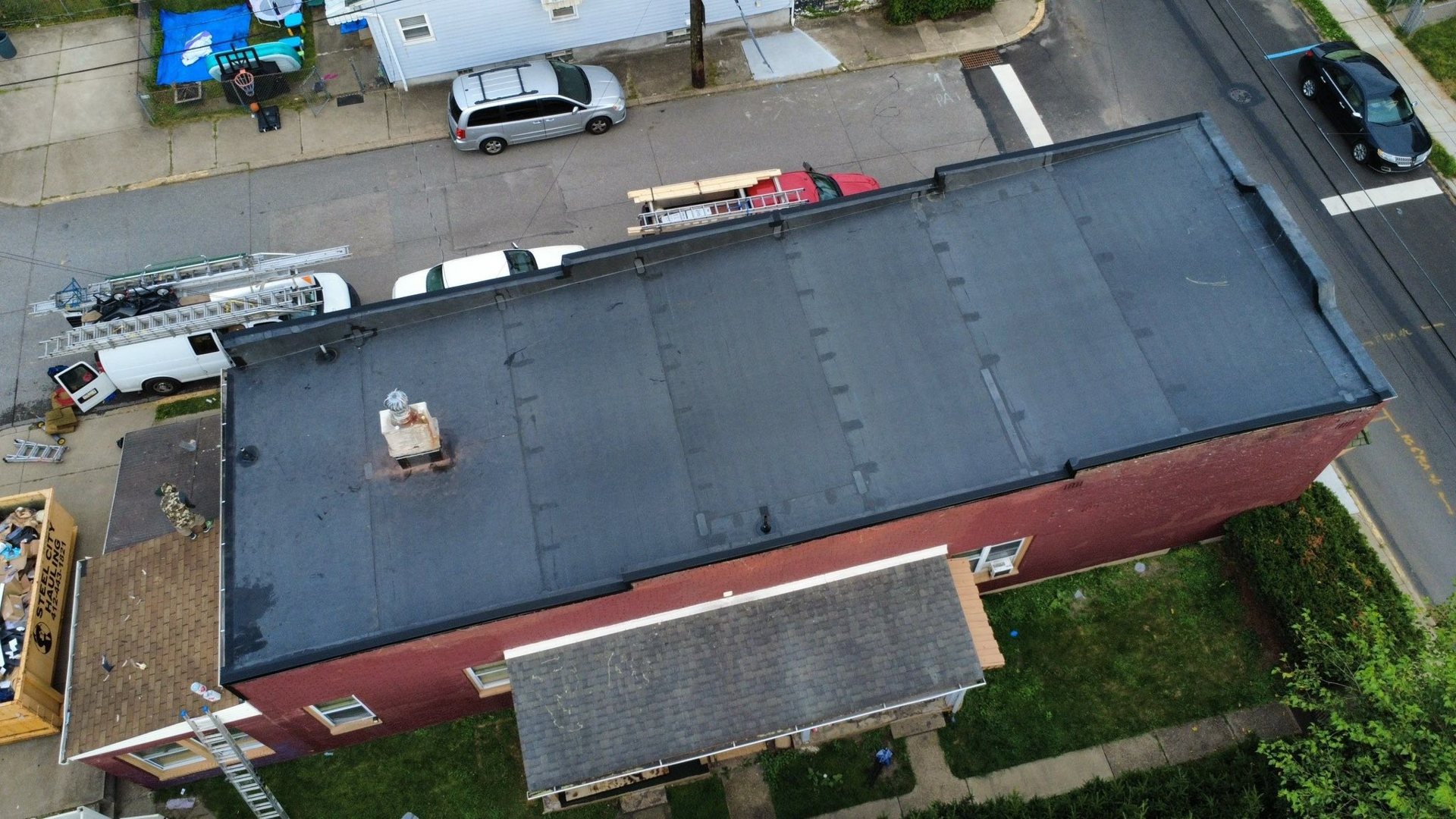
A fluid applied silicone coating is not a roof by itself, but it is the most cost effective way to add 10 to 20 years to a sound EPDM, modified bitumen or metal roof that has begun to age. We are MuleHide certified for silicone roof coatings and apply them to commercial roofs and box gutters across the North Hills.
The Best Commercial Flat Roof for Pittsburgh Weather
Pittsburgh is a heating dominated climate with long stretches of freeze and thaw from December through March and humid but rarely extreme summers. That changes the single ply decision compared with the Sun Belt, where most national advice is written.
- Cold flexibility beats reflectivity. A white roof saves cooling energy in a hot climate. Here the energy difference between a black and a white roof is minor, and the longer cold weather record of EPDM wins.
- Freeze and thaw punishes seams. Water that enters a seam in December opens it by March. Taped EPDM seams on a properly primed membrane and welded thermoplastic seams both hold when installed correctly. Poorly cleaned seams of any type fail.
- Ponding and snow load. Older city flat roofs have low spots. Tapered insulation that moves water to the drains matters more than the brand of membrane.
- Installation windows. EPDM adhesives and primers have minimum application temperatures, but the system goes down most of the year, and we work all winter when the deck is dry and the day is above the manufacturer minimum.
Our answer for most offices, apartment buildings, garages, mixed use buildings and small warehouses in Pittsburgh is fully adhered .060 EPDM over new polyiso insulation and a cover board. For a restaurant, a brewery, an auto shop with solvents or any building with heavy rooftop grease exhaust, we recommend PVC. For a large distribution building that runs air conditioning hard all summer, white TPO or white EPDM is reasonable.
Commercial Flat Roof Insulation
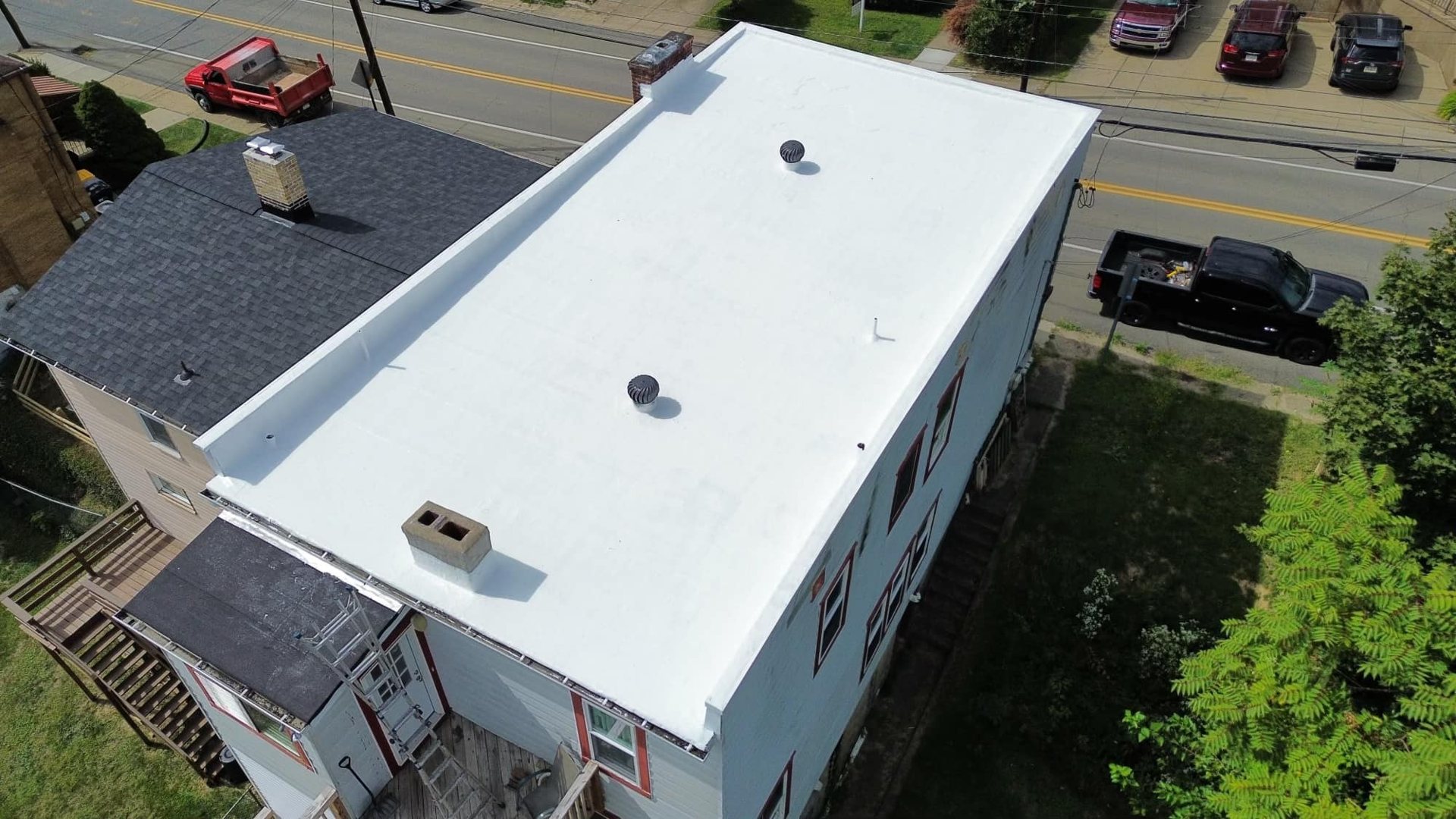
Insulation is where a surprising share of the budget and the energy savings live. Pennsylvania follows the International Energy Conservation Code, which in Climate Zone 5 requires continuous insulation above the deck on a commercial low slope roof, generally about R-30 when all of it sits above the deck. Polyiso board is the standard because it has the highest R value per inch, two staggered layers stop heat loss through the joints, and a high density cover board on top protects the insulation and gives the adhesive something solid to bond to. When we replace a commercial roof we usually find one thin layer of wet or crushed insulation under the old membrane, and replacing it is often the largest single improvement in the building's comfort and utility cost.
Is Single Ply Roofing Any Good? Pros and Cons
Yes. Single ply membranes are light, which suits older buildings never designed for gravel ballast or layers of asphalt. They install quickly with no kettles or torches on most jobs, they are easy to inspect and repair because every seam is visible, and manufacturers back them with 15, 20 or 30 year warranties when a certified contractor installs them.
The drawbacks are real but manageable. One layer means one chance: a dropped tool or a sharp HVAC panel can puncture it, and walkway pads from the hatch to every piece of equipment solve most of that. Seam and flashing quality depends almost entirely on the installer, which is why certification matters more on a flat roof than on a shingle roof. And black EPDM near a grease vent will soften, so match the membrane to what the building exhausts.
What Drives the Cost of a Single Ply Roof
We do not publish prices because two roofs of the same size can differ by half for reasons visible only on site. The main cost drivers are the membrane type and thickness, recover versus tear off (code allows a maximum of two roof layers), the amount of new insulation, the number of penetrations, curbs, drains and parapet walls to flash, the condition of the deck and the attachment method. A written estimate from a commercial roofing inspection is free and itemized, and the same EPDM system goes on flat roofed homes and additions through our residential roof replacement service.
Frequently Asked Questions
Is single ply roofing the same as TPO?
No. Single ply is the category and TPO is one membrane inside it, alongside EPDM and PVC. When a contractor says single ply, ask which membrane, which thickness and which attachment method they mean.
What is the most common type of commercial roof?
Single ply membrane roofing is the most common commercial roof type in the United States, with TPO leading nationally by square footage and EPDM second. In Pittsburgh and the North Hills, black EPDM is what we see and install most often because of its cold weather record and because most local commercial buildings are small to mid size.
What is the longest lasting flat roof material?
Among membranes, a thick EPDM or PVC roof that is fully adhered, properly flashed and inspected twice a year commonly reaches 30 years, and EPDM roofs from the 1980s are still in service. On a roof with enough pitch, standing seam metal outlasts every membrane, and a silicone coating applied before a membrane fails adds a decade or more.
Which is better, TPO or EPDM?
For most Pittsburgh buildings we recommend EPDM: longer track record, flexible in the cold, a stable formulation and easy repairs. TPO makes sense for a large building that runs heavy air conditioning and wants a white reflective roof, installed by a crew trained on welding.
What is the best roof for a restaurant?
PVC. Grease and animal fats from kitchen exhaust soften EPDM and can degrade some TPO, while PVC resists them. A grease containment system under the exhaust fan extends the life of an existing EPDM roof, but at replacement time PVC is the right call around the vents.
Can a single ply roof go over my existing roof?
Often yes. Code permits a recover over one existing roof layer if the deck and insulation are dry and sound, and we cut test squares to check first. If there are already two layers or the insulation is saturated, a tear off is required and is usually the better long term value.
Talk to a Pittsburgh Commercial Flat Roof Contractor
If you own or manage a flat roof commercial building in Pittsburgh or the North Hills, we will inspect the seams, flashings, drains and insulation and give you a written recommendation on EPDM, two ply modified bitumen, a silicone coating or, where the building calls for it, PVC or TPO. Malick Brothers Exteriors is BBB A+ accredited, PA registered contractor PA174918 and MuleHide certified. Contact us to schedule a free commercial roof estimate.