Replacing a commercial roof is one of the largest capital investments a building owner will face. The decision you make today will affect your operating costs, maintenance burden, and property value for decades. With so many options on the market, narrowing down the right material can feel overwhelming. But here’s the good news: when you focus on long-term value rather than upfront cost alone, the choice becomes much clearer.
Key Factors That Determine the Best Value Roofing
Before diving into specific materials, it helps to understand what makes a commercial roof a smart investment. Four factors should guide your decision: lifespan, durability, energy efficiency, and total cost of ownership. Your building’s construction type also matters. Flat roofs, low-slope roofs, and steep-slope roofs each have materials that perform best on their specific structures.
Achieving strong commercial roof durability means matching your material to your building’s needs. High foot traffic from HVAC technicians? Chemical exposure from nearby equipment? Sun-baked all day? Each scenario calls for a different solution. Taking the time to assess these variables upfront prevents costly mistakes down the road.
What Is the Best Roofing Material for Longevity?

If lifespan is your top priority, metal roofing stands above the competition. Standing seam metal systems routinely last 50 years or more when properly installed. Some metal roofs exceed 70 years with minimal maintenance. That kind of longevity is hard to beat.
Metal’s durability comes from its resistance to wind, hail, and fire. It does not crack, warp, or rot. For building owners seeking durable roofing materials that reduce long-term replacement costs, metal is often the clear winner. The trade-off is a higher initial investment, but over a 50-year horizon, the math typically favors metal.
What Is the Best Commercial Roofing Material?
There is no single best material for every building. The ideal choice depends on your roof’s slope, your climate, your budget, and how much maintenance you are willing to perform. That said, three materials consistently deliver excellent long-term value: metal, PVC, and TPO.
Metal works well on steep-slope and some low-slope applications. PVC excels in industrial settings where chemical resistance matters. TPO offers a balance of affordability and energy efficiency, making it popular in hot climates. Each of these options represents a best value roofing solution when matched to the right building.
Single-Ply Roofing: TPO, PVC, and EPDM Compared
Single-ply membranes dominate the commercial flat roof market. TPO and PVC are heat-welded, creating strong seams that resist leaks. EPDM uses adhesives or seam tape. All three options are lightweight, fire-resistant, and relatively easy to repair.
TPO reflects sunlight effectively, which can reduce cooling costs in warmer regions. It has become one of the most popular choices for flat commercial roofs due to its balance of performance and affordability. PVC performs similarly but handles chemical exposure better, making it ideal for restaurants or manufacturing facilities with rooftop grease exhaust. EPDM is slightly less reflective but offers strong UV resistance for buildings in dry, sunny climates.
The main drawback of single-ply systems is puncture vulnerability. Dropped tools or heavy foot traffic can damage the membrane if contractors are careless. Choosing a thicker membrane (60 mil instead of 45 mil) adds durability without dramatically increasing cost. Most single-ply roofs last between 15 and 30 years with proper maintenance.
Metal Roofing: Standing Seam vs. Screw-Down Panels
Commercial metal roofing comes in two primary styles. Standing seam systems use concealed fasteners and interlocking panels. Screw-down panels use exposed fasteners driven directly through the metal. Both options provide excellent weather resistance, but they differ in maintenance needs and overall longevity.
Standing seam costs more upfront because installation requires greater skill and more labor hours. However, the concealed fastener design eliminates the maintenance headaches that screw-down panels create. Metal expands and contracts with temperature swings. Over time, exposed screws can loosen, requiring periodic re-tightening to prevent leaks. Screw-down systems typically need maintenance within five years of installation.
Material options include galvalume, steel, and aluminum. Aluminum resists corrosion better in coastal environments, making it a smart choice near saltwater. Steel offers the best balance of strength and value for most inland applications. Galvalume provides a mill finish look and works well in various climates.
Which of the Following Commonly Used Roofing Materials Has the Longest Average Life Expectancy?
Among common commercial roofing materials, metal consistently delivers the longest service life. Standing seam metal roofs last 40 to 70 years or more. By comparison, single-ply membranes like TPO and PVC last 15 to 30 years. Built-up roofing and modified bitumen typically reach 20 to 30 years.
Asphalt shingles, while common on steep-slope commercial buildings, have the shortest lifespan at 15 to 35 years depending on quality. Designer or architectural shingles last longer than basic three-tab products, but neither approaches metal’s longevity. When evaluating commercial roof durability, metal remains the gold standard for owners prioritizing decades of reliable performance.
Commercial Roofing Material Lifespan Comparison
| Material | Expected Lifespan | Best Application |
|---|---|---|
| Standing Seam Metal | 40-70+ years | Steep-slope and low-slope roofs |
| TPO | 15-30 years | Flat roofs in hot climates |
| PVC | 20-30 years | Industrial and chemical exposure |
| Built-Up Roofing (BUR) | 20-30 years | High foot traffic flat roofs |
| Modified Bitumen | 20-25 years | Moderate traffic flat roofs |
| Asphalt Shingles (Designer) | 25-35 years | Steep-slope commercial buildings |
Which Roofing Material Is Best for Resale?
If you plan to sell your commercial property within the next decade, roof condition will influence buyer perception and appraisal value. A recently installed metal roof signals low future maintenance costs and strong protection against weather damage. Buyers often pay a premium for that peace of mind.
TPO and PVC also appeal to buyers, especially on flat-roof buildings where these materials are industry standard. A well-maintained single-ply roof with warranty coverage remaining can be a strong selling point. On the other hand, an aging built-up roof or deteriorating asphalt shingles may trigger price negotiations or require replacement credits.
Energy Efficiency and Operating Cost Savings
Energy efficiency has become a critical factor in commercial roofing decisions. Many government projects now require a minimum R-30 energy efficiency rating. Even without regulatory requirements, a reflective or well-insulated roof can meaningfully reduce cooling costs.
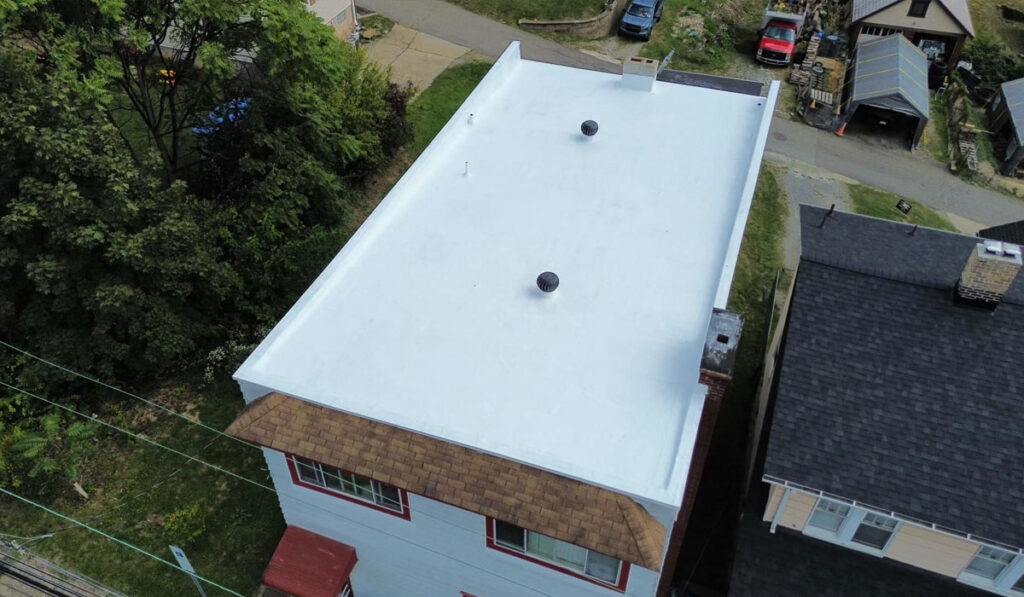
White TPO and PVC membranes reflect sunlight and carry Energy Star ratings. Metal roofs, especially those with reflective coatings, can reduce cooling costs by 10 to 25 percent according to the U.S. Department of Energy. Adding tapered insulation beneath any roof system improves R-value while promoting proper drainage. These energy savings compound over time, making efficient roofing materials even more attractive from a total cost perspective.
Built-Up and Modified Bitumen: Traditional Options Still Worth Considering
Built-up roofing has protected commercial buildings for over a century. Multiple layers of asphalt and reinforcing fabric create a durable, waterproof barrier. These systems handle heavy foot traffic well, making them suitable for buildings with frequent rooftop maintenance needs. The downside is installation complexity and the weight these systems add to your structure.
Modified bitumen offers a middle ground between traditional built-up roofing and modern single-ply systems. It installs faster than BUR while providing similar durability. Self-adhered versions eliminate the need for hot asphalt during installation, improving safety and reducing labor time. Both options deliver solid performance for owners seeking durable roofing materials with proven track records.
Making the Right Choice for Your Building
The best commercial roofing material for long-term value depends on your specific situation. Metal delivers unmatched longevity for buildings where a 50-year solution makes sense. TPO and PVC provide solid performance at lower upfront costs, making them smart choices when budget constraints exist.
Consider your building’s exposure to sun, wind, chemicals, and foot traffic. Think about how long you intend to own the property. Factor in energy costs and maintenance requirements. When you weigh all these variables, the right answer usually becomes clear. For a deeper dive into matching materials to your building’s needs, read our guide on How to Choose the Right Commercial Roofing System for Your Business.
A professional roof inspection is the best starting point. An experienced contractor can assess your current roof’s condition, identify your building’s unique requirements, and recommend best value roofing options that align with your goals. Investing in the right material now saves money, headaches, and unexpected repairs for years to come.e.