Table of Contents
I’ve spent a lot of cold mornings on flat commercial roofs around Pittsburgh, and I can tell you where the trouble almost always starts. It’s rarely the wide, open field of the membrane. It’s the flashing — those metal and membrane transitions at every edge, wall, curb, and pipe. When a building leaks, that’s the first place I climb toward, and nine times out of ten, that’s exactly where I find the problem.
Flashing takes a beating here that it simply wouldn’t in a milder climate. Between our brutal winters, our damp air, and rooftops crowded with heavy equipment, these details get stressed from every direction at once. This post walks through why commercial roof flashing fails on Pittsburgh buildings, what the warning signs look like, and how to stay ahead of it. My goal is simple. I want to help you catch a fifty-dollar problem before it turns into a fifty-thousand-dollar one.
What Flashing Actually Does Up There
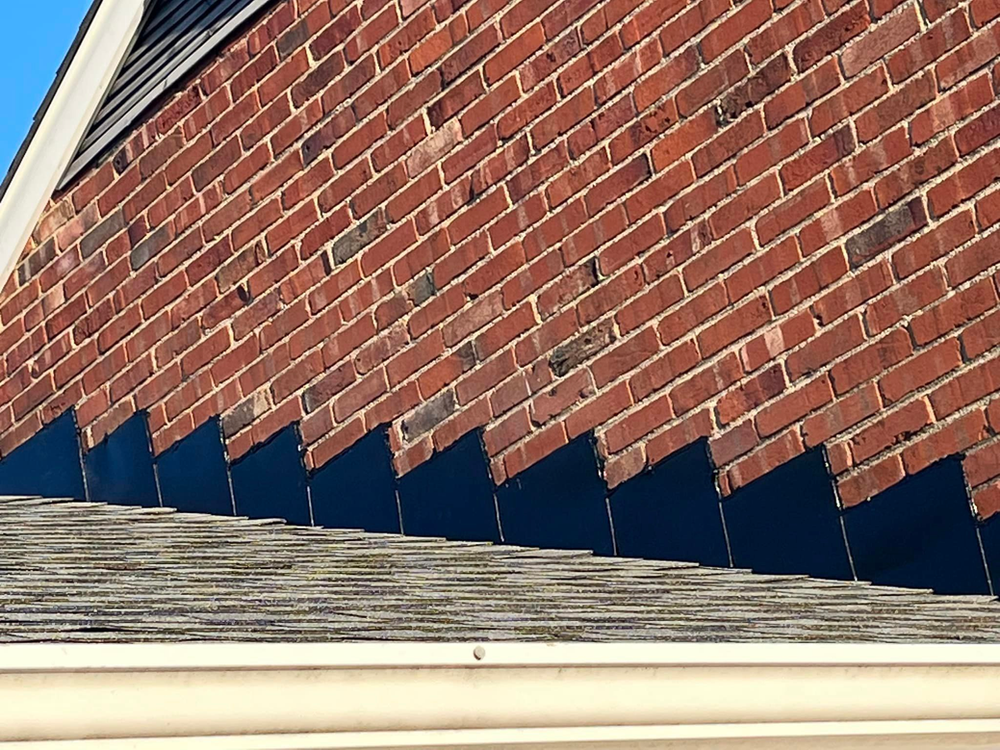
Flashing is the waterproofing that seals every spot where your roof stops being flat and open. Think parapet walls, roof-to-wall joints, drains, skylights, and the raised curbs under rooftop units. Water naturally travels toward these seams and edges, and flashing is what redirects it back toward the drains where it belongs. In plain terms, roof flashing does the hardest job on the entire roof. When it works, you never think about it. When it fails, you find out fast.
The Real Reasons Why Commercial Roof Flashing Fails on Pittsburgh Buildings
So let’s get to the heart of it. Why commercial roof flashing fails on Pittsburgh buildings usually comes down to a handful of forces working together over time. No single one destroys a flashing overnight. It’s the combination — weather, chemistry, and wear — that slowly grinds a good seal down until water finds the gap.
The biggest culprit is thermal movement. Metal expands under a July sun and contracts hard in January cold, and that constant flexing works sealant loose season after season. Add corrosion from our damp, historically industrial air, and galvanized metal starts to rust at the very seams you need to stay watertight. Now layer on ponding water, foot traffic, and shortcuts taken during the original installation. Put all that together, and you have a flashing system quietly fighting a losing battle.
What Are the Common Problems With Roof Flashing?
When people ask me what actually goes wrong up there, I give them the short list I’ve seen a hundred times. Cracked or shrunken sealant is number one, usually because someone leaned on caulk instead of properly lapped materials. After that it’s rusted or oil-canned metal, membrane that has pulled away from a wall, and fasteners that have backed out and left the metal loose. Every one of these starts small and quiet, which is exactly what makes them dangerous.
| Where it fails | What you’ll notice | Why it matters |
|---|---|---|
| Parapet wall and coping | Staining or a soft spot at the top of the wall | Water slips behind the wall and into the deck |
| Roof-to-wall joint | Bubbling or a lifted edge along the base | The seam opens and lets water track inside |
| Drains and scuppers | Standing water and dark debris rings | Ponding breaks down the seal quickly |
| Curbs under HVAC | Rust streaks and loose metal | Vibration backs fasteners out over time |
| Pipe boots and penetrations | Cracked collars and dry-rotted rubber | Tiny openings, surprisingly big leaks |
If you can spot even one of these from the ground or from a stained stairwell ceiling, it’s worth a closer look. Most of these signs show up months before an actual interior leak announces itself. That gap of time is your cheapest chance to fix things. Miss it, and the repair bill climbs in a hurry.
How Our Freeze-Thaw Winters Break the Bond
Pittsburgh winters are almost designed to destroy flashing. The city averages around 44 inches of snow a year, and our temperatures bounce above and below freezing over and over through the season. Every time water seeps into a hairline gap, freezes, and expands, it pries that gap a little wider. Do that thirty or more times in a single winter, and a tiny crack becomes an open channel. That’s the freeze-thaw cycle, and it is merciless on any seam that isn’t perfectly sealed.
Snow and ice make it worse by piling up where they shouldn’t. Ice dams form along parapets and roof edges, and trapped meltwater backs up under the flashing instead of draining away. On a low-slope commercial roof, that water has nowhere to go and all the time in the world to find a weak point. I’ve traced springtime leaks straight back to an ice dam that formed months earlier. By the time the ceiling stains appear, the real damage is already behind you.
What Is a Common Reason for Roof System Failure in Commercial Buildings?
If I had to name the single most common reason commercial roof systems fail, it wouldn’t be some dramatic storm. It’s water quietly finding its way in through details and drainage that were never quite right. Poor drainage and failed flashing go hand in hand, because standing water sits against base flashing and slowly eats the seal. I dug into that connection in What Causes Commercial Roof Drainage Problems in Pittsburgh?, since the two problems feed each other. Fix one and ignore the other, and you’ll be back up on the roof before long.
Installation shortcuts are the other big one. A membrane roof is only as strong as its weakest transition, and flashing is where corners tend to get cut to save time. When commercial roof repair leans on caulk and hope instead of proper materials and technique, it simply won’t survive a Pittsburgh winter. Careful work in these spots isn’t glamorous, but it’s what keeps water out for decades instead of years.
What Is the 25% Rule for Roofing?
Here’s one that catches a lot of building owners off guard. The 25% rule is a building-code guideline: if you repair, replace, or recover more than 25% of a roof — or of a distinct roof section — within a 12-month period, the whole thing usually has to be brought up to current code. It grew out of hurricane-prone states and lives inside the International Building Code that Pennsylvania jurisdictions generally follow. Around here it tends to act more like a guideline shaped by local code officials and your insurance policy than a rigid, black-and-white statute.
So why does this matter for flashing? Because neglected flashing leads to widespread deck and membrane damage, and that’s how a small leak grows into a repair big enough to trip the 25% threshold. What could have been a targeted patch suddenly becomes a full tear-off with code upgrades attached. Staying ahead of flashing problems is one of the simplest ways to keep your project small and your budget predictable.
Why Is Proper Flashing Important in Commercial Roofing?
Proper flashing matters because it protects everything you can’t see from the parking lot. Behind a failed seam sits your roof deck, your insulation, your structural steel, and the ceiling and inventory sitting below it. Water that sneaks past flashing never announces itself politely. It rots decking, feeds mold, and shows up as a stain long after the real trouble started. Done right, flashing is the difference between a roof that lasts its full service life and one that quietly gives out a decade early.
There’s a reason industry groups like the National Roofing Contractors Association put so much weight on flashing details and workmanship. It’s the highest-risk, highest-reward part of the whole system. Spend a little extra care here during any commercial roofing project, and you buy yourself years of dry, quiet ceilings. That’s a bargain every time.
Catching Small Problems Before They Get Expensive
The good news is that flashing rarely fails without warning. A twice-a-year inspection — ideally in spring after the freeze-thaw beating and again in fall before winter sets in — catches almost everything while it’s still cheap to fix. We look for cracked sealant, lifted metal, rust, ponding, and any spot where the membrane has begun to pull away from a wall. Clearing drains and keeping unnecessary foot traffic off vulnerable areas goes a surprisingly long way too.
My honest advice? Don’t wait for a stain to appear on a tenant’s ceiling. By that point you’re not fixing flashing anymore. You’re replacing decking, drying out insulation, and calming down unhappy occupants. A short, routine inspection now protects the building, the budget, and your peace of mind all at once. That’s a trade I’d make every single time.