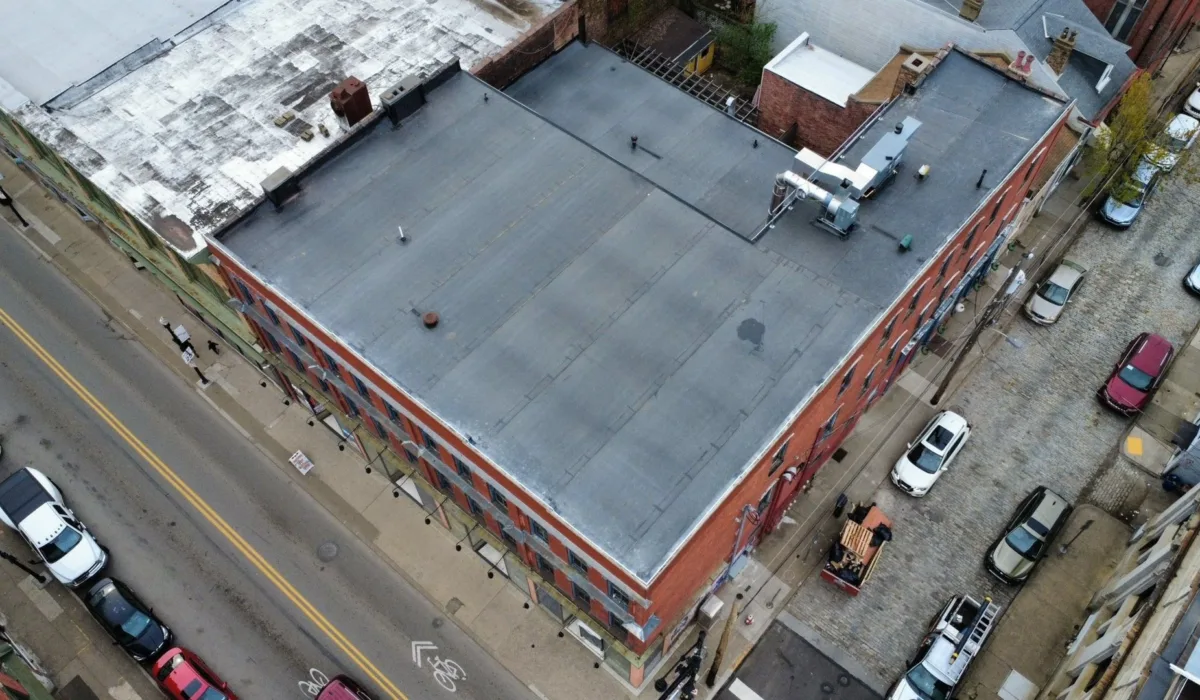
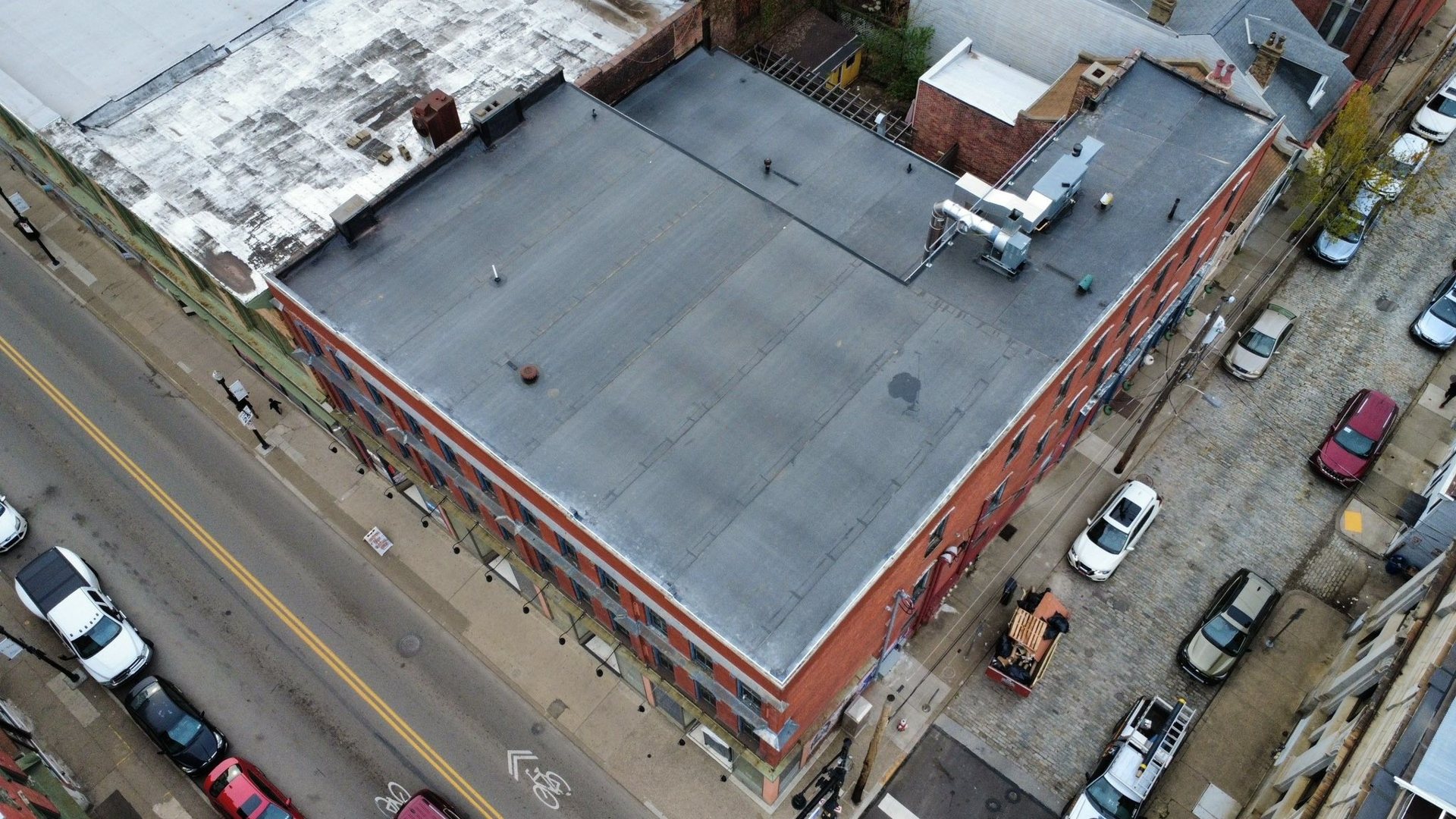
Roof penetrations are common leak points because every pipe, vent, drain, and HVAC curb that pushes through the membrane breaks the roof's sealed surface. Those openings rely on flashing and sealant to stay watertight, and both age out. In the freeze and thaw winters we get around Pittsburgh and Sewickley, they age faster. Seal the details well, and you prevent most leaks before they ever reach the ceiling below. That single design fact explains why commercial roofing leak repair is really about protecting a handful of vulnerable spots, not resurfacing the whole thing.
We have walked a lot of low slope commercial roofs, and the story rarely changes. The wide, open field of the roof is almost never where the trouble begins. It is the busy spots, where something sticks up through the surface, that leak first and leak most.
Why Roof Penetrations Are Common Leak Points on Commercial Buildings in Sewickley
A flat or low slope roof is essentially a giant bathtub liner. It works beautifully until you cut holes in it. Every penetration is a deliberate hole, ringed by flashing and sealant that must flex, bond, and shed water for years. That is a tall order for a small detail. Now multiply that one detail by the dozens of penetrations on a typical commercial roof, and you can see how quickly small vulnerabilities add up.
The Pittsburgh region adds its own stress. We swing from summer heat to hard winter freezes, and water expands as it turns to ice. When moisture sneaks into a tired seal and freezes, it pries the seam wider, a little more each cycle. Add wind driven rain coming up the river valleys around Pittsburgh and rooftop foot traffic, and even well built penetration details need regular attention to stay dry.
What Is the Number One Cause of Roof Leaks?
If we had to name a single culprit on commercial buildings, it is failed flashing around penetrations and transitions. Flashing is the metal or membrane material that wraps the base of anything projecting through the roof. When it corrodes, lifts, cracks, or separates, water walks right in.
Sealant failure is the close cousin of flashing failure. Caulk and pourable sealants dry out, shrink, and crack under UV exposure and temperature swings. A bead that looked perfect three years ago can be a hairline highway for water today. The Insurance Institute for Business & Home Safety metal flashing guidance is worth a read, and it makes clear that the job of flashing is to direct water away from edges and penetrations. Most of these failures are slow, quiet, and completely preventable with routine inspection.
What Is the Most Common Location to Find a Roof Leak?
The most common place to find a leak is at a penetration or a transition, anywhere the flat field of the roof meets something vertical. Think pipe boots, drain bowls, skylight curbs, parapet walls, and the base of rooftop units. Water finds the weak seam, not the strong middle.
Here is the frustrating part: the leak inside rarely appears directly under the failure. Water enters at a penetration, travels along the deck or a seam, and drips through the ceiling several feet away. By the time you spot a brown ring on a ceiling tile, water may have been tracking through the assembly for weeks. That is why chasing a stain without inspecting the roof usually leads to the wrong repair.
The Roof Penetrations That Cause the Most Trouble
Not every penetration carries the same risk. The ones that move, vibrate, or get serviced often tend to fail first. The table below breaks down the usual suspects and why they leak.
| Penetration | Why it leaks | Warning sign |
|---|---|---|
| HVAC and rooftop units | Vibration and service traffic loosen the flashing | Stains near mechanical areas |
| Pipe boots and vents | Sealant cracks; rubber boots split with age | Damp drywall below the pipe run |
| Roof drains | Clamping rings loosen; debris causes ponding | Slow drainage, standing water |
| Skylight curbs | Curb flashing and seals degrade over time | Rings or drips around the skylight |
| Pitch pans | Sealant shrinks and pulls away from the sides | Concave, cracked filler |
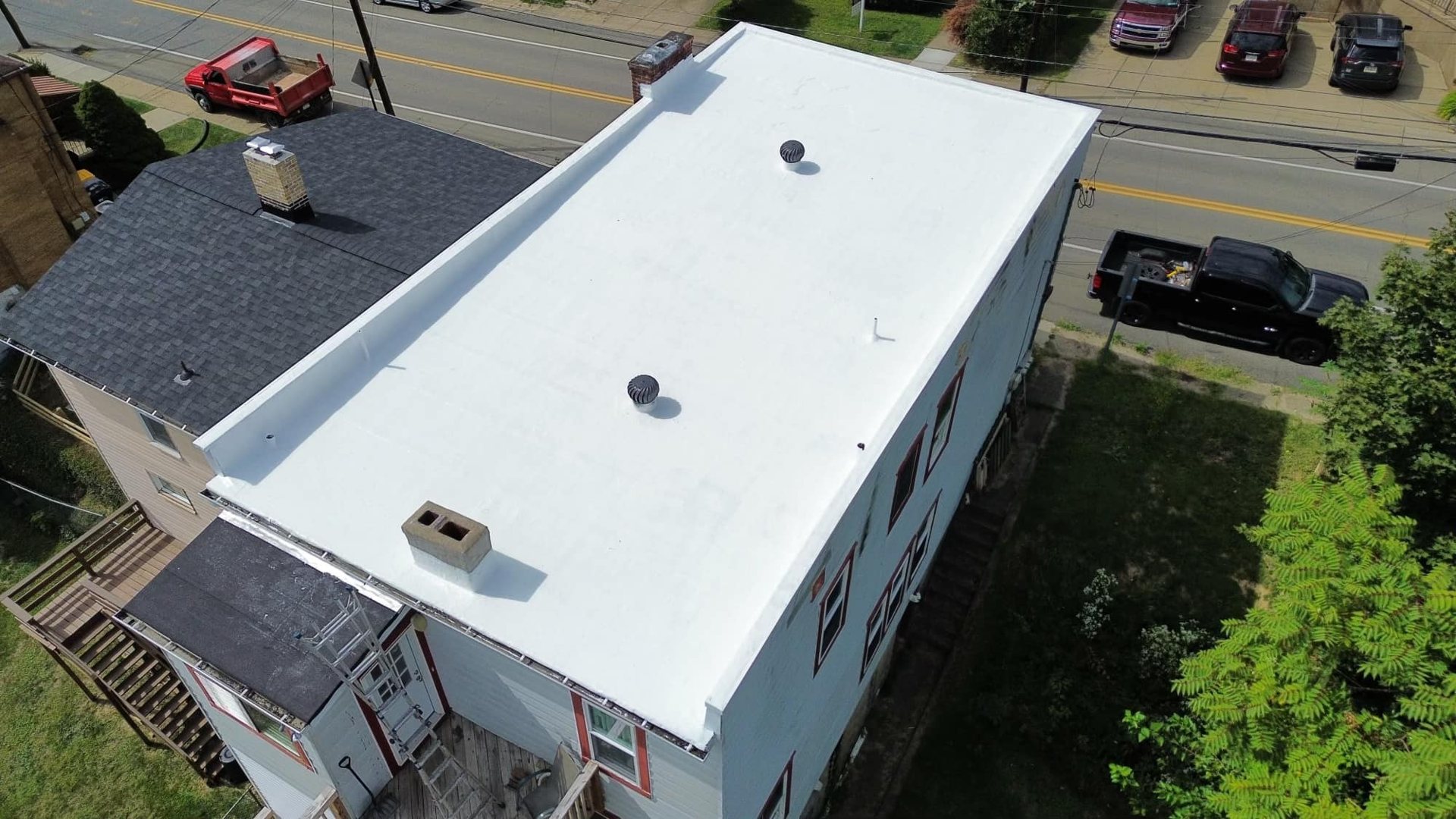
A quick word on pitch pans. They are small metal boxes filled with sealant around oddly shaped penetrations, and they are notorious maintenance headaches. As soon as the filler shrinks and cups, it holds water instead of shedding it. Wherever possible, a properly flashed detail beats a pitch pan every time.
What Is the 25 Rule in Roofing?
The 25 rule, usually called the 25 percent rule, is a building code threshold. In plain terms, if more than 25 percent of a roof section is repaired, replaced, or recovered within a 12 month period, that entire section generally must be brought up to current code rather than patched. It comes from the International Building Code and its residential counterpart, which Pennsylvania adopts through its Uniform Construction Code.
Why does this matter for leaks around penetrations? Because a building that neglects small flashing repairs can end up with damage spread across a big chunk of the roof. Once you cross that 25 percent line, a modest repair can turn into a full section replacement. In other words, deferred maintenance does not just cost you a leak, it can quietly raise the scope of the eventual fix. Catching penetration leaks early is the simplest way to stay well under the threshold.
Are Commercial Landlords Responsible for Roof Leaks?
Usually, yes, but it depends on the lease. In most standard commercial leases, the landlord owns responsibility for the building's structure and roof, while the tenant handles interior upkeep. Some leases split the difference, making the landlord responsible for the structure while the tenant covers routine maintenance and minor repairs. That default flips in a triple net (NNN) lease, where the tenant may take on roof maintenance and repair costs.
We tell owners and tenants the same thing: read the lease before the water starts dripping. Look for the clauses covering structure, roof, maintenance, and capital repairs. This is not legal advice, and every agreement is worded differently. When real money is on the line, have an attorney review it. Clear responsibility up front saves an ugly argument later.
A Smarter Approach to Roof Leak Prevention
Good roof leak prevention is not complicated, but it does require consistency. Inspections twice a year, spring and fall, catch aging sealant and lifted flashing before a Pittsburgh winter tests them. After any major storm, a quick look pays for itself. Documenting each visit with photos also gives you a paper trail if a warranty claim or lease dispute ever comes up.
A few habits make an outsized difference. Keep drains and scuppers clear so water never ponds against a seam. Log every new penetration, because rooftop equipment added by an outside contractor is a frequent source of surprise leaks. And insist that any penetration work follow the roofing manufacturer's details, since sloppy add ons can void your warranty. As a MuleHide certified installer, we flash penetrations on EPDM, two ply low slope, and silicone coated roofs to the manufacturer's details. Curious which systems hold up best? Our guide, What Type of Commercial Roof Is Least Likely to Leak?, is a useful next read.
When It Is Time for Professional Commercial Roof Repair
Some fixes are simple; others need a trained crew and the right materials. If you are seeing repeat stains, ponding water, or flashing that is pulling away, it is time to call in a commercial roofing crew rather than reaching for another tube of caulk. The right crew will trace the leak to its true source instead of chasing the stain, which is where most DIY patches go wrong. Patching over a failed detail buys weeks, not years.
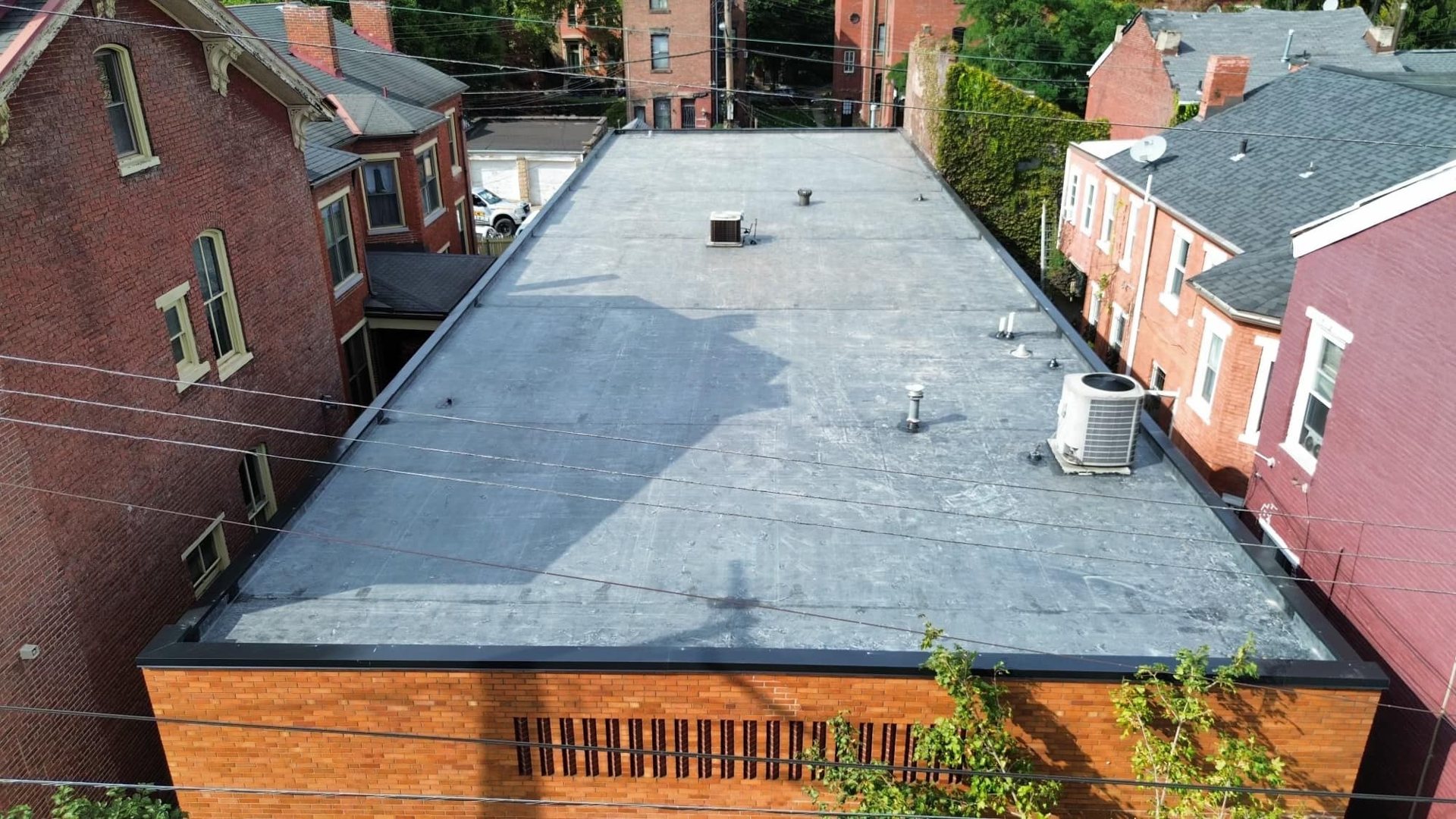
A professional inspection does more than stop today's leak. It maps every penetration, documents the roof's condition, and gives you a plan that protects your budget and your building. For any commercial property owner in Pittsburgh or Sewickley, that kind of foresight is the difference between a small repair now and a major replacement later. Your roof will tell you when it needs help; the trick is listening early.
Have a leak around a rooftop unit, drain, or pipe boot? Contact Malick Brothers Exteriors for a free written estimate, and we will find the source and show you what it takes to fix it.