The best commercial roofing systems are not the same for every building. A flat roofed warehouse in the Strip District, a hotel with rooftop HVAC units and a brick storefront on Perry Highway each need a different answer. This guide covers the types of commercial roofing systems in use today, how long each lasts, which buildings each fits, and how we at Malick Brothers Exteriors help owners choose. We are a family owned commercial roofing contractor in Pittsburgh, MuleHide certified for EPDM, two ply low slope and silicone coating systems, and we install metal and shingle roofs on sloped commercial buildings as well.
The short version: pick the system that matches your roof slope, rooftop traffic, building use and how long you plan to own the property. Then pick a contractor who installs that system every week.
What is a commercial roofing system?
A commercial roof system is more than the membrane or panel you see from above. On a low slope roof it is a layered assembly: structural deck, a vapor retarder where needed, rigid insulation (usually polyiso), a cover board, the waterproofing layer, and the flashing and edge metal that tie it together. Membranes can be fully adhered, mechanically fastened or ballasted, and each method affects wind resistance, weight and how the roof handles Western Pennsylvania freeze and thaw cycles.
Commercial roofs fall into two groups. Low slope roofs (under 2 inches of rise per foot) use membranes, asphalt systems or coatings. Steep slope commercial roofs on churches, restaurants, banks and offices use the same materials as houses: metal panels, architectural shingles and, on older buildings, slate.
Types of commercial roofing systems explained
These are the seven systems you will hear about when you request bids in Pittsburgh, with what each does well and where it falls short.
EPDM rubber roofing
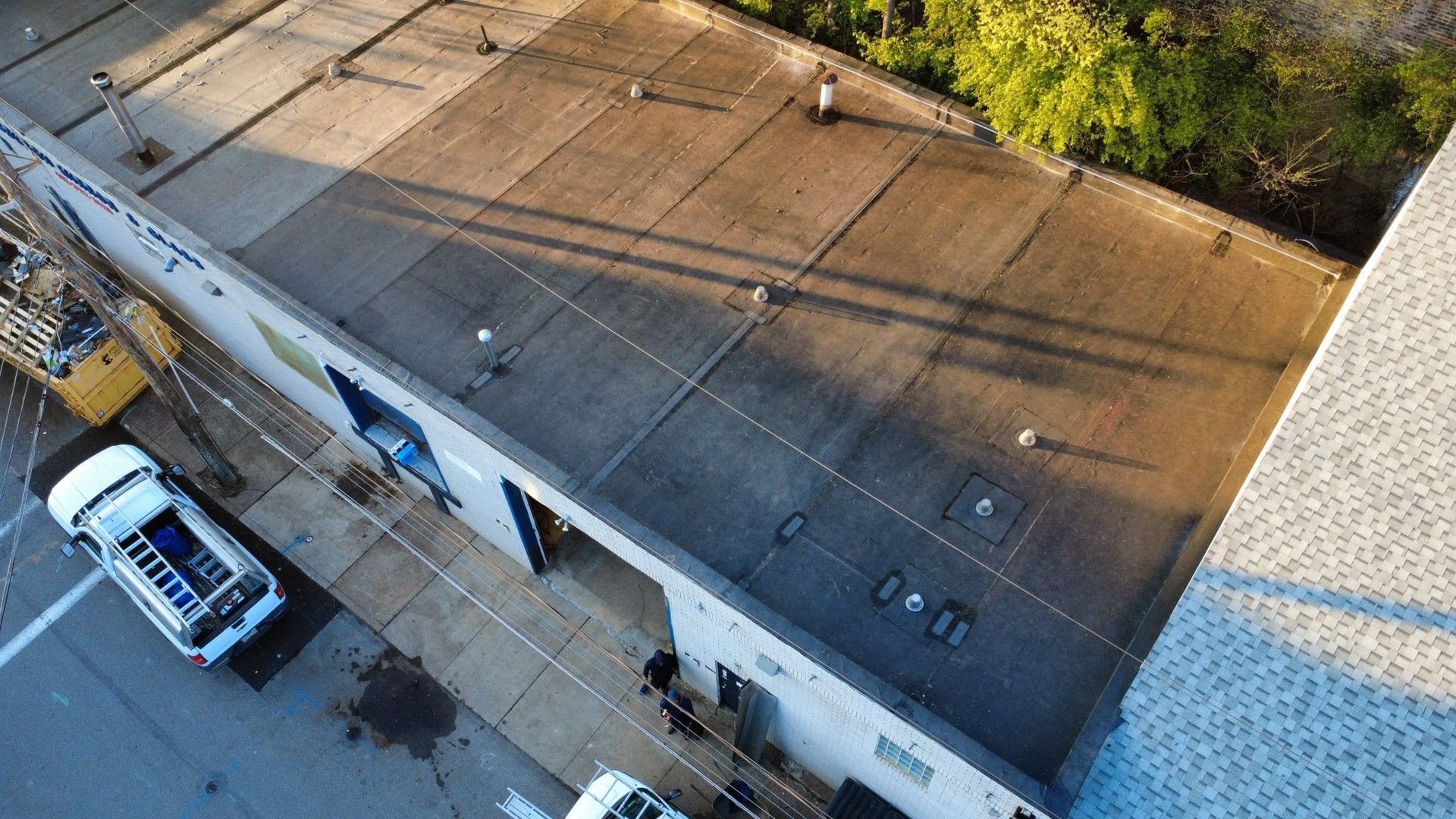
EPDM (ethylene propylene diene monomer) is a thermoset rubber membrane, usually black, sold in large sheets that keep seam counts low. It handles cold weather well, stays flexible through decades of winters, and is easy to repair with seam tape and patches. EPDM is the system we install most often on Pittsburgh commercial buildings, in MuleHide .060 thickness, because the 60 mil sheet resists punctures from foot traffic and dropped tools far better than 45 mil. Black EPDM absorbs heat, a minor drawback in July and a small advantage during our long heating season. See our EPDM roofing page.
TPO single ply
TPO (thermoplastic polyolefin) is a white reflective membrane with heat welded seams as strong as the sheet itself. The white surface lowers cooling loads on buildings that run air conditioning hard. Industry market surveys consistently show TPO and EPDM as the two most installed low slope membranes in the country. The white surface shows dirt and needs periodic cleaning, and formulations vary between manufacturers, so the brand and the installer both matter.
PVC single ply
PVC (polyvinyl chloride) performs much like TPO but adds strong chemical and grease resistance, which makes it the usual recommendation for restaurants with rooftop exhaust fans and for manufacturing buildings where oils and solvents reach the roof. Seams are heat welded. PVC usually costs more than TPO, so it is specified where its chemical resistance earns its keep.
Modified bitumen
Modified bitumen (mod bit) is asphalt reinforced with APP or SBS polymer modifiers and installed in two or three plies, torch applied, cold applied or self adhered. Our MuleHide two ply low slope system is a mod bit assembly. It suits roofs with regular foot traffic from HVAC technicians because the granulated cap sheet is tough underfoot, and it bridges well onto older buildings where the deck is not perfectly uniform.
Built up roofing (BUR)
Built up roofing, often called tar and gravel, uses alternating layers of hot asphalt and reinforcing felt. If one layer is cut, the layers below still shed water. BUR is heavy and slow to install, so it is rarely specified for new work, but many Pittsburgh buildings still carry a sound BUR roof worth maintaining rather than replacing.
Metal roofing
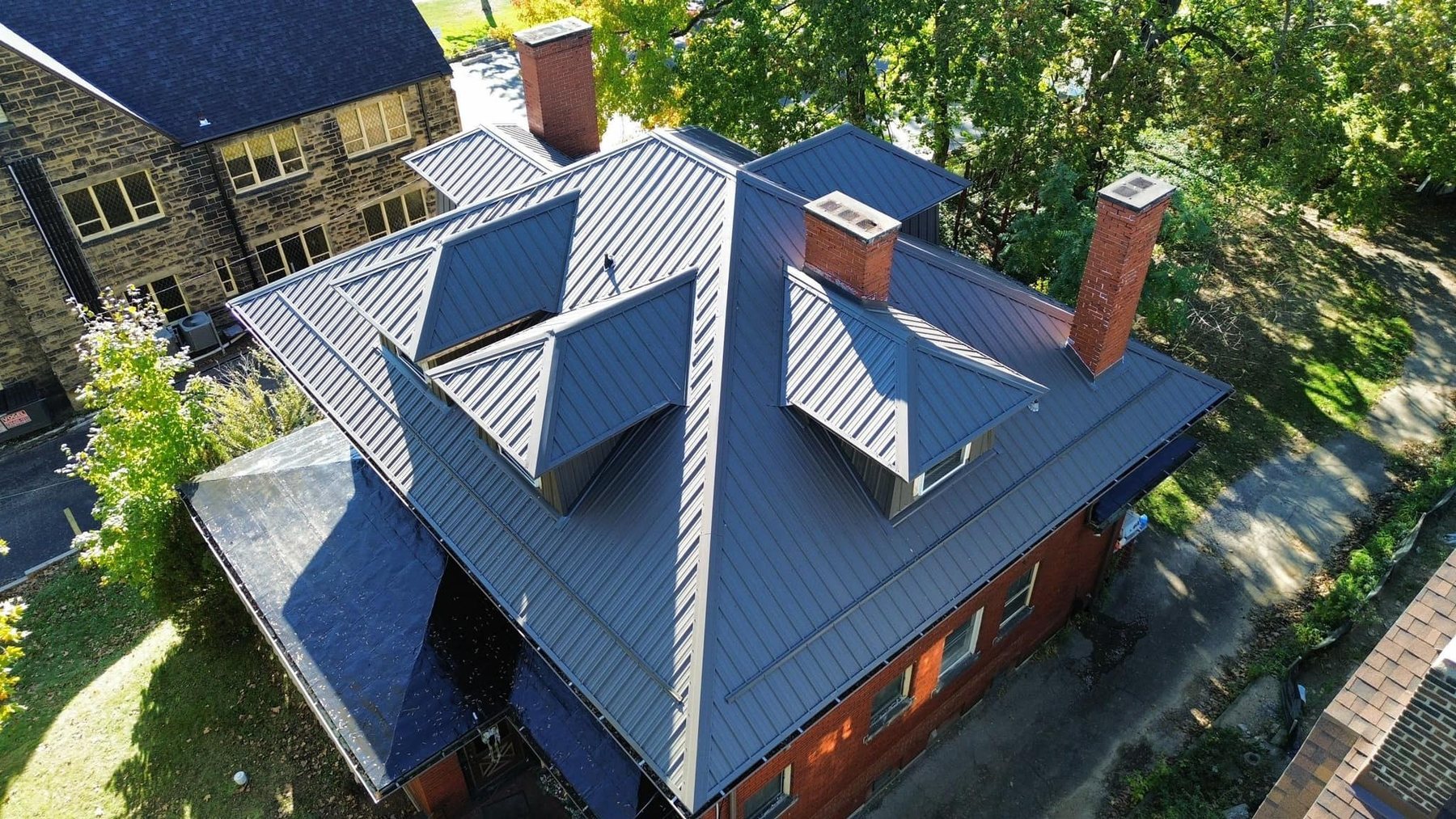
Standing seam metal is the longest lasting commercial roof system in common use. Concealed clips let panels expand and contract with temperature swings, with no exposed fasteners to loosen. Metal sheds snow, resists fire and wind, and keeps its appearance for decades. Screw down panels cost less to install, but the washers age and the screws back out, so they need regular retightening. Metal is mostly a steep slope product, though some standing seam profiles are rated for low slopes. Our metal roofing page covers the profiles and colors we install.
Silicone and other roof coatings
A coating is not a roof on its own, but over a structurally sound EPDM, mod bit, metal or BUR roof it is one of the best commercial roof replacement options because it avoids a replacement. Fluid applied silicone seals seams, bridges small cracks and adds a reflective white surface. Silicone tolerates standing water better than acrylic, which matters on Pittsburgh roofs where drains clog with leaves every fall. We apply MuleHide silicone coatings on commercial roofs and on the box gutters of older North Hills buildings. Details are on our silicone roofing page.
Commercial roofing systems compared
| System | Typical service life | Best fit | Watch for |
|---|---|---|---|
| EPDM (.060) | 25 to 30 years | Flat and low slope roofs in cold climates, warehouses, apartments | Seam maintenance on older adhesive seams, heat absorption |
| TPO | 20 to 25 years | Flat roofs on buildings with high cooling loads | Dirt on white surface, brand quality varies |
| PVC | 20 to 30 years | Restaurants, manufacturing, chemical or grease exposure | Higher material cost than TPO |
| Modified bitumen (2 ply) | 20 to 25 years | Low slope roofs with regular foot traffic | Torch application needs an experienced crew |
| Built up roofing | 20 to 30 years | Existing BUR roofs worth maintaining | Weight, slow installation, rarely specified new |
| Standing seam metal | 40 to 70 years | Steep slope commercial buildings, long ownership horizon | Higher upfront cost, needs skilled installers |
| Silicone coating | 10 to 20 years per coat | Sound existing roofs with worn surfaces | Not a fix for wet insulation or failed decking |
Service life figures are typical ranges for well installed and maintained systems. Ponding water, clogged drains and unrepaired punctures shorten all of them.
What is the best commercial roofing material for long term value?
If you plan to hold the building for decades and the roof has enough pitch, standing seam metal wins on lifespan. It also, along with copper, usually carries the highest upfront cost, which is why owners who plan to sell within ten years often choose differently. For flat and low slope roofs, which is most commercial buildings, the long lasting commercial roof is usually .060 EPDM or PVC over new polyiso insulation and a cover board. The membrane gets the attention, but the insulation and cover board keep the roof from being crushed by foot traffic and from losing R value when a small leak goes unnoticed.
Energy performance belongs in the value math. White TPO and PVC reflect sunlight, and the U.S. Department of Energy reports that cool roofs lower surface temperatures and reduce cooling demand. In Pittsburgh, where heating season runs longer than cooling season, the bigger savings usually come from the insulation under the membrane. Energy code for reroofing in Pennsylvania generally requires insulation to meet the prescribed R value when the roof is replaced to the deck, a cost driver that belongs in every estimate you compare.
Which roofing system is best for your building type?
- Warehouses and distribution buildings: EPDM or TPO, mechanically fastened or fully adhered. Large sheets, few penetrations.
- Hotels and apartment buildings: A commercial roof system for hotels must handle dozens of penetrations for vents, HVAC units and elevator housings, plus constant service traffic. Fully adhered EPDM or PVC with walkway pads around every unit, and a documented maintenance plan.
- Restaurants: PVC near grease exhaust, EPDM elsewhere on the roof is a common hybrid.
- Churches, banks and offices with pitched roofs: Standing seam metal or architectural shingles. Many Pittsburgh churches have slate worth repairing rather than replacing.
- Mixed use buildings with storefronts below apartments: A low slope membrane on the main roof and a coated or rebuilt box gutter system at the edges.
Risk minimization in commercial roofing
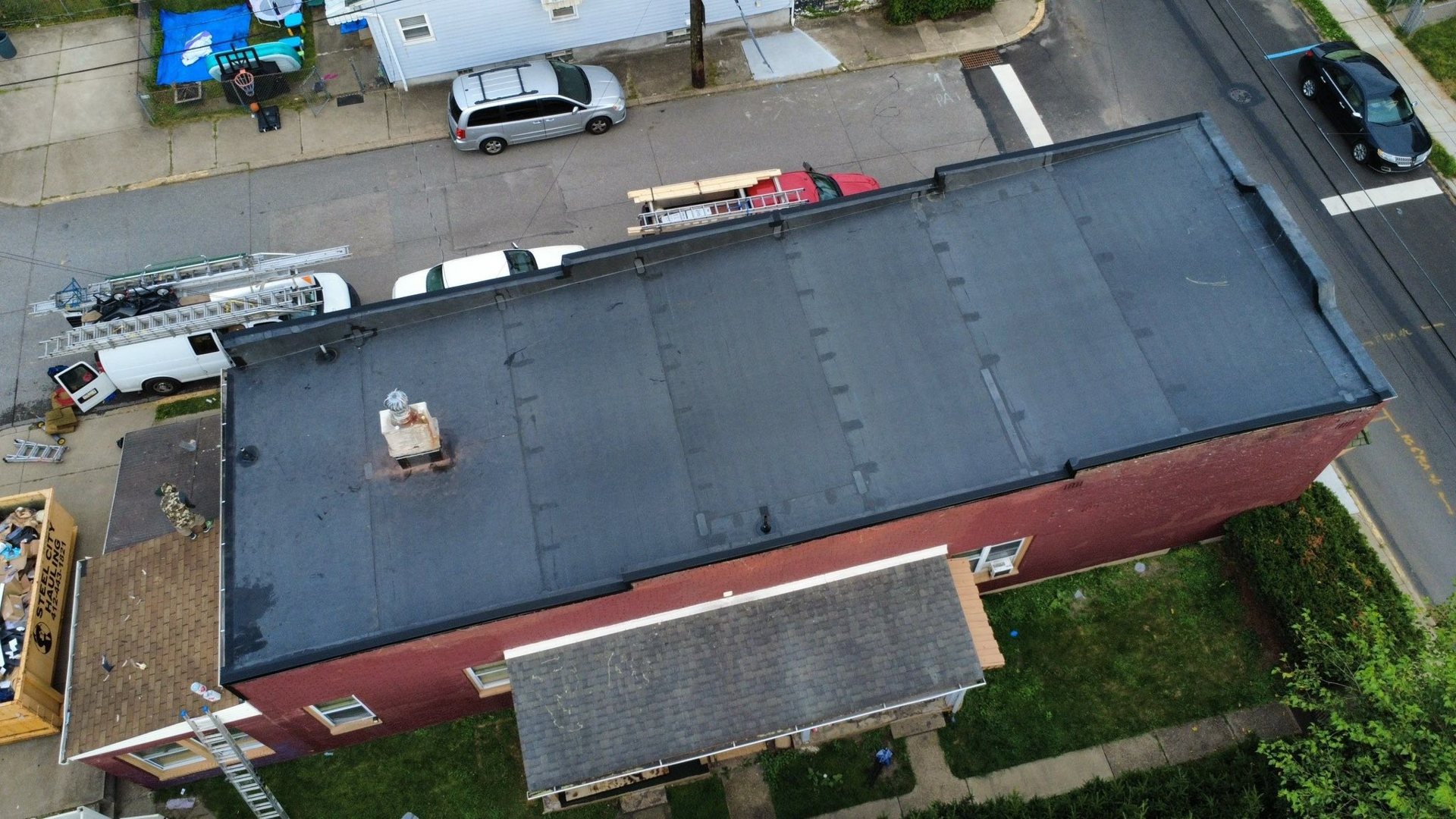
A roof failure on a commercial building becomes inventory damage, tenant complaints and insurance claims. Most of that risk can be managed before and during the project.
- Start with a core sample. Before anyone quotes a recover or a coating, cut a small core to see whether the insulation is wet. Wet insulation must come out, and a bid that skips this step is guessing.
- Specify the full assembly in writing. Membrane thickness, insulation type and R value, cover board, attachment method, edge metal and flashing. Two bids that both say "EPDM roof" can differ by half the system.
- Match the warranty to the installer. Manufacturer system warranties are only issued when a certified contractor installs the complete system. Our MuleHide certification lets us register their warranties on EPDM, two ply and silicone jobs.
- Verify the contractor. Look up the Pennsylvania Home Improvement Contractor registration on the PA Attorney General HIC search (ours is PA174918), ask for a current certificate of insurance, and check the BBB profile.
- Plan around your operations. Torch work, hot asphalt and adhesives bring flame and fume considerations. For an occupied hotel or restaurant we schedule sections and use cold applied or self adhered products where they fit.
- Keep a maintenance schedule. Two inspections a year plus a visit after any major storm catch open seams and clogged drains while they are still small repairs.
How to choose the best commercial roofing company
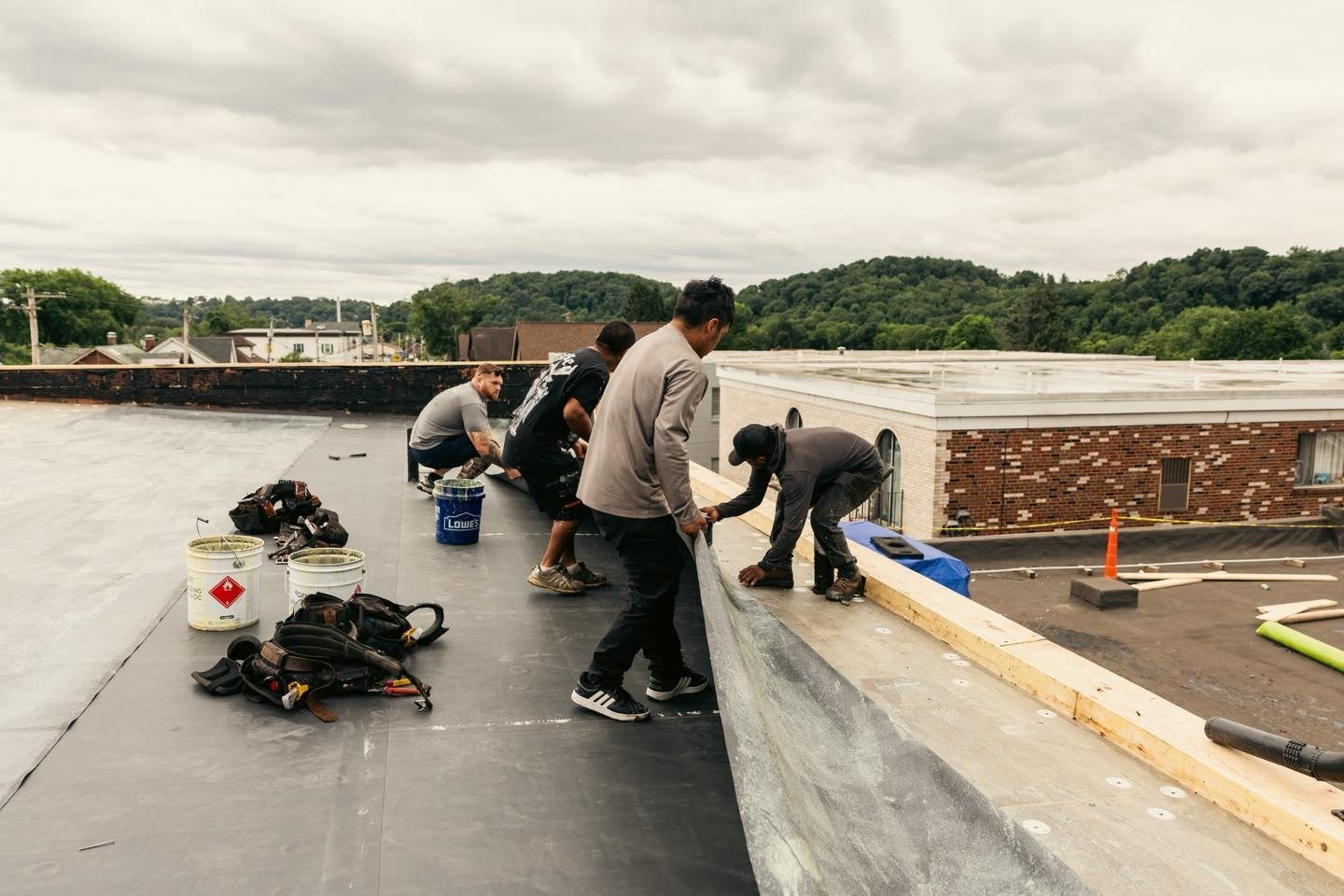
The best system installed poorly will fail before a middle grade system installed well. When you compare Pittsburgh commercial roofers, ask which systems each one installs most often, whether their own crews do the work, which manufacturer certifications they hold, and whether they will show photos of the deck and insulation during the job. We photograph every stage of a commercial roof so the owner sees what was under the old roof and what replaced it. Our verified list of the best roofers in Pittsburgh lets you compare several companies side by side.
Frequently asked questions
What type of roof is best for commercial buildings?
For flat and low slope commercial buildings, single ply membranes are the most common choice, with .060 EPDM the best fit for cold climates like Pittsburgh and PVC the best fit where grease or chemicals reach the roof. For pitched commercial buildings, standing seam metal offers the longest service life. The right answer depends on slope, rooftop traffic, building use and ownership horizon.
Which commercial roofing system lasts the longest?
Standing seam metal lasts the longest, often 40 to 70 years when installed with concealed clips and proper expansion details. Among low slope membranes, well installed and maintained .060 EPDM and PVC typically reach 25 to 30 years. Regular inspections and prompt seam and drain repairs get any system to the top of its range.
What is the 25 percent rule in roofing?
The 25 percent rule is a code provision, written into some state codes and often cited elsewhere, that says if more than 25 percent of a roof section is repaired or replaced within twelve months, the whole section must be brought up to current code, including insulation. Pennsylvania municipalities enforce the Uniform Construction Code, so confirm the local requirement before planning a large repair instead of a replacement.
What is the most expensive commercial roofing material?
Copper and standing seam metal generally carry the highest upfront cost because of material price and skilled labor. Spread over 40 years or more, their cost per year is often lower than a membrane replaced twice in the same period. We provide a free written estimate for any system so you can compare upfront cost and expected life side by side.
Can a commercial roof be coated instead of replaced?
Yes, when the roof is sound, the insulation is dry and the surface is clean. A silicone coating over a worn EPDM, mod bit, metal or BUR roof adds years of service with far less disruption than a tear off. It is not a fix for wet insulation, rotted decking or widespread open seams, which is why we core sample before recommending it.
Get a written estimate for your commercial roof
We will walk your roof, core sample where needed, photograph what we find and give you a written estimate that spells out the complete system, not just the membrane. Our shop is at 500 Perry Highway in West View and we serve commercial buildings across Pittsburgh and the North Hills. Contact Malick Brothers Exteriors or call (412) 616-0191 to schedule your evaluation.