Those tiny particles coating your asphalt shingles do more than give your roof its color. They serve as your home's first line of defense against UV rays, fire, and weathering. When you start noticing them piling up in your gutters, it is a signal worth paying attention to. The question is not whether to panic. It is whether you need a targeted residential roof repair or a full replacement. This guide walks through how we make that call on Pittsburgh homes every week.
Why Roof Granules Matter for Your Home's Protection
Granules are not just decorative. They shield the underlying asphalt from harmful UV radiation, which would otherwise cause the shingles to crack and become brittle. They also add fire resistance and help shed water. When granular loss on shingles becomes widespread, the exposed asphalt is vulnerable to the elements. This accelerates deterioration and can lead to water infiltration, rotted decking, and mold growth inside your home.
Pittsburgh weather is hard on granules. Our freeze and thaw cycles from November through March, heavy spring rain, summer heat on south facing slopes, and the occasional hail storm all loosen the bond between granule and asphalt a little faster than a milder climate would. Add the steep roofs and tall trees common in neighborhoods like Mt. Lebanon, Squirrel Hill, and the North Hills, and it is no surprise that granule questions are one of the most common calls we get.
Is It Normal for Granules to Come Off a New Roof?
Yes. If you recently had a roof installed and you are finding granules in your gutters, do not worry just yet. During manufacturing, extra granules get embedded that are not fully adhered. Crews walking on the roof during installation also loosen some particles. This initial shedding should taper off quickly.
If it does not slow down after a month or two, contact your roofing contractor. It could indicate a manufacturing defect or improper installation. For most new roofs, a small amount of granular loss on shingles is completely normal. On the complete Atlas systems we install as an AtlasPro+ Platinum Select contractor, the shingles are covered by the Atlas 50 year warranty, so a genuine defect is handled through the manufacturer rather than out of your pocket.
Key Signs You Are Dealing with Roof Granules Coming Off
The most obvious indicator is finding granules in places they should not be. Check your gutters during routine cleaning. Look at the ground near your downspouts after a rainstorm. A small amount is normal over time, but piles of granules are a red flag. You might also notice bald spots on your shingles where the black asphalt shows through.
Another sign is uneven coloring across your roof. Areas with significant granule loss will appear darker or faded compared to protected sections. If you see curling, cracking, or brittle shingles alongside the granule loss, your roof is telling you something important. These combined symptoms usually point toward replacement rather than repair.
- Granules collecting in gutters, splash blocks, or at the base of downspouts
- Dark streaks or bald patches, especially on the south and west slopes
- Shingle edges that curl, cup, or crumble when touched
- Exposed fiberglass mat showing a light, fibrous texture
- Granule loss that lines up with a known hail or wind event
What Is the 25% Rule in Roofing?
The 25% rule is a rule of thumb that helps determine whether repair or replacement makes financial sense. If the cost of a repair would exceed roughly 25 percent of what a full roof replacement would cost, you are usually better off replacing the entire roof. It is not written into Pennsylvania building code, but many Pittsburgh roofers, including us, use it as a sanity check when a repair estimate starts to balloon.
The logic is straightforward. Patchwork repairs on a deteriorating roof often lead to more repairs down the road, and every visit carries its own labor and setup cost. A professional inspection can help you run the numbers and make an informed decision about shingle granule repair versus replacement. We put both options in writing on the same free estimate so you can compare them side by side.
What Is the Difference Between Roof Repair and Replacement?
A repair addresses localized damage while keeping the rest of your roofing system intact. This might involve replacing a handful of damaged shingles, fixing flashing around a chimney, or sealing minor cracks. Repairs work well when the damage is isolated and the rest of your roof remains structurally sound.
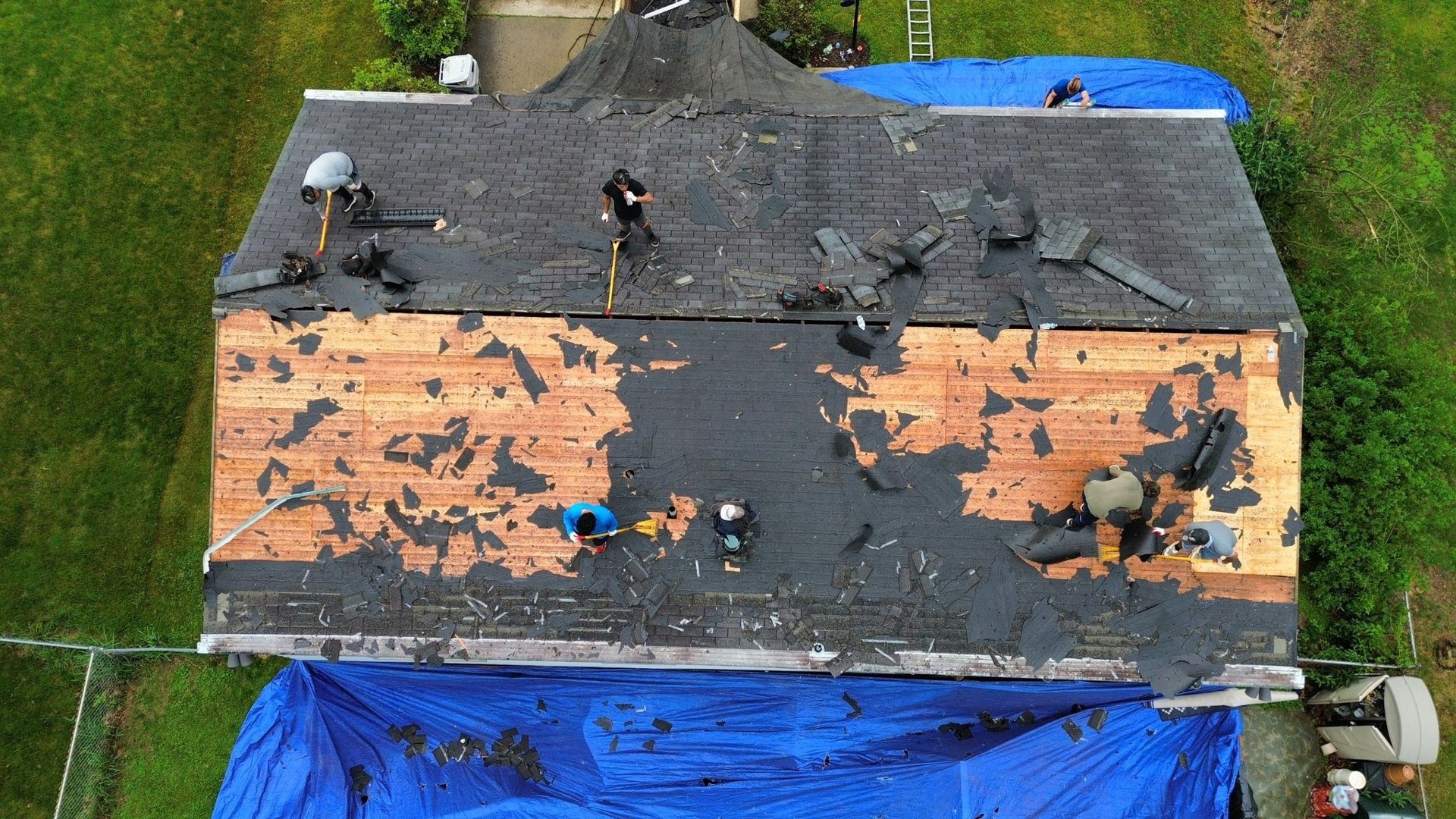
Replacement means removing the existing roof covering entirely and installing a new system. This becomes necessary when damage is widespread, the roof has reached its expected lifespan, or structural issues exist beneath the shingles. While replacement costs more upfront, it provides a fresh start with full manufacturer warranties and updated building code compliance. Your written estimate is the real number for either path, and it depends on roof size, pitch, number of layers to remove, decking condition, flashing details, and the shingle line you choose.
Repair vs Replacement: Quick Comparison
| Factor | Repair | Replacement |
|---|---|---|
| Damage scope | Isolated, localized | Widespread, systemic |
| Roof age | Under 15 years | Over 20 to 25 years |
| What drives cost | Number of shingles, flashing work, access | Square footage, pitch, tear off layers, decking, shingle line |
| Timeline | Hours to one day | One to three days typically |
| Warranty | Limited workmanship | Full manufacturer plus labor |
Can You Replace Roof Granules?
Here is the honest answer: no, not effectively. Once granules have worn off, you cannot simply glue them back on or sprinkle new ones over the damaged area. The granules are embedded during the manufacturing process and become an integral part of the shingle's protective layer. Attempting a DIY fix will not restore the shingle's original integrity.
Some contractors offer sealant applications as a temporary measure, but this is essentially a band aid solution. It might buy you a little time, but it will not reverse the damage already done. If you are seeing significant granule loss, the better approach is to fix damaged shingles by replacing them entirely or planning for a full roof replacement.
When Roof Granules Coming Off Calls for Repair
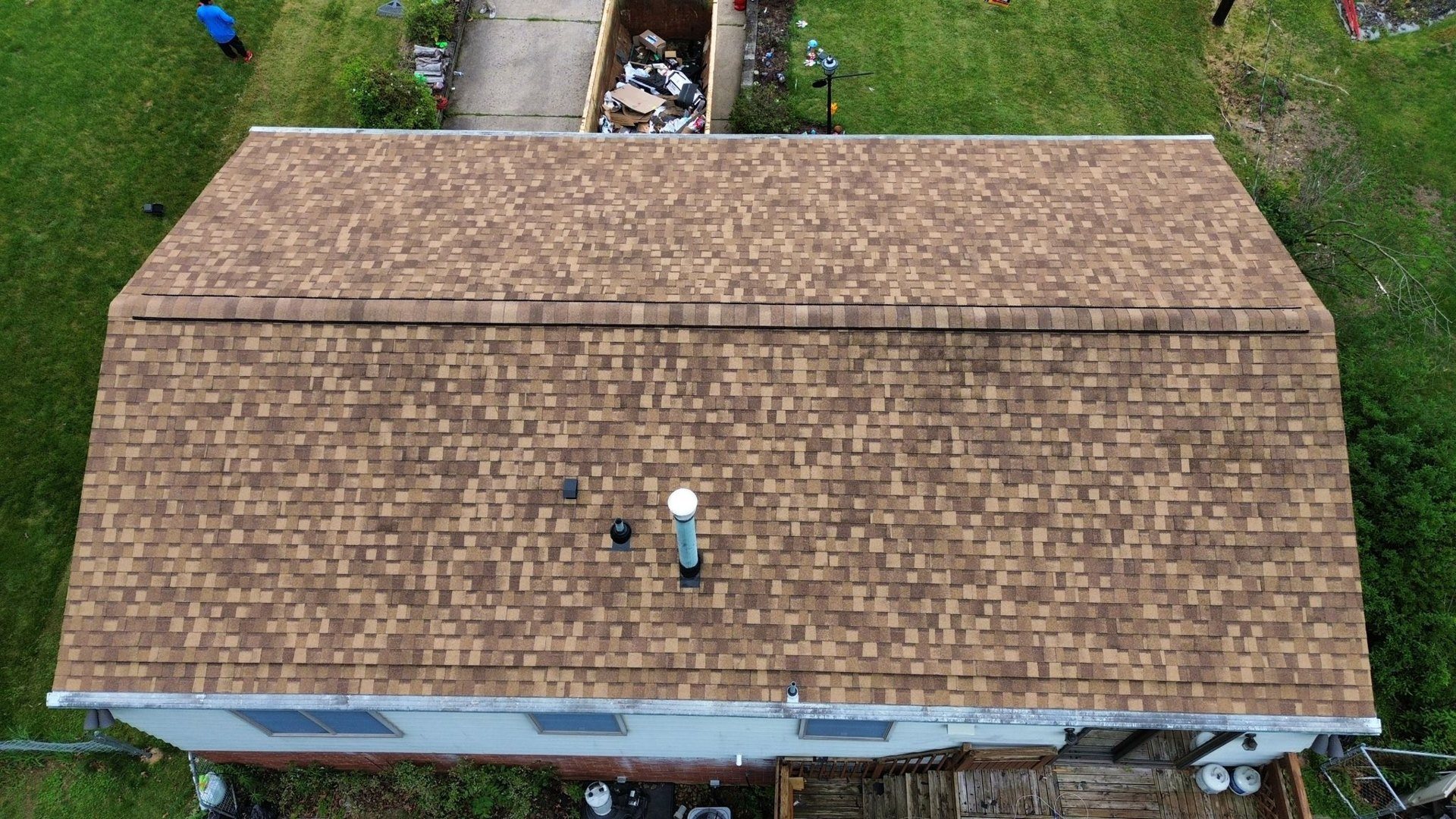
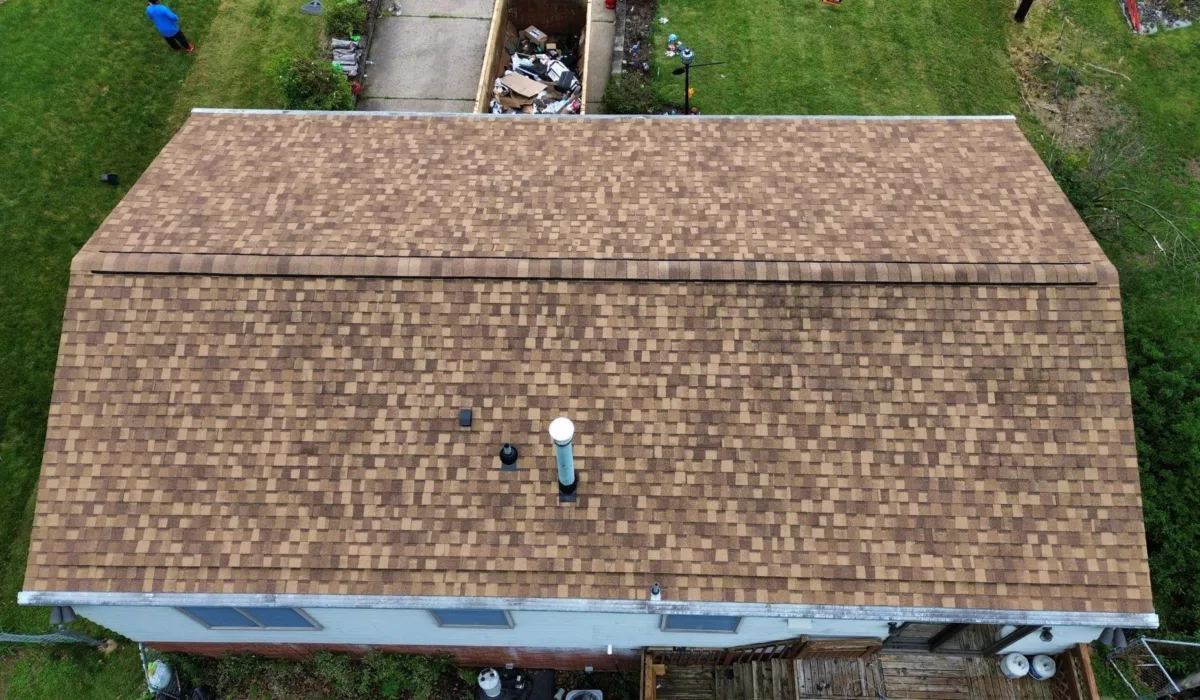
Repair makes sense when the damage is contained. Maybe a tree branch scraped a section of your roof during a storm. Perhaps a specific area took a direct hit from hail. If the granule loss is limited to one small section while the rest of your roof looks healthy, targeted repairs can extend your roof's life without a major expense.
Age matters here too. If your roof is less than 15 years old and the damage is isolated, a shingle granule repair approach is usually the smart move. On a repair visit we match the shingle as closely as possible, replace the damaged courses, check the flashing and any exposed nail heads nearby, and photograph the finished work for your records. Wondering how long the project might take? Our post on how long roofing takes has a detailed breakdown of timelines.
When Repair vs Replacement Tips Toward a New Roof
Replacement becomes the clear choice when granule loss is widespread across your roof. If you are seeing large bald spots, exposed fiberglass matting, or the black asphalt substrate showing through in multiple areas, patching will not cut it. The protective layer is too compromised to be restored piecemeal.
Your roof's age is a major factor. Asphalt shingles typically last 20 to 30 years depending on quality and climate. If your roof is approaching or past the 25 year mark and showing signs of granular loss on shingles, replacement is almost always more cost effective than ongoing repairs. Consistent leaks, failed professional inspections, and curling or cracking shingles alongside granule loss all point toward replacement.
Many Pittsburgh homes still carry roofs installed in the late 1990s or early 2000s, and some older homes in Bellevue, Dormont, and the city neighborhoods have two layers of shingles stacked up. A second layer traps heat and bakes the granules off the top layer faster. When we find two layers, we recommend a full tear off so the new system goes down on sound, inspected decking.
Practical Tips for Homeowners Facing This Decision
Start with a professional inspection. A qualified roofer can assess the extent of the damage and give you an honest evaluation. According to InterNACHI's roofing inspection standards, uniform granule loss across a roof typically indicates normal weathering, while patchy or localized loss often signals deeper problems.
Document everything. Take photos of your gutters, the ground near downspouts, and any visible damage. This documentation helps with insurance claims if storm damage is involved. Checking your roof after major storms and addressing small problems promptly can extend its lifespan significantly.
Ask about licensing and warranties. We are family owned, based at our shop on Perry Highway in West View, BBB A+ accredited, and registered with Pennsylvania as a home improvement contractor (PA174918). Any roofer you hire should be able to show you the same.
Frequently Asked Questions
How many granules in the gutter is too many?
A light dusting after a storm is normal, especially on a roof under five years old. A visible layer that you can scoop up by the handful, or granules that keep appearing every time it rains, means the shingles are shedding faster than they should and deserve a closer look.
Does granule loss mean my roof is leaking?
Not necessarily. Granule loss comes first and leaks come later, once the exposed asphalt cracks and water finds a path. That gap is your window to repair or replace before interior damage starts.
Will insurance cover a roof with granule loss?
Insurance usually covers sudden damage from a specific event such as hail or wind, not gradual wear. If a storm caused the loss, document it right away and have a roofer inspect before you file.
Can you do roof repairs in a Pittsburgh winter?
Yes. We work all winter. Shingle repairs are done on dry days when the material is warm enough to seal, and full replacements continue through the cold months with the right planning.
Do you charge for the inspection and estimate?
No. The inspection and written estimate are free, and the estimate spells out both the repair option and the replacement option when both are reasonable.
Final Thoughts on Making the Right Choice
Roof granules coming off is not something to ignore, but it is also not always cause for alarm. Minor loss on a newer roof is expected. Localized damage from a storm can often be repaired. But when the loss is widespread, when your roof is aging, or when repairs keep piling up, replacement becomes the smarter long term investment.
The key is acting before small problems become expensive ones. If you are in Pittsburgh or the surrounding suburbs and your gutters are filling with granules, contact Malick Brothers Exteriors for a free inspection and written estimate. We will tell you honestly whether a repair will hold or whether it is time for a new roof.