Table of Contents
If you manage or own a commercial property, the idea of replacing your roof probably brings up more questions than answers. How long will it take? Will my business need to shut down? These are fair concerns, and I want to walk you through the entire process so nothing catches you off guard. A commercial roof replacement process is a significant investment, but with the right preparation, it does not have to be a headache.
Too many building owners go into this unprepared. That is exactly why understanding the commercial roofing project steps from start to finish matters so much. Let’s break it all down.
What Is Involved in the Roof Replacement Process?
The commercial roof replacement process generally follows five main phases: inspection and planning, site preparation, tear-off, installation, and final inspection. Each phase serves a distinct purpose, and skipping any of them can lead to problems down the road. Knowing what to expect keeps you in control of the project.
Before a single shingle or membrane is touched, the roofing team needs a full picture of your roof’s condition. This means detailed assessments of insulation, flashing, deck integrity, and drainage. Core testing may also be performed to evaluate the condition of underlying materials that are not visible from the surface.
Pre-Construction: Inspections and Planning for Your Commercial Roof Replacement Project
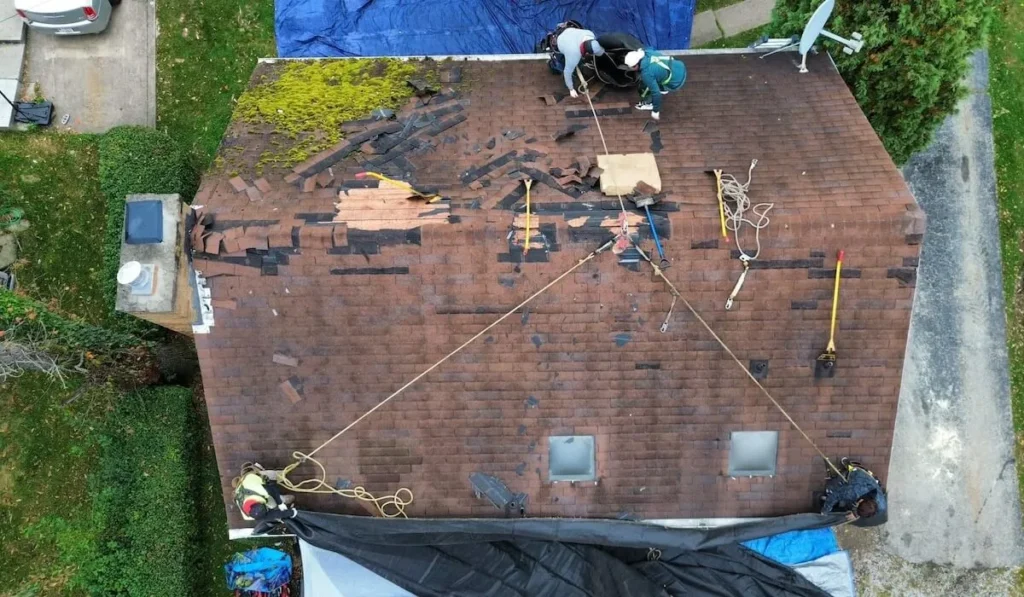
The planning phase is where a successful project is built. Your contractor will assign a dedicated crew, including a foreman and superintendent, to oversee every detail. They will work with you to establish a schedule that respects your business hours and minimizes downtime. Expect this phase to take several days to a couple of weeks depending on your building’s complexity.
During this time, your contractor will finalize material choices, pull permits, and coordinate material deliveries. If you want a deeper look at this planning stage, What to Expect in Your Roofing Project: A Step-by-Step Guide is a helpful resource. Communication during this phase is everything. Make sure you have a dedicated contact person who can relay updates to your staff and tenants.
Site Preparation and Safety Protocols
Once planning wraps up, your property starts to look like a construction zone. Crews will establish a staging area for equipment, materials, and large dumpsters. Scaffolding goes up. Safety perimeters are set. Third-party safety inspectors may even visit the site to conduct audits before work begins.
One thing many building owners overlook is rooftop HVAC equipment. These units often need to be temporarily lifted or carefully worked around during the project. Your contractor should address this early so there are no surprises with your heating or cooling systems.
What Type of Roof Do Most Commercial Buildings Have?
Most commercial buildings feature flat or low-slope roofing systems. The three most common materials are TPO (Thermoplastic Polyolefin), EPDM (Ethylene Propylene Diene Monomer), and PVC (Polyvinyl Chloride). Each one brings different strengths to the table, and the right choice depends on your building’s needs, your local climate, and your budget.
| Roofing Material | Avg. Lifespan | Best For |
|---|---|---|
| TPO | 15 to 25 years | Energy efficiency, budget-friendly projects |
| EPDM | 20 to 35 years | Durability, cold-climate performance |
| PVC | 20 to 30 years | Chemical resistance, restaurants, manufacturing |
| Metal | 30 to 45 years | Longevity, high-wind areas |
| Built-Up (BUR) | 20 to 30 years | Multi-layer protection, flat roofs |
TPO is currently one of the most widely installed options due to its balance of affordability and energy savings. Its white reflective surface can reduce cooling costs significantly during warmer months. EPDM, on the other hand, has been an industry standard for decades and performs exceptionally well in regions with wide temperature swings.
Tear-Off and Deck Inspection: The Loudest Phase of the Commercial Roof Replacement Process
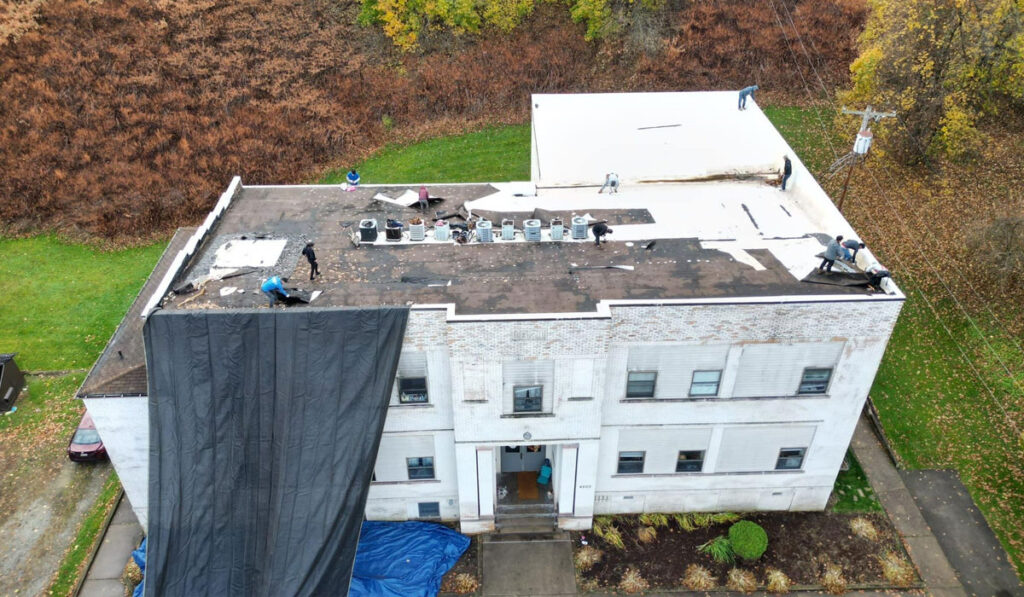
This is where things get noisy. The tear-off phase involves removing the old roofing material, insulation, and flashing layer by layer. Crews will strip everything down to the roof deck. It is the most disruptive part of the commercial roof replacement process, so prepare your employees and tenants for elevated noise levels during this stage.
Once the old materials are gone, the roofing professionals will inspect the underlying deck for water damage, rot, or structural weaknesses. This step is critical. Installing a new roof over a compromised deck is a recipe for premature failure. Any damaged sections will be repaired or replaced before moving forward.
Installation of the New Roofing System
With a solid deck in place, the new roofing system goes on. Whether your contractor is installing TPO, EPDM, PVC, or another material, the process involves laying the membrane, sealing seams, and ensuring watertight connections around every penetration point. Quality crews aim to leave the site clean at the end of each work day.
Installation timelines vary. A smaller commercial building might wrap up in under a week, while larger facilities can stretch to several weeks. Weather is always a factor. Rain, high winds, or extreme heat can halt work temporarily, so build a buffer into your expectations.
How Often Should a Commercial Roof Be Replaced?
Most commercial roofs last between 20 and 30 years, though the actual lifespan depends on the material, installation quality, and maintenance. A roof that receives biannual inspections and prompt minor repairs can easily outlast one that gets ignored. If your roof is approaching the 20-year mark and you are seeing persistent leaks or rising energy bills, it is time to start planning.
I recommend having a professional inspection done at least 3 to 5 years before your roof’s expected end-of-life. This gives you time to budget and compare contractors without emergency pressure.
Expected Disruptions During a Commercial Roofing Project
Let’s be honest. A roof replacement is not a silent process. During the tear-off and installation phases, expect noise, vibration, and occasional odors depending on the materials being used. Some adhesives and sealants can produce fumes, though modern roofing products have improved significantly in this area.
The good news is that most businesses can stay open during a what to expect roof replacement commercial project. Professional contractors work in phases and often schedule the loudest activities outside of peak business hours. Keep your team informed about the daily schedule so they know what to expect each morning.
Final Inspection and Project Closeout
Once installation is complete, the contractor conducts a thorough final walkthrough. This inspection ensures the work meets all local building codes, quality standards, and manufacturer specifications. Any punch-list items are addressed before the project is officially closed out.
At handover, you should receive full documentation covering warranty information, material specifications, and maintenance recommendations. Keep it somewhere accessible because you will need it if you ever file an insurance claim. A well-documented commercial roofing project steps file protects your investment for years to come.
Tips for a Smooth Commercial Roof Replacement Project
Preparation makes the difference between a stressful project and a smooth one. Designate a single point of contact within your organization to communicate with the roofing crew. Make sure all building occupants know the project timeline, including start dates and expected noise windows.
Do your homework before hiring a contractor. Look for proper licensing, insurance, and a proven track record with commercial projects. Ask for references and verify them. The cheapest bid is rarely the best one when it comes to protecting a building that houses your business and employees.