Table of Contents
Buying a commercial building is exciting right up until the moment the roof starts leaking. I’ve watched more than one buyer celebrate a great price, then spend the next winter chasing water stains across a warehouse ceiling. The roof is the single most expensive system on most buildings, yet it’s the one people examine the least. If you’re buying a commercial property in Pittsburgh, the roof deserves its own inspection, its own report, and its own line in your negotiations.
Here’s the uncomfortable truth. A roof can look perfectly fine from the parking lot and be failing from the inside out. That gap between “looks okay” and “actually okay” is exactly where buyers get hurt. And on a commercial roof, that gap is often measured in tens of thousands of dollars.
Is a Roof Inspection Necessary?
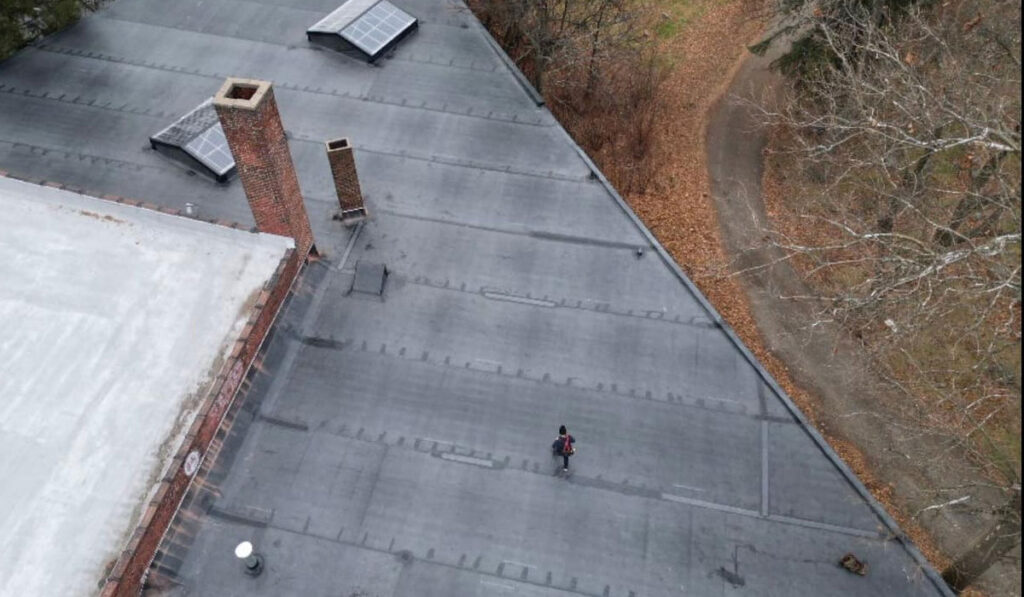
Short answer: yes. A general building inspector will glance at the roof, note its age, and move on. That is not the same thing as a dedicated commercial roof inspection performed by someone who works on these systems every single day. Flat commercial roofs are experts at hiding their problems. Ponding water, saturated insulation, and failing seams rarely announce themselves until they’ve already done real damage.
Think of it this way. You wouldn’t buy a business without reviewing the books, and the roof is the building’s biggest financial liability sitting in plain sight. A specialist can tell you how many years of service life are left, what needs attention now, and what can wait. That information quietly changes what the building is actually worth. Walk into your negotiation without that number, and you’re bidding blind.
Pittsburgh’s Freeze-Thaw Cycle Is Brutal on Flat Roofs
Pittsburgh weather is a roof’s worst enemy. Our temperatures bounce above and below freezing all winter, sometimes twice in a single day. Water seeps into a tiny crack, freezes, expands, and pries that crack a little wider. Repeat that cycle a few hundred times and a hairline seam becomes an open wound.
This is why local experience matters so much for Pittsburgh roofing. Ice dams back water up under membranes. Trapped moisture in the insulation freezes and lifts the surface. A roof that would comfortably last twenty years in a mild climate can fail years early here. An inspector who understands our winters knows exactly where to look first.
Caveat Emptor: Why the Risk Is Entirely Yours
Commercial real estate in Pennsylvania runs on a simple, harsh principle: caveat emptor, or “let the buyer beware.” Unlike a residential home sale, the seller of a commercial building generally is not required to hand you a tidy list of every defect. If there’s a problem you didn’t catch, it’s your problem the moment you close.
That legal reality flips the entire burden onto you as the buyer. Nobody is coming to rescue you after the deal is done. The only real defense is due diligence you pay for and control yourself. A thorough roof report is one of the few tools that shifts a little of that risk back where it belongs.
Buying a Commercial Building in Pittsburgh? Don’t Skip the Roof Inspection Before You Sign
I’ll say it plainly, because it’s the whole point. Buying a commercial building in Pittsburgh means the roof inspection is not optional. Your lender may even require one before approving financing, so you might be doing this whether you like it or not. Use that to your advantage.
A clean report gives you peace of mind. A report full of problems gives you leverage. Either you renegotiate the price down to cover the repairs, or you ask the seller to fix things before closing. I’ve seen a single honest roof report save a buyer far more than the inspection ever cost.
What a Commercial Roof Inspector Actually Checks
A good inspector doesn’t just hunt for holes. They evaluate the roof as a whole system and hand you a written condition report with real detail. Here’s what a solid inspection covers.
| Area | What They’re Checking |
|---|---|
| Membrane | Wear, punctures, and deterioration on flat TPO or EPDM surfaces |
| Flashing & penetrations | Watertight seals around HVAC units, skylights, and vents |
| Drainage | Ponding water, clogged scuppers, and drains that invite ice buildup |
| Trapped moisture | Hidden wet insulation, usually found with thermal imaging |
Look at that last row. Thermal imaging is non-destructive, meaning the inspector finds soaked insulation without cutting the roof open. That kind of detail is what separates a real report from a quick look. If you want to understand how service life feeds into all of this, it’s worth reading How Often Should a Commercial Roof Be Replaced? before you make an offer.
What Are Some Reasons an Inspector May Choose Not to Walk the Roof?
Sometimes an inspector won’t physically walk the surface, and that’s not laziness. Safety always comes first. A roof slick with snow, ice, or morning frost is genuinely dangerous, and Pittsburgh serves up plenty of all three.
There are other reasons too. A steep pitch, a fragile or aging membrane that could be damaged by foot traffic, standing water, or no safe access point can all keep an inspector off the surface. In those cases, a good professional turns to drones, thermal cameras, or an interior inspection instead. The takeaway is simple. If the roof can’t be walked safely on the scheduled day, reschedule or use the right tools rather than accepting a guess.
The Pittsburgh Facade Ordinance Most Buyers Overlook
Here’s one almost nobody sees coming. The City of Pittsburgh requires most non-residential buildings to have their facade, cornices, overhangs, and exterior fixtures inspected by a licensed engineer or architect every five years. This isn’t a suggestion, and noncompliance can carry fines that stack up daily.
When you buy the building, you inherit that obligation. Ask the seller for the most recent facade inspection report during due diligence. You can review the city’s own rules through Pittsburgh’s facade inspection requirements. Confirming compliance now beats discovering a pile of daily fines later.
Are Buyers Still Waiving Inspections?
In the frenzied markets of a few years ago, plenty of buyers waived inspections to win bidding wars. That gamble has cooled off. National figures still show a meaningful share of buyers skipping the inspection contingency, but the practice draws more criticism every year, and several states are now moving to protect a buyer’s right to inspect.
For a commercial building, waiving the roof inspection is a bet I would never make. On a house, a missed problem might cost a few thousand dollars. On a commercial roof, you’re staring at repairs that can run into the tens of thousands, plus the business disruption when tenants start calling about leaks. The money you save by skipping the inspection almost never justifies the exposure.
How to Build Roof Protection Into Your Purchase Agreement
Protection starts with paperwork. Before you sign, make sure your purchase agreement includes a clear inspection contingency that gives you the right to walk away or renegotiate based on what the roof report reveals. Put it in writing, and give yourself enough time to get a specialist out there.
From there, the path is straightforward. Order a dedicated roof inspection early, read the report closely, and bring the findings to the negotiating table. A roof is one of the few things on a building you can measure honestly before you own it, so measure it. The cost of the inspection is trivial next to the cost of being wrong about it. Do that, and you’ll close with confidence instead of crossed fingers.