Hiring a commercial roofing contractor in Pittsburgh is a bigger decision than hiring one for a house. The roof over a warehouse, a storefront, an apartment building or a church protects inventory, tenants, equipment and payroll. Pick the wrong crew and you get patches that fail by spring, a warranty nobody will honor and a leak that keeps moving. Pick the right one and the roof becomes something you stop thinking about for twenty years.
We are Malick Brothers Exteriors, a family owned roofing company founded in 2022 by Ryan Malick and based at 500 Perry Highway in West View. We are MuleHide certified for EPDM, two ply low slope systems and silicone coatings, and we handle commercial roofing in Pittsburgh from emergency leak calls to full tear offs. This guide covers what we would want a property owner to check before signing with any contractor, including us: licensing, insurance, manufacturer certification, warranties, bids, scheduling, what a real proposal contains and which questions separate a professional from a guy with a ladder. If you want a shortlist to start from, our guide to the best roofers in Pittsburgh is a fair place to begin.
Why Pittsburgh commercial roofs fail faster than the brochure says
Pittsburgh weather is hard on flat and low slope roofs. Winter brings repeated freeze and thaw cycles that expand and contract membranes, seams and flashings week after week. Spring brings heavy rain and wind gusts that lift loose edge metal and push water under any open seam. Summer heat and UV exposure dry out old sealant. Water that pools around a clogged drain sits for days, then freezes, then finds the smallest gap.
The person you hire should know how EPDM, TPO, modified bitumen and silicone coatings behave through a Western Pennsylvania winter, and should be able to show you local buildings where their work has held up.
Licensing and insurance: the non negotiables
Pennsylvania requires any contractor doing home improvement work above a small annual threshold to register with the Attorney General under the Home Improvement Consumer Protection Act. Commercial work on a purely commercial building is governed differently, but a company that holds a current PA HIC number has already submitted insurance proof to the state, and you can look the number up yourself on the Pennsylvania Attorney General HIC search. Our registration is PA174918.
Inside the City of Pittsburgh, the Department of Permits, Licenses and Inspections requires contractors to be licensed with the city, and most commercial reroofing, structural work and material changes require a building permit. Minor surface repairs often do not. Ask who is pulling the permit and confirm it is the contractor, not you. Unpermitted work creates problems with insurance claims, inspections and the eventual sale of the property.
Insurance is the part people skip. Ask for a current certificate of insurance showing general liability and workers compensation, and ask that it be sent from the insurance agent directly to you. If a worker is hurt on your roof and the contractor has no workers compensation coverage, the claim can land on the building owner. A certificate that is expired, that names a different company, or that the contractor cannot produce within a day is a reason to stop the conversation.
Manufacturer certification and why it decides your warranty
Most commercial membrane manufacturers only issue their full system warranties through contractors they have trained and approved. A roofer who is not certified can still buy the material, but the warranty you receive will usually be a short material only warranty with no labor coverage, and the manufacturer may decline to inspect the installation at all.
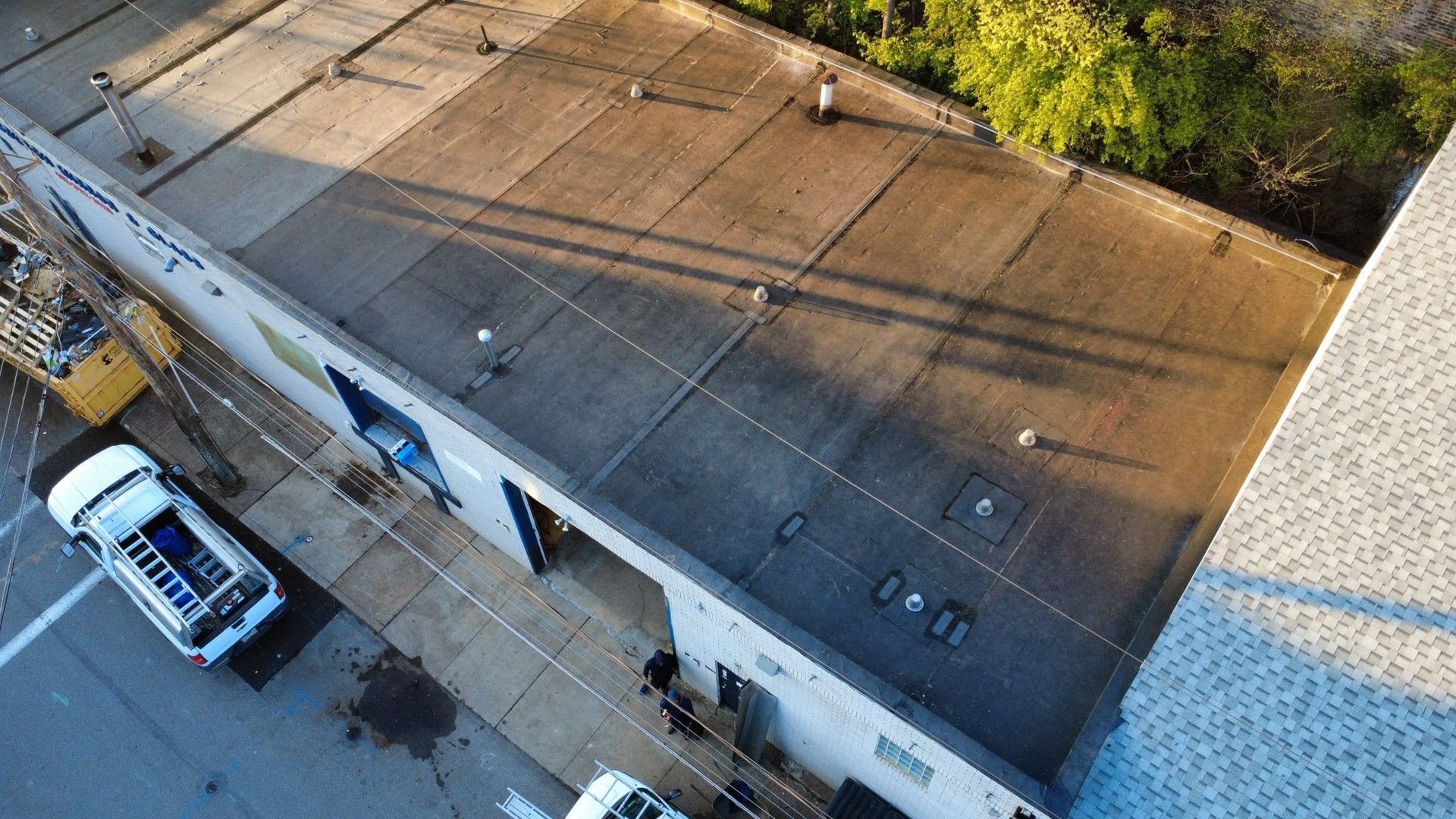
We are MuleHide certified for .060 EPDM rubber roofing, MuleHide two ply low slope systems and MuleHide silicone coatings. On steep slope sections of mixed commercial buildings we are an Atlas PRO+ Platinum contractor, which allows us to offer the Atlas fifty year warranty on complete Atlas systems. When a contractor tells you they are certified, ask which manufacturer, which products, and whether the warranty they are quoting is a manufacturer system warranty or only their own workmanship guarantee. Both matter. A good proposal states each one in writing with its term.
BBB accreditation is a secondary signal. We hold a BBB A+ rating, and we would tell you to read the complaint history on any contractor you are considering, including ours.
Repair, coating or replacement: how a good contractor decides
The most common question we get from building owners is whether to repair or replace a commercial roof. The honest answer depends on three things: how old the system is, how much of it is compromised, and whether the insulation and deck underneath are still dry. A contractor who answers that question from the parking lot is guessing.
The twenty five percent rule
The industry benchmark is simple. If more than roughly a quarter of the roof area is damaged, or more than a quarter of the insulation tests wet, replacement is usually the better investment than repair. Below that line, targeted repair or a restoration coating is often the right call, provided the deck is sound.
Core cuts and moisture surveys
Before we quote any large job we take core samples, small cuts straight through the roof assembly, to count the layers, check the insulation for trapped moisture and see how the deck is holding up. On larger roofs an infrared scan or moisture meter survey maps where water is hiding under the membrane. A roof can look fine from above and be soaked through beneath. Those readings set an honest scope of work, so the number in the proposal is the number you pay.
When a silicone coating makes sense
A roof coating is a liquid applied membrane that bonds to the existing surface, seals aging seams and creates a reflective barrier against UV. White silicone performs well in Pittsburgh because it stays flexible through temperature swings and tolerates ponding water. On a structurally sound roof with mostly dry insulation, a fabric reinforced or seamless silicone system can add ten to fifteen years of service with far less disruption than a tear off. It cannot save a roof with a rotted deck or saturated insulation, and any contractor who proposes a coating without a moisture survey is selling product, not a solution.
Typical service life by system
| Roofing system | Typical service life | Notes for Pittsburgh |
|---|---|---|
| EPDM rubber | 20 to 30 years | Flexible through freeze and thaw, seams need periodic attention |
| TPO | 15 to 25 years | Reflective, seams can split with age |
| PVC | 20 to 30 years | Resists grease and chemicals, common on restaurants |
| Modified bitumen, two ply | 20 to 25 years | Durable layered system, good on roofs with foot traffic |
| Built up roof | 20 to 30 years | Older buildings, leaks can be hard to trace |
| Metal | 30 to 45 years | Longest life, watch fasteners and seams for rust |
| Silicone coating over sound roof | 10 to 15 years added | Restoration option, requires dry insulation |
Once a roof passes twenty years and repairs have become a yearly habit, replacement removes the uncertainty from every storm. Our EPDM page and silicone roofing page go deeper on the two systems we install most.
Commercial roof leaks: quick fixes versus permanent repairs
The quick fix is emergency containment. Roofing tape, mastic and a rubberized patch pressed over a split seam will hold water out during a storm, through a freeze when nothing will cure, or until a tenant can be protected. The surface has to be dried first, because sealant will not bond to a wet membrane. Most patches last weeks to a few months. They are useful and they are not permanent.
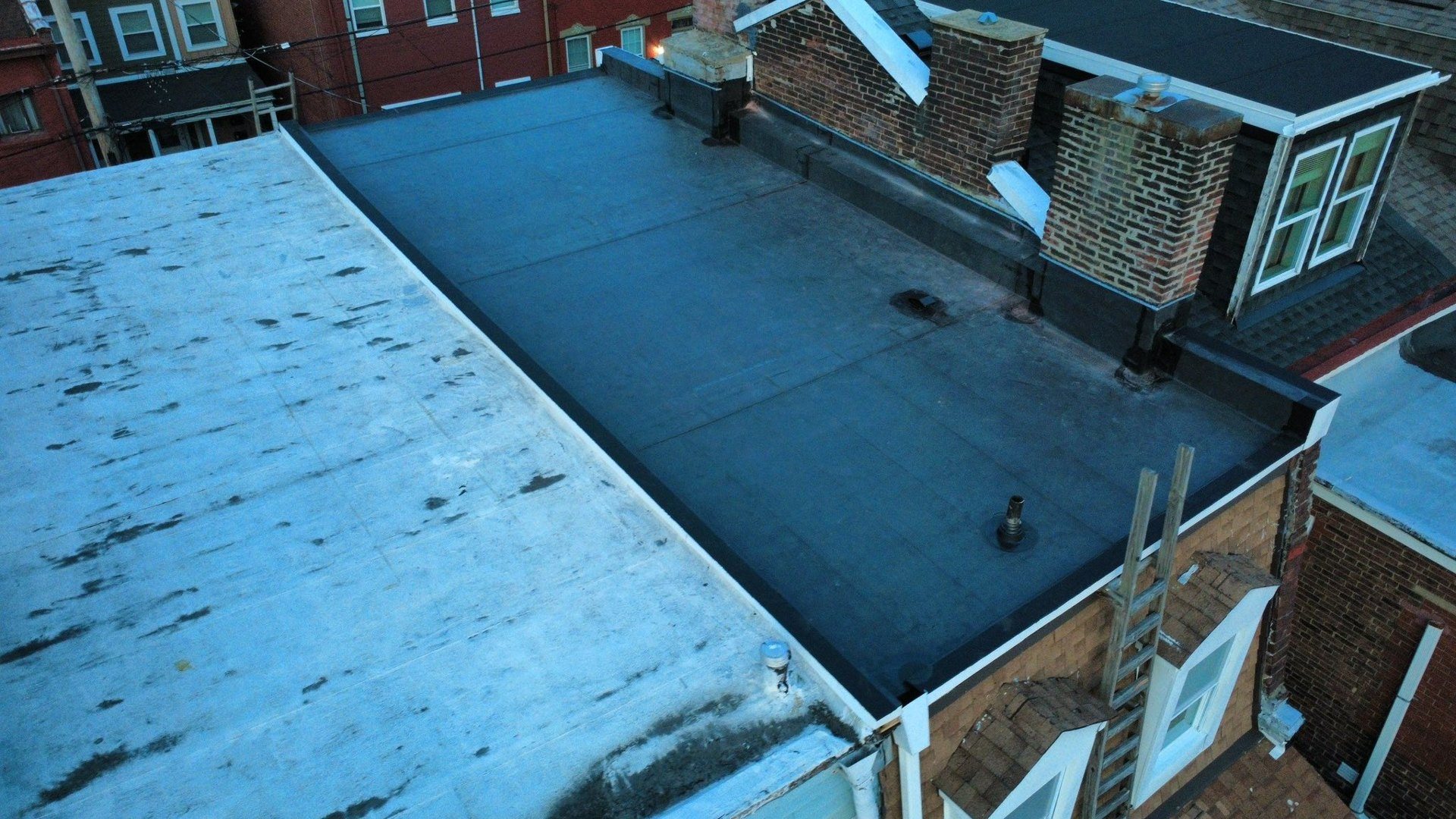
The permanent repair starts by asking why the water got in. Most commercial roof leaks trace back to three causes: membrane damage from foot traffic, equipment or debris; ponding water where a drain or scupper is clogged; and flashing failure at curbs, walls, pipes and HVAC units. A lasting repair cuts out the deteriorated membrane, installs new flashing, seals problem metal seams with fleece backed silicone, and comes with a written warranty.
Finding the leak is its own skill. The wet spot on the ceiling is almost never directly under the breach, because water travels along the deck and follows seams and pipes before it drops. A good contractor starts at the interior stain, works outward across the roof above it, checks every penetration and low spot, and uses a moisture meter rather than guessing. If a new roof is leaking, the usual culprit is a flashing detail or penetration that was never properly tied in, which is a warranty call, not a new bill. Our repair division handles flat, slate, tile and shingle roofs as well as box gutters.
Getting bids: what a good commercial roofing proposal contains
Get at least two or three written proposals, and compare scope before you compare totals. The lowest number is often the one that left something out. A proposal worth signing includes:
- The findings of the inspection, including core cut results, moisture readings and photos of the problem areas.
- The exact system being installed, by manufacturer and product name, with membrane thickness and insulation type and R value where applicable.
- Whether the existing roof is being torn off or covered, and how many existing layers are on the building.
- Flashing details at every wall, curb, drain, pipe and rooftop unit, and who is disconnecting and reconnecting HVAC equipment.
- Drainage changes such as new drains, scuppers or tapered insulation to end ponding.
- Permit responsibility and who is paying the permit fee.
- Both warranties in writing: the manufacturer system warranty with its term and what it covers, and the contractor workmanship warranty.
- A realistic timeline, the crew size, working hours and how the site will be staged and cleaned each day.
- A payment schedule tied to milestones, never full payment up front.
- A change order process for what happens if the deck is worse than expected.
We give every commercial customer a free written estimate that spells all of this out. Cost is driven by square footage, the number of penetrations and curbs, how many layers have to come off, the condition of the deck and insulation, and the system you choose. A contractor who explains those drivers is being straight with you.
Scheduling and preparing your building for the work
A restaurant does not want a summer shutdown, a warehouse cannot lose its holiday weeks and a school wants the work done before the buses return. We build the schedule around the owner, which sometimes means early mornings, off peak hours or phasing the roof in sections so part of it is always watertight.
| Project type | Typical timeline |
|---|---|
| Small, open low slope roof | A few days |
| Mid sized commercial building | One to two weeks |
| Large or complex roof with many penetrations | Three to five weeks or more |
| Silicone restoration coating | A few days once the roof is dry |
Weather moves these numbers. Most crews stop work when sustained winds reach the low twenties in miles per hour, and single ply membranes and coatings need the surface temperature above roughly forty to fifty degrees to cure properly. Dry and above forty is workable; wet or icy is not, whatever the thermometer says. We work through the Pittsburgh winter on repairs and on replacements when conditions allow.
Before the crew arrives, clear dead equipment and stored material off the roof, give live HVAC units and vents clear space, cover sensitive equipment inside, warn staff and tenants about noise, and agree on where the dumpster, chute and hoist will go so customers are never boxed in.
Inspections and maintenance plans after the job
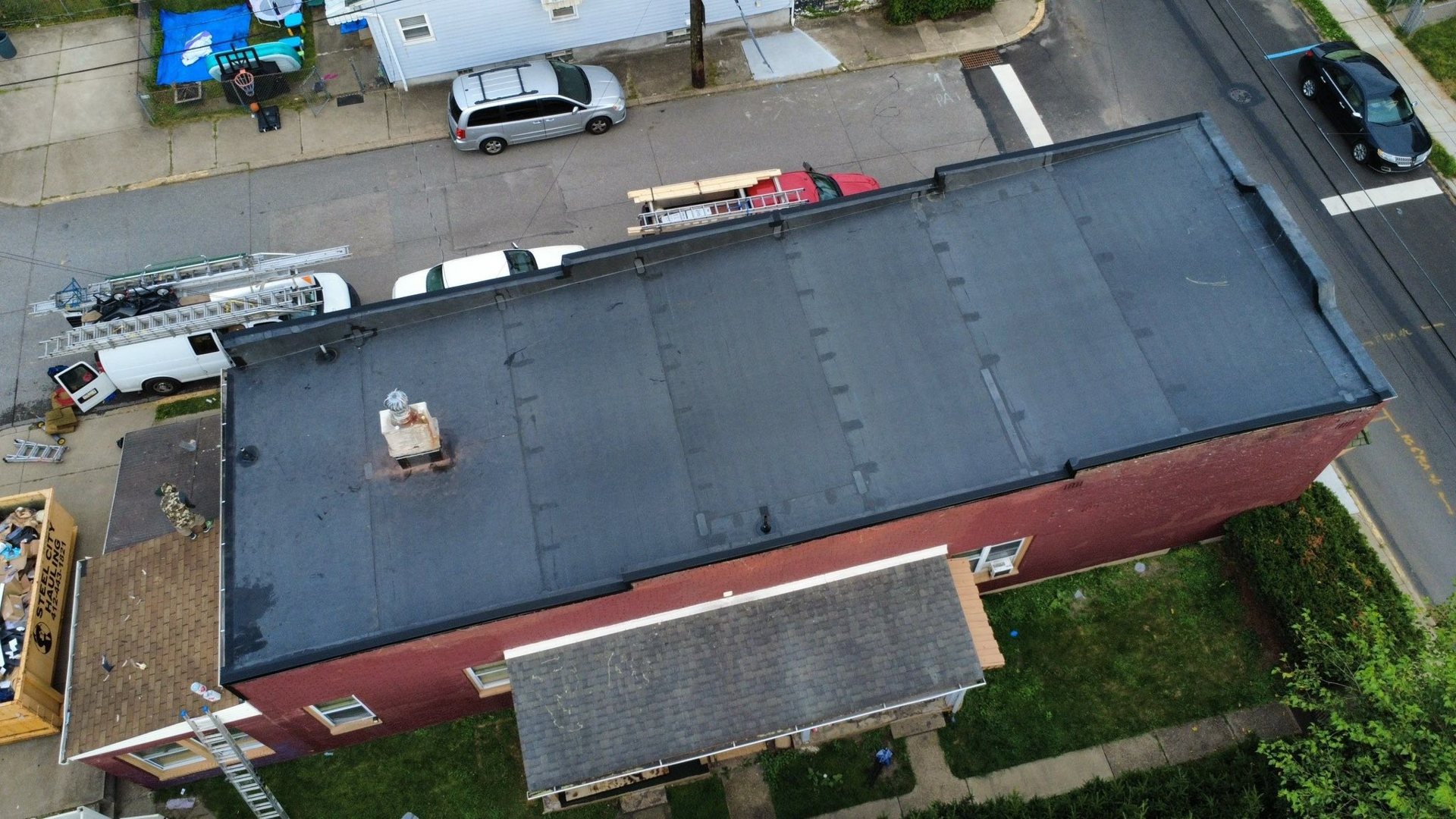
The contractor relationship should not end when the last truck leaves. The NRCA recommends inspecting commercial roofs at least twice a year, and in Pittsburgh the right windows are early spring after the freeze and thaw season and fall before snow. Add an inspection after any hail, high wind or heavy snow event.
A maintenance visit should cover the membrane, every seam and flashing, all drains and scuppers, edge metal and sealant at penetrations. Clogged drains are the most common cause of ponding water, and clearing them before the first heavy spring rain is the cheapest maintenance there is. Ask whether the contractor offers a maintenance plan with a written report and photos after each visit, because that documentation is what your insurer will want if you ever file a storm claim.
Questions to ask a commercial roofing contractor in Pittsburgh
- What is your PA HIC number, and can your insurance agent send me a current certificate directly?
- Which manufacturers have certified you, for which products, and will this job carry a manufacturer system warranty?
- Will you take core cuts or run a moisture survey before you quote, and will I see the results?
- Who pulls the City of Pittsburgh or municipal permit?
- Can you show me three commercial roofs you installed in the Pittsburgh area that are more than five years old?
- What happens if you open the roof and find a rotted deck or wet insulation?
- What is your workmanship warranty, and what does it exclude?
- How do you handle an emergency leak call, and what is your response time in a storm?
Red flags that should end the conversation
- Demands for full payment, or a large deposit, before any material is delivered.
- A bid far below the others with no explanation of what was left out.
- No physical local address, or an out of state crew that appeared after a storm.
- Refusal to put the warranty terms in writing.
- A coating or overlay recommended without any moisture testing.
Frequently asked questions
How do I choose a commercial roofer in Pittsburgh?
Verify the PA HIC registration and a current insurance certificate, confirm manufacturer certification for the system being proposed, read recent reviews and the BBB record, ask for local commercial references older than five years, and compare at least two detailed written proposals on scope rather than on total. Hire the company that inspected the roof properly before quoting it.
Should I repair or replace my commercial roof?
If the roof is under fifteen years old and the damage is isolated, repair it. If more than about a quarter of the roof or its insulation is compromised, the deck is soft, or repairs have become an annual event, replacement is the better investment. A moisture survey and core cuts settle the question; a visual guess does not.
How often should a commercial roof be inspected?
Twice a year, in early spring and in fall, plus after any major hail, wind or snow event. Each visit should check seams, flashings, drains, edge metal and sealant at penetrations, and should end with a written report and photos you can keep for insurance purposes.
How long does a commercial roof replacement take?
A small open roof can be done in days. A mid sized building usually takes one to two weeks, and a large roof with many curbs and penetrations can run three to five weeks or more. Weather, permits and the condition of the deck underneath all move the schedule, which is why a realistic window should come after the inspection, not before.
Does commercial insurance cover roof leaks?
Usually only when the damage is sudden, such as a wind, hail or falling tree event. Leaks caused by age, wear or deferred maintenance are generally excluded. Keep inspection reports and dated photos so you can show the roof was in good condition before the storm.
Talk to a Pittsburgh commercial roofing contractor
If you own or manage a commercial building anywhere in the Pittsburgh area, we will walk the roof with you, take the core cuts, and hand you a free written estimate that spells out the system, the warranties and the schedule. No pressure and no gimmicks. Contact Malick Brothers Exteriors or call (412) 616-0191 to schedule a commercial roof inspection.