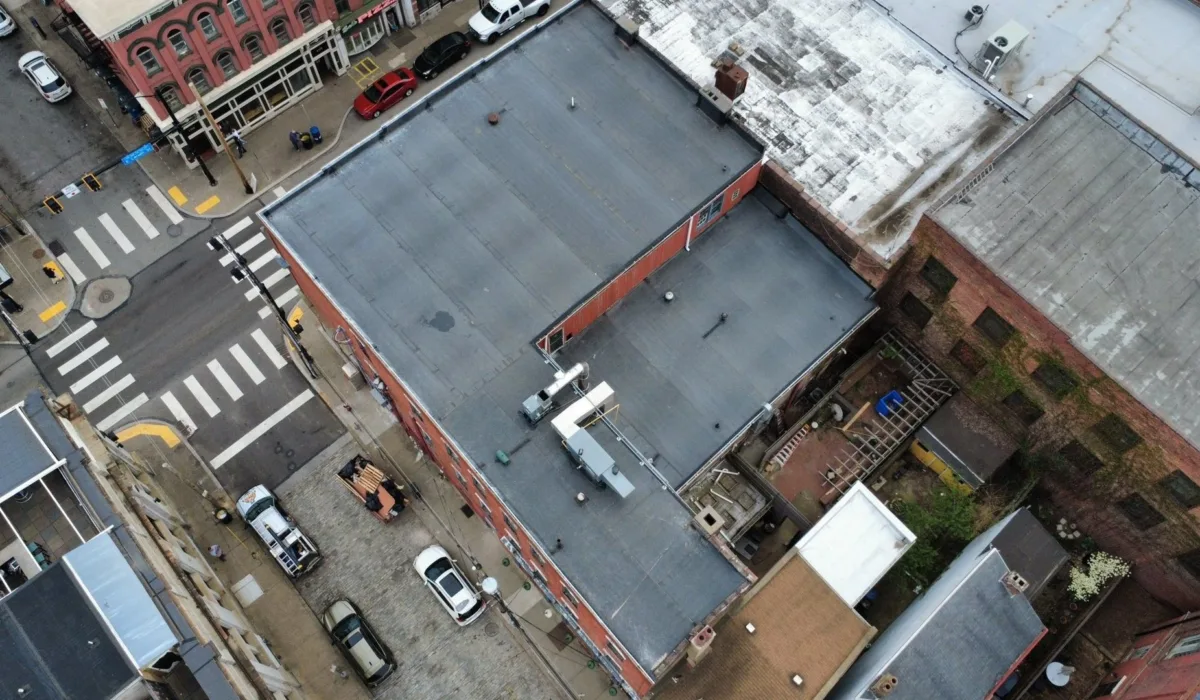
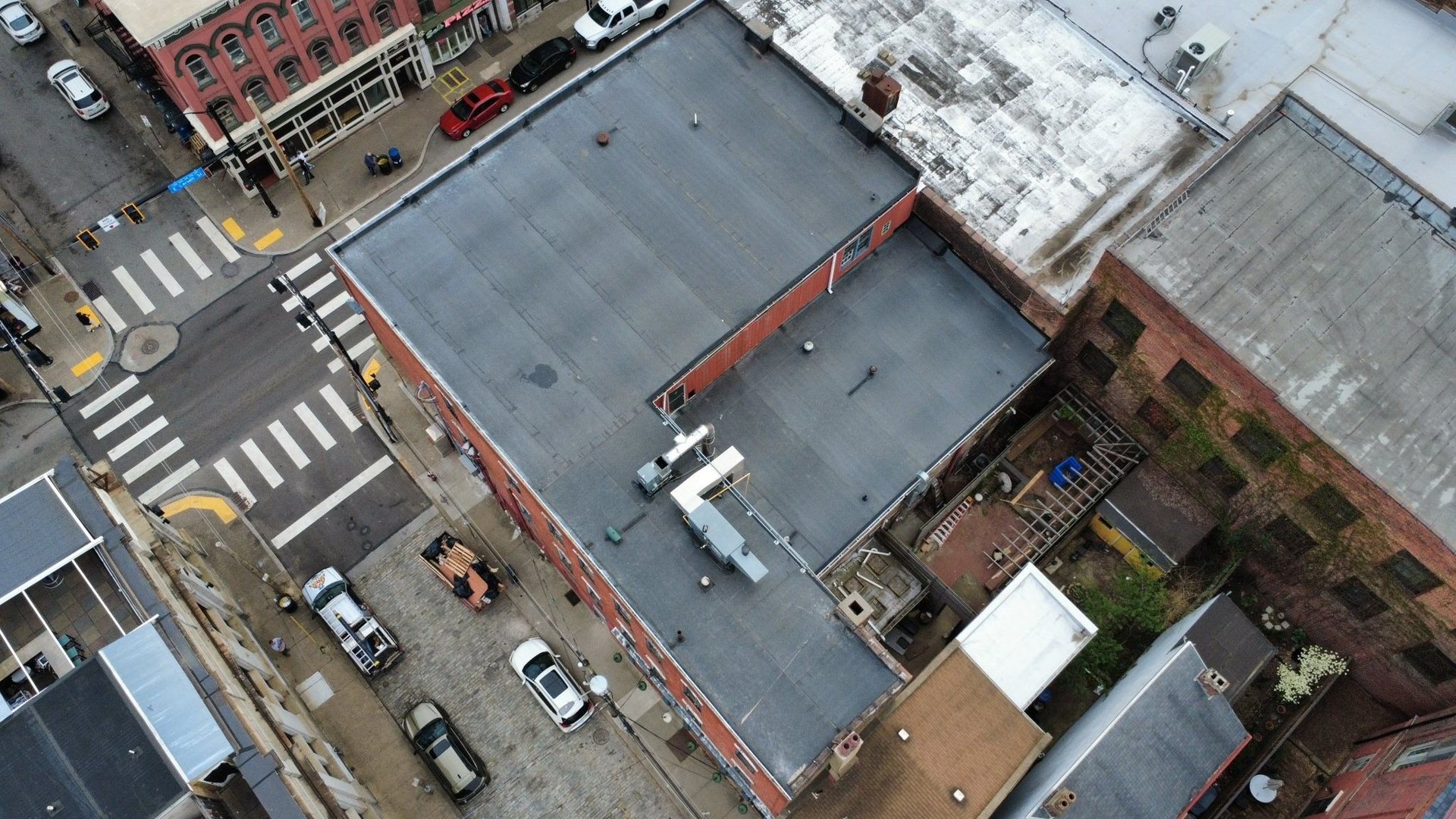
Most commercial roofs in Pittsburgh are flat or low slope, and most of them are old. Warehouses in the Strip District, storefronts along Perry Highway, apartment buildings in the city neighborhoods and church halls in the South Hills all sit under membranes, built up systems or metal that has been patched for decades. When one of those roofs starts leaking, the owner needs to know what kind of roof it is, what the realistic options are, and how to tell a qualified commercial roofer from a storm chaser.
This guide answers those questions. We are Malick Brothers Exteriors, a family owned roofing company based at 500 Perry Highway in West View. We are MuleHide certified for low slope systems and we handle commercial roofing in Pittsburgh across the North Hills, the city and the South Hills. Below is what we tell every building owner who calls us.
How Commercial Roofing in Pittsburgh Differs from Residential
A house roof sheds water by slope. A commercial roof usually cannot. Most commercial buildings in Allegheny County have a pitch of a quarter inch per foot or less, so the roof has to be a sealed, continuous waterproof layer that drains through internal drains, scuppers or box gutters. That changes everything about how it is built and how it fails.
- Membranes instead of shingles. EPDM rubber, TPO, PVC, modified bitumen and fluid applied silicone coatings are the common systems. Shingles only appear on pitched sections like mansards and entry canopies.
- Drainage is the whole game. Ponding water, clogged drains and failed box gutters cause more commercial leaks in Pittsburgh than membrane failures do.
- Rooftop equipment. HVAC curbs, vent stacks, satellite mounts and pipe penetrations each need flashing details that a residential crew rarely sees.
- Insulation and the building envelope. Commercial reroofs often add polyiso insulation and cover boards, which affects energy use and code compliance.
- Occupied buildings. Tenants, customers and deliveries keep moving while the work happens, so staging, safety and scheduling matter as much as the roofing.
The Pittsburgh climate adds its own pressure. Our freeze and thaw cycles open seams and flashings over the winter, spring rain finds every pinhole, and summer heat bakes an old black EPDM roof until the seams let go. A roofer who works these buildings every week knows where to look first.
The commercial roofing systems we install and repair
We are a MuleHide certified contractor. MuleHide is a low slope manufacturer that has been in the roofing business since 1906, and certification means our installers are trained on its systems and our complete installations qualify for manufacturer backed warranties. Here is how the main options compare for a Pittsburgh building.
| System | Best fit | What to know in Pittsburgh |
|---|---|---|
| EPDM rubber (.060) | Flat roofs on warehouses, apartment buildings, storefronts | Proven in freeze and thaw, simple to repair, dark color absorbs summer heat unless a coating is added |
| 2 ply modified bitumen | Low slope roofs with foot traffic or rooftop equipment | Tough, puncture resistant surface, good for roofs with many penetrations |
| Silicone coating | Aging EPDM, metal or modified bitumen roofs that are still sound | Extends roof life without a tear off, reflective white finish, also used on box gutters |
| Standing seam metal | Pitched commercial roofs, churches, retail, mixed use | Long service life, sheds snow, higher material cost |
| Asphalt shingles (Atlas) | Pitched sections, mansards, small commercial buildings | Familiar look, fastest installation, Atlas 50 year warranty on complete Atlas systems |
EPDM: the Pittsburgh workhorse
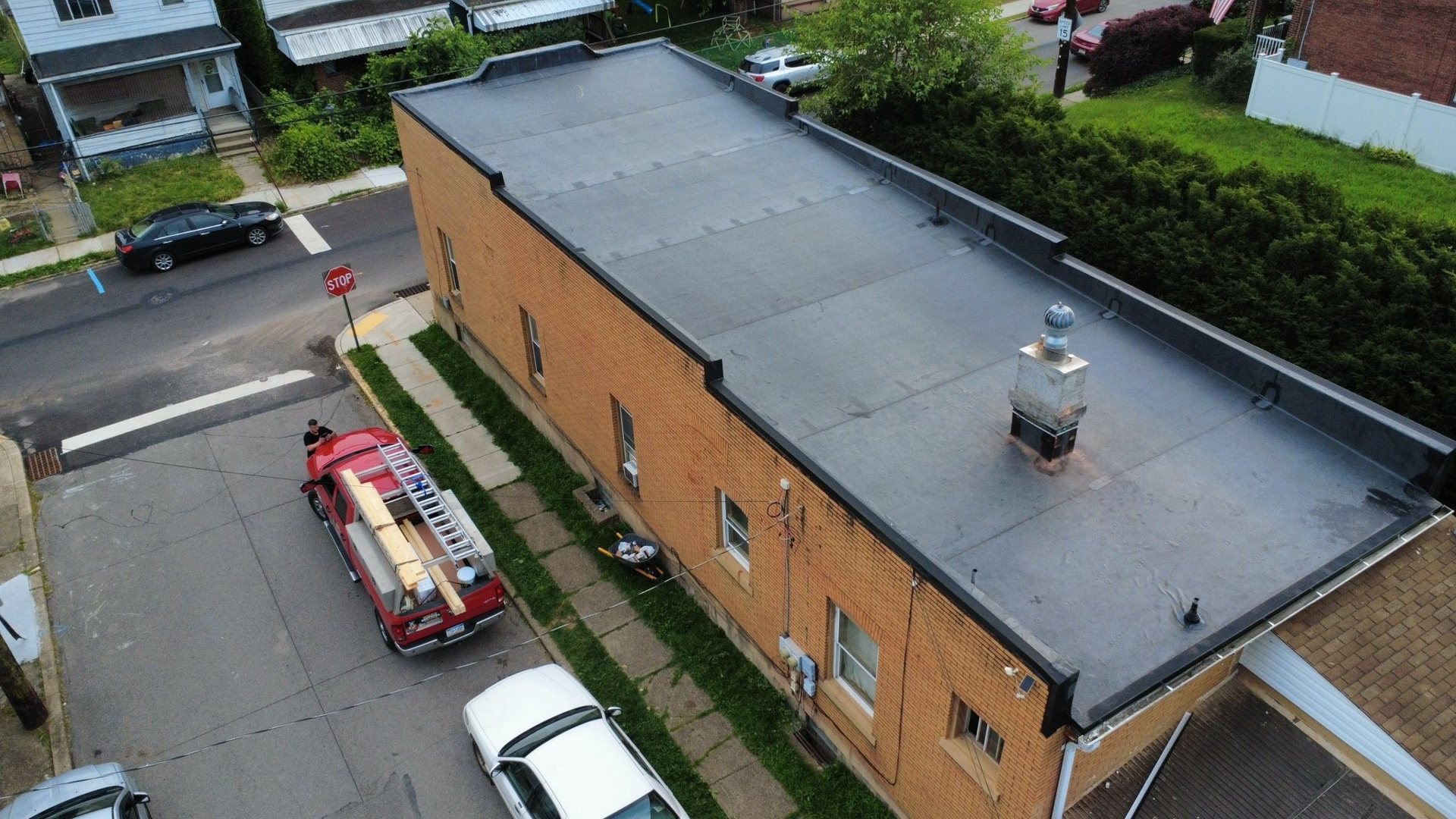
Most of the commercial roofs we replace get a MuleHide .060 EPDM system. In 2025 alone we installed EPDM on a glass company building, a McKees Rocks apartment building and a Glenshaw commercial roof, and we paired EPDM with Atlas shingles on mixed pitch buildings in Mt. Washington and Glenshaw. The .060 thickness is the heavier commercial grade, and fully adhered installation keeps the membrane from fluttering in the wind that comes up the river valleys. Read more about the material on our EPDM roofing page.
Silicone coatings: when a tear off is not needed yet
If the existing membrane or metal roof is dry underneath and the seams can be reinforced, a MuleHide silicone coating system can add years of service at a fraction of the disruption of a full replacement. We use the same silicone on the box gutters that line so many older Pittsburgh commercial buildings, which is often where the water is actually getting in. Details are on our silicone roofing page.
Metal and slate on pitched commercial roofs
Churches, schools and older retail buildings across the city often have steep roofs in slate or metal. We install standing seam metal roofing and our repair division handles slate, tile and box gutter work, so one contractor can cover the whole building instead of three.
Commercial roofing services to expect from a Pittsburgh contractor
A qualified commercial roofer should be able to offer all of the following, and explain which one your roof actually needs rather than defaulting to a replacement.
- Roof inspection and written report. A walk of the entire roof, every drain, every curb and every seam, with photos. We document the condition before we recommend anything.
- Leak repair. Seam repairs, flashing replacement, drain and scupper repair, ponding fixes. Many Pittsburgh commercial leaks are a flashing problem, not a roof problem.
- Roof restoration with coatings. Silicone systems over sound EPDM, modified bitumen or metal.
- Full replacement. Tear off, new insulation and cover board where required, new membrane, new edge metal and flashings, manufacturer warranty registration.
- Box gutter and drainage work. Relining, coating or rebuilding box gutters, resizing downspouts, adding overflow scuppers.
- Preventive maintenance. Spring and fall visits to clear drains, check seams and reseal penetrations before small problems become interior damage.
- Storm and emergency response. Temporary dry in after wind or ice damage, documentation for the insurance claim, then a permanent repair.
What drives the cost of a commercial roof in Pittsburgh
Every building owner wants a number, and every honest roofer will tell you the number comes from the roof, not from a chart. These are the factors that move a commercial roofing estimate up or down:
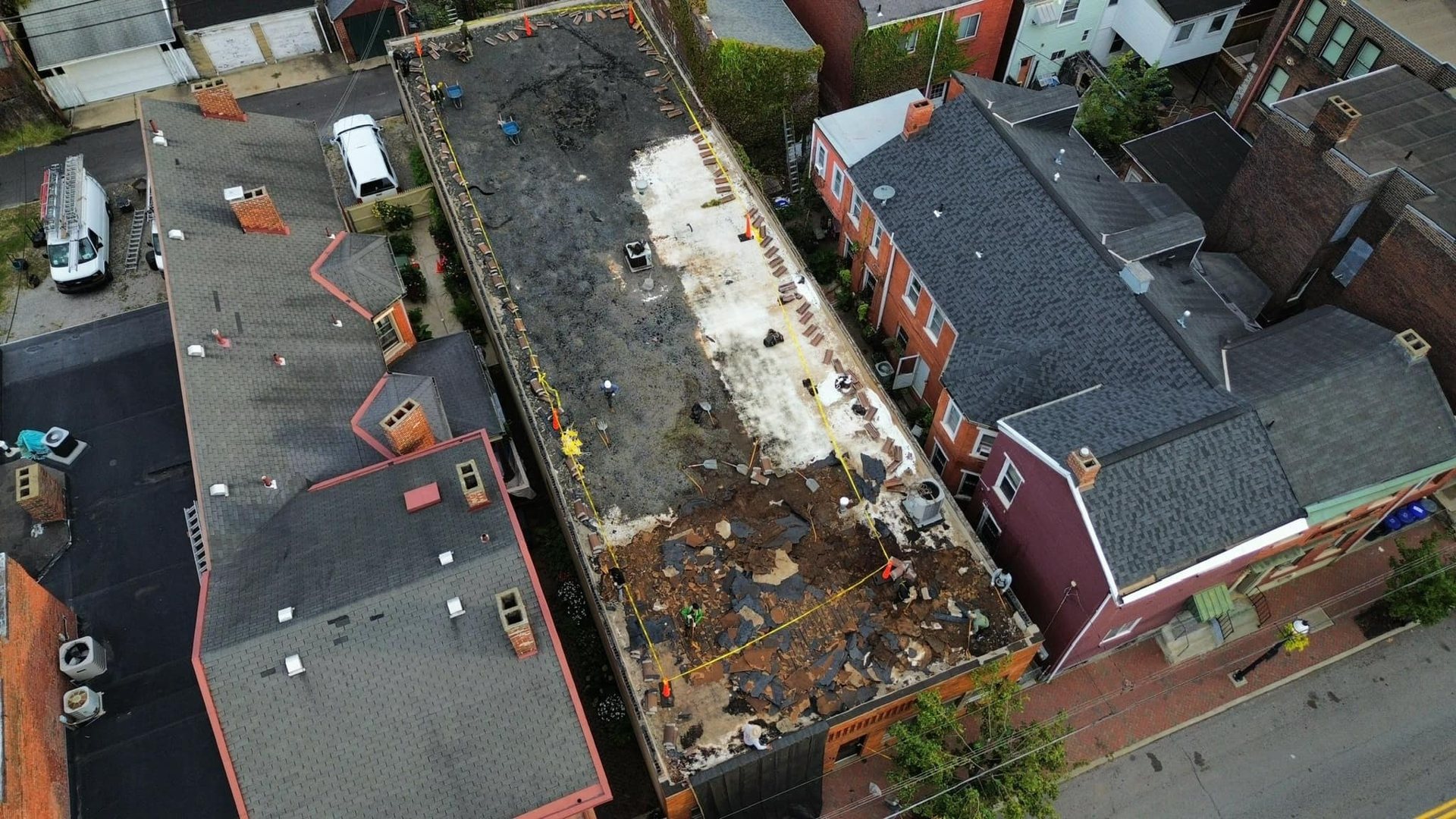
- Square footage and access. A 4,000 square foot roof on a two story storefront with alley access prices very differently from the same roof on a five story building that needs a crane.
- Tear off versus overlay. Removing one or more existing roof layers adds labor and disposal. Pennsylvania adopts the International Building Code, which limits how many roof layers can remain, so some roofs must come off.
- Insulation and cover board. Adding polyiso to meet current energy code is often required on a full replacement.
- Penetrations and rooftop units. Every HVAC curb, drain, vent and skylight is a detail that takes time to flash correctly.
- System choice. A silicone restoration costs less than an EPDM replacement, which usually costs less than metal.
- Warranty level. Manufacturer system warranties require specific components and inspections, which add cost but transfer risk to the manufacturer.
We provide a free written estimate that lists the system, the thickness, the insulation, the flashing details and the warranty so you can compare it line by line with any other bid. We also offer financing for owners who would rather spread the cost of a replacement.
How to vet commercial roofing contractors in Pittsburgh
Pennsylvania does not license roofers at the state level. Anyone doing home improvement work over a small annual threshold must register with the Attorney General as a Home Improvement Contractor, and you can check any contractor's registration on the PA Attorney General HIC lookup. Our number is PA174918. Beyond registration, ask for these:
- Manufacturer certification for the system being proposed. Ask to see it. For low slope work we are MuleHide certified; for shingles we are an Atlas PRO+ Platinum contractor.
- Certificate of insurance naming your building, with general liability and workers compensation. Call the agent to confirm it is current.
- Local commercial references you can drive past. Ask for the address and the year.
- A written scope that names the membrane thickness, the insulation, the edge metal and the warranty term. Vague bids hide vague work.
- BBB record. We have been BBB accredited with an A+ rating since 2022 with zero complaints.
- Safety practices. Fall protection and a plan for keeping tenants and customers clear of the work zone.
Be careful with any contractor who shows up unannounced after a storm, asks for a large deposit before materials arrive, or pressures you to sign the same day. Those are the warning signs the National Roofing Contractors Association and the Attorney General both flag.
What a commercial roofing project looks like with Malick Brothers
We are a small company by design. Ryan Malick founded the business in 2022, he still walks the roofs, and the crew that installs your roof works for us, not a subcontractor. Here is how a typical commercial job runs:
- Inspection. We walk the roof, photograph every problem area, probe for wet insulation and check the drains and gutters.
- Options. You get a written estimate with the repair option, the restoration option and the replacement option where each one makes sense, with the warranty for each.
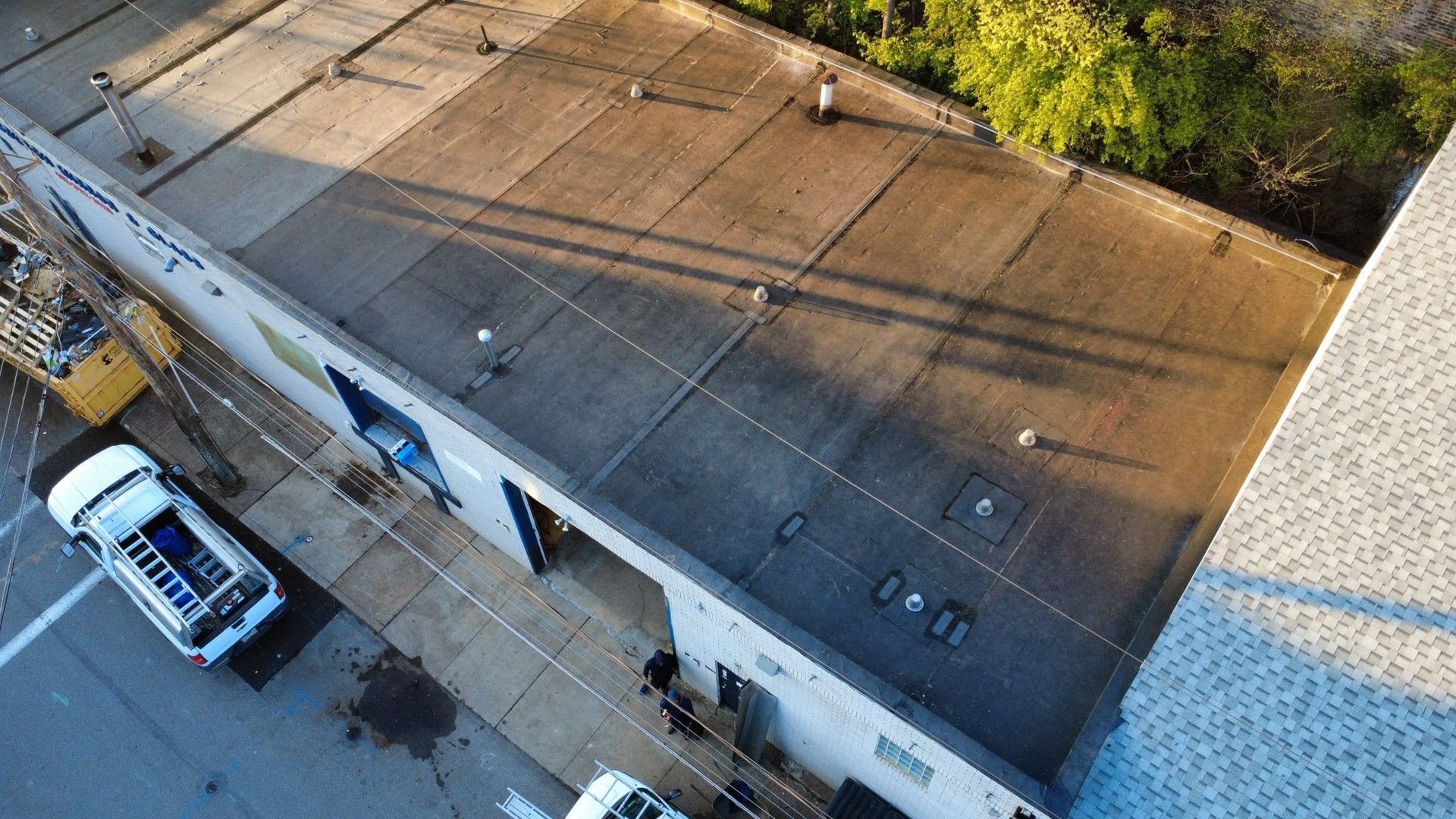
- Scheduling around your business. We plan material deliveries, dumpster placement and work hours around your tenants and customers. We photograph the whole process so you can see the roof deck, the insulation and the finished membrane without climbing a ladder.
- Installation. Tear off, deck repairs, insulation, membrane, flashings and edge metal, with the manufacturer's details followed so the warranty is valid.
- Close out. Final walk, debris removal, warranty paperwork and a maintenance schedule.
We work from West View, in the North Hills, with crews working across the North Hills, the city neighborhoods and the South Hills. That matters when you have a leak at 7 in the morning and a tenant on the phone. You can see our full coverage on our service areas page.
Energy efficiency and your commercial roof
The roof is the largest surface on the building and the easiest place to cut heating and cooling costs. On a replacement, adding insulation under the membrane is the biggest win. On a restoration, a white silicone coating reflects summer sun instead of absorbing it the way old black EPDM does. The U.S. Department of Energy's cool roof guide explains the tradeoffs; in Pittsburgh's climate the insulation upgrade usually pays back faster than the reflective surface alone.
Frequently asked questions about commercial roofing in Pittsburgh
How long does a commercial roof last in Pittsburgh?
A properly installed .060 EPDM roof commonly serves 20 to 30 years here, modified bitumen about 20, standing seam metal 40 or more, and a silicone coating adds roughly 10 to 20 years to a sound roof depending on thickness. Maintenance is the deciding factor. Clogged drains and open seams shorten any of those numbers.
Can you repair a commercial roof instead of replacing it?
Often, yes. If the insulation is dry and the membrane is still flexible, seam repairs, new flashings and a coating can buy years. If a probe or core sample shows saturated insulation across large areas, a replacement is the only honest recommendation because trapped water will keep rotting the deck.
What is the best roofing material for a flat roof in Pittsburgh?
For most flat commercial roofs in Allegheny County we recommend .060 EPDM for its track record in freeze and thaw and its ease of repair. Roofs with heavy foot traffic or many rooftop units are better served by a 2 ply modified bitumen system. Buildings that want a reflective surface can coat either one with silicone.
Does a commercial roof replacement need a permit in Pittsburgh?
Most municipalities around Pittsburgh require a building permit for a commercial reroof, and some inspect the deck before the new roof goes on. Check with your local code office. We handle the permit as part of the job. A contractor who tells you no permit is needed should be asked to put that in writing.
How do I tell if a commercial roofer is honest?
Look for a PA HIC registration you can verify, a current certificate of insurance, manufacturer certification for the system quoted, and a written scope with product names and thicknesses. Honest roofers show you photos of the problem, offer repair as well as replacement when repair is viable, and never ask you to sign on the first visit.
Get a free commercial roof inspection
If your building has a leak, a roof you are not sure about, or an insurance claim that needs documentation, we will walk the roof and give you a written estimate with real options. We serve commercial property owners across the North Hills, the city of Pittsburgh and the South Hills. Contact Malick Brothers Exteriors or call (412) 616-0191 to schedule.