Does roof replacement include gutters? In most contracts, no. A standard roof replacement covers tearing off the old shingles, repairing bad decking, installing new underlayment, drip edge, flashing, ventilation and shingles. Gutters and downspouts are a separate line item unless you ask for them. That surprises many Pittsburgh homeowners, because the two systems meet where most roof edge leaks start. At Malick Brothers Exteriors we install roofs and we fabricate 5 and 6 inch seamless gutters on site, so we see both sides of that edge every week. This guide explains what happens to your gutters during a roof job, when they stay, when they come off, and when it is the right time to replace them.
If your gutters are sagging, leaking at the seams or pulling away from the fascia, our gutter services in Pittsburgh can be scheduled on the same day as your residential roof replacement, with one crew and one cleanup.
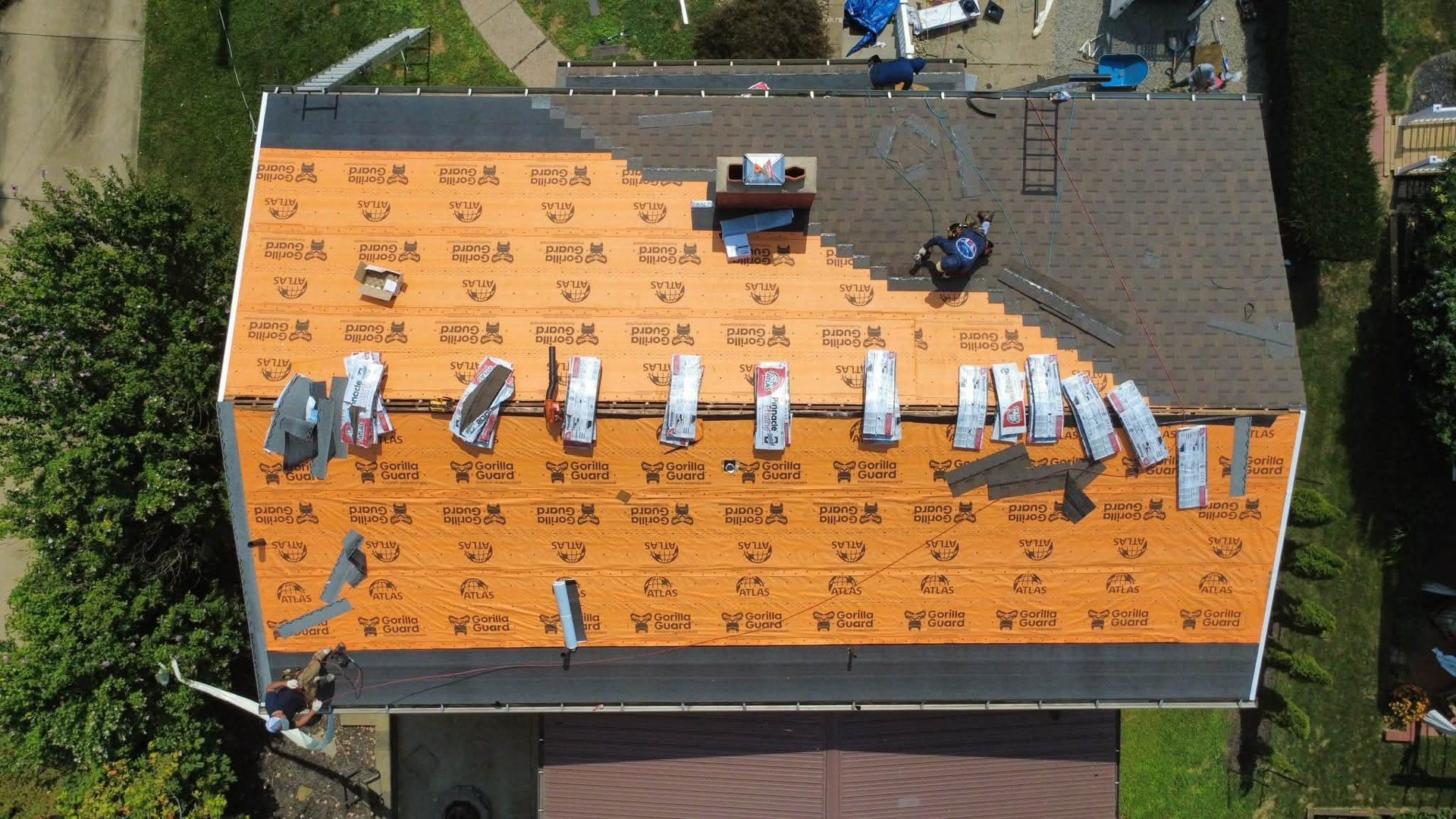
What a roof replacement normally includes
When you compare roofing estimates, look for these items. A complete tear off and replacement should list:
- Removal and disposal of the existing shingles and any old underlayment
- Inspection of the roof deck and replacement of rotted or delaminated sheathing
- Ice and water barrier at the eaves, valleys and penetrations (required in our climate)
- Synthetic underlayment over the rest of the deck
- New metal drip edge at the eaves and rakes
- New step flashing, counter flashing and pipe boots
- Ridge vent or other exhaust ventilation
- Starter strip, field shingles and ridge cap
Gutters, downspouts, fascia and soffit are not on that list. A good roofer will tell you if they need attention, but they are quoted separately so you can decide.
Drip edge and gutter apron: the metal that connects roof and gutter
The reason gutters matter during a roof job comes down to two pieces of bent metal.
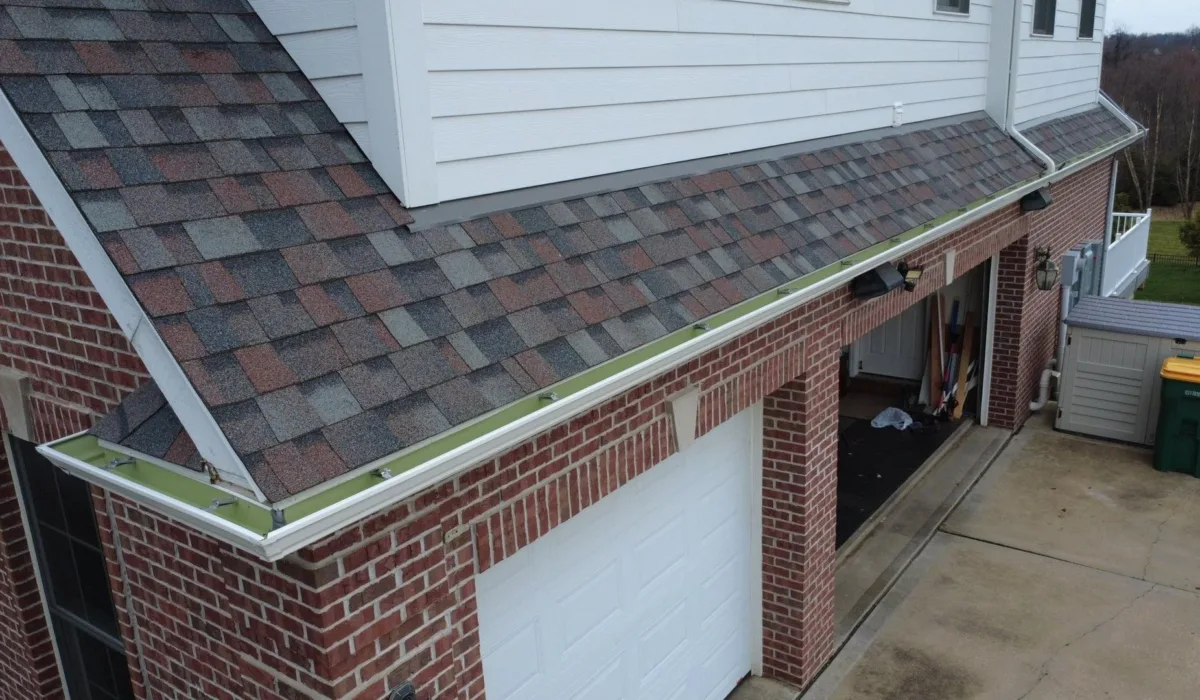
Drip edge is an L shaped strip installed along the eaves and rakes. At the eaves it goes under the ice and water barrier and over the fascia, so water running off the shingles drops into the gutter instead of wicking back under the roof edge. The International Residential Code requires it at eaves and rakes on asphalt shingle roofs (IRC R905.2.8.5), and Pennsylvania municipalities enforce the IRC. Older Pittsburgh homes often never had it; your replacement will add it.
Gutter apron is a wider, more sharply bent version of drip edge made for the eaves. It extends farther down and tucks inside the back of the gutter, so water that runs behind the shingle edge still lands in the trough. We use gutter apron at the eaves on most jobs, especially on low slope porch roofs and on homes with a history of water running behind the gutter and staining the fascia.
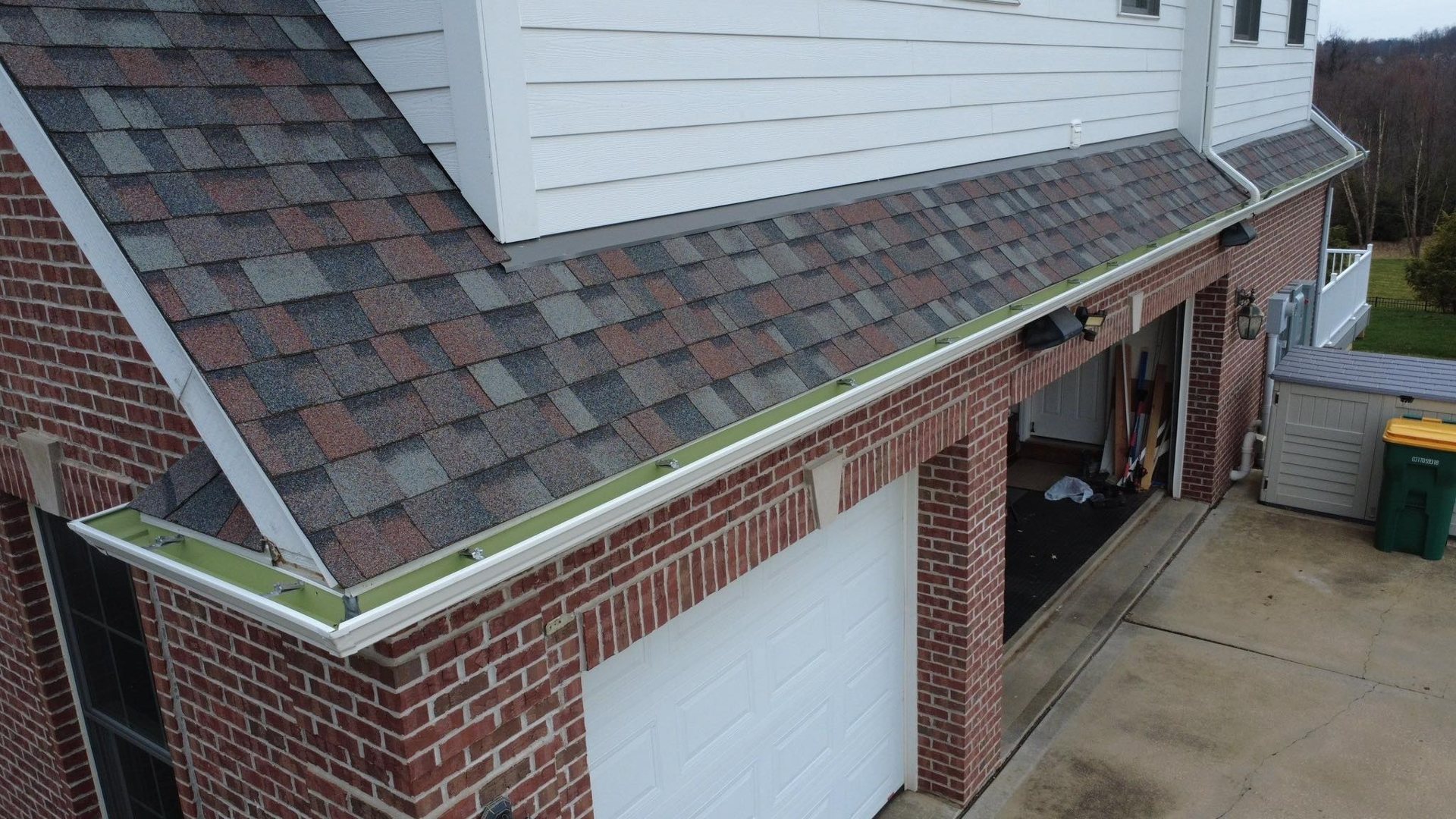
The gutter is hung on the fascia with hidden hangers screwed through the back of the gutter. The drip edge or apron has to slide behind the back of the gutter and over the fascia. If the gutter is tight to the fascia and the old drip edge is nailed in place, the crew has to loosen or remove the gutter to get the new metal in correctly. Skipping that step is how water ends up behind the gutter and rots the fascia.
Do gutters have to be removed when replacing a roof?
Not always. On most of our jobs the gutters stay up through the tear off and are protected. Whether they come down depends on four things.
| Situation | What usually happens |
|---|---|
| Newer seamless gutters, hung on the fascia with hidden hangers, in good shape | Stay in place. Crew loosens hangers where needed to slide drip edge or apron behind the gutter, then resecures. |
| Gutters hung with spikes and ferrules (older style) | Often loosened or removed. Spikes work loose and the back of the gutter is usually already pulling away from the fascia. |
| Gutters attached to the roof deck or over the shingle edge (roof mounted brackets) | Must come off. They sit in the exact spot the new underlayment and drip edge go. |
| Rotted or soft fascia behind the gutter | Must come off. The fascia is replaced, then the gutter is rehung or replaced. |
| Sectional gutters leaking at every seam, sagging, or rusted | Removed and replaced. Rehanging a failed gutter on a new roof is wasted labor. |
| Metal roofing or slate going on | Usually removed. |
When gutters stay, we cover them, keep ladders off them, and after the last shingle goes on we clean the gutters and flush the downspouts, because granules and nails always find their way in.
Do gutter guards need to be removed when replacing a roof?
Yes, in almost every case. Most guard systems either clip under the first course of shingles or screw to the front lip of the gutter. Any guard that slides under the shingles has to come out before tear off, because the shingles it is tucked under are being removed. Guards that only clip to the gutter lip catch tear off debris, so we pull them and reinstall them at the end. If your guards came with a warranty, check whether removal by a roofer affects it before the job starts. Malick Brothers does not sell gutter guards, so we have no reason to push you either way on them.
When it is the right time to replace the gutters too
Can you replace a roof without replacing gutters? Yes, and we do it often. But the roof replacement is the cheapest moment you will ever have to replace gutters, because the ladders, the crew and the dumpster are already there, and the fascia is exposed. Replace them with the roof if you see any of these:
- Seams dripping or white mineral streaks on the fascia below the joints (sectional aluminum or galvanized gutters)
- Gutters pulling away from the house, or a visible gap between the back of the gutter and the fascia
- Sagging sections that hold standing water after a rain
- Peeling paint, soft wood or black staining on the fascia
- Downspouts that are crushed, undersized or dumping at the foundation
- Overflow at the inside corners during heavy summer storms
That last one matters in Pittsburgh. Our summer thunderstorms dump a lot of water in a short time, and a 5 inch gutter on a large or steep roof section will overflow at the corners even when it is clean. That overflow soaks the fascia and runs down to the foundation.
5 inch or 6 inch seamless gutters
We fabricate both sizes on site from aluminum coil in white, black and almond, so each run is one continuous piece from corner to corner with no seams to split. The choice between sizes is about roof area and pitch, not looks.
5 inch K style is the standard residential gutter and handles most ranch homes, Cape Cods and two story colonials with ordinary roof sections. It pairs with 2 by 3 inch downspouts. We installed about 300 feet of white 5 inch seamless gutter on a McCandless home and many 5 inch runs in Ross Township.
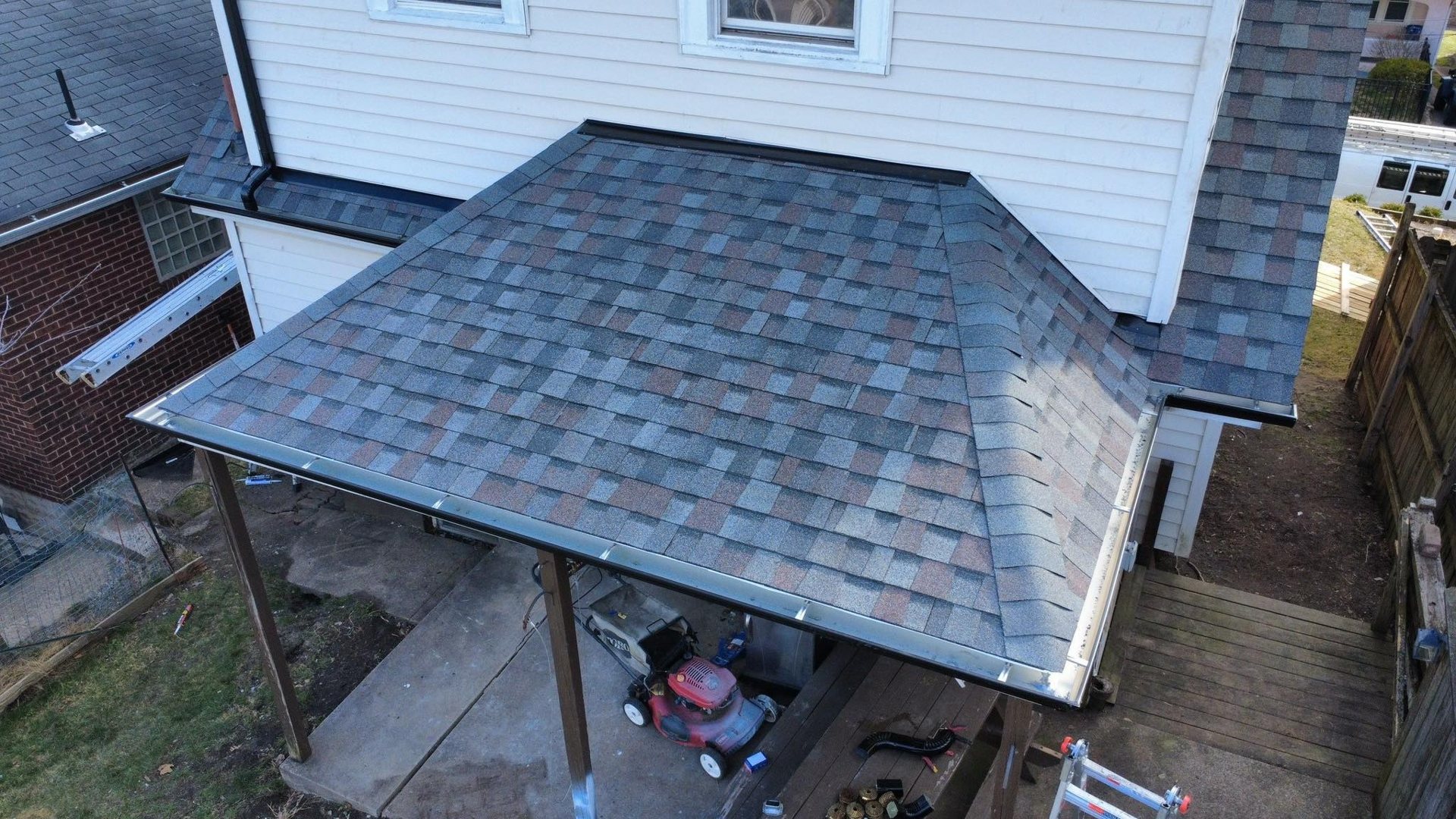
6 inch K style holds noticeably more water and pairs with 3 by 4 inch downspouts. We recommend it for steep roofs, long uninterrupted eaves, roof sections that drain a large area into one corner, and homes where a lower roof catches runoff from an upper roof. On a new roof we size the gutter to the roof, not to whatever was there before.
Along with the gutters we replace fascia and wrap it in aluminum, and we install or repair the vented soffit behind it. See our soffit and fascia page for how that work ties in.
Box gutters on older Pittsburgh homes
Many homes in Bellevue, West View, the city neighborhoods and the older parts of the North Hills were built before 1940 with built in box gutters. Instead of a trough hung on the fascia, the gutter is a wood channel framed into the eave and lined with metal. From the street it looks like part of the cornice.
Box gutters change the conversation in three ways:
- They cannot be "removed and rehung." They are part of the roof structure. The options are to reline them, coat them or rebuild the eave with a conventional gutter, which is a carpentry project.
- The lining has to be addressed with the roof. New shingles and underlayment lap into the gutter lining, so a lining that is pinholed or split will keep leaking into the cornice no matter how good the new roof is.
- They are often the real source of the "roof leak." Water at the top of an interior wall on an old house is very often a failed box gutter, not the shingles.
Our repair division handles box gutters. On a 2026 Bellevue project we installed a new Black Shadow shingle roof and coated the existing box gutters with a MuleHide silicone system rather than tearing the eaves apart, which kept the original cornice and stopped the leaks. Coating works when the lining is sound but tired; rotted wood underneath calls for relining or rebuilding, and we tell you which one you have after we get up there.
Gutters first or roof first?
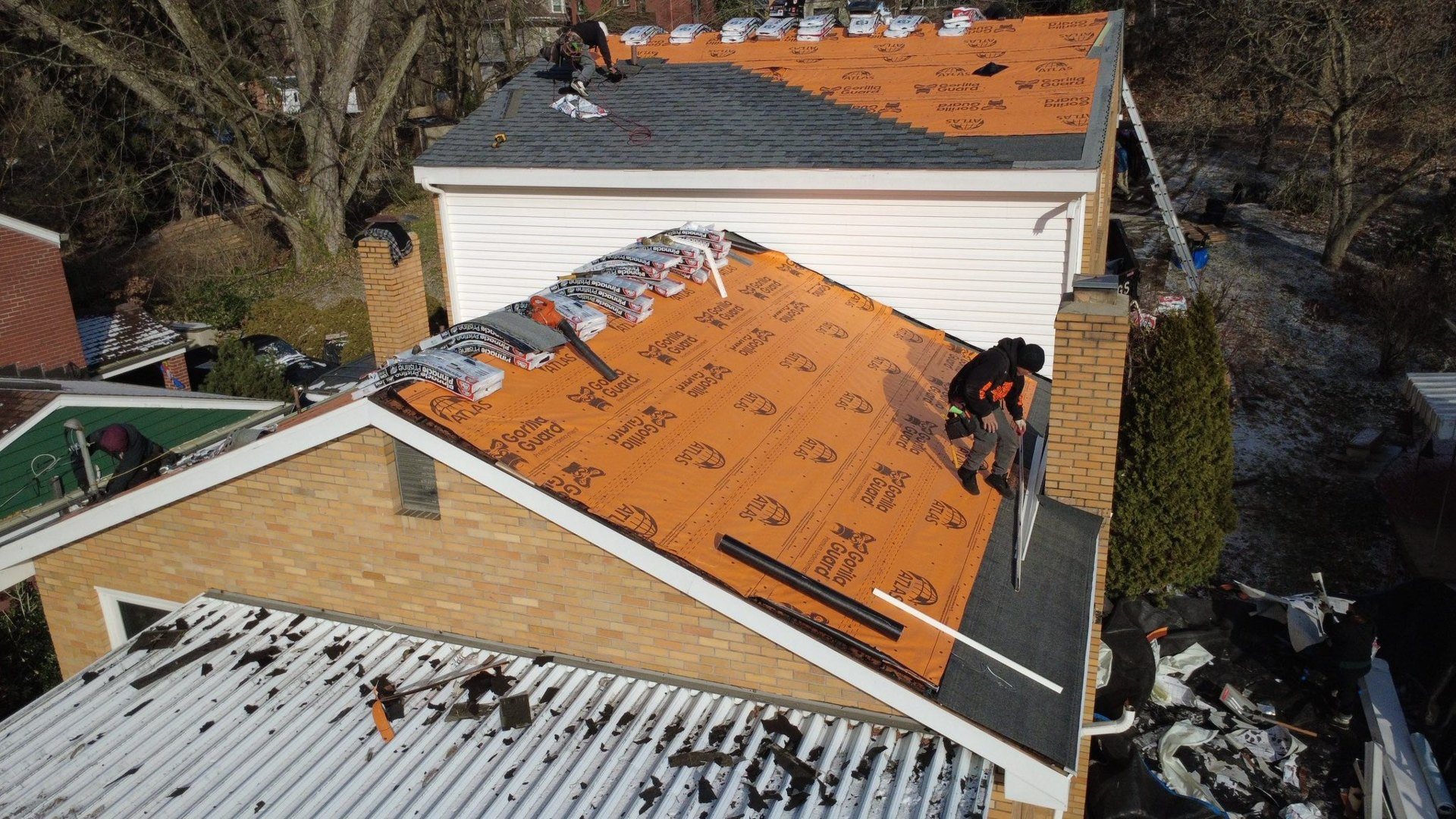
Roof first, gutters second, on the same job or within a few days. The drip edge and apron go on with the roof, the fascia gets repaired, then the new gutters are hung tight to the finished edge at the correct pitch. New gutters installed a month before the roof just get loosened again so the apron can go behind them.
What drives the cost of adding gutters to a roof job
Total linear feet, 5 inch versus 6 inch, the number of downspouts and corners, ladder height, fascia repairs and box gutters are what move the number. Doing the gutters with the roof costs less than two separate projects because setup and cleanup happen once. We list each item separately in a free written estimate, and financing is available for the combined project.
Malick Brothers Exteriors is a family owned company founded in 2022 by Ryan Malick, based at 500 Perry Highway in West View, BBB A+ accredited and registered with the state as PA HIC PA174918. We install the roof and the gutters with our own crews.
Frequently asked questions
Does roof replacement include gutters?
Usually not. A standard roof replacement covers shingles, underlayment, drip edge, flashing and ventilation. Gutters, downspouts, fascia and soffit are quoted as separate items so you can decide whether to include them. Ask for an itemized estimate and you will see exactly what is and is not in the roof price.
Do you have to replace gutters when replacing a roof?
No. If your gutters are seamless, securely hung on the fascia and not leaking, they can stay. Replace them with the roof if they leak at the seams, sag, pull away from the house, or overflow in heavy rain. The roof job is the least expensive time to do it because the crew and equipment are already on site.
Can gutters be removed and reinstalled?
Yes, if they are seamless aluminum in good condition. The crew unscrews the hidden hangers, sets the runs aside, and rehangs them after the drip edge and shingles are done. Old sectional gutters and spike and ferrule gutters rarely survive removal cleanly, and box gutters cannot be removed at all because they are built into the eave.
Can I replace gutters before I install a new roof?
You can, but it is the wrong order. The roofer has to loosen the new gutter to get drip edge and apron behind it, and tear off debris lands in it. Do the roof first and hang the gutters right after. If the old gutters are failing and the roof is still a year away, a repair is usually the better bridge.
Do you remove gutters when replacing a roof on a house with box gutters?
No. Box gutters are framed into the roof edge and lined with metal, so they are part of the roof. During a replacement the lining is inspected and either coated, relined or rebuilt, and the new underlayment and shingles are lapped into it. Treating the box gutter is the step that stops most leaks on older Pittsburgh homes.
What is a gutter apron and do I need one?
A gutter apron is a wide eave flashing that goes under the underlayment, over the fascia and down inside the back of the gutter. It keeps water that runs behind the shingle edge inside the trough. Standard drip edge meets code, but apron does a better job on low slope eaves and on homes that have had water staining behind the gutter.
Get the roof edge done right
If you are planning a roof replacement anywhere in Pittsburgh or the North Hills and want a straight answer on whether your gutters should stay, come off or be replaced, we will look at the roof, the gutters and the fascia together and put everything in one written estimate with separate line items. Contact Malick Brothers Exteriors to schedule your free estimate.