Pittsburgh business owners know spring and summer storms arrive without warning. One afternoon the sky darkens, hail falls, and your commercial property is suddenly at risk. The good news? Most standard commercial property insurance policies do cover hail damage. The challenge lies in understanding your policy, documenting damage properly, and knowing what steps to take when filing a claim.
Commercial roof hail damage insurance claims require attention to detail and clear understanding of policy language. This guide walks you through protecting your Pittsburgh commercial property after a hailstorm.
Understanding Commercial Roof Hail Damage Insurance Coverage
Standard all-perils commercial property insurance policies typically cover sudden damage caused by hail and wind. Your roof falls under the building coverage section, which protects against perils including hail, wind damage, and wind-driven rain. This can qualify you for total or partial roof replacement depending on documented damage extent.
Insurance companies draw clear lines around coverage. Damage related to age, wear and tear, or poor maintenance is excluded. Some policies impose higher deductibles specifically for wind or hail events. Others limit claim filing windows to just 6 to 12 months after the event.
Cosmetic damage exclusions have become increasingly common. If hail impacts appearance but doesn’t affect function, your claim may be denied. Understanding this distinction before filing is essential.
Does Insurance Cover Hail Damage to Commercial Roofs in Pittsburgh? Key Policy Considerations
When reviewing your policy, identify whether you have actual cash value or replacement cost coverage. Actual cash value accounts for depreciation, meaning older roofs receive smaller payouts. Replacement cost coverage provides funds at current prices.
The hail damage commercial roofing claims process depends heavily on timing. Documenting damage immediately strengthens your claim. Waiting months creates opportunities for insurers to attribute damage to wear and tear rather than the storm.
Is Commercial Roofing a Hard Job?
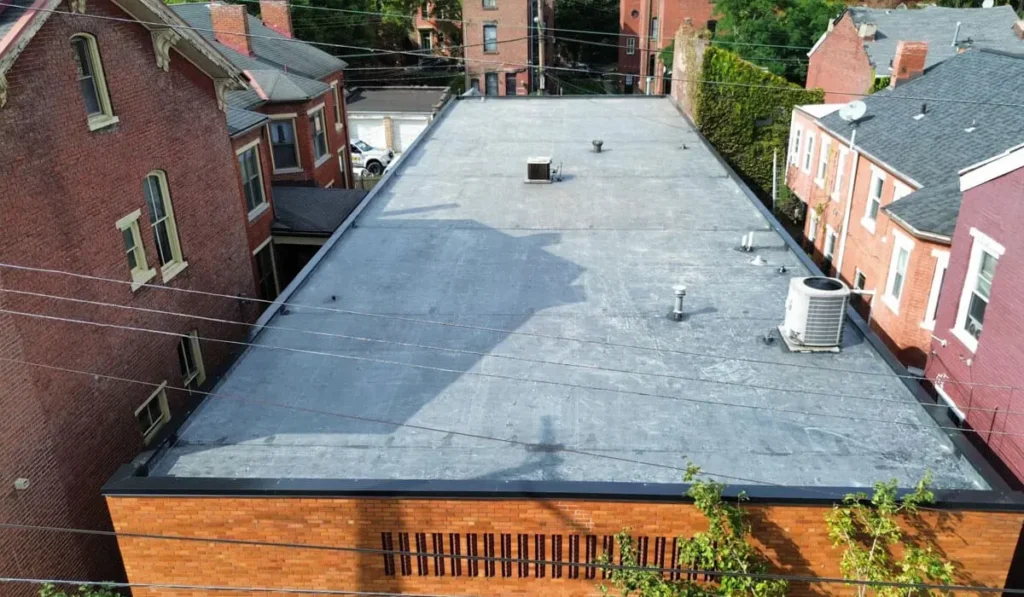
Commercial roofing presents unique challenges residential projects don’t involve. Large flat surfaces require specialized materials, drainage systems, and installation techniques. Workers navigate HVAC units, skylights, and rooftop equipment while maintaining safety standards.
According to industry surveys, roofing ranks among the most physically demanding contractor jobs. Weather conditions impact both safety and timelines. This difficulty translates directly to expertise required for proper roof insurance claims Pittsburgh documentation.
Signs Your Commercial Roof Suffered Hail Damage
Hail damage isn’t always obvious from ground level. Check vehicles parked nearby for dents. Examine outdoor fixtures, HVAC units, and metal vents for impact marks. Look at gutters for accumulated granules stripped from roofing materials. Plants near your building may show stripped leaves or broken stems.
On the roof itself, damage manifests differently depending on materials. Asphalt shows bruising, cracking, and granule loss. Metal components display dents and punctures. Single-ply membranes may have tears or compromised seams leading to water intrusion over time.
Because hail damage can be highly localized, your building may sustain significant damage while neighboring properties appear unaffected. Professional inspection remains the only reliable assessment method after severe weather.
What Questions Should You Ask a Roofing Contractor?
Selecting the right contractor protects both your property and your insurance claim. Start by verifying their physical business location. Ask for their legal business name to research their background independently. Request proof of licensing, liability insurance, and workers’ compensation coverage.
Inquire about experience with commercial roofing insurance claims specifically. Contractors who regularly work with adjusters understand documentation requirements and can provide estimates in formats insurers recognize. Request references from local commercial clients and follow up on them. Get warranty details in writing for both workmanship and materials before any work begins.
What Are the Three Main Components of a Commercial Roofing System?
Understanding your roof’s structure helps you communicate effectively with contractors and adjusters.
| Component | Function | Common Materials |
|---|---|---|
| Roof Deck | Structural foundation supporting all layers | Steel, concrete, wood |
| Insulation | Controls heat transfer and energy efficiency | Polyisocyanurate, polystyrene |
| Membrane | Waterproof barrier against elements | TPO, EPDM, PVC, modified bitumen |
Hail can damage any layer, though membranes show the most visible signs. Impact damage can compress insulation and stress deck connections even when the membrane appears intact.
How Often Should a Commercial Roof Be Inspected?
Industry best practices recommend inspecting commercial roofs twice annually. Schedule spring inspections to assess winter damage and fall inspections to prepare for harsh weather. This catches minor issues before they escalate into major problems.
Always arrange inspection after significant weather events. Hailstorms can cause damage that isn’t immediately apparent from inside your building. Early detection protects your property and ability to file timely claims. For roofs older than ten years, consider increasing frequency.
Filing Your Claim: Does Insurance Cover Hail Damage to Commercial Roofs in Pittsburgh?
Act quickly when damage occurs. Document everything with photographs and videos from multiple angles. Note the storm date and time. Hail melts fast, so capture evidence immediately.
Contact your insurance company promptly. Getting estimates from reputable commercial roof hail damage insurance contractors strengthens your position. Be present when the adjuster visits and point out specific damage areas.
For more guidance, visit Navigating Roof Insurance Claims with Malick Brothers Exteriors.

Protecting Your Investment Through Prevention
Prevention remains your best defense. Installing Class 4 impact-resistant materials reduces hail vulnerability and may qualify you for premium discounts. Consider adding policy endorsements for code upgrades and material matching.
Maintain detailed records of all roof work and inspections. This documentation proves proper maintenance, countering potential insurer arguments that damage resulted from neglect. According to the Insurance Information Institute, thorough documentation significantly improves claim outcomes.
Working with Professionals After Storm Damage
Partner with licensed professionals who understand both commercial roofing and insurance claims. Reputable contractors identify damage untrained eyes miss and document findings in formats insurers accept.
Avoid storm chasers who appear with aggressive tactics after weather events. These transient contractors often provide substandard work and disappear before warranty issues surface. Verify local presence, references, and insurance before signing agreements.
Final Thoughts
The answer to whether insurance covers hail damage to commercial roofs in Pittsburgh is generally yes, but details matter enormously. Your policy language, documentation quality, and response timing all influence outcomes. Understanding coverage limitations helps you avoid unpleasant surprises during the claims process.
Invest in professional inspections, maintain thorough records, and work with experienced contractors who understand commercial roofing. These steps protect your commercial property investment and ensure you receive fair compensation when Pittsburgh’s unpredictable weather causes damage to your building.