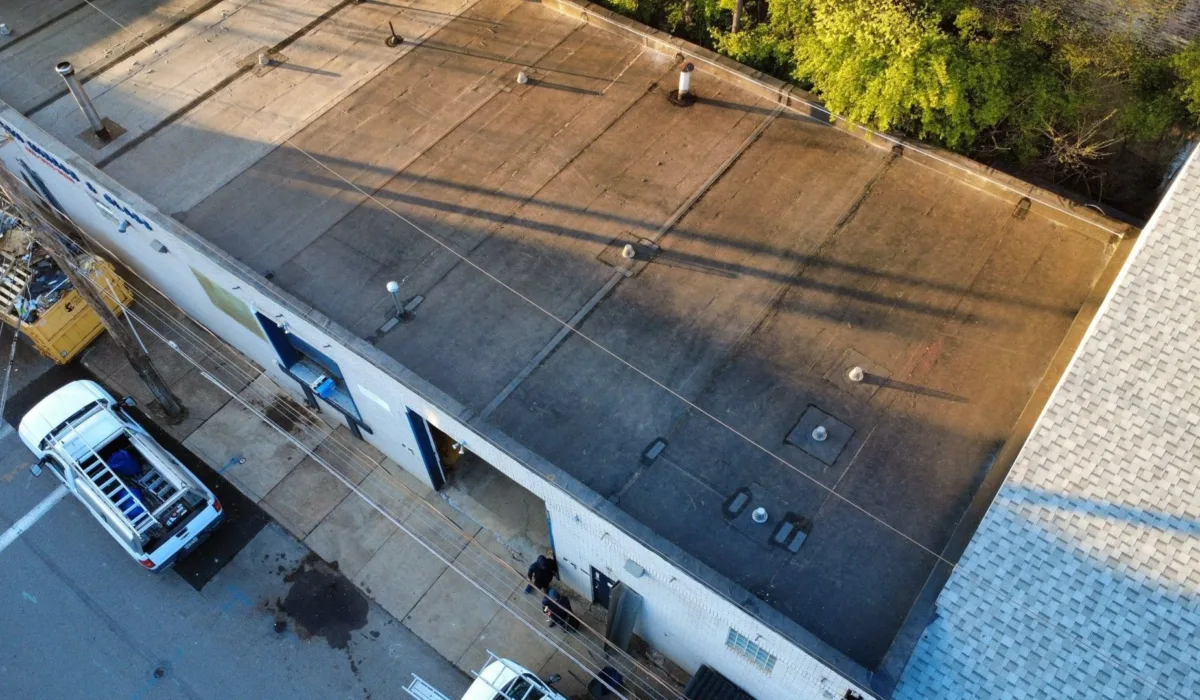
Most commercial buildings in Pittsburgh have a flat or low slope roof, and most of those roofs are covered with a single ply membrane. The two membranes building owners ask us about most are EPDM (a synthetic rubber) and TPO (a white thermoplastic). Both can work here. The right one depends on the building, the rooftop equipment, the budget priorities and who installs it.
We are Malick Brothers Exteriors, a family owned roofing company based at 500 Perry Highway in West View. We are MuleHide certified for .060 EPDM, two ply low slope systems and silicone coatings, and EPDM roofing is the single ply system we install on commercial and flat residential roofs across the North Hills and the city. This guide compares EPDM roofing in Pittsburgh with TPO honestly, including the cases where TPO is the better call, so you can make a confident decision before you sign a contract.
EPDM and TPO at a glance
Both products are single ply roofing: one layer of membrane, rolled out over insulation or a cover board, then sealed at the seams. The difference is the chemistry.
- EPDM (ethylene propylene diene monomer) is a cured rubber sheet. It is usually black, comes in very large rolls, stays flexible in the cold and has been used on low slope roofs in the United States since the 1960s. Seams are bonded with factory tape or liquid adhesive.
- TPO (thermoplastic polyolefin) is a reinforced plastic sheet, usually white, that reflects sunlight. Seams are fused with a hot air welder, which creates a continuous bond when the welder is set correctly and the sheet is clean.
| Factor | EPDM | TPO |
|---|---|---|
| Material | Synthetic rubber, usually black | Thermoplastic, usually white |
| Seams | Tape or adhesive | Hot air welded |
| Cold weather flexibility | Excellent, stays pliable well below freezing | Good, but stiffer in deep cold |
| Sun reflectivity | Low in black, higher in white or with a reflective coating | High when new, lower as the surface soils |
| Typical service life | Commonly 25 to 30 years for .060 membrane with maintenance | Commonly 20 to 25 years depending on formulation |
| Repairs | Patch with primer and cover tape, any season | Patch by welding, needs a clean dry surface |
| Installation weather | Wide window, including cool shoulder seasons | Narrower window, dry and mild conditions preferred |
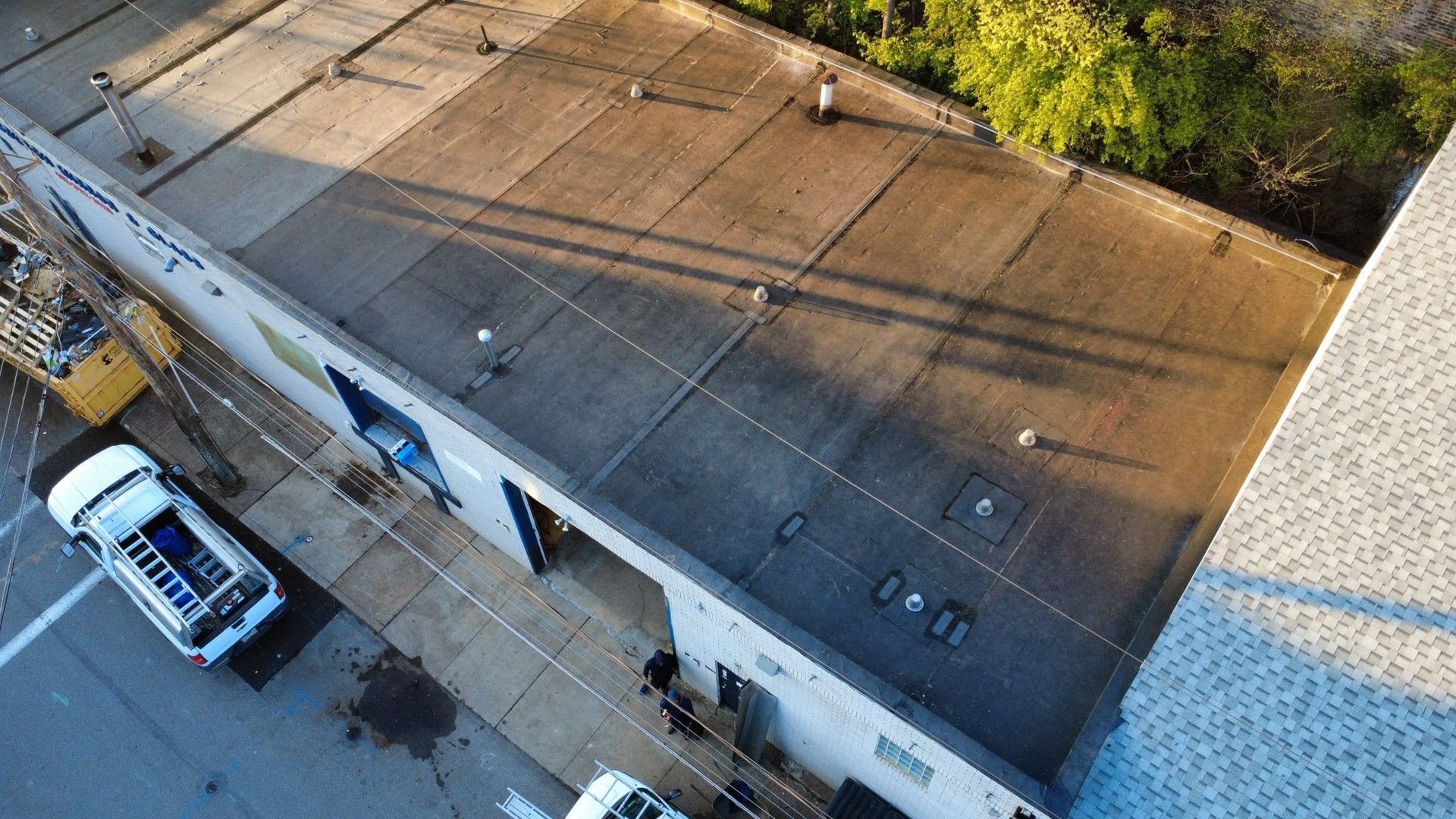
Why Pittsburgh weather favors EPDM roofing
Pittsburgh is not a hot climate. Winters bring repeated freeze and thaw swings from November through March, wet springs and humid summers with far fewer clear sunny days than the Sun Belt. That pattern shapes the comparison.
EPDM stays rubbery in the cold. When a roof deck contracts on a January night and expands on a sunny afternoon, the membrane moves with it instead of fighting it. That flexibility is the main reason rubber roofs have such a long track record on Pittsburgh warehouses, garages, storefronts and row house additions.
TPO earns its reputation in sunny regions where a reflective white surface cuts air conditioning load all summer. In Pittsburgh the cooling season is short and the heating season is long, so the energy argument for a bright white roof is weaker than the marketing suggests. A black EPDM roof also absorbs a little free heat in winter, which does not hurt here.
Snow load is a draw. Both membranes carry snow fine when the structure is sound. What matters more is drainage: ponding water behind a clogged drain or a sagging deck is the enemy of every flat roof in the region.
When TPO is the better choice
We install EPDM, but we would rather you choose the right roof than our roof. TPO is the stronger option when:
- The roof is covered in equipment. Restaurants, labs and buildings with dense HVAC, vents and pipe penetrations benefit from welded seams and welded flashings around every curb. Welding also handles grease and chemical exposure that can soften EPDM adhesives.
- Reflectivity is required. Some lease terms, LEED targets and municipal energy programs call for a cool roof surface. White TPO meets that out of the box. White EPDM and silicone coated EPDM can also qualify, so ask before assuming.
- You are matching an existing system. If half of a building already has TPO in good shape, extending it with TPO keeps one warranty and one repair method.
Not every TPO sheet is the same. Formulations have changed several times since the product arrived in the 1990s, and the cheapest rolls have had early weathering problems in independent testing. If you go with TPO, insist on a current generation membrane from a major manufacturer and a contractor who welds TPO every week, not once a season.
When EPDM is the better choice
EPDM wins on most of the flat roofs we see in Pittsburgh:
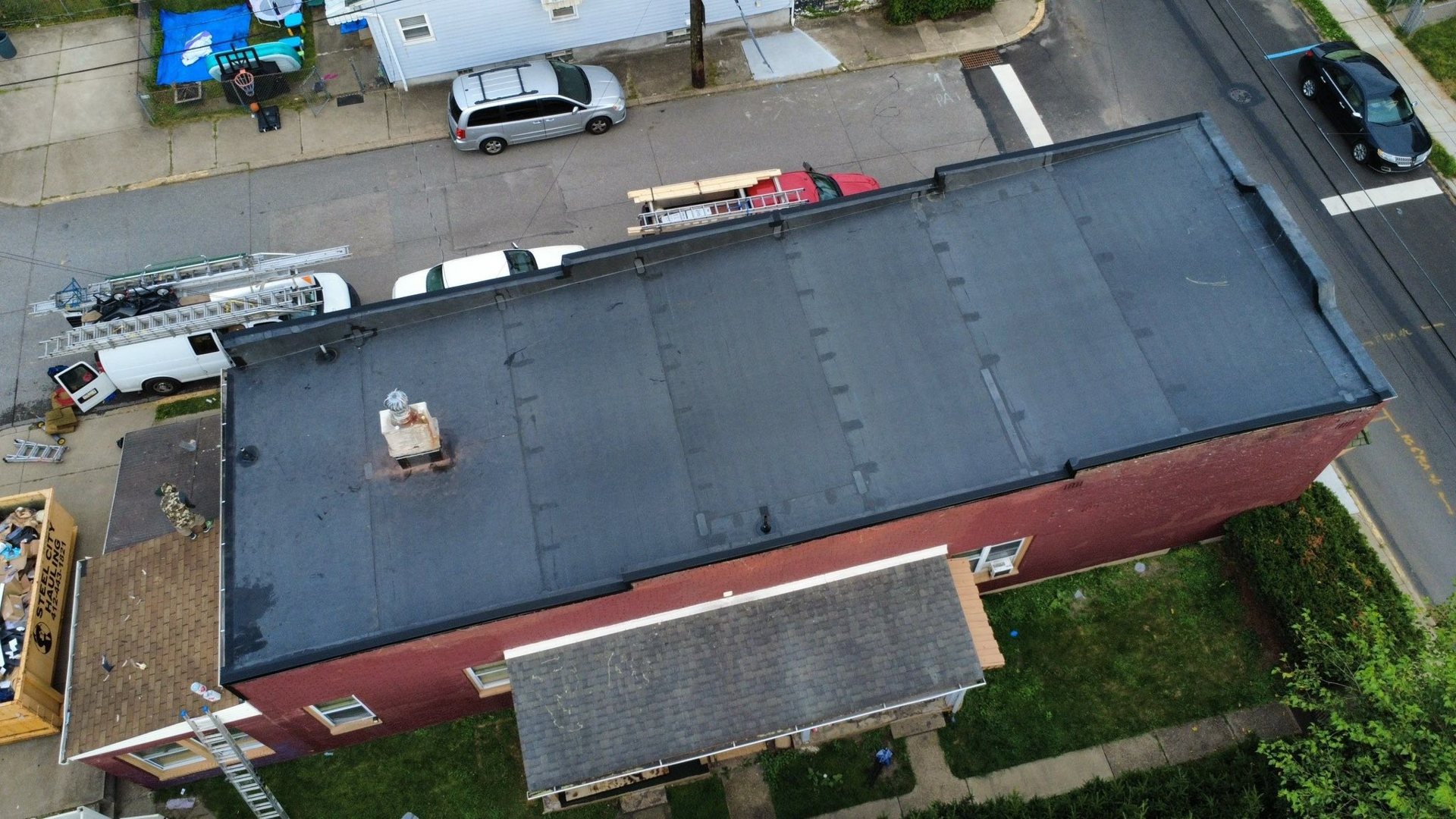
- Large, simple roof areas. EPDM rolls come up to 50 feet wide, so a warehouse or apartment roof can be covered with a fraction of the seams a 10 foot TPO roll needs.
- Older buildings that move. Brick commercial buildings in Lawrenceville, the North Side and the Mon Valley settle and flex. Rubber tolerates that better than a stiffer thermoplastic.
- Year round scheduling. Our crews work all winter. Adhesive and tape seams can be installed in cooler weather than hot air welding, which gives a business more flexibility on timing.
- Easy repairs for the life of the roof. A puncture from a dropped tool or a careless HVAC tech is fixed with primer and a cover tape patch. Any competent flat roofer in the region can do it, and the patch does not need a welder or a dry warm day.
- Long documented service life. The .060 membrane we install is thicker than the .045 sheet sold in home centers, and a well maintained .060 EPDM roof commonly runs 25 to 30 years.
What goes wrong with each membrane
EPDM weak points
The honest knock on EPDM is the seams. Early rubber roofs from the 1980s used liquid splice adhesive that dried out, and some of those seams opened after 10 to 15 years. Modern factory applied seam tape fixed most of that, but seams still need to be primed and rolled correctly, and they should be inspected every spring and fall. Black EPDM also runs hot in July, which matters more on a building with a lot of rooftop air conditioning. A silicone coating, which we are certified to apply, turns a black rubber roof white and extends its life at the same time.
TPO weak points
Welding is both the strength and the risk. A welder set too cold leaves a seam that looks sealed and peels later. A welder set too hot scorches the sheet. Wind, dust and moisture on the sheet all affect the weld, so TPO is sensitive to the installer and the day. TPO also gets stiffer as it ages and in deep cold, and a soiled white roof loses much of the reflectivity that justified it. Repairs require a welder and a clean, dry surface, which rules out a lot of Pittsburgh afternoons.
How we install EPDM roofing in Pittsburgh
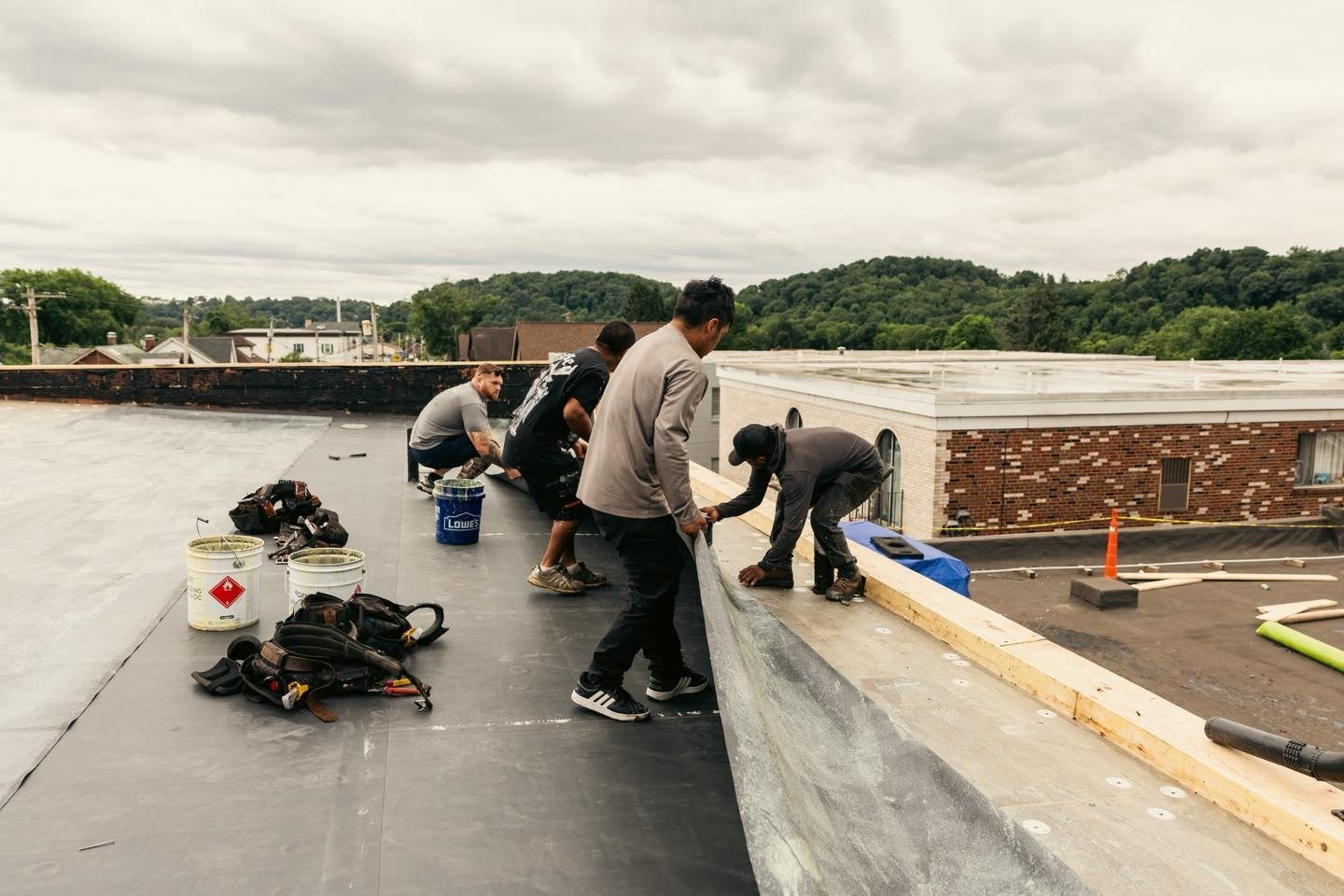
A single ply roof is only as good as what is under it and who puts it down. On a typical commercial EPDM replacement we:
- Inspect the existing roof and deck, including core cuts where needed to find wet insulation. A roof inspection comes before any written estimate.
- Tear off failed layers or, where code and the structure allow, prepare the existing roof for a recover.
- Install new polyiso insulation and a cover board, tapered toward the drains when the roof ponds.
- Fully adhere MuleHide .060 EPDM to the cover board, then prime and tape every seam, and flash every curb, pipe and wall with the manufacturer's accessories.
- Replace or reset drains, scuppers and edge metal, since that is where most flat roof leaks start.
- Walk the finished roof with the owner and provide the MuleHide warranty paperwork.
Because we are a certified MuleHide contractor, the manufacturer backs the system warranty. You can confirm the certification with MuleHide Products and check our Pennsylvania home improvement contractor registration, PA174918, on the Pennsylvania Attorney General's HIC lookup.
Other low slope options worth knowing
EPDM and TPO are not the only answers. On a small flat section attached to a shingle house, such as a porch, a dormer or a rear addition, we often pair an Atlas shingle roof with a MuleHide two ply modified bitumen system or EPDM, as we did on jobs in Observatory Hill, Mt. Washington and Glenshaw in 2025. On a commercial roof that is sound but aging, a silicone roof coating can add years without a tear off. Our commercial roofing page covers the full range, and financing is available for larger projects.
What drives the cost of a flat roof in Pittsburgh
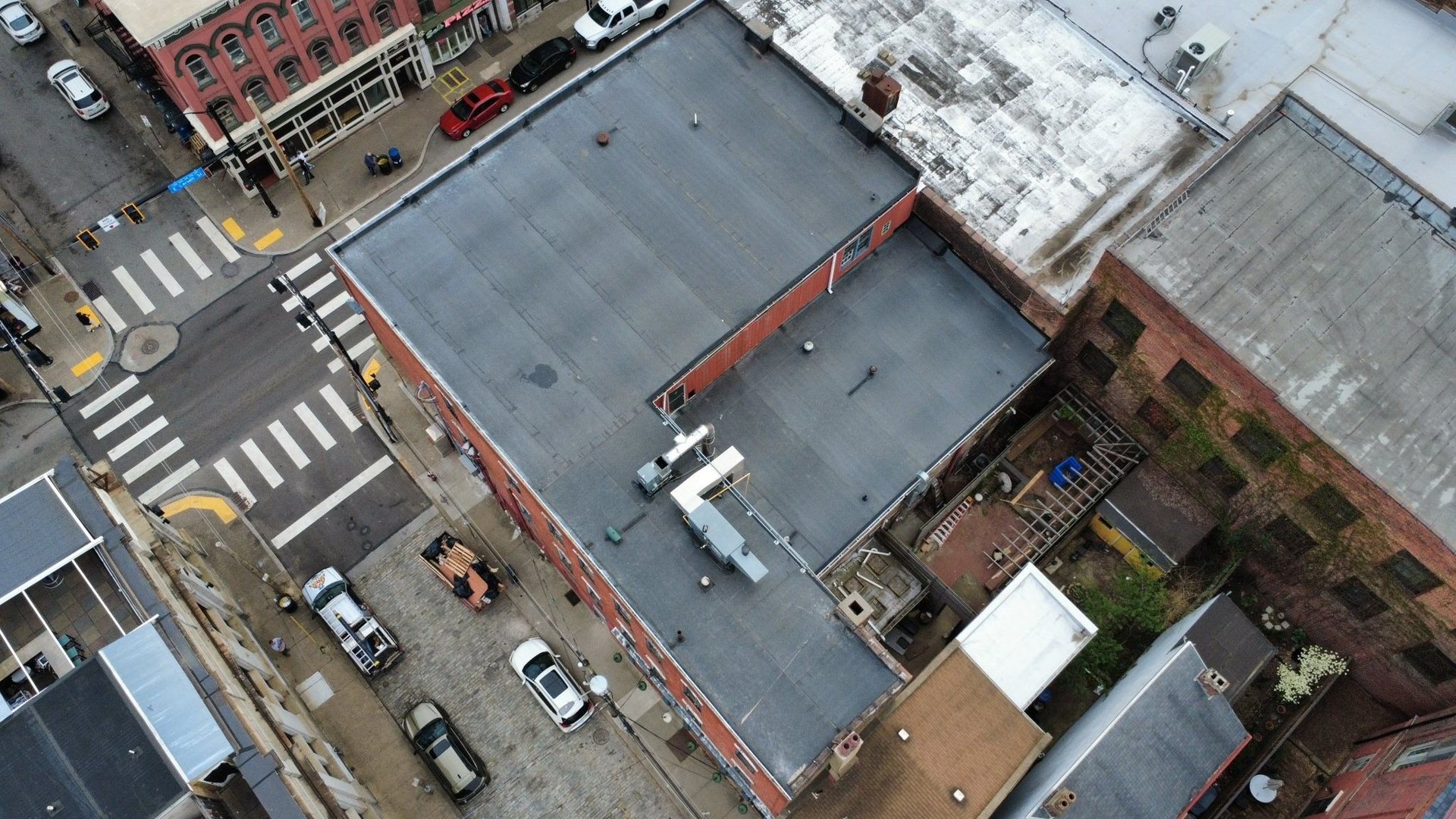
We do not publish prices because no two flat roofs cost the same. The numbers that matter on your estimate are roof area, how many layers have to come off, how much wet insulation is found, the amount of new insulation needed to meet the current energy code, the number of penetrations and curbs to flash, edge metal and drain work, and access for a crane or conveyor. Membrane choice is usually a smaller share of the total than owners expect, so pick the membrane that fits the building and spend the savings on tapered insulation and good drainage. Every estimate we give is free and in writing.
Frequently asked questions
What are the downsides of TPO roofing?
TPO depends heavily on the installer. Seams and flashings are hot air welded, and a weld that is too cool, too hot or made on a dirty sheet can fail later. The membrane stiffens with age and in deep cold, repairs need a welder and dry conditions, and older or budget formulations have a mixed weathering record. Buy a current generation membrane and hire a crew that welds TPO regularly.
Is EPDM better than TPO for a Pittsburgh business?
For most Pittsburgh buildings, yes. Our long winters, freeze and thaw cycles and short cooling season play to the flexibility and cold weather repairability of rubber. TPO is the better fit when a roof is crowded with equipment and chemical exposure, when a cool roof surface is required, or when you are extending an existing TPO roof.
How long does an EPDM roof last in Pittsburgh?
A fully adhered .060 EPDM roof with good drainage and a seam inspection every spring and fall commonly lasts 25 to 30 years. The roofs that fail early usually had ponding water, clogged drains or seams that were never checked. A silicone coating applied in the later years can extend service life further.
Can EPDM be installed in winter?
Yes, within manufacturer limits. We work all winter, and tape seam EPDM has a wider installation temperature window than hot air welded TPO. Adhesives and primers still have minimum temperatures, so a cold snap may pause a job for a day or two, but a dry winter week is workable for rubber.
Do I need a full tear off or can the new membrane go over the old roof?
It depends on the number of existing layers, whether the insulation is wet and what the local code allows. A recover saves money and landfill, but covering wet insulation traps the problem. We take core samples before recommending either path and put the recommendation in the written estimate.
Does Malick Brothers install TPO?
Our commercial certification is with MuleHide for .060 EPDM, two ply low slope systems and silicone coatings, and EPDM is what we install and warranty. If an inspection shows that TPO is the right system for your building, we will say so, because the goal is a roof that lasts, not a sale.
Get a straight answer on your flat roof
If you own or manage a commercial building, apartment or flat roofed home in Pittsburgh, we will inspect the roof, explain what we find and put a free written estimate in your hands. Contact Malick Brothers Exteriors or call (412) 616-0191 to schedule.