Commercial roofs rarely fail all at once. They send warnings first: a stain on a drop ceiling tile, a puddle that is still there three days after the rain stopped, a seam that lifts when you press on it. If you own or manage a building in Pittsburgh, knowing the signs your commercial roof needs repair is the difference between a service call and a deck replacement. This guide covers the warning signs by roof type, what ponding, seams, flashing and drains are telling you, what to do the same day you find a problem, and how we decide between repair and replacement.
We are Malick Brothers Exteriors, a family owned roofing company based at 500 Perry Highway in West View. Our repair division handles flat, EPDM, TPO, modified bitumen, metal and slate roofs across the North Hills and the city, and we are MuleHide certified for low slope systems and silicone coatings. If you already know your building has a problem, you can skip ahead and request commercial roof repair in Pittsburgh today. If you are not sure yet, keep reading.
Why Pittsburgh commercial roofs fail early
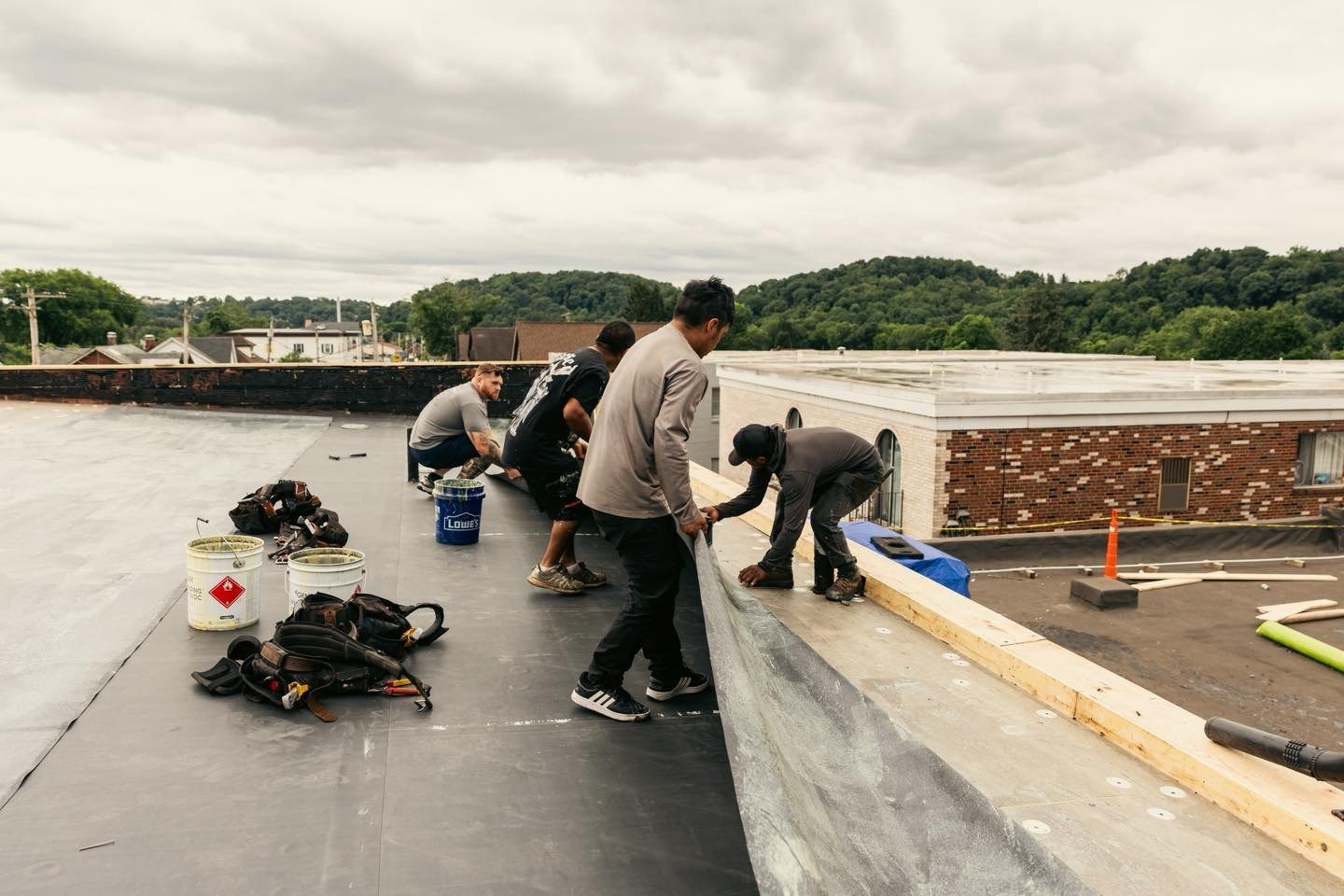
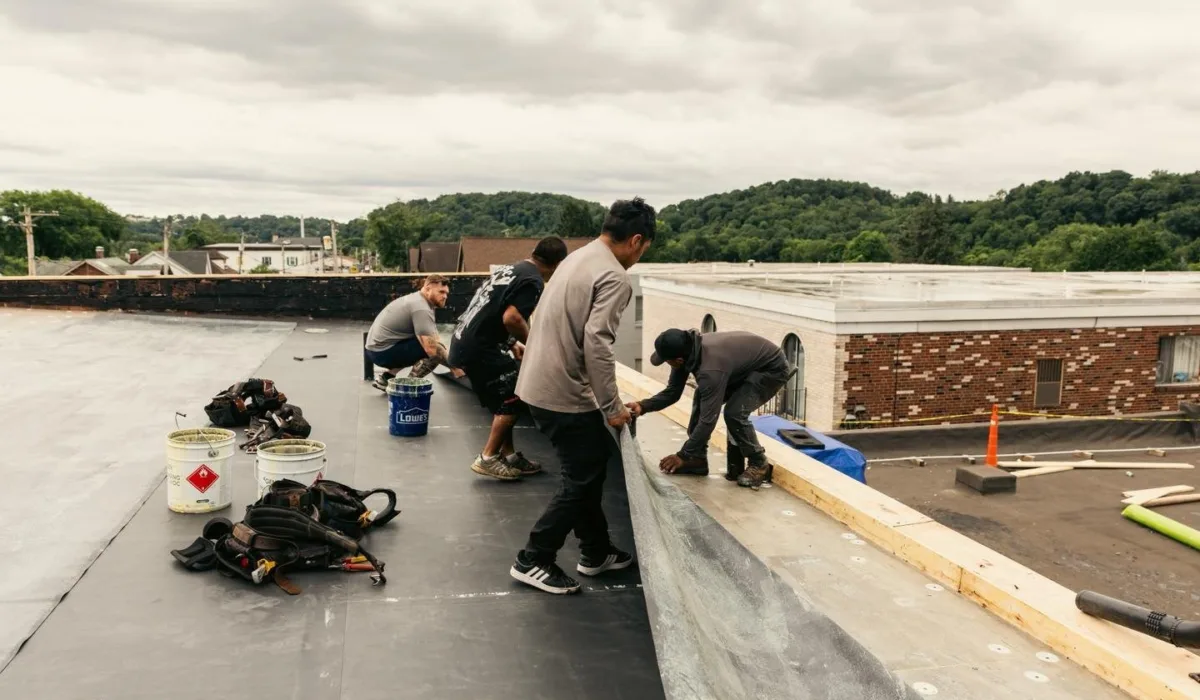
Winter in western Pennsylvania brings repeated freeze and thaw cycles, so water sitting in a seam or crack expands as ice, opens the gap, then melts and goes deeper the next day. Summer puts black EPDM membranes through large daily temperature swings that stress every seam. Add older buildings with internal drains and parapet walls, and small problems become expensive quickly. That is why the question "can minor commercial roof damage wait" usually has the same answer: a few weeks at most, and never through a winter.
Warning signs by roof type
Each system fails in its own way. Here is what to look for.
EPDM (rubber) roofs
- Seams that have lifted, wrinkled or lost adhesion. On older glued seams, run a hand along the lap and feel for an edge that catches.
- Shrinkage. EPDM pulls back over time and shows first at edges and curbs, where it tents up or pulls flashing away from the wall.
- Surface crazing or a chalky feel, which means the membrane is losing its plasticizers and getting brittle.
We install MuleHide .060 EPDM, thicker than the .045 membrane on many older Pittsburgh roofs, which is more prone to the problems above. See our EPDM roofing page for the full system.
TPO and PVC roofs
- Seams that have never been fully welded. A properly heat welded TPO seam cannot be peeled. A cold or scorched weld opens up after a few seasons.
- Surface cracking in the top layer, usually worst on south facing areas where UV exposure is highest.
- Membrane separating from the insulation board under it, which you notice as a soft or loose feel when walking.
Built up and modified bitumen roofs
- Blisters from trapped moisture or air between the plies. A few can be cut and patched. Widespread blistering means moisture is inside the system.
- Alligatoring, the pattern of surface cracks that looks like reptile skin. It means the asphalt has dried out and the roof is near the end of its service life.
- Bare spots where the gravel or granule surfacing has washed off, exposing the asphalt to sun.
Metal roofs
- Backed out or missing fasteners. Thermal movement works screws loose year after year, and each empty hole is a leak.
- Rust at panel edges, around fasteners, and at any spot where the coating has been scratched through.
- Failed sealant at panel laps and around penetrations. Sealant has a shorter life than the panels themselves.
Our metal roofing page covers the systems we install and repair.
Ponding water: the 48 hour test
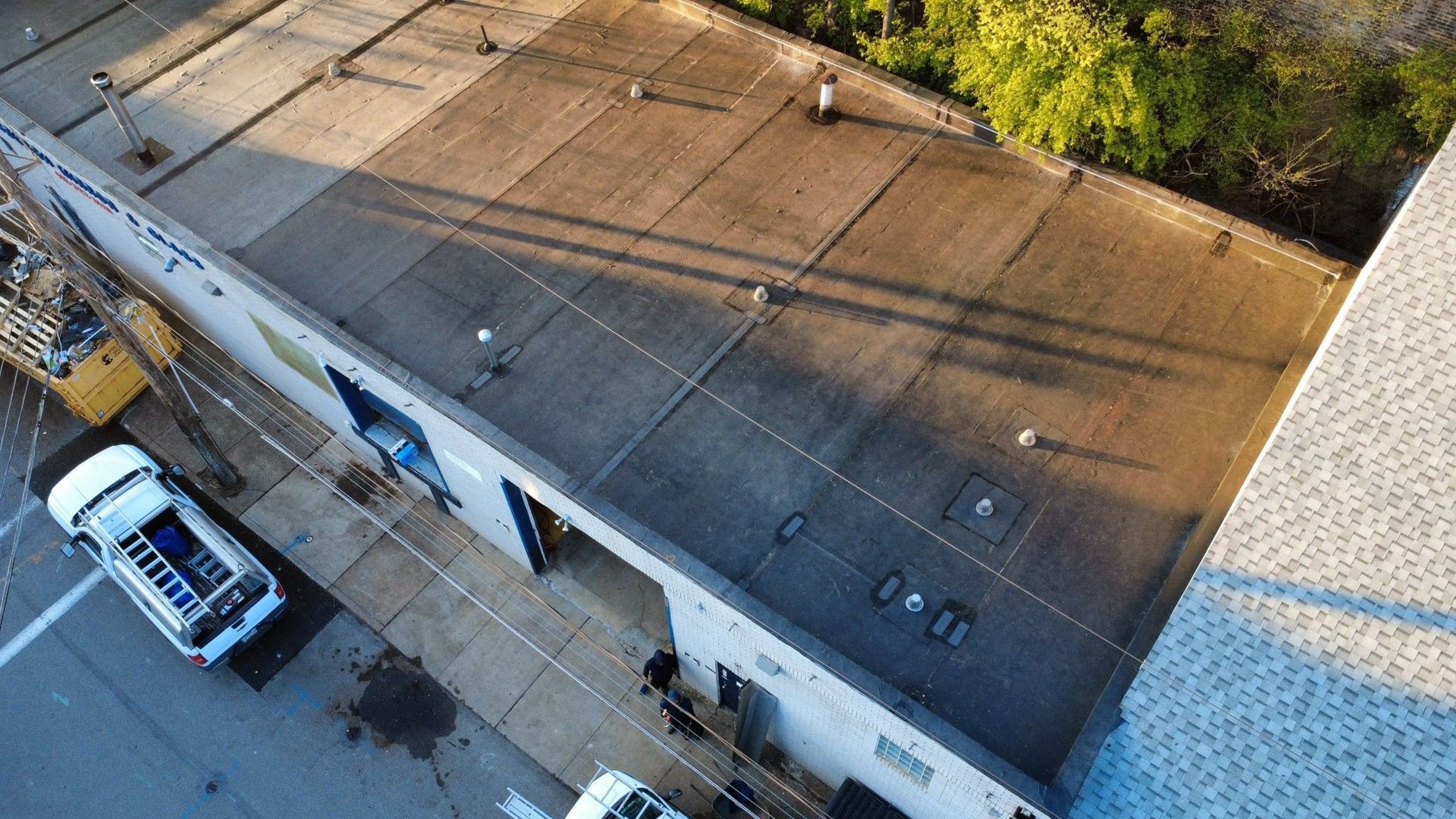
Low slope does not mean flat. Water still standing 48 hours after rain stops is ponding. It adds weight the structure was not designed for, keeps seams wet, and in winter becomes an ice sheet that expands into every crack it touches. Look for dirt rings, algae or a dark tide line on the membrane; they mark where water sits even on a dry day. Ponding usually traces back to a clogged drain, a sagging deck, or crushed insulation, and fixing the cause is a repair, not a replacement, if it is caught before the deck is damaged.
Seams, flashing and penetrations: where most leaks start
The open field of a commercial roof is rarely where a leak starts. Leaks start at the details:
- Seams. Every lap in the membrane is a potential path for water. Lifted, wrinkled or peeling seams need to be cleaned, primed and resealed, or cut out and covered with new material.
- Base flashing at walls and curbs. The membrane turns up the wall and is terminated at the top with a bar or counterflashing. When the termination bar loosens or the sealant above it cracks, water runs straight down behind the membrane.
- Pipe boots and pitch pockets. Every pipe and conduit through the roof needs a sealed boot. Sealant filled pitch pockets shrink and crack with age.
- HVAC curbs. Every service visit is a chance for a dropped panel or dragged tool to cut the membrane. Check the corners of each curb.
- Edge metal. Gravel stop, drip edge and coping on the parapet should be tight. Lifted or loose edge metal is the first thing wind catches.
Drains, scuppers and gutters
Check every internal drain for a strainer dome that is in place and clear of leaves, bags and debris. Scuppers through parapet walls should be open with intact sleeves. Box gutters on older Pittsburgh buildings deserve special attention because they rust from the inside and leak into the wall below. We coat box gutters with MuleHide silicone when the metal is still sound, which is far less disruptive than replacing them.
Downspouts must flow freely too; one frozen solid in January backs water up onto the roof. Our gutter services team handles commercial gutters and downspouts.
Interior warning signs you can spot without going on the roof
Walk the top floor after a hard rain and look for:
- Stained, sagging or bowed ceiling tiles, especially near walls, columns and HVAC units.
- Water trails on the underside of a metal deck, or rust streaks on bar joists.
- Musty odors, mold on walls or ceiling, or peeling paint, which point to long term moisture rather than a single leak.
- Drips during a thaw rather than during rain, which usually means ice damming at the roof edge or a leak that only opens when the membrane warms up.
- Rising heating and cooling bills with no other explanation. Wet insulation loses most of its insulating value, so a roof that has taken on water costs you every month.
How do I know if a roof leak needs urgent repair?
Treat any commercial roof problem as urgent if one or more of the following is true:
- Water is reaching electrical equipment, a data closet, inventory or a tenant space.
- The leak is active and the forecast calls for more rain or snow within a few days.
- You can see daylight, a hole, or a seam open more than a few inches.
- The deck or ceiling is sagging. Stay out from under it and call the same day.
- Standing water has been on the roof for more than two days.
- Wind has lifted edge metal or the membrane is flapping. One more storm can peel a section off.
A single stained tile with no active drip, a small blister, minor crazing or a loose drain strainer can usually wait for a scheduled visit within a couple of weeks. Even these should not wait through a Pittsburgh winter.
What to do the same day you find a problem
- Protect what is under the leak. Move inventory and equipment, set buckets, and pull wet ceiling tiles so they do not fall.
- Photograph everything. Dated photos of the interior damage and, if safe, the roof surface help with insurance and give the roofer a head start.
- Clear the drains if you can reach them safely. A blocked drain is the most common cause of a sudden leak and the easiest fix.
- Do not patch with roof cement from the hardware store. Asphalt based cement damages EPDM and TPO and makes a proper repair harder.
- Call a commercial roofer and describe the roof type, the leak location, and what is under it.
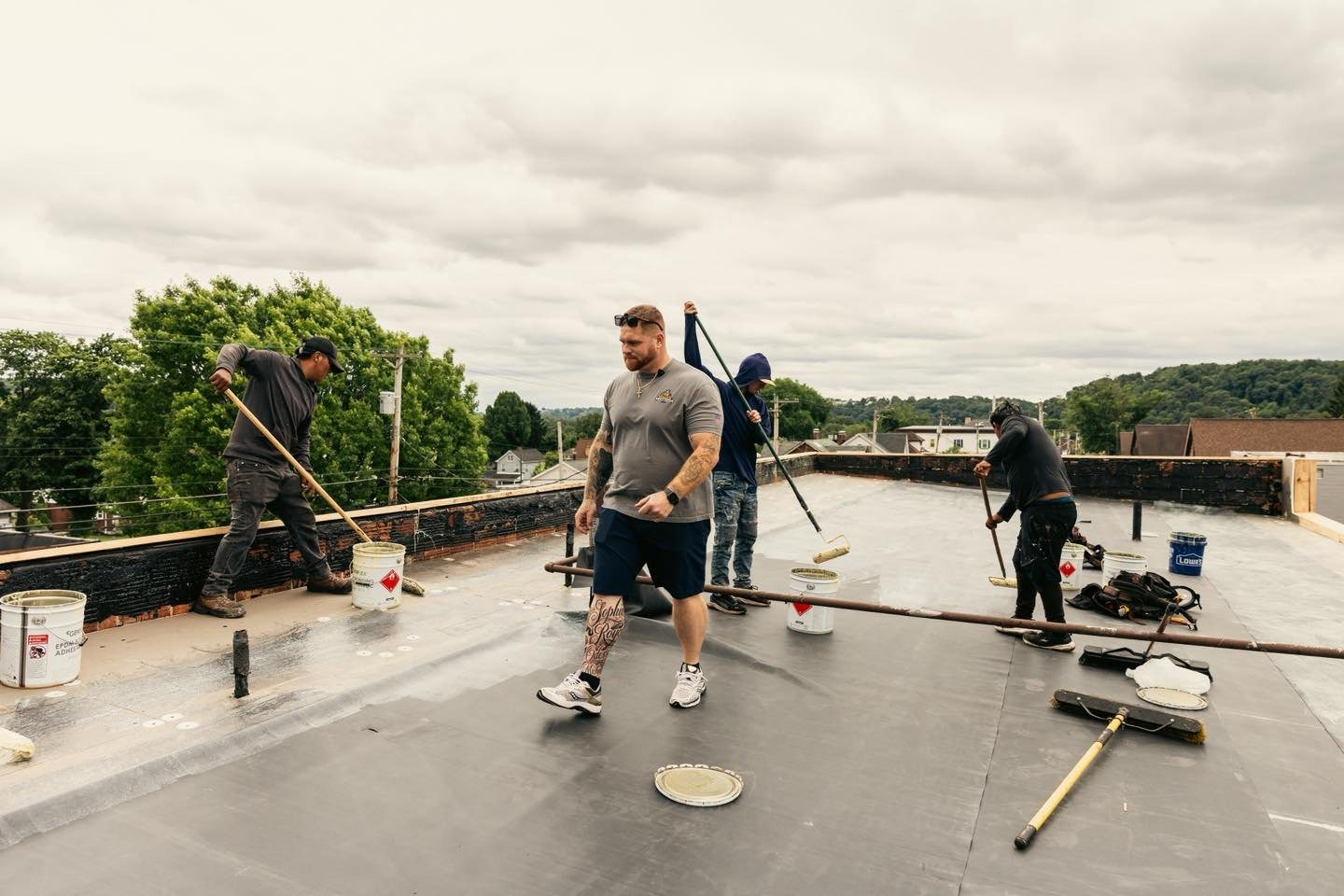
Repair or replacement: how we make the call
Most of the signs above are repairable if they are caught early. The decision comes down to four questions.
| Question | Points toward repair | Points toward replacement |
|---|---|---|
| How much of the roof is affected? | Isolated seams, a few penetrations, one ponding area | Problems across more than roughly a quarter of the roof |
| Is the insulation wet? | Dry, or wet in a small area that can be cut out and replaced | Saturated across large areas, found by core cuts or moisture scan |
| How old is the system? | Well within its expected service life | At or past the end of its service life, with brittle or shrinking membrane |
| Is the deck sound? | Solid deck, no sagging | Rusted, rotted or sagging deck sections |
There is a middle option. If the insulation is dry and the deck is sound but the surface is worn, a MuleHide silicone coating can add years of service without a tear off. Learn more on our silicone roofing page.
Cost is driven by square footage, the number of penetrations and curbs, whether wet insulation or deck must be replaced, access and staging, and the system chosen. We give a free written estimate after an on site inspection with core samples where needed, so the number is based on what is actually under the membrane.
How often should a commercial roof be inspected?
The National Roofing Contractors Association recommends inspecting commercial roofs twice a year, in spring and fall, plus after any major storm. In Pittsburgh, the fall inspection matters most. It is your last chance to clear drains, reseal terminations and fix open seams before the freeze and thaw season starts. A spring inspection catches what winter did.
Between inspections, ask your HVAC service company to report anything they notice on the roof, and walk the top floor after heavy rain.
Frequently asked questions
What is the typical lifespan of a commercial roof?
It depends on the system, the installation and the maintenance. In the Pittsburgh climate, a well installed .060 EPDM or TPO roof that is inspected twice a year outlasts a thin, neglected membrane of the same type by many years. Age alone does not decide anything; condition does. We assess the membrane, seams and insulation before we talk about remaining life.
Can minor commercial roof damage wait?
A small blister, a loose strainer or one stained tile with no active drip can usually wait for a scheduled visit within a few weeks. Open seams, lifted flashing, ponding water and any active leak should not wait, and nothing should be left to ride through a Pittsburgh winter. Freeze and thaw cycles turn small openings into large ones in a single season.
What is the 25 percent rule in roofing?
It refers to a common building code and manufacturer guideline that when more than 25 percent of a roof section needs to be repaired or recovered within a 12 month period, the whole section must be brought up to current code rather than patched. In practice, once a quarter of the roof has problems, replacement is usually the better value anyway. Your inspection will tell you where you stand.
Is it normal for a commercial roof to have some standing water?
A little water right after rain is normal. Water that is still there two days later is ponding, and it shortens the life of every roof system. The fix is usually a cleared drain, a tapered insulation cricket to redirect water, or an added drain or scupper. Those are repairs, not replacements, if the deck below is still sound.
Do you handle emergency commercial roof repairs in Pittsburgh?
We prioritize active leaks and storm damage, and we work through the winter. Call (412) 616-0191, tell us the roof type and what is under the leak, and we will get a technician out to stop the water first and then plan the permanent repair.
Get your commercial roof looked at
If you have seen any of these signs on your building, do not wait for the next storm. Malick Brothers Exteriors is BBB A+ accredited, PA registered (PA174918), MuleHide certified, and based in West View. We will inspect the roof, show you photos of what we find, and give you a free written estimate with a clear recommendation for repair, coating or replacement. Contact us or call (412) 616-0191 to schedule your commercial roof inspection.