Table of Contents
If you manage or own a building with a flat or low-slope roof, you already know the headache. Water sits. It pools. It refuses to leave. Commercial roof water pooling is one of the most common service calls in the roofing industry, and it is also one of the most preventable. Modern roofing systems are specifically engineered to move water off your roof before it causes damage.
What Does “Roofing System” Mean?
A roofing system is not just the visible membrane or shingles you see on top. It is a layered assembly of materials working together to protect a building from water, wind, UV exposure, and temperature extremes. Most commercial systems include a structural deck, insulation, a vapor barrier, and a weatherproofing membrane. Each layer has a job, and when one fails, the whole system suffers.
For flat and low-slope roofs, the system also includes drainage components like interior drains, scuppers, and gutters. They are integral to how the system manages water. Without them, even a perfectly installed membrane will eventually fail under the stress of commercial roof water pooling.
What Are the Types of Roofing Systems?
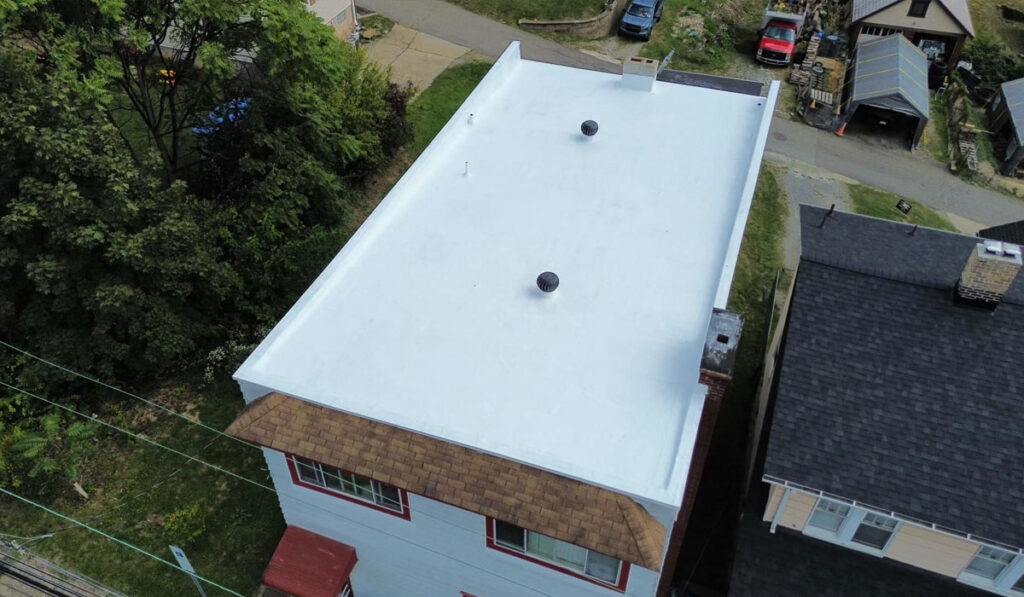
There are several broad categories, but on commercial buildings you will typically encounter single-ply membranes, built-up roofing (BUR), modified bitumen, spray polyurethane foam (SPF), and liquid-applied coatings. Single-ply systems like TPO and PVC use heat-welded seams that create watertight bonds. BUR relies on multiple layers of asphalt and reinforcing fabric.
The right choice depends on the building, climate, and budget. When it comes to commercial roof water pooling, single-ply membranes and silicone coatings tend to outperform older asphalt-based systems. I have seen 20-year-old TPO roofs that still drain perfectly because the welded seams held up.
How Roofing Systems Handle Ponding Water Through Slope and Design
Here is something a lot of people do not realize: a flat roof is not actually flat. Or at least, it should not be. The National Roofing Contractors Association recommends a minimum slope of 1/4 inch per foot to ensure positive drainage. That slight pitch is what guides water toward drains, scuppers, or roof edges. When the slope is missing or compromised, water has nowhere to go.
Roof ponding water officially refers to water that remains on the surface for more than 48 hours after rainfall. Even a small amount of standing water adds surprising weight to a roof structure. One inch of ponding across a modest area can exert over five pounds per square foot. Over weeks and months, that load causes the deck to sag, which creates deeper low spots, which hold more water. It is a cycle that feeds itself.
What Are the 5 Types of Roofing?
When most people ask this question, they are thinking about the big categories: asphalt shingles, metal roofing, tile, wood shake, and flat or low-slope membrane systems. For residential properties, asphalt shingles dominate the market. Metal roofing is growing fast thanks to its longevity. Tile and wood shake serve niche markets where aesthetics matter most.
But for the purposes of ponding water, flat membrane systems are where the real engineering happens. These include TPO, PVC, EPDM, modified bitumen, and built-up roofing. Each membrane handles roof ponding water differently, with PVC and TPO leading the pack in water resistance thanks to their welded seam technology. For a deeper look at one of these materials, check out Understanding PVC: Properties, Uses, and Benefits.
Tapered Insulation: The Hidden Slope Builder
One of the most effective tools for eliminating ponding is tapered insulation. These are rigid polyiso boards manufactured at a gradual incline, typically 1/8 inch to 1/4 inch per foot. Installers lay them beneath the membrane to create a subtle pitch directing water toward drains or scuppers.
Tapered insulation also improves energy efficiency. The thicker portions add R-value where the roof needs it most. I have worked on projects where a tapered system solved drainage problems and lowered heating costs in the first winter. It pays for itself.
How Roofing Systems Handle Ponding Water With Drainage Components
Drainage is the backbone of any flat roof. Interior drains sit at low points and connect to the building’s plumbing. Scuppers are openings along the parapet walls that allow water to exit through downspouts. Most well-designed roofs use a combination of all three components.
When any of these clog, water backs up fast. Leaves, debris, and bird nests can block a drain in a single storm. Clogged drains are responsible for a significant percentage of premature flat roof failures. Routine inspections, especially in fall and after heavy storms, are non-negotiable for any building owner dealing with flat roof drainage issues.
Crickets and Saddles
Crickets are small, peaked structures installed on the roof to redirect water around obstructions like HVAC units, skylights, or chimneys. They are typically made from rigid foam board and covered with the roof membrane. Saddles work similarly but span the low point between two drains. Both are simple in concept but incredibly effective at eliminating isolated ponding spots that would otherwise sit and cause damage over months.
Membrane Selection and Water Resistance
Not all membranes handle standing water equally. Silicone coatings are inorganic and non-porous, meaning they do not break down when submerged. TPO and PVC membranes perform well too, because their heat-welded seams do not separate under water exposure the way adhesive-based seams can.
EPDM rubber membranes are flexible and UV-resistant, but their adhesive seams can be vulnerable in ponding zones. Modified bitumen and built-up systems are durable, but prolonged water contact can leach oils from the asphalt, leaving the membrane brittle.
| Roofing System | Ponding Resistance | Seam Type | Best Use Case |
|---|---|---|---|
| TPO | High | Heat-welded | Commercial flat roofs |
| PVC | High | Heat-welded | Chemical exposure areas |
| EPDM | Moderate | Adhesive/tape | Large low-slope surfaces |
| Silicone Coating | Very High | Seamless | Ponding-prone areas |
| Built-Up (BUR) | Low-Moderate | Layered asphalt | Multi-ply redundancy |
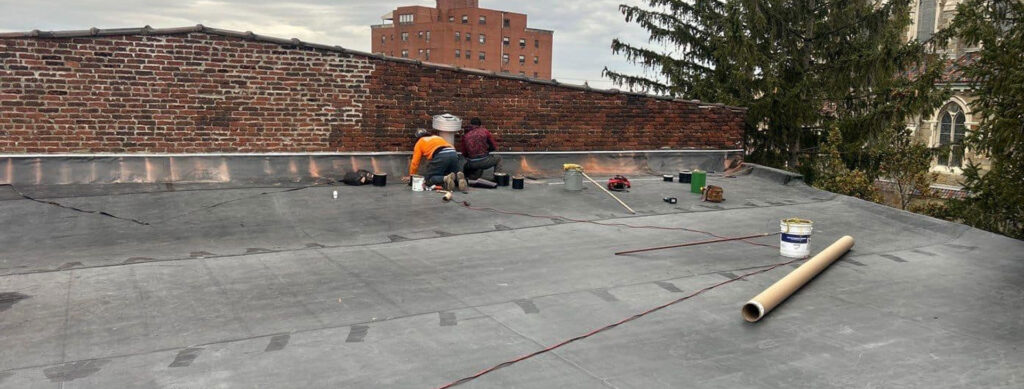
How Do Roofing Systems Work to Prevent Long-Term Damage?
A well-designed roofing system prevents long-term damage by combining proper slope, reliable drainage, and a membrane suited to the building’s conditions. The slope moves water. The drains remove it. The membrane resists whatever lingers. When all three elements work together, ponding simply does not happen. When one element fails, the problems start compounding quickly.

Regular maintenance ties the whole system together. Clearing drains, inspecting flashings, and checking for low spots after heavy rainfall keeps small issues from becoming expensive emergencies. I always tell building owners that a roof inspection twice a year is the cheapest insurance they will ever buy. The Asphalt Roofing Manufacturers Association offers solid guidance on best practices for managing ponding and maintaining drainage systems over the life of a roof.
How Roofing Systems Handle Ponding Water: When Repair Is Not Enough
Sometimes the problem is too far gone for a patch or a new drain. If the structural deck has sagged, if the original slope was never adequate, or if flat roof drainage issues persist despite repeated repairs, a full reroof may be the only lasting solution. That means tearing down to the deck, correcting the slope with tapered insulation or structural modifications, and installing a new membrane system designed for the building’s specific drainage needs.
It is a bigger investment upfront. But it eliminates the cycle of band-aid fixes that end up costing more over time. A properly sloped and drained roof, built with the right membrane, should give you decades of worry-free performance. That is what a roofing system is supposed to do.