Table of Contents
Flat and low‑slope roofs offer contemporary styling, but puddles on their surface are a red flag rather than an architectural flourish. Standing water can soak seams, invite moss and insects, and add unexpected weight that stresses the structure. Although a thin film of water after a heavy rain is normal, persistent pools mean something is wrong with the roof’s slope, drainage or maintenance. Learning how to prevent ponding water on a flat commercial roof is therefore essential for protecting your building.
Understanding Ponding Water on Flat Roofs
Ponding occurs when water remains on a roof for more than 24–48 hours. To avoid this, modern roofs are built with a subtle pitch—typically at least 1/4 inch per foot—that guides water toward drains or scuppers. When the pitch is too shallow or broken by depressions, water settles into low spots and accumulates. Even small pools can impose thousands of pounds of load on the deck, and prolonged moisture may lead to leaks, mould and structural damage. The NRCA and most manufacturers agree that a roof with positive drainage should dry within two days; anything longer signals a problem.
What Causes Ponding on Flat Commercial Roofs?
Most ponding problems stem from poor slope or obstructed drainage. Building codes require membrane roofs to slope at least 1/4 inch per foot, but errors in framing or tapered insulation can leave sections effectively flat. Structural settlement and thermal movement may introduce dips over time. Debris‑choked drains, undersized scuppers and clogged gutters prevent water from leaving the roof, while heavy foot traffic compresses insulation and creates low spots. Roof penetrations such as skylights and HVAC units interrupt water flow and can become collection points.
How much ponding is acceptable on a flat roof?
Some short‑term puddling during storms is expected on low‑slope roofs. Industry standards generally allow water to remain for up to 48 hours; beyond that, the roof is considered inadequately drained. Chronic puddles that appear in the same spots after every rain shorten the membrane’s life and may void warranties.
How to stop water ponding on a flat roof?
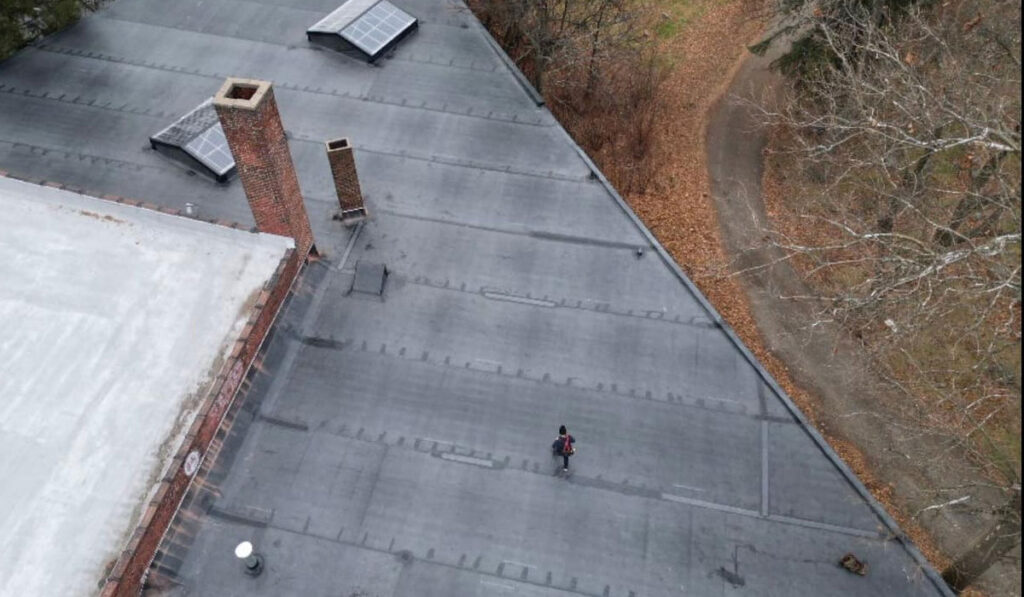
The first step in solving ponding is a careful inspection. Minor issues like blocked scuppers or sagging drain boots can often be fixed by cleaning and repair. Persistent ponds usually require slope correction. Contractors might install tapered insulation or crickets around low areas to redirect water, or build up the surface with lightweight concrete or spray polyurethane foam. If the existing drainage is inadequate, adding new drains or enlarging old ones may be necessary. Whatever the remedy, proper commercial roof drainage and routine maintenance are essential to prevent recurrence.
How to avoid rain water accumulation in a flat roof?
Prevention begins with thoughtful design and consistent upkeep. Work with a roofing professional to ensure the roof has a sufficient pitch and enough drains to handle local rainfall. During construction, details such as curbs and flashing should be installed so they don’t interrupt water flow. After installation, avoid storing heavy objects on the roof, as they compress insulation and create dips. Regularly clear leaves and debris from drains and scuppers at least twice a year and after storms, and consider heat cables in cold climates to keep drains clear.
How to improve drainage on a flat roof?
A flat roof relies on one or more drainage systems. Interior drains connect to pipes inside the building and suit large roofs; scuppers are openings in parapet walls that allow water to exit quickly; and gutters with downspouts collect runoff along roof edges. Secondary drains act as backups if the primary system fails. Regardless of which system your building uses, cleaning and inspection keep it working. A quick reference is provided below:
| Drainage System | Description | Ideal for |
|---|---|---|
| Interior drains | Connected to internal plumbing to remove water from low points | Large or complex roofs |
| Scuppers | Wall or parapet openings that let water spill off the edge | Small to mid‑sized roofs |
| Gutters & downspouts | Channels along edges that collect runoff and carry it away | Buildings with parapets |
| Secondary drains | Extra outlets used if primary drains clog | All roofs with parapets |
If the roof experiences heavy rain frequently, talk to a roofer about adding drains or enlarging existing ones. Maxwell Roofing recommends water‑testing drains during maintenance to make sure they are clear.
Inspection and Maintenance Practices
Flat roofs need regular attention. Inspect twice a year—typically in spring and autumn—and after severe weather. Look for standing water, blisters or cracks in the membrane, and signs of sagging. Remove debris from drains, gutters and scuppers, and reseal loose flashings. Maxwell Roofing notes that cleaning gutters and drains is fundamental to roof care. Documenting inspections and repairs helps you track developing issues and schedule professional evaluations when necessary.
Material Choices and Protective Coatings
Not all roof membranes respond to ponding in the same way. Built‑up and modified bitumen roofs can degrade under constant standing water, whereas single‑ply membranes like TPO and PVC have heat‑welded seams that resist chemical and water breakdown. EPDM is flexible but benefits from reinforcement. Protective coatings provide an extra layer: silicone coatings are particularly resistant to permanent ponding and ultraviolet rays; acrylic coatings are reflective and economical but may need periodic reapplication. Coatings enhance a well‑designed roof but cannot correct poor drainage on their own.
When to Call the Experts
Routine tasks such as clearing debris can be done by building staff. However, chronic ponding, structural sagging or widespread membrane damage call for professional expertise. A licensed commercial roofer can inspect the roof, pinpoint root causes and recommend appropriate solutions. Structural engineers may be required if the deck shows signs of deflection. For more advice on repairs and contractor selection, see the Commercial Roofing resources from Malick Brothers Exteriors. Addressing fix ponding water roof issues promptly is more cost‑effective than emergency repairs down the road.
Key Takeaways and Final Thoughts
Ponding water on a flat roof is a warning sign, not a decorative feature. A well‑designed roof should dry within 48 hours. Adequate slope, properly sized drainage systems and regular maintenance are the keys to preventing flat roof ponding and preserving your roof’s life. Clear drains, inspect twice a year and fix issues promptly. When in doubt, call a professional. Proactive care keeps your roof dry, protects your building and provides peace of mind.