Water is patient. Give it a low spot and a clogged drain on a flat roof and it will sit there for days, working on the membrane one seam at a time. Commercial roof drainage problems are the root cause behind most of the leaks, blisters and soft decks we are called out to fix across Pittsburgh. This guide covers what goes wrong, why ponding water is the warning sign that matters most, how to stop water pooling on a flat roof, and when a repair is enough versus when the slope itself has to be rebuilt.
We are Malick Brothers Exteriors, a family owned roofing company based at 500 Perry Highway in West View. We are MuleHide certified for EPDM, 2 ply low slope systems and silicone coatings, and our repair division handles flat roofs and box gutters all year. If you manage a building and need commercial roofing in Pittsburgh that keeps water moving, everything below comes from what we see on real roofs in this region.
What Is Ponding Water on a Flat Roof?
A flat roof is not actually flat. It is built with a slight pitch, usually a minimum of a quarter inch of drop for every foot, so water is nudged toward interior drains, scuppers or gutters. When that gentle slope is compromised, or the outlets clog, water stops moving and pools.
Roofers call standing water that remains more than 48 hours after rain "ponding." That is the threshold the National Roofing Contractors Association and most membrane manufacturers use when they decide whether a roof has positive drainage. A thin film of water the morning after a storm is normal. The same puddle in the same spot two days later is a drainage problem.
Is Ponding Water on a Roof a Problem?
Yes, and the damage compounds. An inch of water weighs roughly five pounds per square foot. Spread a two inch pond across a few hundred square feet and the deck is carrying a load it was never designed to hold for days at a time. Over years, that extra weight deflects the deck, which deepens the low spot, which holds more water. The problem feeds itself.
Standing water also attacks the roof directly:
- It keeps seams and flashing wet, which loosens adhesives and opens laps.
- It concentrates dirt and algae in one place, so the membrane ages fastest where it is weakest.
- Once a seam opens it saturates the insulation, which loses most of its R value.
- In winter it freezes, expands and pries small gaps wider with every cycle.
- Most manufacturer warranties treat chronic ponding as a maintenance failure, which can void coverage.
Common Commercial Roof Drainage Problems in Pittsburgh
Across the North Hills, the city and the river towns, the causes repeat.
| Cause | What it does to drainage |
|---|---|
| Debris and failed strainers | Leaves, seed pods, shingle granules from a neighboring roof and windblown trash clog drains and scuppers. A missing strainer lets sludge straight into the pipe. |
| Freeze and thaw cycles | Trapped water expands as it freezes, cracking seams and widening gaps. A slow drain in October can be frozen solid in January. |
| Settling and compressed insulation | Decks deflect under years of load, foot traffic crushes insulation, and the positive slope disappears in patches. |
| Undersized or too few drains | Older buildings were drained for the storms of their era. Intense summer downpours overwhelm them. |
| Rooftop equipment | HVAC curbs, skylights and pipe penetrations interrupt the flow path and create collection points on the uphill side. |
| Previous repairs | Thick patches and built up flashing can create a dam that holds water behind it. |
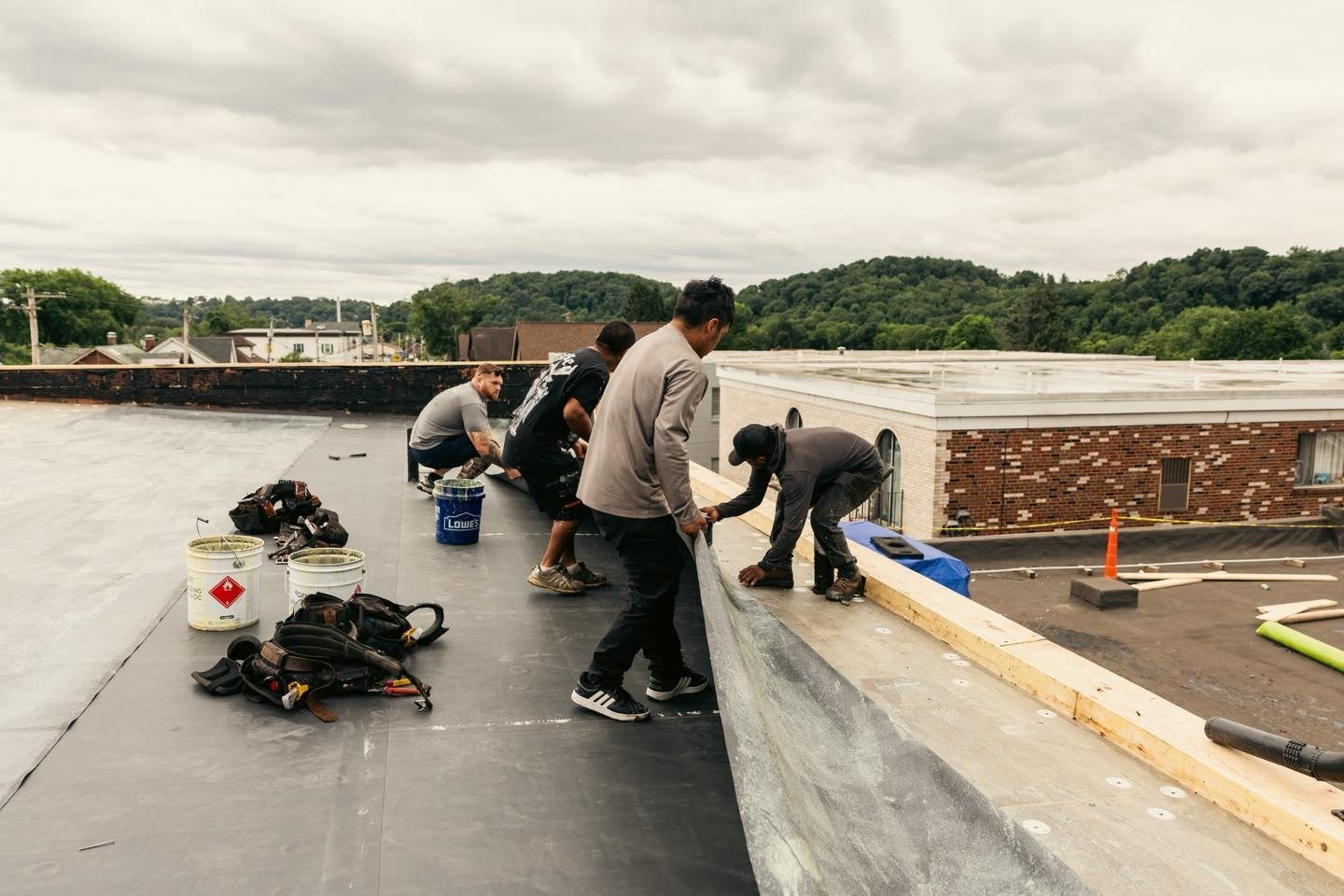
Pittsburgh's mature tree canopy is a constant supplier of drain clogging material every fall, and our winters freeze, thaw and freeze again, sometimes within the same week. We have cleared drains that had not been touched in years and watched the water start moving within minutes. That is how simple, and how neglected, this problem usually is.
Commercial Roof Drainage Systems: The Three Methods
Every low slope roof uses one or more of three methods to get water off the building. Knowing which one you have tells you where to look when water stops moving.
- Interior drains. Basins set into the membrane at the low points, usually with a sump, a clamping ring that seals the membrane and a domed strainer. Water travels through pipes inside the building. These suit large roofs and protect the piping from weather, but hidden clogs are common because nobody sees the pipe.
- Scuppers. Openings through the parapet wall that let water pour into a conductor head and downspout, or free fall away from the building. Scuppers need less piping and often serve as overflow protection, but they must be kept clear of ice and debris.
- Gutters and downspouts. Common on roofs that pitch toward the edge. Commercial gutters and box gutters carry far more water than residential ones and need the same cleaning. We install 5 and 6 inch seamless gutters and coat box gutters with silicone when the metal is sound but the seams have failed.
Well designed roofs also have overflow drains or scuppers set a few inches above the primary outlets, so a clogged main drain in a downpour does not send water up the parapet. If your roof has none, add them during the next repair.
How to Stop Water Pooling on a Flat Roof
The fix depends on the cause, so the first step is always a careful inspection after a rain, when the water shows you exactly where it wants to sit. From there, the solutions move from simple to structural.
1. Clear and repair the drains
Pull the strainers, scoop out debris and flush each drain with a hose. If water still backs up, the pipe below needs snaking. Replace cracked or missing strainers, tighten clamping rings and reseal the membrane at the drain bowl. Commercial roof drain repair is the fastest fix on this list and solves a surprising share of ponding complaints on its own.
2. Fix the low spots
Shallow dips can be brought back to grade with a flat roof leveling compound or a cut to fit insulation fill under a new patch of membrane. Around HVAC curbs and skylights, a cricket or saddle redirects water around the obstruction instead of letting it collect behind it.
3. Add slope with tapered insulation
When a whole area has lost its pitch, tapered polyiso boards create a new gradient toward the drains. This is the standard solution for roofs that were built too flat or have settled. It is done during a membrane replacement, which is why we recommend it when a roof is due for a new system rather than as a standalone repair.
4. Add or enlarge drains
If the roof simply has too few outlets for its area, adding a drain or scupper at the low point, or enlarging the existing ones, cures the problem permanently. This often pairs with adding overflow scuppers.
5. Correct the structure
When the deck itself has sagged, no surface fix will hold. A structural engineer evaluates the framing and the deck is reinforced before the new roof goes on.
Roof Coatings and Ponding Water
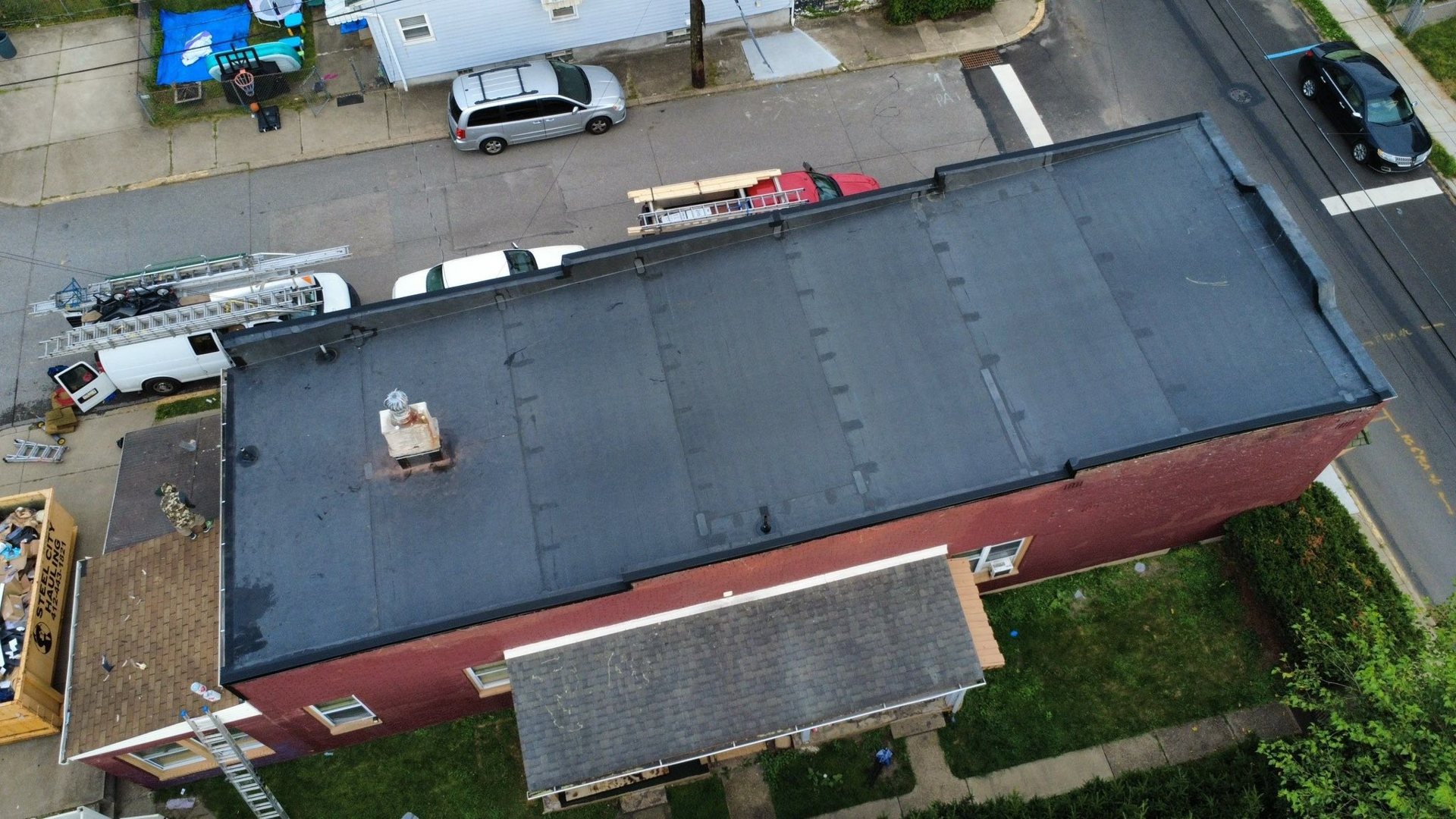
Building owners often ask whether a coating will stop ponding. No. A coating cannot add slope. What it can do is protect a membrane that has to live with occasional standing water.
Silicone is the coating for that job. It keeps its adhesion under permanent ponding and resists ultraviolet light. Acrylic coatings are reflective and economical but soften under standing water. We install MuleHide silicone roof coatings on aging membranes and on box gutters, and we are candid with every client that the coating goes on after the drainage is fixed, not instead of fixing it.
Other Common Commercial Roof Problems and How to Fix Them
Drainage is the root cause, but it shows up as a handful of recurring symptoms. These are the most common repairs needed on commercial roofs in our area.
| Problem | Usual cause | Fix |
|---|---|---|
| Leaks | Open seams, failed flashing, aging membrane | Find the source with a water test, reseal or replace the section |
| Ponding water | Clogged drains, lost slope | Clear drains, fill low spots, tapered insulation |
| Damaged flashing | Rust, cracking, pulled seals around curbs and parapets | Replace or reseal with new metal and compatible sealant |
| Membrane punctures | Foot traffic, dropped tools, dragged equipment | Patch with matching EPDM or TPO, add walkway pads |
| Blistering | Trapped moisture under the membrane | Cut out the blister, dry the area, apply a new patch |
| Shrinkage and bridging | Membrane aging and thermal cycling | Replace stressed sections and re secure flashing |
| Granule loss | UV wear on modified bitumen cap sheets | Coat or replace before the asphalt is exposed |
To fix a commercial roof leak, a roofer finds the entry point with a water test, repairs it, and then checks why water was sitting there long enough to get in.
What Is the 25 Percent Rule for Roofing?
The International Building Code, as adopted in Pennsylvania, includes a provision owners often learn about the hard way. If more than 25 percent of a roof section is repaired, replaced or recovered within a 12 month period, the whole section generally has to be brought up to current code rather than patched piecemeal. That can mean adding tapered insulation to meet minimum slope and bringing insulation up to current energy requirements.
Chronic ponding damages a membrane across a wide area, not one tidy corner, so fixing drainage early keeps a repair small enough to stay under that threshold. Local enforcement varies, so verify with your municipality before major work.
Maintenance That Keeps Water Moving
None of this is complicated, and that is the good news. A simple routine prevents most commercial roof drainage problems:
- Clean drains, scuppers and gutters twice a year. Late fall, after the last leaves drop, is the most important pass. Early summer, after spring storms, is the second.
- Check after every major storm. Walk the roof, or have us do it, and look for standing water that is still there two days later.
- Keep equipment off the drainage paths. Stored materials and heavy units compress insulation and create new low spots.
- Install walkway pads where HVAC technicians travel, so foot traffic does not crush the insulation.
- Keep a log. Dated photos of each drain and each puddle make warranty and insurance claims far easier.
Signs of a failing roof drain: rings of dried sediment where puddles keep forming, gurgling or slow flow during rain, algae near an outlet, and a strainer that is cracked, loose or missing. Inside, watch for ceiling stains and damp walls.
Frequently Asked Questions
How much ponding is acceptable on a flat roof?
Water that drains within 48 hours of a rain is considered normal on a low slope roof. Water still present after 48 hours is ponding by the NRCA definition and should be investigated. Chronic puddles that return to the same spot after every storm shorten membrane life and can void a manufacturer warranty, even when they look harmless.
How often should commercial roof drains be cleaned?
At minimum twice a year, in late fall and early summer, plus a check after any major storm. Buildings under heavy tree cover or with a history of clogs need more frequent attention. Clearing a strainer takes minutes, and it is the least expensive thing you will ever do for a flat roof.
Can a roof coating fix ponding water?
No. A coating cannot add slope or unclog a drain. A silicone coating can protect a membrane that lives with occasional standing water, because silicone keeps its bond under ponding where acrylic will not. We treat coatings as the final step after drains and low spots are corrected, never as the fix itself.
Does Malick Brothers repair commercial roof drains?
Yes. Our repair division handles flat roof leaks, drain and scupper repairs, flashing, box gutters and silicone coatings on commercial and multi unit buildings across the Pittsburgh area, and we work through the winter. For buildings that need slope correction or a new system, we install MuleHide .060 EPDM and 2 ply low slope roofs as a MuleHide certified contractor, and we set the drains and overflow scuppers first and build the slope to them.
Get Eyes on Your Roof Before the Next Freeze
If your building has puddles that outlast the weather, stained ceiling tiles, or drains you have not looked at since last year, now is the time. We will walk the roof, photograph every drain and low spot, and give you a written estimate for what it actually needs, whether that is an afternoon of drain repair or a new tapered system. Contact Malick Brothers Exteriors to schedule a commercial roof drainage inspection in Pittsburgh.