Did you know that over 75% of all new commercial flat roofs in the U.S. now use membrane systems? That’s no accident. In Pittsburgh, where businesses face frigid winters, torrential spring rains, and muggy summers, membrane roofing has become a go-to solution for durability, energy efficiency, and cost-effectiveness.
So, what is membrane roofing? Why it’s popular in Pittsburgh commercial roofing is a question many property owners and facility managers are starting to ask. Let’s dig into the answer, breaking down the types of membrane roofing systems, their benefits, potential drawbacks, and why Pittsburgh businesses are embracing them in 2025 and beyond.
Understanding Membrane Roofing Systems
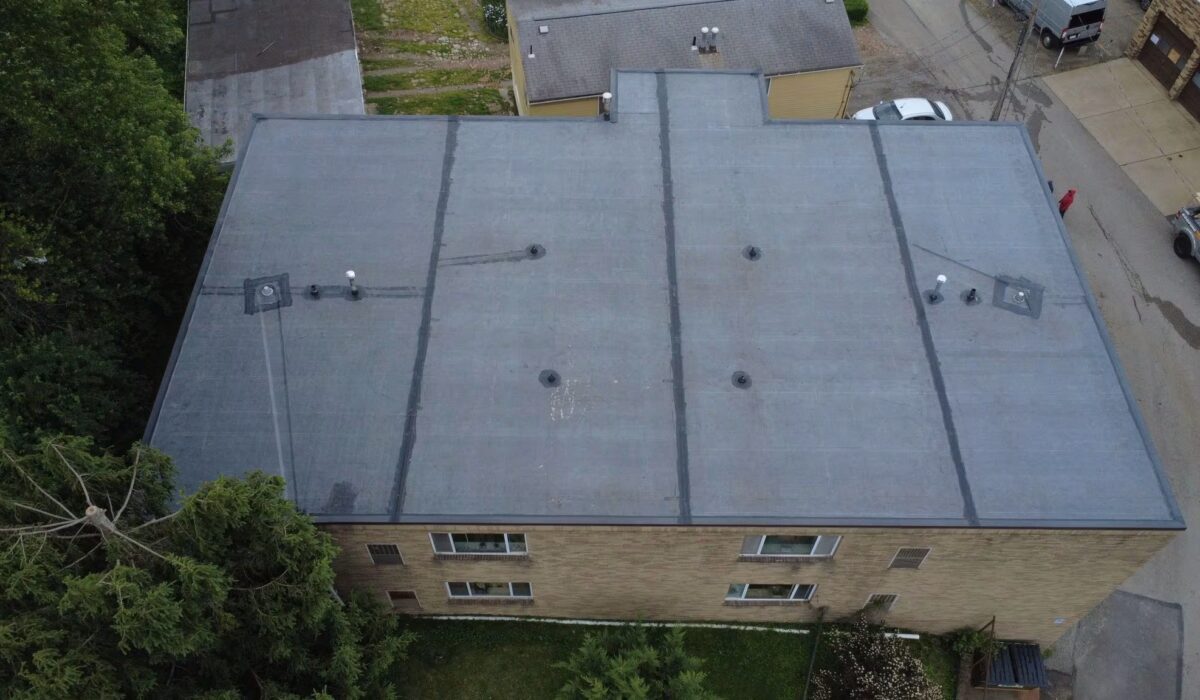
Membrane roofing refers to a category of roofing systems designed for flat or low-slope commercial roofs. Instead of shingles or tiles, membrane systems use large sheets of synthetic or modified materials that are either chemically adhered or mechanically fastened to the roof substrate.
The three most common membrane types are:
- EPDM (Ethylene Propylene Diene Monomer)
- TPO (Thermoplastic Polyolefin)
- PVC (Polyvinyl Chloride)
Each has unique advantages, but all share a primary purpose: to provide seamless, watertight protection that resists weather, UV rays, and foot traffic.
What Is Membrane Roofing? Why It’s Popular in Pittsburgh Commercial Roofing
Flat and low-slope roofs are common throughout Pittsburgh’s commercial districts—from South Side warehouses to downtown office buildings. These rooftops face year-round weather extremes that can wreak havoc on traditional roofing materials.
This is where membrane roofing shines. Unlike asphalt shingles or metal, these systems are:
- Flexible in freeze-thaw conditions
- Highly resistant to water and wind
- Capable of reducing indoor heat buildup during the summer
- Low-maintenance over decades of use
When we talk about what is membrane roofing? Why it’s popular in Pittsburgh commercial roofing, the answer is rooted in real-world performance. These roofs hold up, require fewer repairs, and offer significant energy savings—a crucial factor for property owners managing large square footage.
What is the Purpose of a Membrane Roof?
A membrane roof exists for one reason: to protect your building from water and weather. But its benefits extend well beyond that.
Primary purposes include:
- Waterproofing: The seamless installation prevents leaks and ponding
- Insulation: When paired with proper underlayment, they improve thermal performance
- Reflectivity: White membrane options like TPO and PVC reflect UV rays, reducing HVAC loads
- Durability: With proper care, some systems last 20–30+ years
Membrane systems are also lightweight, which means less stress on your structure and easier installation compared to built-up or metal systems.
Modified Bitumen and Single-Ply Membranes: What Pittsburgh Prefers
According to The Rise of Commercial Roofing in Pittsburgh for 2025, modified bitumen is a top choice for buildings with older structural designs. Reinforced with plastic or rubber polymers, it’s torch-applied or cold-adhered in layers that form a watertight barrier.
On the other hand, newer buildings are embracing single-ply membranes like EPDM and TPO:
- EPDM: Known as “rubber roofing,” it’s ideal for wide, flat rooftops
- TPO: Offers heat reflection, chemical resistance, and affordability
Both systems are featured in expert guides from Nations Roof that explore their thermoset and thermoplastic properties in detail.
What is the Most Common Commercial Roofing Material?
While built-up roofing and metal systems are still in use, single-ply membranes have quickly become the most common commercial roofing Pittsburgh material.
Why?
- They adapt well to flat roof designs
- Require less labor and time to install
- Offer better energy efficiency and insulation
- Are easier to repair and maintain
Whether you’re sourcing from a local roofing supply Pittsburgh warehouse or working with a contractor, EPDM and TPO are consistently at the top of the materials list for commercial projects in 2025.
What Are the Disadvantages of a Membrane Roof?
No roofing system is perfect. While membrane roofing has many advantages, there are a few challenges to consider:
- Installation Sensitivity: Poor sealing or loose fasteners can cause leaks
- Puncture Risk: Although durable, membrane roofs can be damaged by sharp objects or heavy foot traffic
- UV Degradation (for EPDM): Without a protective topcoat or ballast, rubber membranes can degrade over time
- Limited Aesthetics: Membrane roofs are more functional than decorative
That said, choosing experienced commercial roofers minimizes these risks. When installed correctly and inspected regularly, membrane systems outperform many traditional roofs.
Roof Coatings: Extending the Life of Your Membrane System
Already have a membrane roof showing signs of age? You don’t always need a full replacement.
Roof coatings – particularly silicone, acrylic, or urethane – can breathe new life into aging surfaces:
- Silicone: Best for ponding water areas
- Acrylic: UV-resistant and budget-friendly
- Urethane: Offers tough impact and chemical resistance
Applying a coating reduces reflectivity loss and creates a seamless top layer that restores waterproofing and insulation. It’s a popular upgrade in Pittsburgh’s commercial roofing scene.
How Expensive Is a Membrane Roof?
The cost of a membrane roofing system varies based on factors like square footage, insulation, material choice, and installation method. That said, membrane roofing tends to be one of the most cost-effective long-term options.
While upfront costs may be higher than basic asphalt systems, membrane roofs:
- Require fewer repairs
- Lower utility bills over time
- Last longer (20+ years with proper care)
For Pittsburgh businesses investing in energy efficiency or tax-incentivized upgrades, the ROI is worth it.
How to Choose the Right Membrane Roofing Contractor

Hiring the right commercial roofer is critical. Look for companies with:
- Proven experience in commercial roofing Pittsburgh
- Certifications with leading membrane manufacturers
- A track record of local installations with positive reviews
- Access to top-tier roofing supply Pittsburgh materials
At Malick Brothers Exteriors, we specialize in membrane systems for Pittsburgh’s commercial buildings—from modified bitumen for historic renovations to energy-efficient TPO for modern offices.
We believe no one-size-fits-all solution exists. Our team conducts thorough inspections and recommends systems based on climate, structure, and usage.
Conclusion: Membrane Roofing Is the Future of Pittsburgh Commercial Roofing
So, what is membrane roofing? Why it’s popular in Pittsburgh commercial roofing? It’s a smart, modern solution for aging flat roofs and energy-conscious business owners. Whether you’re managing a logistics hub or a retail strip center, a membrane system can offer long-term protection, efficiency, and peace of mind.
If you’re ready to explore your options, contact a trusted local expert today. Don’t wait until a small leak turns into a major renovation. The right roofing system can protect your investment for decades to come.