Commercial Roofing Installation in Pittsburgh, PA
New commercial roof systems for new construction, additions and building upgrades, from a MuleHide certified contractor.
- Five star Google reviews
- BBB A+ rated
- AtlasPro+ Platinum Select
- PA HIC# PA174918
Commercial Roofing Installation for New Buildings and Additions
A new building or addition gets one chance to have its roof done right. Malick Brothers Exteriors installs flat, low slope and metal roofs on new commercial construction, building additions and properties changing use across Pittsburgh and the North Hills. We help you choose the system, plan the drainage and details, and work to your project schedule so the roof isn't the trade holding everyone up.
- Free consultation and written estimate
- TPO, EPDM, PVC, built up roofing and metal
- MuleHide certified flat roofing contractor
- Labor warranty plus manufacturer warranties
Hundreds of five star Google reviews. Licensed and insured. Pennsylvania Home Improvement Contractor Registration Number: PA174918.
Call for an Estimate
(412) 616-0191
Get Your Free Commercial Roofing Installation Estimate
Tell us about your building or plans and we'll set up a free consultation.
Certified, Licensed and Trusted




Commercial Roofs Built Right From the Deck Up
Many commercial roofing jobs start with an old roof. Installation starts with a bare deck, and that's the best time to get every detail right. We install roofs on new commercial buildings, additions to stores, offices and warehouses, garages and service bays, and older buildings being converted to new uses.
Whether you're the owner, the developer or the general contractor, you get one local, family owned team, born and raised in West View, with a BBB A+ rating. We review the plans, flag problems early and keep you updated with photos as the roof goes on.
- Licensed and insured, PA HIC# PA174918
- Coordination with your builder and other trades
- Photo updates during the installation
Working with a builder? Read how general contractors work with commercial roofing projects.
Matching the Roof to the Building
The best roof for a new building depends on how it will be used. A restaurant with kitchen exhaust, a warehouse with a large open roof and a mixed use building with apartments upstairs all need different things. We walk you through the options and the tradeoffs before anything is ordered.
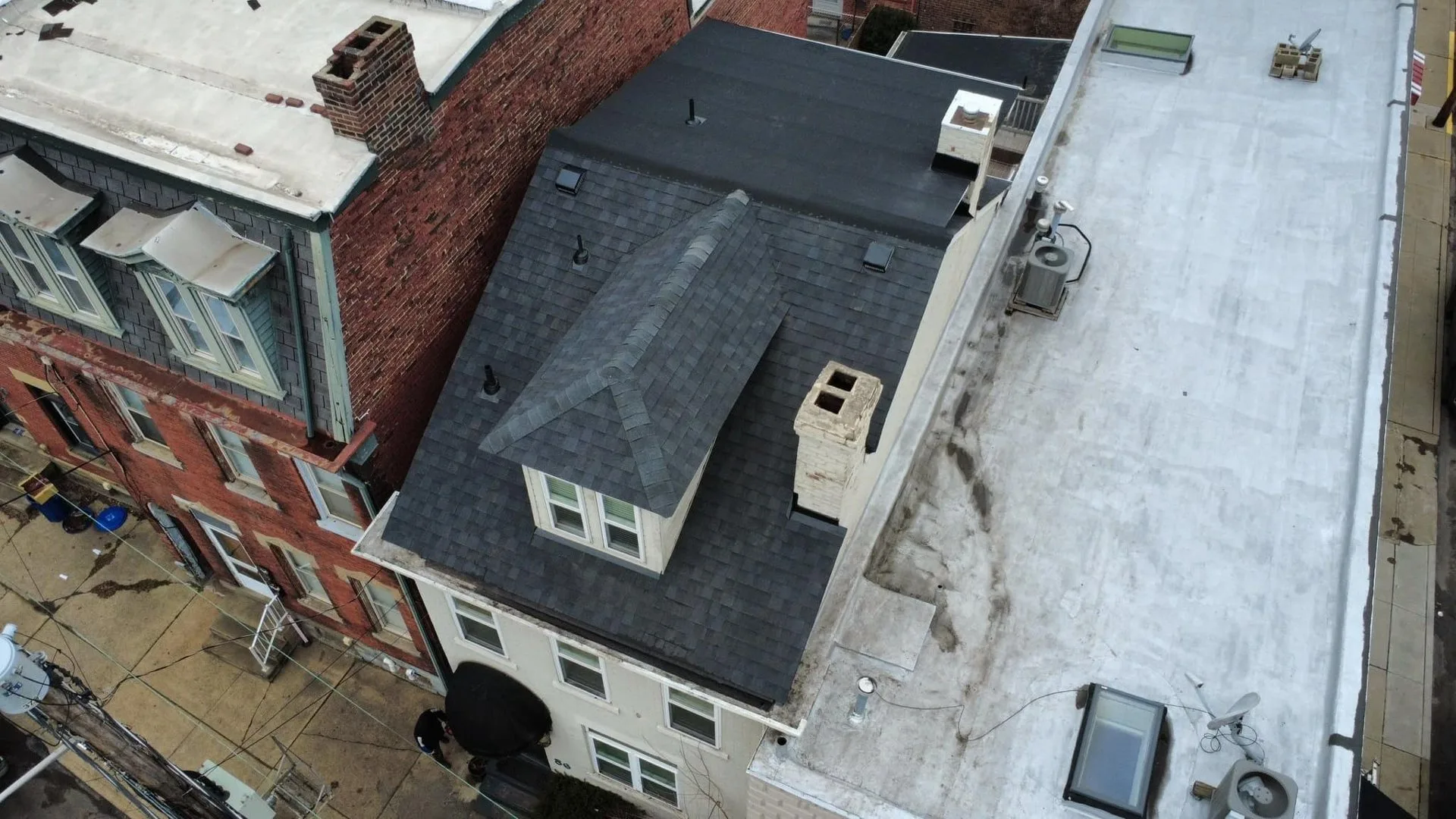
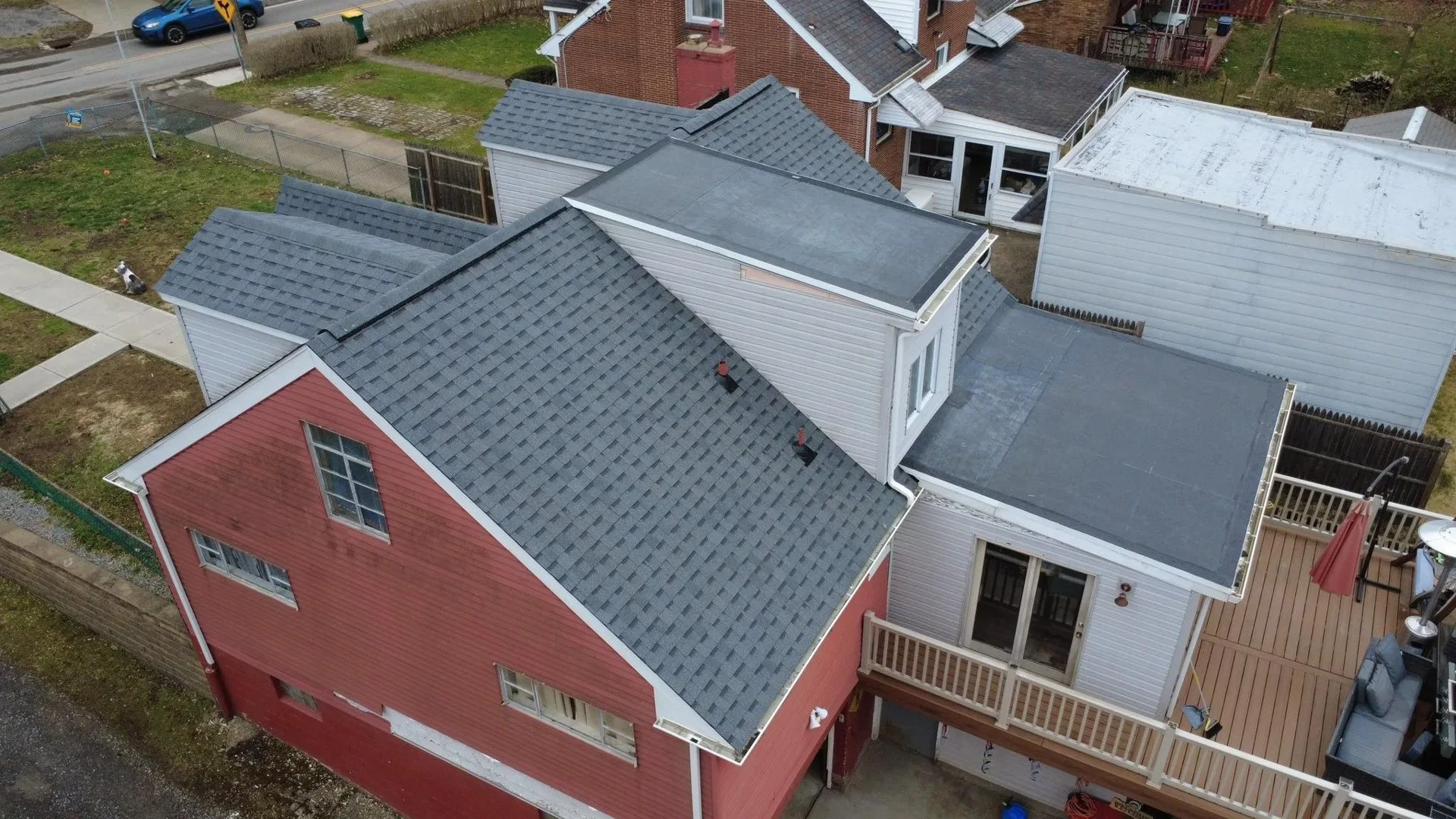
Some owners also use an addition or renovation to change materials, for example moving from an old built up roof to a single ply membrane, or putting standing seam metal on a low slope roof that people can see from the street. On mixed roofs in Glenshaw and Mt. Washington, we paired Atlas shingles on the pitched sections with MuleHide EPDM on the flat ones.
- How the building is used and what sits on the roof
- Energy goals and roof color
- Expected foot traffic for service and maintenance
- Budget now compared with cost over the life of the roof
The Details That Decide How Long a New Roof Lasts
A new commercial roof usually fails at the details, not in the middle of the membrane. We pay close attention to where water goes, what will be mounted on the roof and how the edges are finished.
Getting water to the drains is the biggest one. Flat roofs still need slope, often built in with tapered insulation, so water doesn't pond. We also plan for rooftop units, walk pads where technicians will travel, and edge metal that stands up to wind.
- Slope and drainage planned to drains, scuppers or gutters
- Insulation chosen for the building and the system
- Curbs and flashing for rooftop equipment
- Walk pads along service paths
Adding equipment later? Read what to know about roof load limits and how walk pads protect high traffic areas.
Designed for Snow, Freeze and Thaw and Hillside Sites
Pittsburgh roofs carry snow for weeks at a time, go through freeze and thaw cycles all winter and take summer storms with heavy wind. Buildings on hillsides and hilltops catch more of that wind, and many commercial lots back up to trees that fill drains every fall.
We plan new roofs for those conditions from day one, with secure edges, drainage that can handle a heavy storm, and materials that stay flexible in the cold. In Observatory Hill we installed a MuleHide 2 ply low slope system, and in McKees Rocks a complete EPDM roofing system on an apartment building.
Have an existing roof that's failing instead? See our commercial roof replacement service.
Our Commercial Roofing Installation Process
-
Consultation and plan review
We review the building, drawings and schedule with you or your builder.
-
System recommendation and estimate
A written estimate with the system, insulation and details spelled out.
-
Schedule with the project
We line up materials and crews with the rest of the construction schedule.
-
Deck prep and insulation
We check the deck and install insulation and slope for drainage.
-
Membrane or metal installed
Field membrane or panels, flashing, curbs, edge metal and drains.
-
Walkthrough and closeout
Final walkthrough, photos and warranty paperwork for your records.
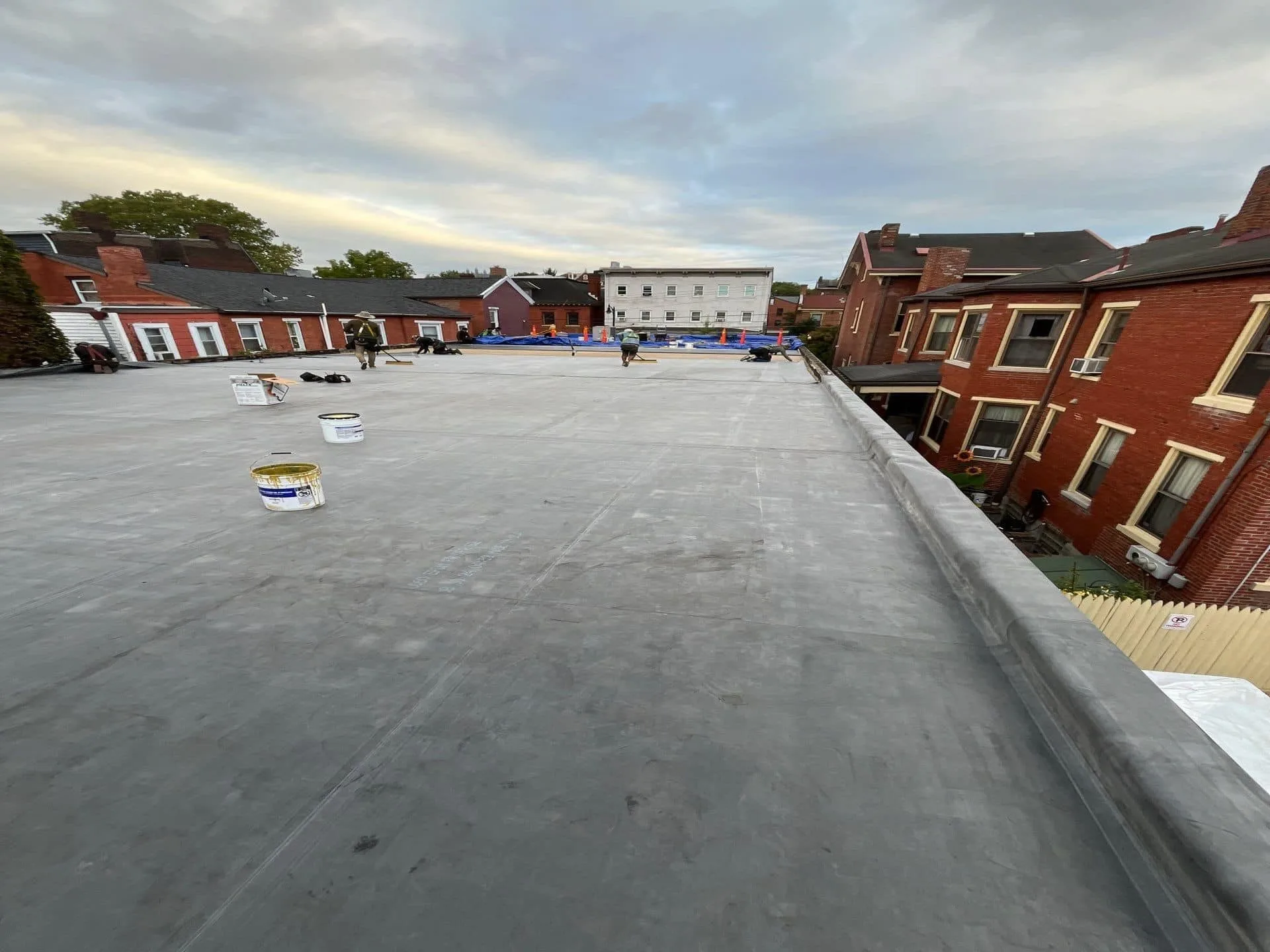
Installing a Membrane Roof in Pittsburgh
Laying out the roof with the crew
Bonding adhesive rolled onto the deck
Membrane fitted at the roof edge
Systems We Install on New Commercial Roofs
Each system has a building it fits best. These three cover most of the new commercial roofs we install around Pittsburgh.
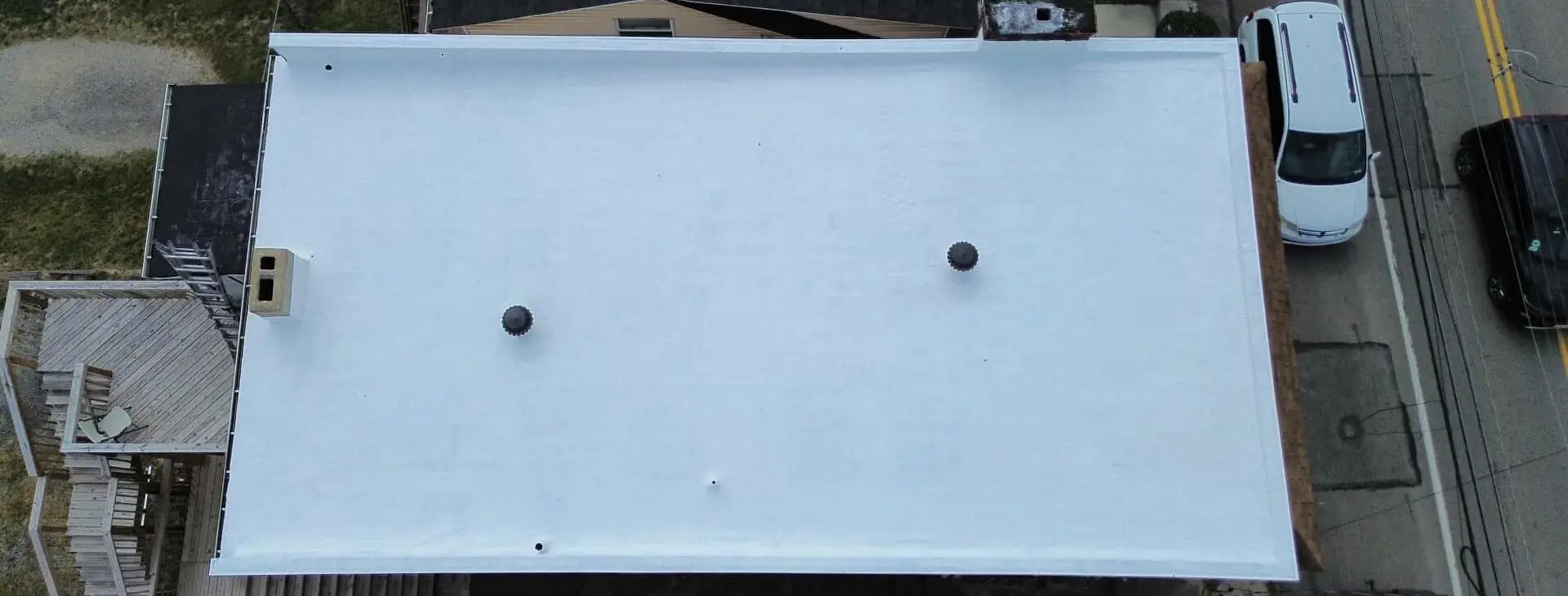
TPO Membrane
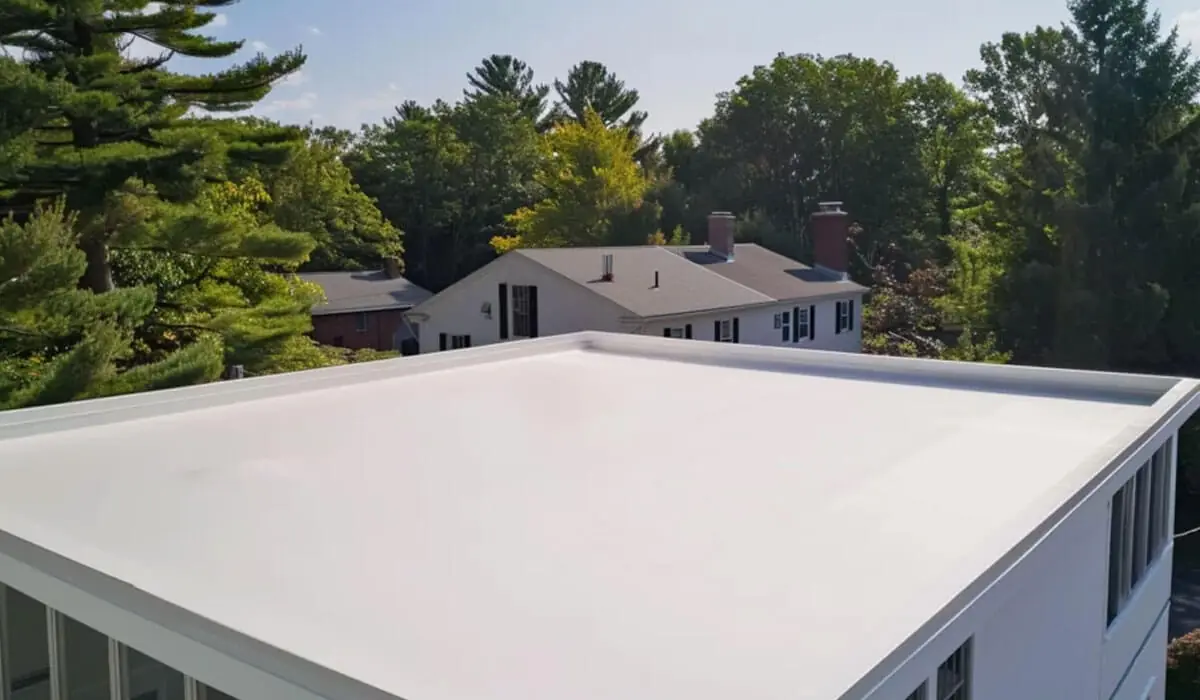
A reflective white single ply membrane with heat welded seams. A popular choice for new offices, retail and warehouses with large open roofs. Learn more about tpo membrane.
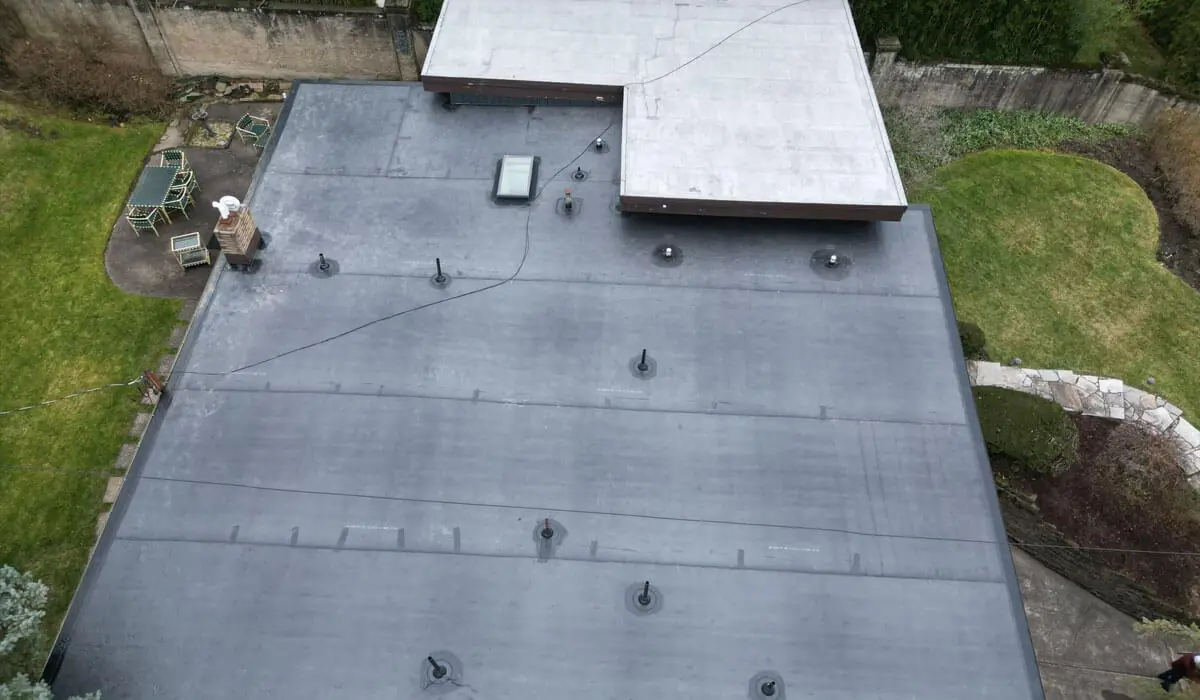
EPDM
A proven rubber membrane that handles cold and freeze and thaw well. We install MuleHide .060 EPDM, a practical, durable option for additions and smaller flat roofs. Learn more about epdm.
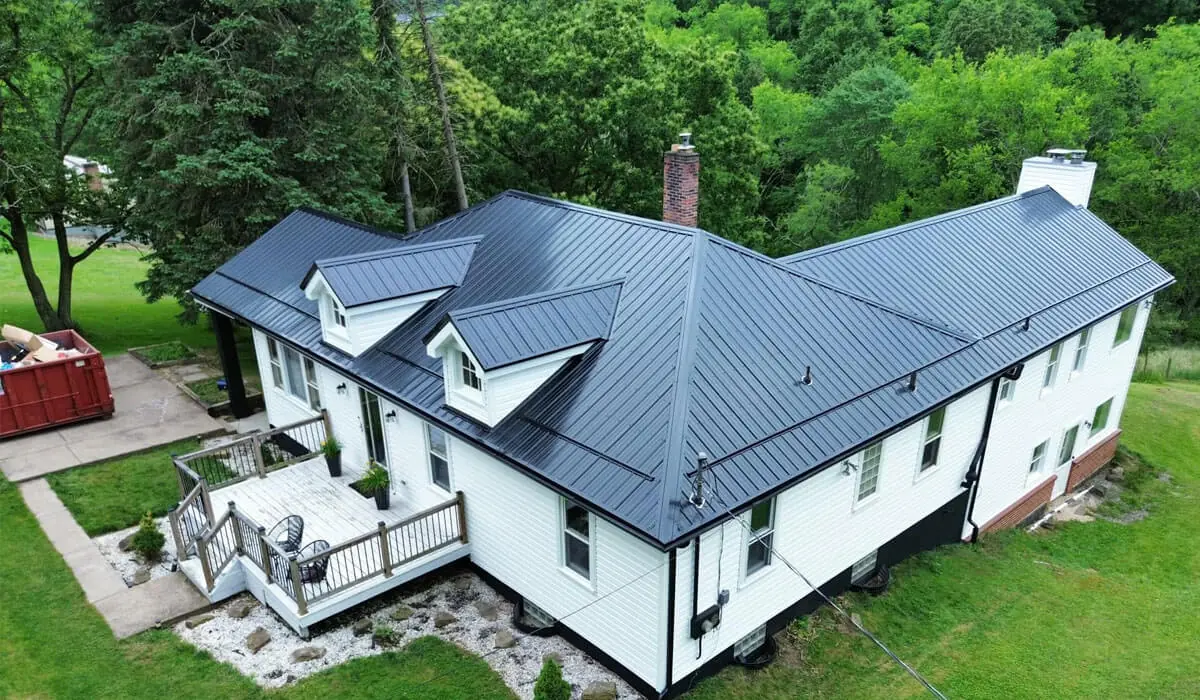
Metal Roofing
Long lasting metal for low slope and pitched commercial roofs, a strong fit when the roof is part of how the building looks from the street. Learn more about metal roofing.
Planning a New Building or Addition? Call for a Free Estimate
(412) 616-0191
What Every New Commercial Roof Includes
A new roof should be a complete system, not just a membrane. Every installation includes these parts.
Insulation and Slope
Insulation and built in slope that move water off the roof instead of letting it pond.
Flashing and Curbs
Flashing at walls, curbs, pipes and rooftop units, done to the manufacturer details.
Edges and Drainage
Edge metal, drains, scuppers or gutters that work together in a heavy storm.
Closeout Records
Photos, the written scope and warranty paperwork for the building file.
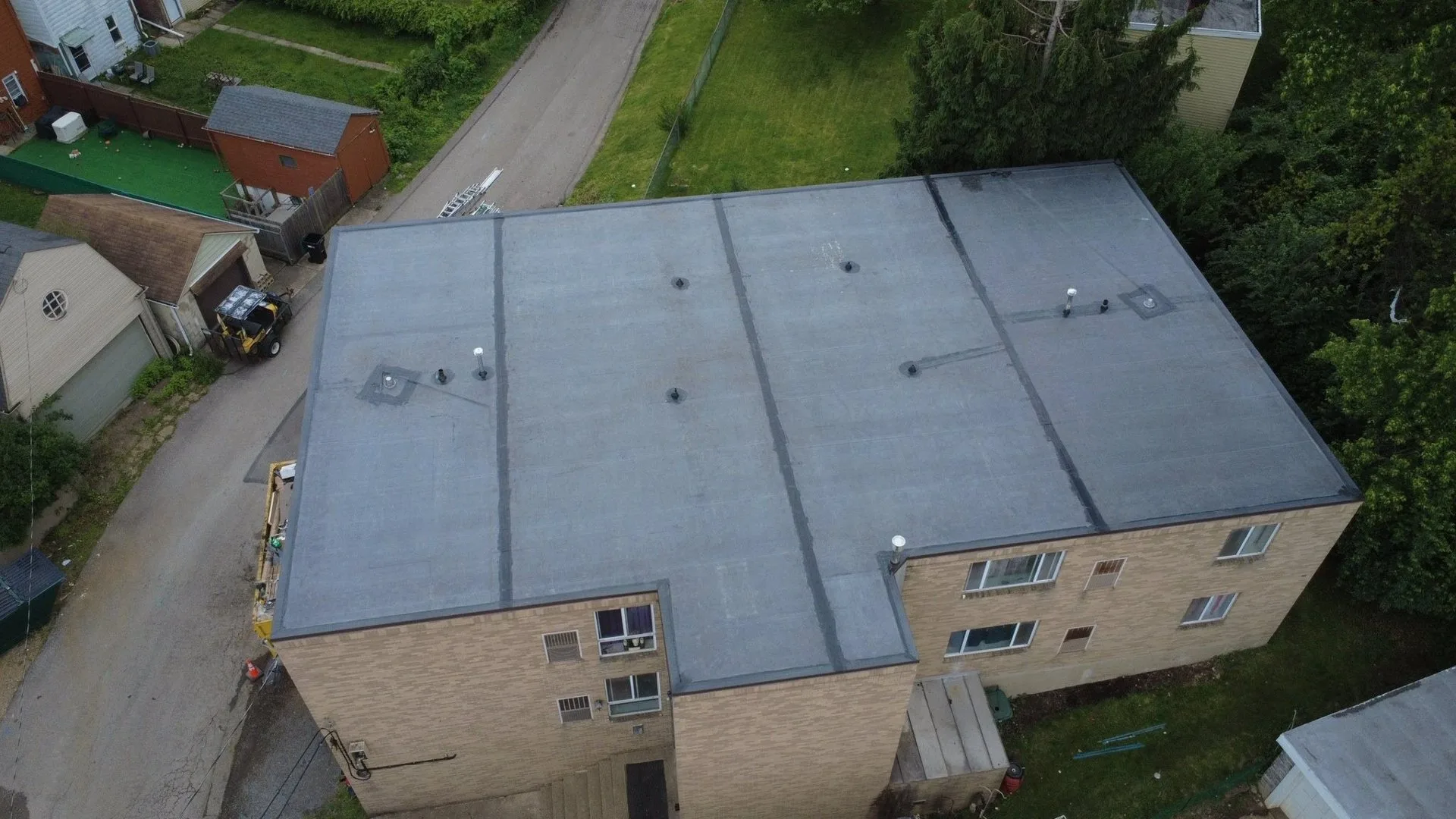
What Affects the Cost of a New Commercial Roof?
We price new roofs from your plans or a site visit, never from a guess over the phone. These are the factors that move the number most:
- Roof area, shape and number of levels
- The system: TPO, EPDM, PVC, built up or metal
- Insulation and tapered slope for drainage
- Rooftop units, curbs and penetrations
- Edge metal, drains, scuppers and gutters
- Access and coordination with other trades
Your written estimate spells out the system and every detail, which makes it easy to compare bids and plan your budget. See which commercial roofing materials offer the best long term value. Need the walls finished too? We also handle siding installation on additions and renovations.
Warranties and Records for a New Building
Every commercial roof we install is backed by our labor warranty on the workmanship, plus the manufacturer warranty on the system you choose. We explain what each warranty covers in your estimate, before you commit.
When the roof is finished, you get photos of the work and your warranty documents to keep with the building records, which helps with insurance, future maintenance and any sale of the property. Ask about financing through our trusted regional lender if it fits your project.
- Labor warranty plus manufacturer warranty
- Photos and paperwork for the building file
- Licensed and insured, PA HIC# PA174918
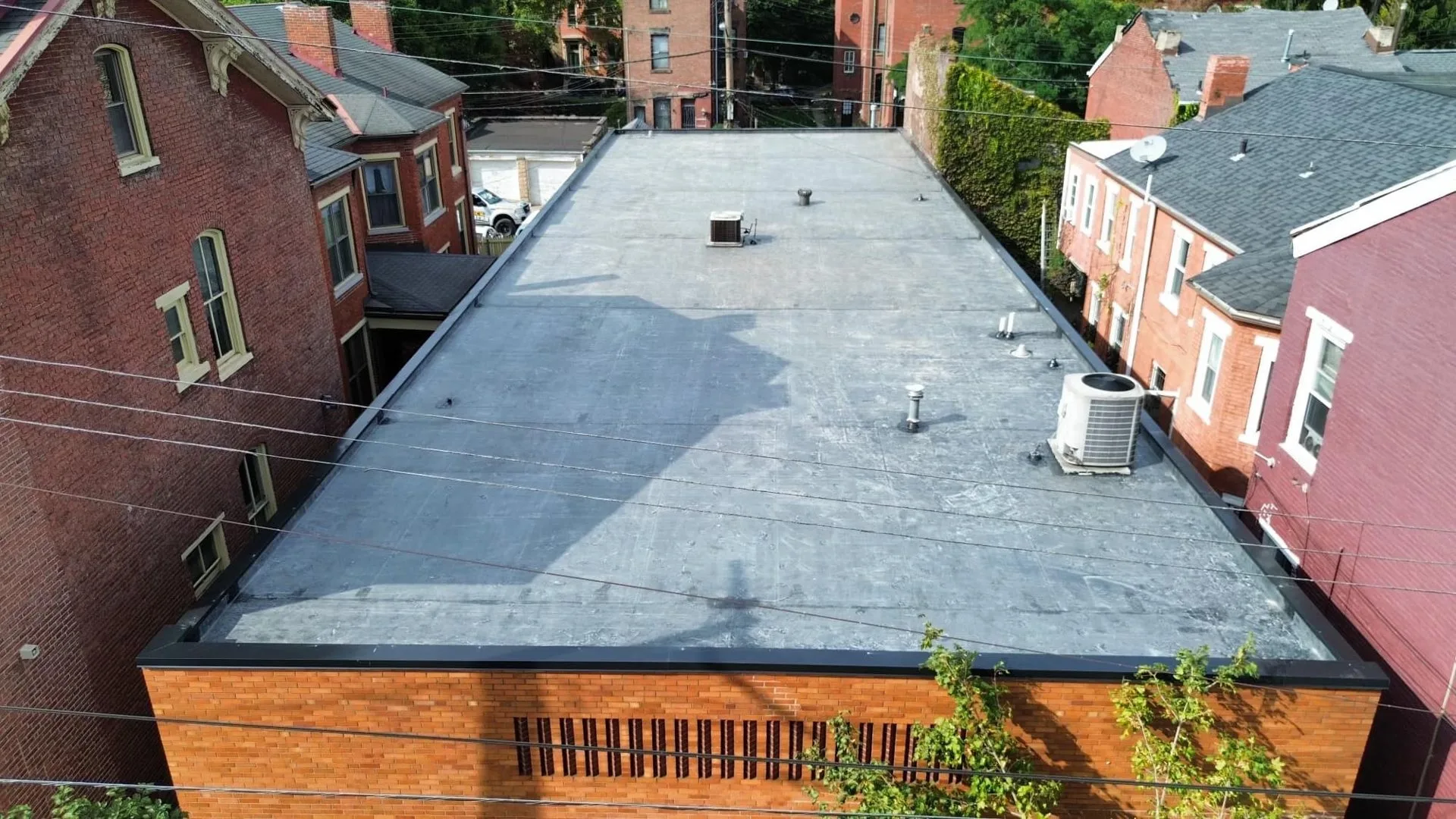
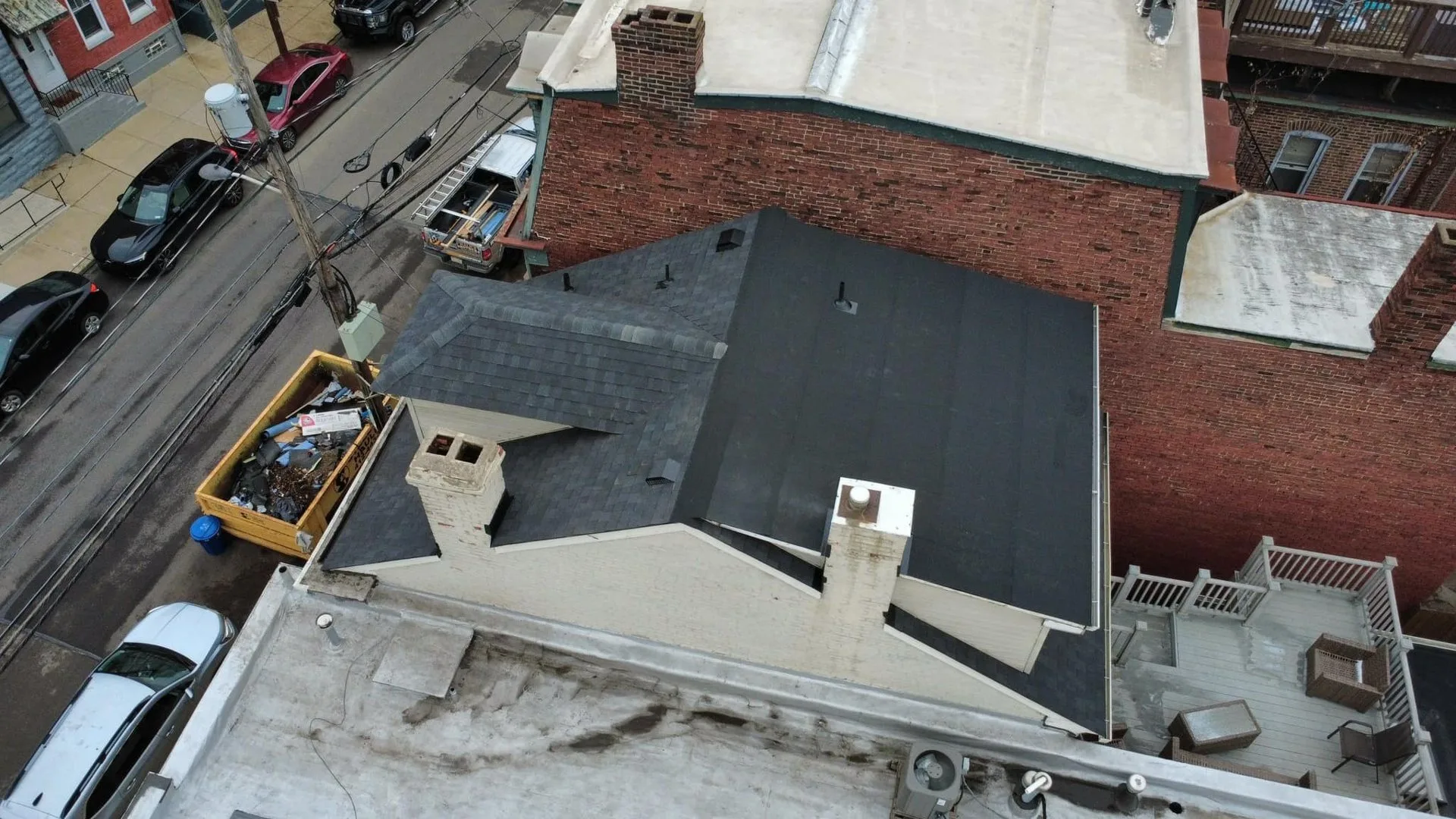
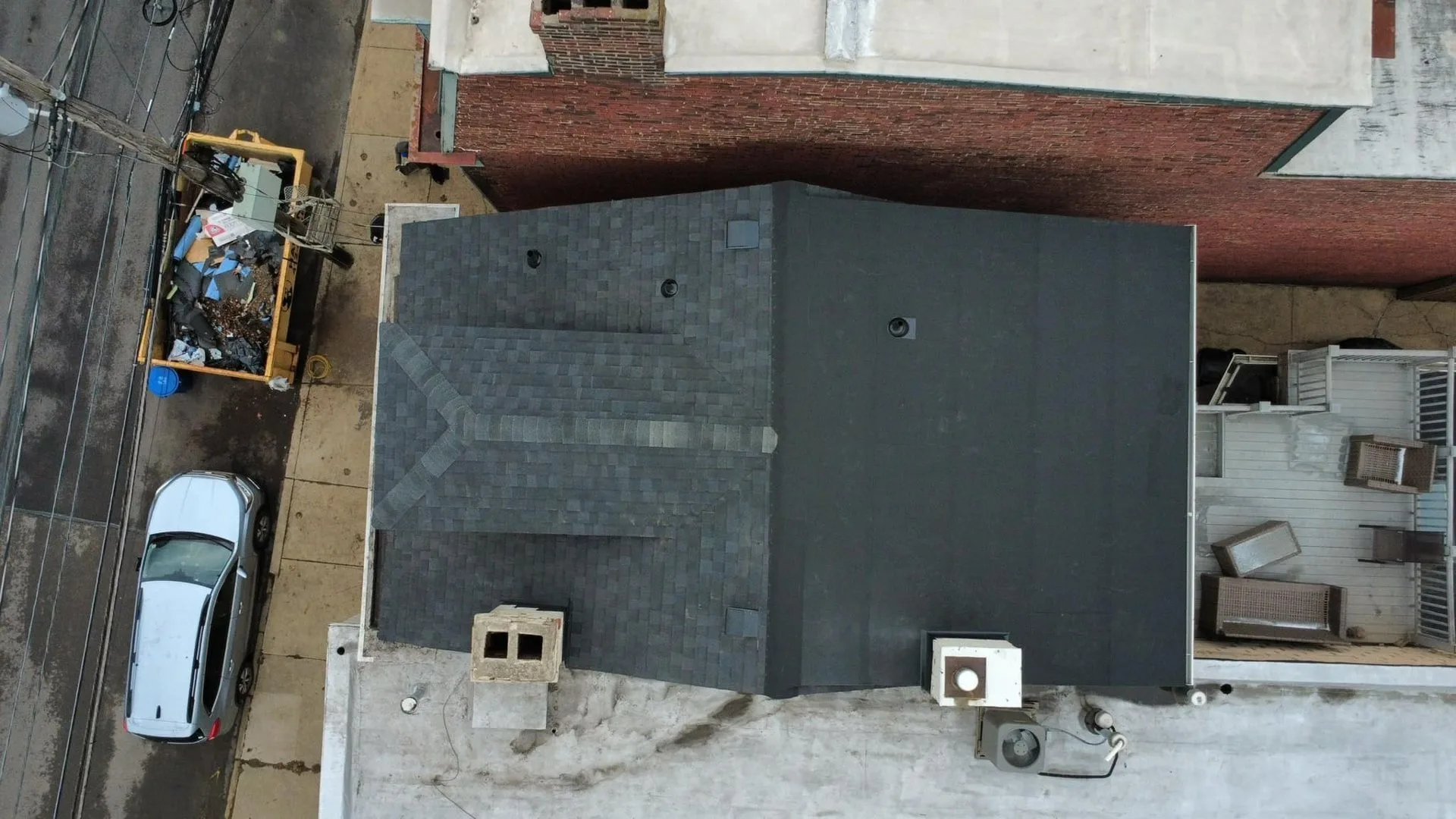
Recent Commercial Roof Installations
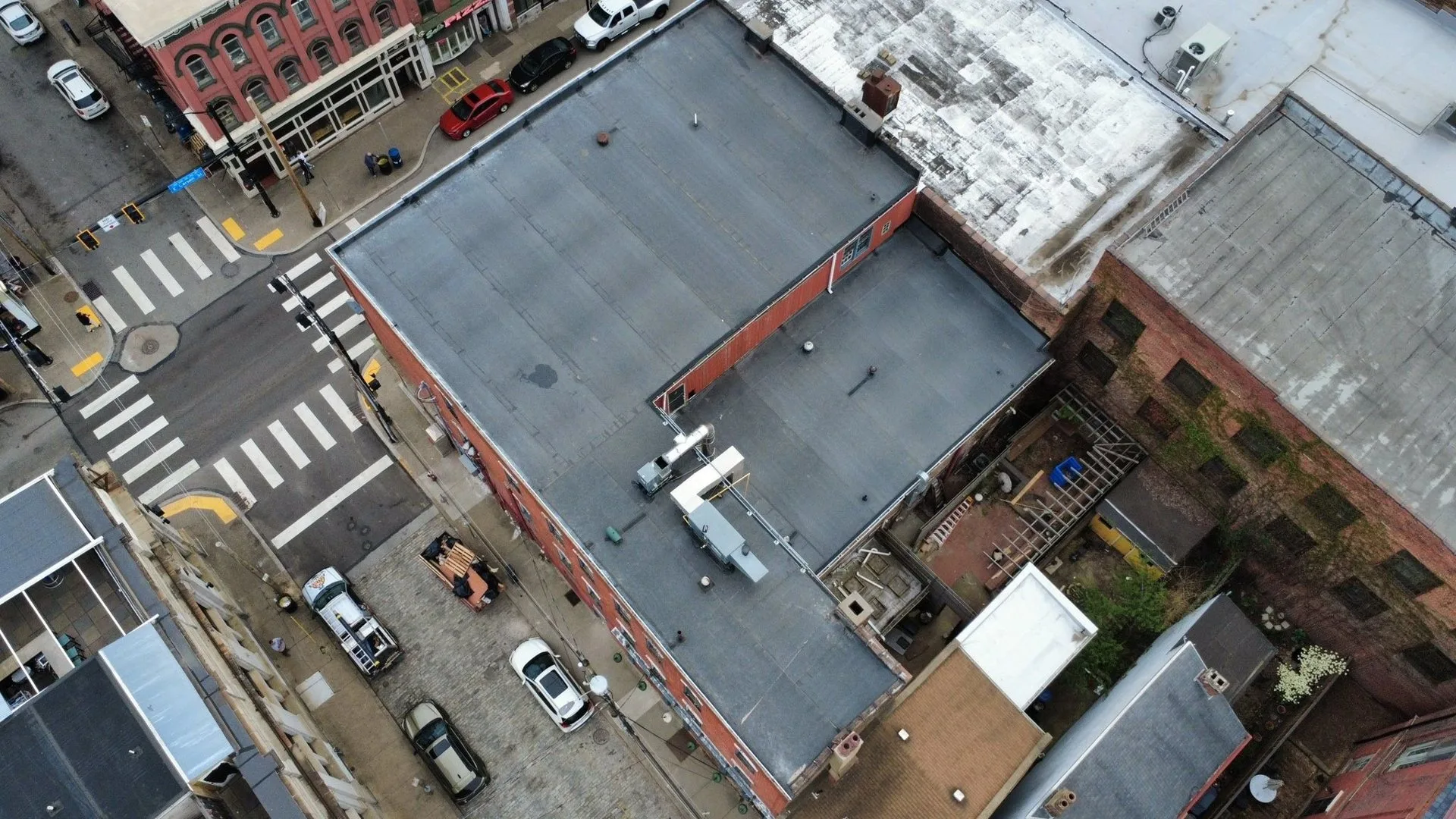
Membrane roofs our commercial crews installed on buildings around Pittsburgh. Click any photo to see it full size.
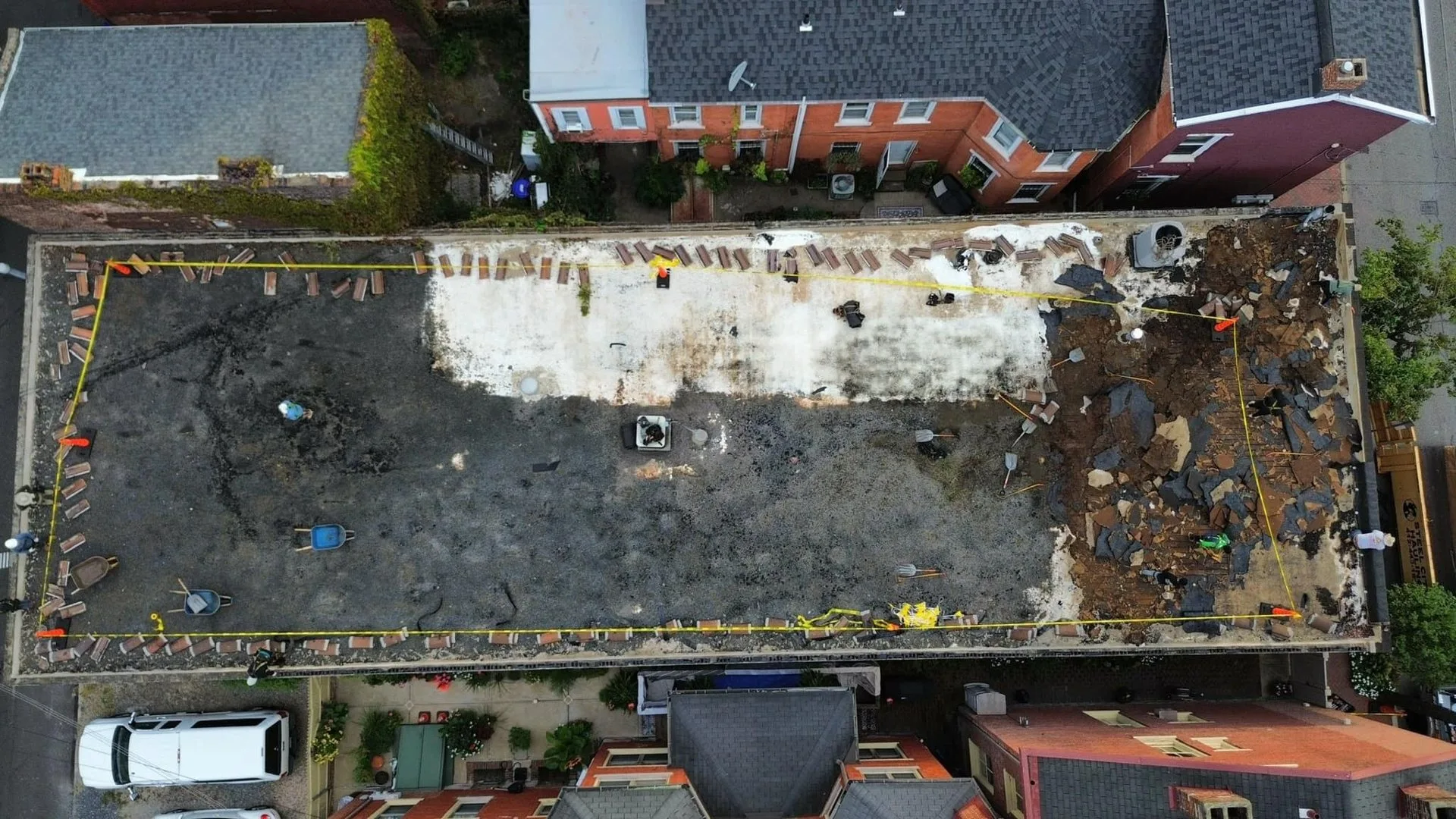
September 2024 Project
A low slope roof completed by our commercial crew, September 2024.
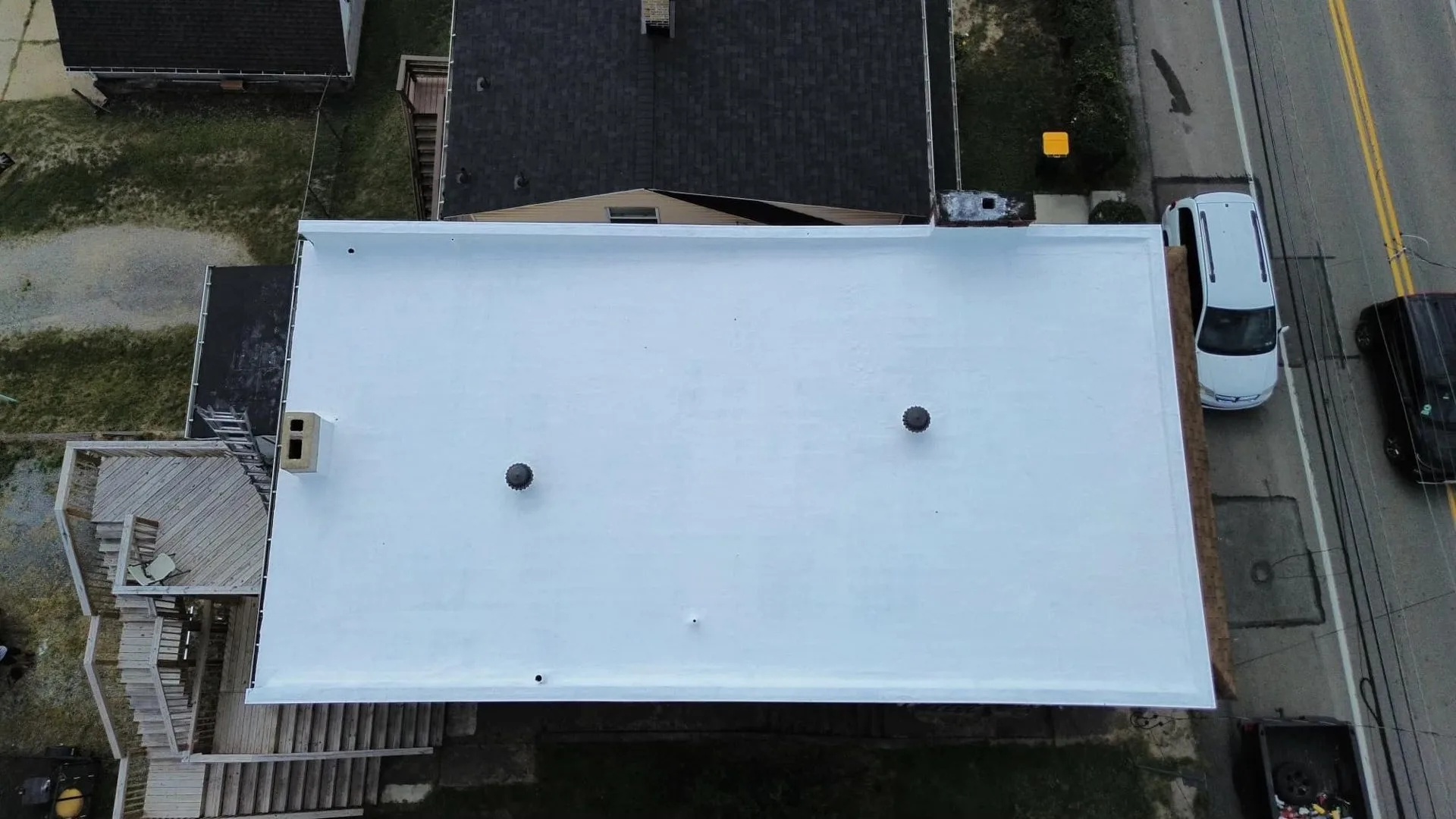
September 2024 Project
A low slope roof completed by our commercial crew, September 2024.
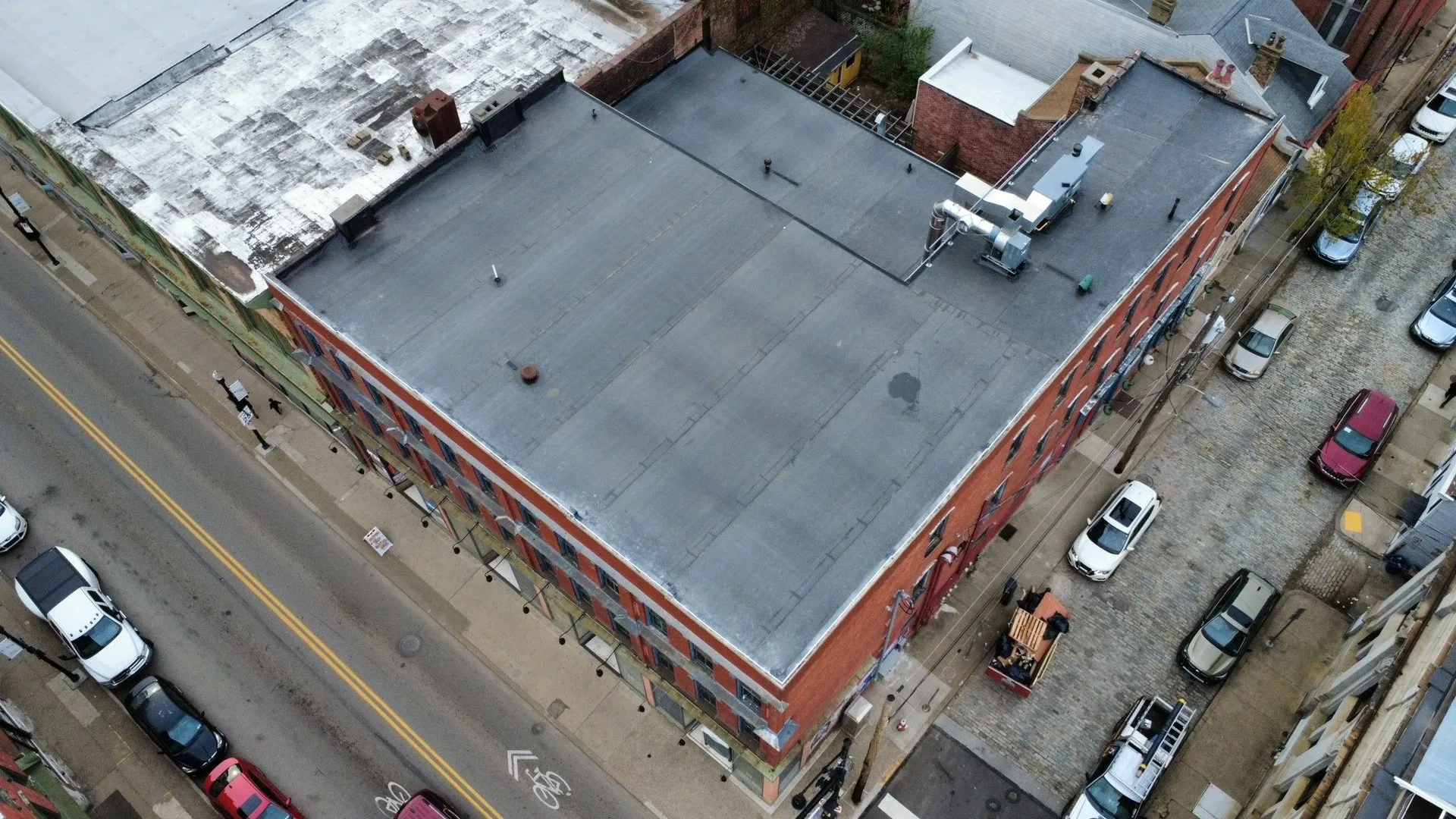
April 2025 Project
A low slope roof completed by our commercial crew, April 2025.
What Our Customers Say
Short excerpts from our Google reviews. Read all of our reviews on Google.

I contacted Ryan in mid-February to take a look at some suspect roofing work someone else had just done...
Steve Schotting

Hands down the best roofing company I’ve done business with in Pittsburgh. The craftsmanship of work is exceptional and prices are always very fair...
Michael Garofalo

As I live in Florida, I needed a reliable, quality roofing artisan to replace 3 sections of rubber roof...
John McCartney
Commercial Roofing Installation Across Greater Pittsburgh
Recent commercial and low slope installs include Pittsburgh Mirror and Glass, an apartment building in McKees Rocks and roofs in Glenshaw, Observatory Hill and Mt. Washington.
From our base at 500 Perry Highway, we install commercial roofs throughout Pittsburgh, the North Hills and nearby communities in Allegheny, Beaver, Butler and Washington counties, including:
Commercial Roofing Installation Questions
Answers to common questions from owners, developers and builders planning a new commercial roof.
Do you install roofs on new construction and additions?
Yes. We install roofs on new commercial buildings, additions, garages and service bays, and buildings being renovated for a new use, along with replacements on existing buildings.
Can you work with our general contractor?
Yes. We plan the schedule around deck readiness and rooftop equipment so the roof goes on at the right point in the project.
What is the best roof for a new commercial building in Pittsburgh?
It depends on the building. TPO is popular for reflective roofs, EPDM is proven in cold weather, PVC suits restaurants with exhaust, and metal fits pitched or visible roofs.
How much does a new commercial roof cost?
Cost depends on roof size and shape, the system, insulation and slope, the number of rooftop units and penetrations, edge and drainage details, and access. We review your plans and give you a written estimate.
How long does a commercial roof installation take?
It depends on the roof size, the system, the weather and where the roof falls in the construction schedule. You get a planned timeline with your estimate.
Can a new addition roof be tied into the existing roof?
Usually, yes. The tie in is one of the most common leak points, so we pay close attention to how the new and old roofs meet and how water drains between them.
Can commercial roofs be installed in winter?
We work all winter, but adhesives, welding and sealants have temperature limits. We plan the schedule around the system and the forecast so the roof goes on the right way.
Is metal a good choice for a commercial building?
Metal works well on pitched and some low slope commercial roofs and lasts a long time. It isn't right for every flat roof, and we'll tell you when a membrane makes more sense.
Can you also handle siding and gutters on the project?
Yes. We also install siding, soffit and fascia, and gutters and downspouts, which can simplify an addition or exterior renovation.
Are you licensed and insured?
Yes. Malick Brothers Exteriors is licensed (PA HIC# PA174918) and carries insurance that protects our crew and your property. We can provide proof of insurance on request.
Schedule Your Free Commercial Roofing Consultation
Tell us about your building, addition or plans and we'll set up a free consultation and written estimate. Prefer to talk? Call (412) 616-0191.