As fall approaches in Pittsburgh, business owners should be eyeing more than just their Q4 goals – it’s also time to make sure your roof is ready for the season. Autumn in western Pennsylvania often brings fierce storms with heavy rain and strong winds that can truly test a commercial roof’s integrity. If you don’t prepare, those fall storms could lead to leaks, interior water damage, or even structural issues that disrupt your operations.
Our Pittsburgh Roof Life: Weather Impact & Maintenance Guide notes that the city endures over 150 wet days annually, creating a perfect storm for roofing wear and tear. Heavy rain can quickly overload clogged gutters or exploit loose shingles, and high winds can rip materials off the roof or send debris flying. Simply put, preparing your business roof for fall isn’t just a routine task – it’s critical protection against costly problems and downtime.
Why Prepare Your Business Roof for Fall in Pittsburgh?
Pittsburgh’s fall weather can be a wild card. One week it’s crisp and clear, the next we’re hit with driving rain and wind gusts. Without preparation, this volatility is bad news for any commercial roof. Heavy rain can cause leaks by finding even tiny gaps in your roofing, lead to gutter overflows that spill water where it shouldn’t be, and saturate roofing materials (causing premature deterioration).
Meanwhile, high winds can loosen or outright tear off shingles and panels, damage flashing around vents and skylights, and hurl debris onto your roof – potentially puncturing membranes or denting metal. For businesses, the stakes are high: a minor leak could damage inventory, disrupt electronics, or force you to temporarily close for repairs. That’s why taking preventative steps before the worst weather hits is so important.
Key Steps to Prepare Your Business Roof for Fall in Pittsburgh
Schedule a Professional Roof Inspection
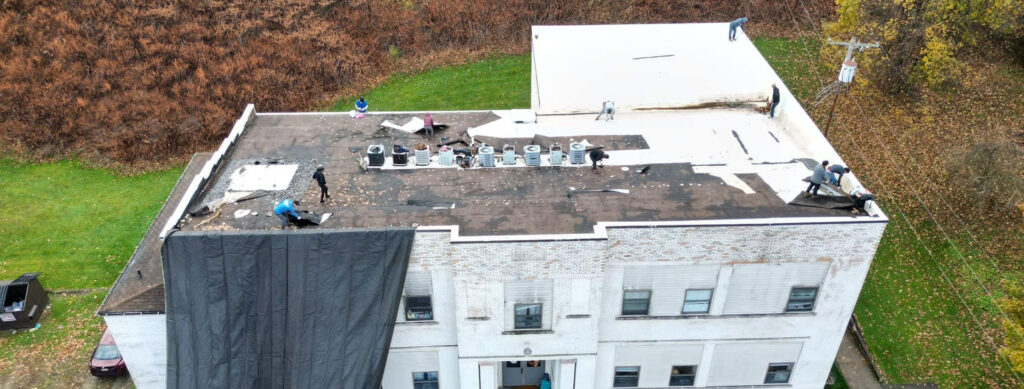
Start the season with a thorough evaluation of your roof’s condition. In our experience, scheduling a fall commercial roof inspection is one of the smartest investments you can make. A professional roofer knows how to spot issues you might miss – loose or missing shingles, hairline cracks in the membrane, soft spots in the decking, or damaged flashing.
The National Roofing Contractors Association (NRCA) recommends having roofs inspected twice a year – once in spring and once in fall. Think of it like a wellness checkup for your roof: fix small issues now and avoid large-scale problems later.
Clean Gutters and Roof Drains
One core task of any fall maintenance plan is keeping your drainage system clear. Falling leaves are beautiful around Pittsburgh, but they wreak havoc on gutters. Clogged gutters or internal drains cause rainwater to back up and overflow into areas it shouldn’t.
An effective fall roof maintenance Pittsburgh checklist always includes removing debris from gutters, downspouts, and scuppers. Scoop out leaves and flush channels with water to ensure free flow. Repair cracks or sagging sections as needed. Proper drainage is critical: if water can’t get off your roof, it will find another way – often straight inside.
Trim Overhanging Branches and Remove Debris
Trees near your building add beauty but also risk. In a windstorm, branches can break, scrape across roofing, or crash onto the surface. Trim branches back to maintain a 10-foot clearance from the roof edge and remove any weakened limbs.
Also, clear debris directly from the roof. Flat commercial roofs often collect leaves and sticks that clog drains. Sweep them away before fall storms hit. This small task prevents big headaches later.
Reinforce Flashing and Sealants
Flashing seals joints and penetrations on your roof – chimneys, HVAC units, skylights, and vents. If flashing is loose, rusted, or cracked, wind-driven rain will exploit those gaps quickly.
This fall, examine all accessible flashing. Look for rust, lifted sections, or dried-out sealant. Replace or reseal as needed. Tightening up flashing is essentially weatherproofing your weakest points, and it’s one of the best defenses against fall storm damage.
Check Attic Ventilation and Insulation
Moisture damage doesn’t only come from outside; it can build up from within. Poor ventilation traps humidity, which condenses and rots the underside of your roof. Inadequate insulation accelerates freeze-thaw stress and creates ice dams in winter.
Check that vents are unobstructed and insulation is dry and evenly distributed. If you see damp spots or mold, act quickly to repair leaks and replace compromised insulation. A well-insulated, ventilated roof cavity improves energy efficiency and reduces long-term roofing issues.
Secure Loose Shingles and Roofing Materials
Before the next storm, secure all loose roofing elements. On pitched sections, repair or replace curling and missing shingles. On flat roofs, fix seams in membranes and ensure coping caps are fastened.
A roof should present a continuous, smooth surface to wind. Even a slightly lifted shingle tab can become a gateway to bigger damage. Handle repairs during calm fall weather, not after a storm tears materials away.
Consider Storm-Resistant Roofing Materials
If your commercial roof is nearing its end of life, fall is a great time to plan an upgrade. Stronger materials mean fewer worries when Pittsburgh’s weather turns harsh.
- Architectural Shingles – More durable than traditional 3-tab asphalt.
- Metal Roofing – Highly wind and rain resistant, sheds snow effectively.
- EPDM Rubber (Single-Ply) – Excellent flexibility and waterproofing for flat roofs.
Here’s a quick reference:
| Roofing Material | Cold Weather Performance | Lifespan Potential |
|---|---|---|
| Architectural Shingles | Good – wind resistant | 25–30 years |
| Metal (Standing Seam) | Excellent – sheds snow | 40–70 years |
| EPDM Rubber | Excellent – flexible | 20–30 years |
When the time comes, choosing storm-resistant materials ensures your investment lasts decades.
(By tackling the steps above, you’re not only preparing for fall – you also prepare roof for winter in one proactive sweep.)
After the Storm: Inspect and Act Quickly
Even with preparation, storms can still cause damage. After a major weather event, inspect your roof from the ground first. Look for missing shingles, debris, or bent flashing. Then check your attic or top floor for leaks or water stains. Finally, clear any debris from gutters and drains again.
If you suspect damage, schedule a prompt commercial roof inspection. Acting quickly reduces the chance of small issues turning into major disruptions.
Conclusion: How to Prepare Your Business Roof for Fall in Pittsburgh
Pittsburgh’s unpredictable fall weather demands a proactive approach. By investing in inspections, gutter cleaning, flashing repair, insulation checks, and material upgrades, you protect your building from costly disruptions.
Business owners who commit to consistent fall roof maintenance Pittsburgh enjoy fewer emergencies and longer roof lifespans. And when it’s time for a replacement, consider storm-resistant options to keep your property secure for decades.
With a well-prepared roof, you can welcome autumn knowing your building is protected and your business won’t miss a beat – no matter what the Pittsburgh skies bring.