Will Roofing Prices Go Down in 2026?
Roofing costs climbed for several years in a row, and while material supply has steadied, we do not expect a large drop. For most Pittsburgh homeowners, waiting for prices to fall is a gamble that a leaking roof rarely allows. The better question is which material gives your home the best value over the years you plan to live there.
That is why so many Western Pennsylvania homeowners end up comparing asphalt shingles with rubber roofing. On many Pittsburgh houses the answer is both: shingles on the main pitched roof and an EPDM rubber roof on the porch, the rear addition or the garage. Below we break down the pros, the cons and what actually drives the cost of each.
Asphalt vs. Rubber Roofing in PA: Why It Matters
Pennsylvania weather is hard on a roof. Pittsburgh sees freeze and thaw cycles all winter, heavy wet snow, humid summers and strong spring storms. Choosing the right material is not only about the up front number. It is about how the roof handles water, how long it lasts and how much attention it needs.
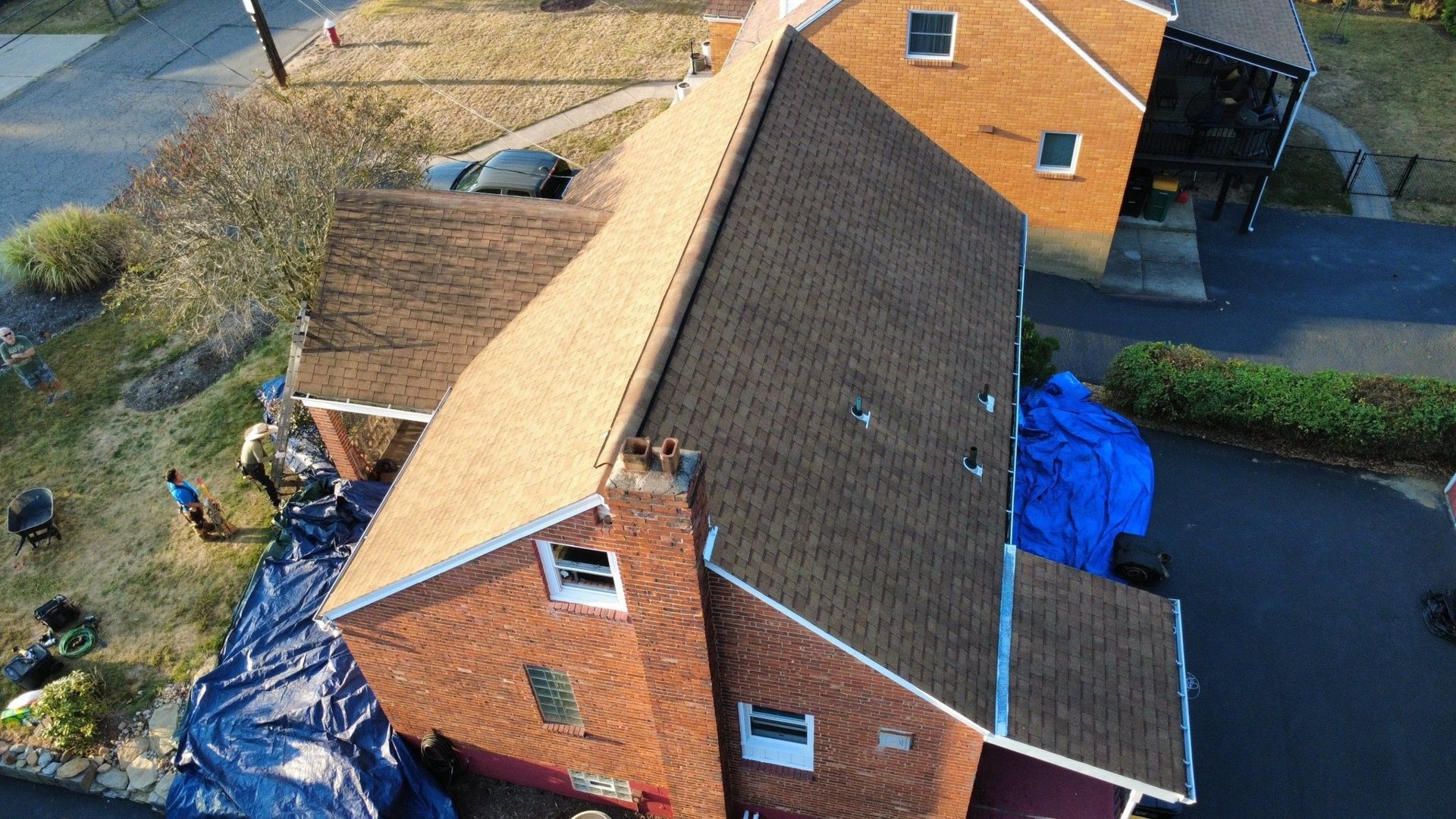
Asphalt shingles remain the most popular choice for sloped residential roofs. They are widely available, relatively lightweight and come in many colors and profiles. Architectural shingles can even mimic the look of slate or wood shakes. If you want a full look at the shingle side, see our asphalt shingle roofing page.
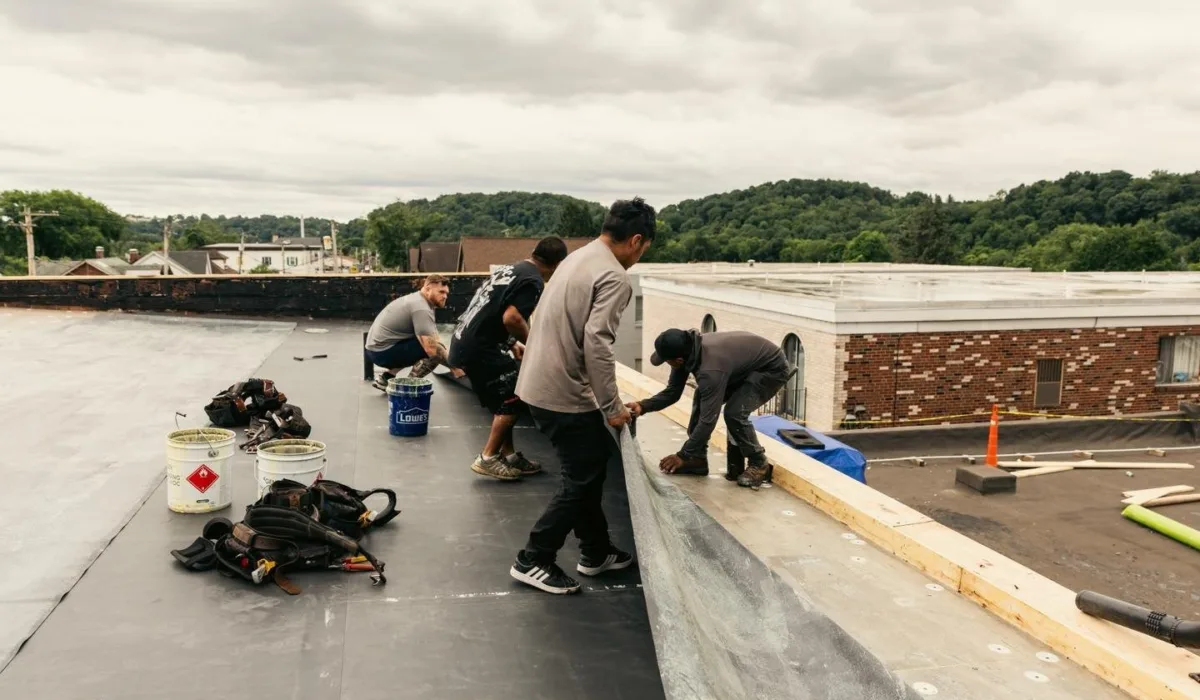
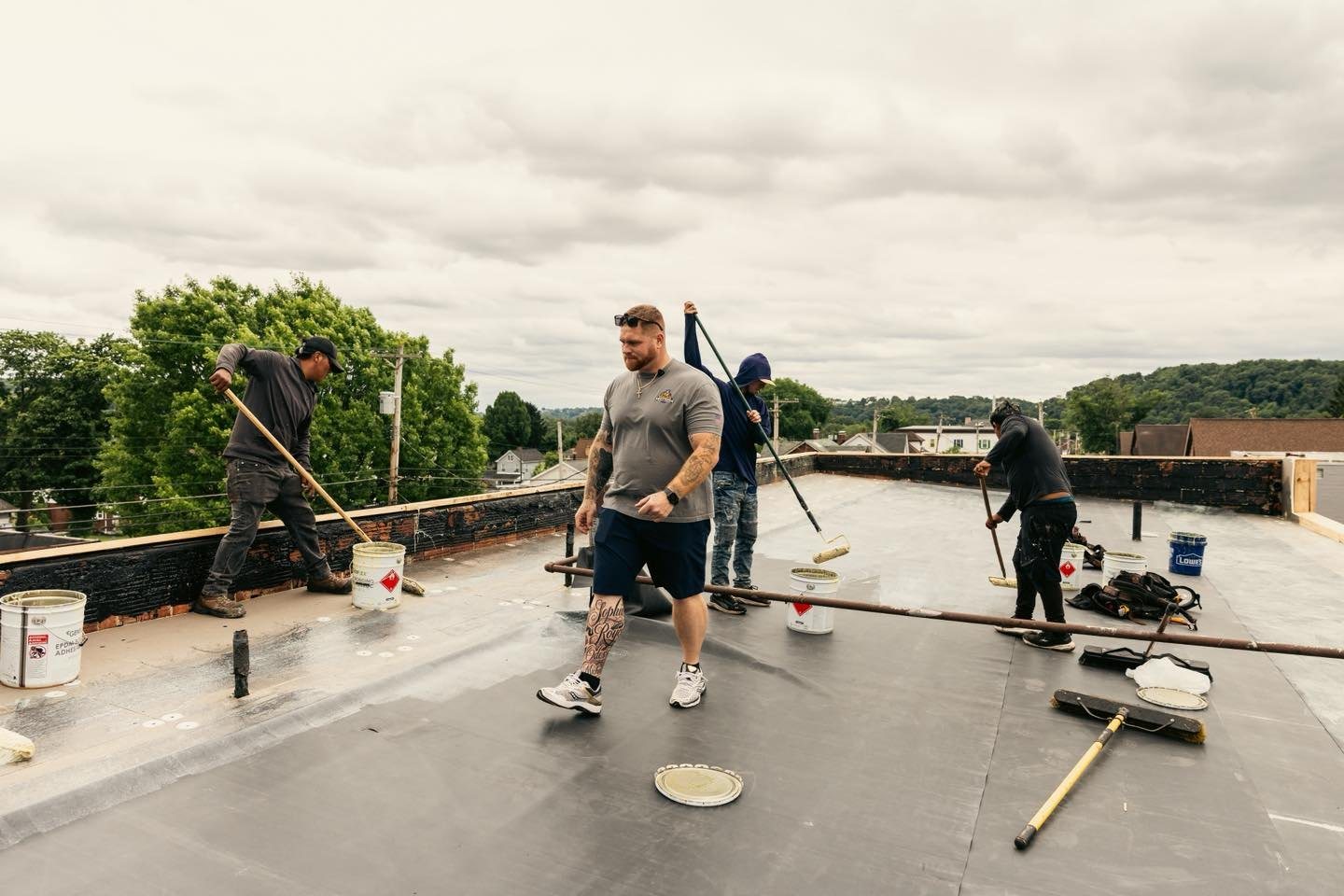
Rubber roofing is built for flat and low slope roofs. EPDM is the classic rubber membrane, and TPO and PVC are single ply cousins often grouped with it. On homes, rubber roofs show up on additions, flat porch roofs, dormers, garages and the rear sections of older city houses, where shingles simply cannot shed water fast enough.
What Are the Pros and Cons of Rubber Roofing?
Rubber roofing is known for durability and weather resistance, but like every material it has trade offs.
Pros:
- Excellent waterproofing for flat and low slope roofs
- Long service life when properly installed
- Fewer seams and less upkeep than shingles on a low pitch
- Some types, like white TPO, reflect heat in summer
- Small punctures can usually be patched cleanly
Cons:
- EPDM is typically black, which absorbs heat
- Poorly made seams, especially glued seams, can lead to leaks
- PVC raises environmental questions because of its chlorine content
- TPO has a shorter track record than asphalt or EPDM
Each type has strengths. EPDM has decades of proven use. TPO offers a reflective surface. PVC resists chemicals and ponding water. In every case, installation quality decides how long the roof lasts.
On residential flat roofs we install MuleHide EPDM in the .060 thickness, and we are MuleHide certified for EPDM, two ply low slope systems and silicone coatings. For a deeper look at these systems, read our post: What Is Membrane Roofing and Is It Right for Flat Roofs in Western PA?
How Do Asphalt Shingles Compare?
Asphalt shingles continue to be the go to for pitched roofs across Pennsylvania. They are versatile, straightforward to install and supported by nearly every roofing contractor.
Advantages include:
- Straightforward installation on most sloped roofs
- Good fire resistance
- A wide range of styles and colors
- Individual shingles can be replaced after storm damage
- Strong manufacturer warranties on complete systems
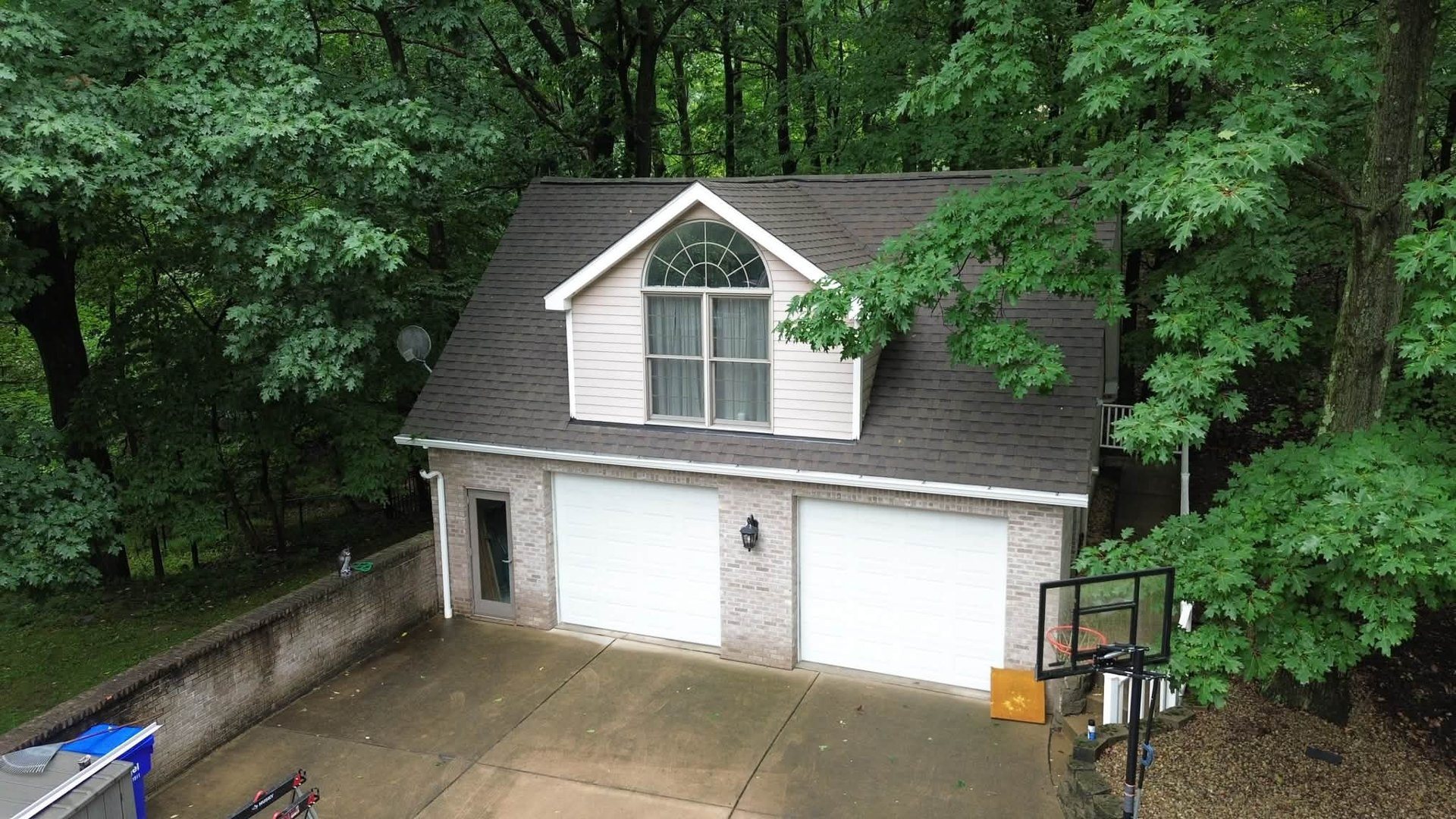
However, shingles are more prone to wind uplift, granule loss and algae streaking in humid climates. On a roof with too little pitch, they also let water back up under the tabs, which is the most common reason we see shingles fail on Pittsburgh porch roofs and rear additions.
As an AtlasPro+ Platinum Select contractor, we install complete Atlas shingle systems, and a complete Atlas system qualifies for the Atlas 50 year warranty.
What Drives the Cost of Each Roof?
We do not quote prices online because every roof is different, but the same factors move the number on every job:
- Roof size and pitch. Steep roofs need more safety setup and labor. Flat roofs need different materials and detailing.
- Tear off layers. Many older Pittsburgh homes have two layers of shingles, or an old built up flat roof under newer material.
- Decking condition. Soft or rotted boards must be replaced before any new roof goes down.
- Penetrations and edges. Chimneys, skylights, vents, walls and drains all need flashing or membrane details.
- Material and system choice. Shingle line, membrane type and thickness, and insulation all affect the total.
The only real number is a written estimate based on your roof. Ours are free.
Which Roof Adds More Value to a Home?
Both materials add value in different ways.
- Asphalt is attractive to buyers because of its traditional look and familiar performance.
- Rubber roofing appeals to owners who want long term protection and low upkeep on the flat sections of a home.
If you plan to sell in the next few years, a new shingle roof offers solid curb appeal. If you plan to stay and want to stop recurring leaks on a flat section, a properly installed rubber roof usually offers better value over time.
What Type of Roof Is More Economical?
The answer depends on your roof shape and structure.
- For pitched roofs, asphalt remains a practical and economical choice because it is widely available and easy to repair.
- For flat or low slope roofs, rubber roofing is usually the better long term investment. It handles standing water and harsh weather, and needs less attention over its life.
Putting shingles on a roof that is too flat is never the economical choice. It tends to leak early and cost more in repairs.
What Should I Look for in a Roofing Contractor?
No matter which material you choose, installation quality is critical. A poor install can take years off any roof.
- A Pennsylvania Home Improvement Contractor registration and liability insurance
- Manufacturer certifications for the system you are buying
- A clear written proposal and easy communication
- Photos or references from recent local projects
- A cleanup plan and a realistic timeline
Malick Brothers Exteriors is a family owned company founded in 2022 by Ryan Malick, based at 500 Perry Highway in West View. We are BBB A+ accredited and registered as PA HIC PA174918.
Frequently Asked Questions
Can I put shingles on a low slope roof?
Most shingle manufacturers require a minimum pitch, and below it water can back up under the shingles. On very low or flat sections, a membrane such as EPDM is the right choice.
Can one house have both asphalt and rubber roofing?
Yes. It is common in Pittsburgh. We often replace the main shingle roof and the flat porch or addition roof together so the transitions are flashed as one system.
How long does an EPDM roof last?
A well installed EPDM roof can last decades. Seam quality, drainage and the edge details matter more than anything else.
Is it worth waiting for prices to drop?
We do not recommend waiting on a roof that is already leaking. Water damage to decking, insulation and ceilings usually costs more than any price change.
Making the Right Choice in 2026
Start with your roof slope, its age and your long term plans. Rubber roofing is usually the best fit for flat roofs and additions, while asphalt remains ideal for most pitched residential roofs. Either way, proper installation makes the difference.
Not sure which your home needs? Contact us or call 412-616-0191 for a free written estimate. We will look at every section of your roof and recommend the material that fits it.