Your roof takes a beating year after year. Whether it’s UV exposure, heavy rain, foot traffic from HVAC technicians, or simply the slow creep of age, commercial roofs are constantly under stress. Most property owners don’t think about their roof until something goes wrong. And by then, what started as a minor issue has often turned into a costly headache.
Understanding the most common commercial roofing problems early is one of the smartest investments you can make. Catching things before they escalate saves money, prevents interior damage, and extends the life of your entire roofing system. Let’s walk through what to watch for, and more importantly, what to do about it.
What Are the Most Common Roofing Problems?
Leaks are the most frequently reported issue in commercial buildings, but they’re rarely a problem on their own. They’re usually a symptom. The real culprits tend to be damaged flashing, membrane deterioration, improper installation, or drainage systems that have been neglected for too long.
Ponding water is another widespread problem, especially on flat roofs. When water sits in one spot for more than 48 hours, it starts to break down roofing materials, add unnecessary weight to the structure, and create the perfect environment for mold and rot. Poor drainage is almost always the root cause. On older buildings, it’s often a combination of clogged gutters and a roof that’s lost its slope over time.
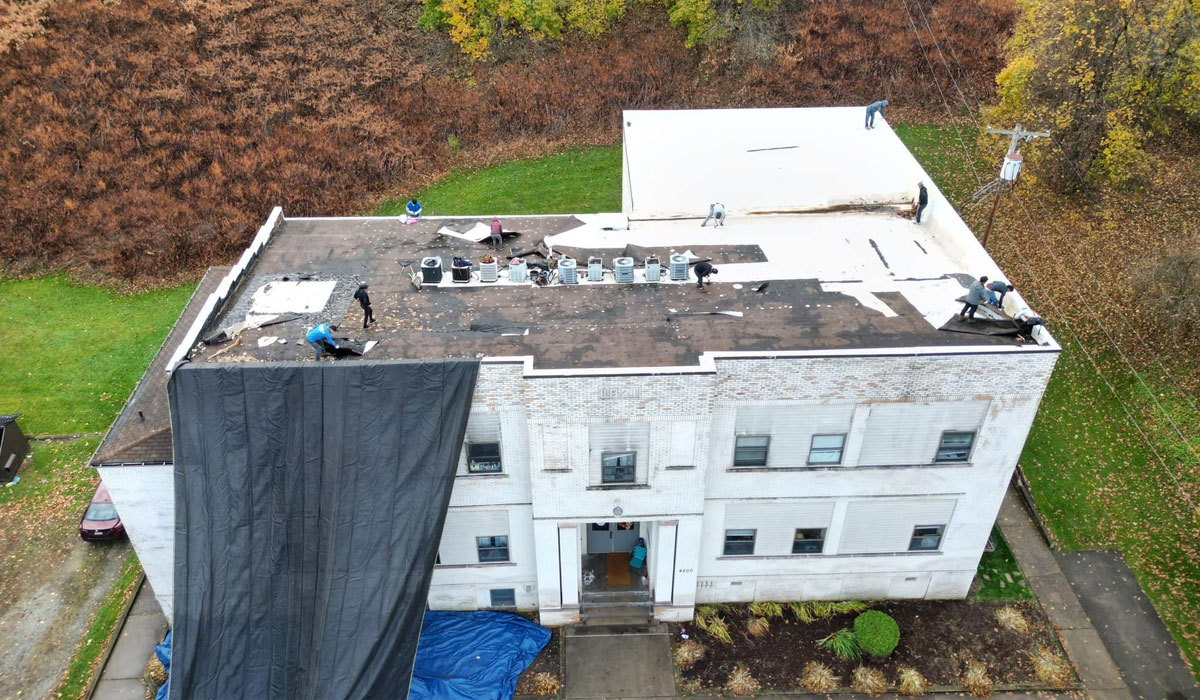
Membrane punctures and blistering round out the most common issues we see in commercial flat roof repair work. Bubbles and blisters form when moisture gets trapped beneath the membrane during installation or seeps in over time. Punctures are usually caused by maintenance workers dropping tools, dragging equipment, or simply walking on surfaces not designed for heavy traffic.
A Quick Reference: Common Commercial Roofing Problems and Fixes
| Problem | Common Cause | Fix |
|---|---|---|
| Water leaks | Damaged membrane, aging materials | Locate source, apply sealant or replace section |
| Ponding water | Poor drainage, clogged gutters | Install drains, use tapered insulation |
| Damaged flashing | Rust, cracking, poor seals | Replace or reseal with new metal/sealant |
| Membrane punctures | Foot traffic, debris, tools | Patch with compatible TPO or EPDM material |
| Blistering | Trapped moisture, poor installation | Cut out blister, dry area, apply new patch |
| Shrinkage | Membrane aging, thermal cycling | Replace damaged membrane sections and flashing |
How Damaged Flashing Leads to Bigger Commercial Roofing Problems
Flashing is the material that seals the transitions on your roof. Around HVAC units, skylights, vents, and parapet walls. It’s often overlooked during routine inspections, but it’s one of the first places where a leak develops. When flashing cracks, rusts, or pulls away from the surface, water finds a path inside almost immediately.
The fix isn’t complicated. Damaged flashing can usually be replaced or resealed with new metal and roofing sealant. But leaving it too long turns a simple repair into a full section replacement. I’ve seen buildings where a $300 flashing fix was ignored and turned into a $12,000 interior repair job within two seasons. It’s not worth the gamble.
What Is the 25% Rule for Roofing?

The 25% rule is something every commercial property owner should know before scheduling any commercial roof repair. In many jurisdictions, if more than 25% of a roof system is being repaired or replaced within a 12-month period, building codes may require the entire roof to be brought up to current standards. This can significantly affect your budget and timeline.
It’s not a universal rule, and it varies by local code, so always verify with your contractor before starting any major work. The takeaway is simple: don’t let deferred maintenance pile up. Small repairs done consistently are far less likely to trigger the 25% threshold than one large emergency repair that covers half the roof.
For more guidance on navigating repairs, maintenance schedules, and DIY-friendly projects, the DIY Guides for Home Improvement & Roofing Solutions are a great place to start.
Will Homeowners Insurance Pay for a New Roof If It’s Leaking?
This question comes up constantly, and the answer depends entirely on why the roof is leaking. Insurance typically covers damage that results from a sudden, unexpected event. A storm, a falling tree branch, hail damage. What it usually does not cover is wear and tear, aging, or damage that developed gradually because maintenance was deferred.
If your roof is leaking because it’s 20 years old and has never been inspected, most insurers will deny the claim. Document everything, get inspections done annually, and keep records of any repairs. That paper trail matters enormously when a claim is filed.
What Not to Say to an Insurance Adjuster for Roof Damage
If you’re filing a roof claim, your words matter more than you might think. Avoid speculating about the cause of the damage. Saying something like “I think it’s been leaking for a while” immediately signals deferred maintenance to the adjuster, which can reduce or void your claim. Stick to the facts and let the inspector document what they find.
Don’t minimize the damage either. Some property owners downplay issues to seem cooperative, but this can result in a payout that doesn’t cover the full cost of repairs. Get an independent assessment from a licensed contractor before meeting with the adjuster. Having that documentation in hand gives you a factual baseline to work from.
Proactive Maintenance: The Best Fix for Common Commercial Roofing Problems
The most effective solution to commercial roofing problems is preventing them from starting. Schedule professional inspections at least twice a year. Once in the spring to assess winter damage and once in the fall before temperatures drop. After any major storm, a quick visual check is worth the time it takes.
Keep drains and gutters clear. It sounds basic, but clogged drainage is behind a massive percentage of flat roof repair calls. Install walkway pads in high-traffic areas to reduce membrane wear. Apply protective coatings where appropriate to extend membrane life. These are not expensive measures, but they compound over time and add years to your roof’s lifespan.
Staying ahead of maintenance doesn’t just protect your building. It protects your budget, your tenants, and your peace of mind.